
 Čeština
 Deutsch


Legate Drusus' Gladius from the Germanic Frontier Campaigns
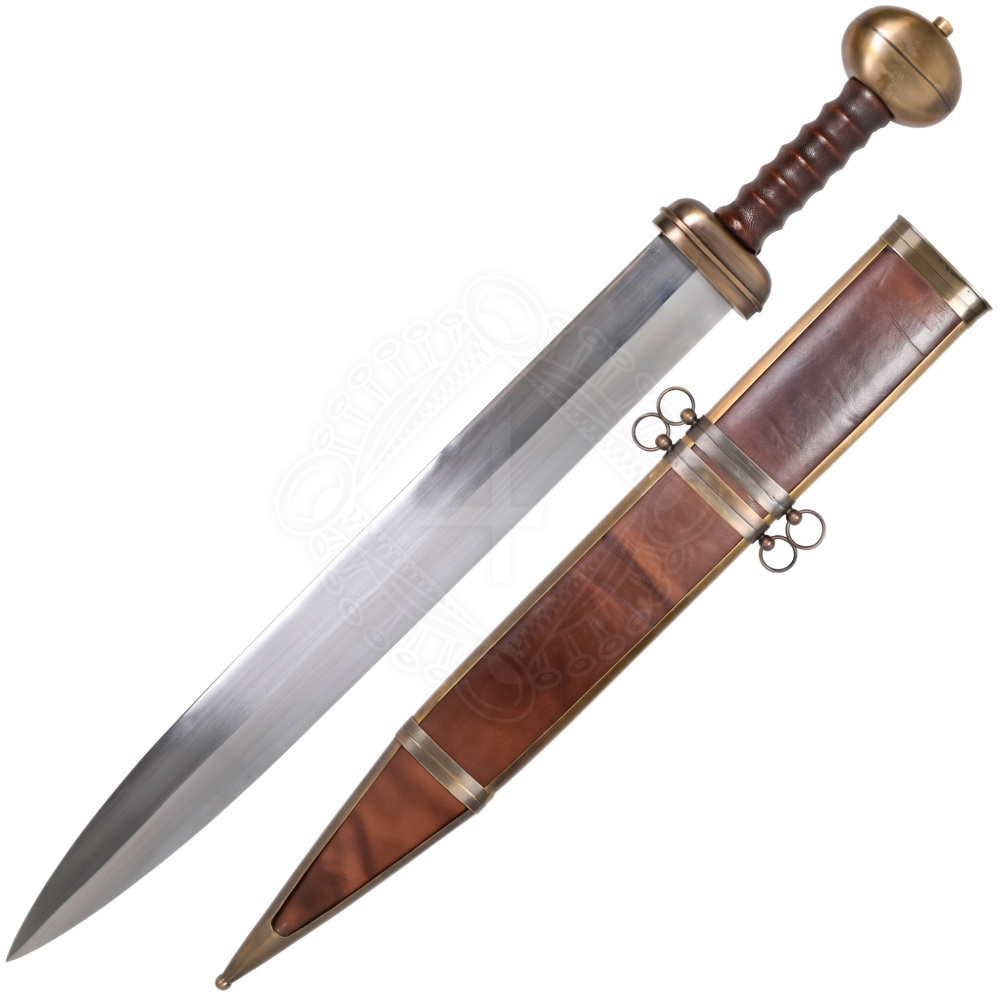
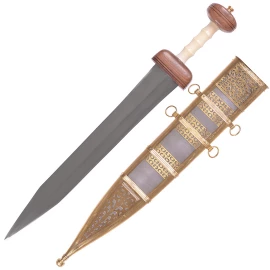
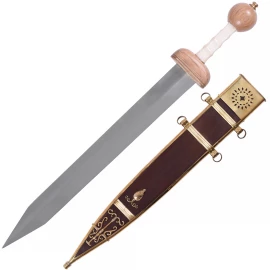
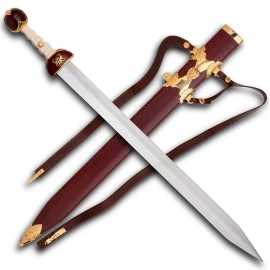
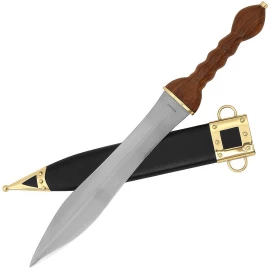
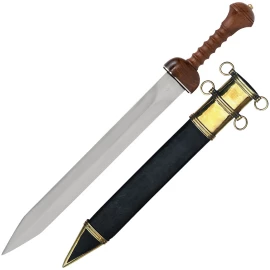
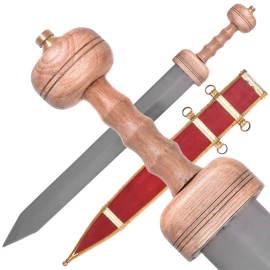
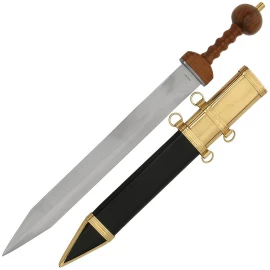
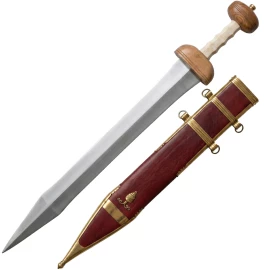
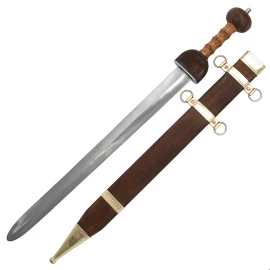
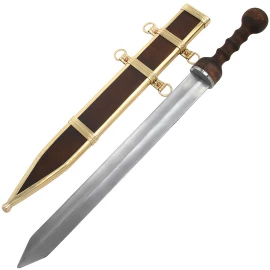
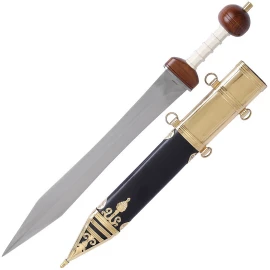
Your journey to the heart of Ancient Rome begins here. We have named this gladius in honour of the legendary commander Nero Claudius Drusus, the first Roman general to reach the Elbe river. This sword is a symbol of the power and discipline of the Roman legions that shaped the Western world. Whether you are a dedicated re-enactor, a historical weapons collector, or a fan of Roman history, you will appreciate the authentic feel of the high carbon steel blade and the classic wood-and-brass hilt. Its balanced weight and robust construction make it a perfect addition to your kit. Experience the legacy of Rome firsthand. Further product information ...

Would you like to be notified as soon as the item is in stock?
You will receive a short e-mail as soon as we have it back in stock.
Legate Drusus' Gladius from the Germanic Frontier Campaigns
Technical Description and Features
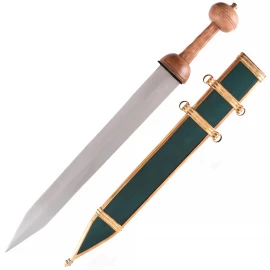
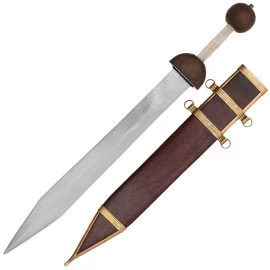
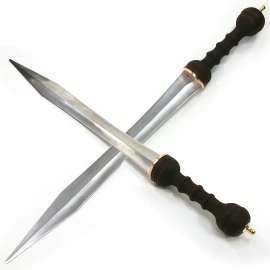
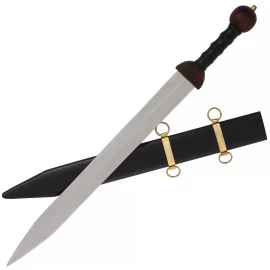
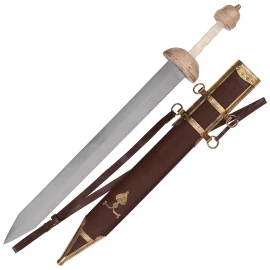
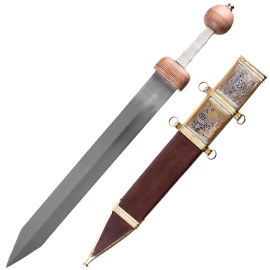
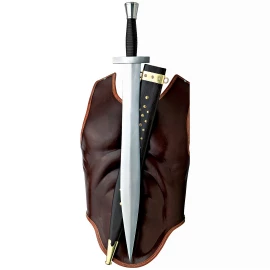
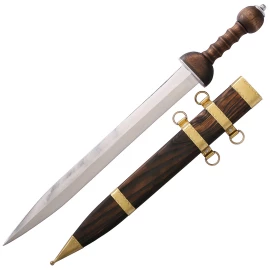
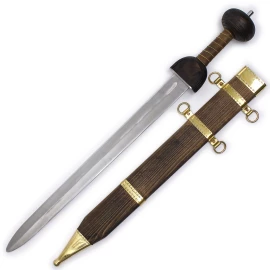
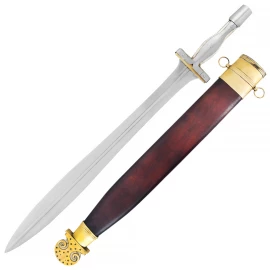
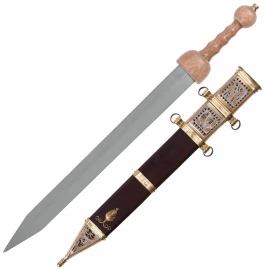
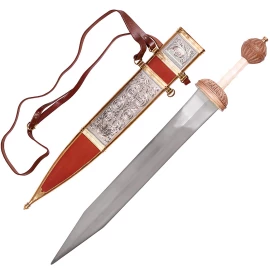
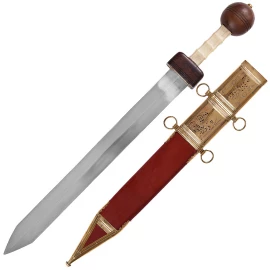
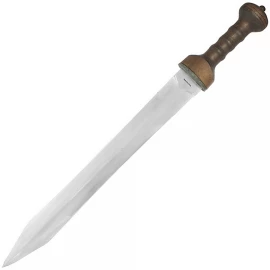
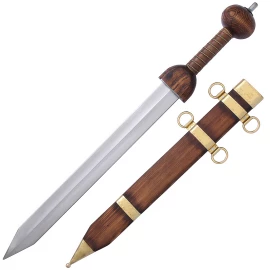
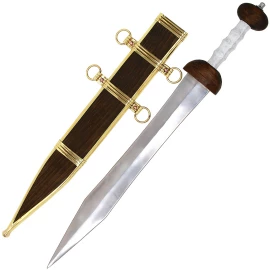
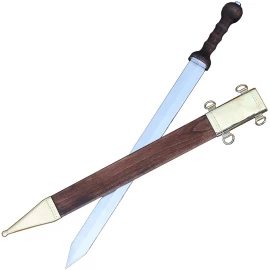
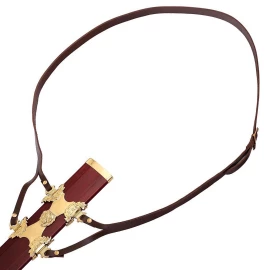
This sword is a faithful reconstruction of the standard infantry weapon used during the early Roman Empire. The blade, featuring a prominent point, is crafted from high carbon steel, providing the correct flexibility and durability. The hilt is ergonomically shaped from hardwood with distinct finger grooves for a secure grip. The guard and the massive globular pommel are accented with brass fittings, giving the weapon a prestigious look. The package includes a leather-covered wooden scabbard featuring ornate brass fittings and four suspension rings for attachment to a military belt (cingulum).
Detailed Product Specifications
| Weapon Type | Gladius (Mainz-Fulham transition type) |
| Blade Material | High Carbon Steel (not stainless) |
| Hilt Material | Hardwood and Brass |
| Total Length | 72 cm / 28.3 in |
| Blade Length | 53.5 cm / 21.1 in |
| Weight (without scabbard) | 1280 g / 2.82 lbs |
| Weight (with scabbard) | 1840 g / 4.06 lbs |
| Scabbard Construction | Wood core, leather wrap, brass fittings |
Historical Significance and Usage
The Gladius was the iconic weapon of the Roman legions from the 3rd century BC until the 3rd century AD. This particular model reflects the blade profile of the Mainz-Fulham transition type, commonly used during the 1st century AD. It was designed primarily as a thrusting weapon to be used in conjunction with the large rectangular shield (scutum). Interestingly, the Romans adopted the design from Celtiberian tribes in Spain. Legate Drusus, whom this sword honors, was a key figure in the Roman conquest of the Germanic territories, proving the lethal efficiency of the gladius in dense forest combat.
Maintenance and Safety Guide
Because the blade is made of carbon steel, it requires regular maintenance to prevent rust. After every use or handling, wipe the blade with a dry cloth and apply a thin layer of protective mineral oil. The leather on the scabbard should be treated occasionally with leather balsam to keep it supple and prevent cracking.
Safety Warnings
- For safety reasons, this product is classified as a decorative replica and is not intended for practical combat or HEMA sparring.
- Due to the sharp point and edges, handle with extreme care to avoid accidental injury to yourself or others.
- Never strike the blade against hard surfaces like trees or stones, as this may cause structural failure of the steel.
- Ensure you have adequate space when drawing the sword to avoid hitting nearby objects or people.
- Keep this product out of reach of children at all times.
We recommend pairing this gladius with a matching Roman military belt and a authentic woollen tunica to complete your legionary impression.
We are here for you!









.3773623034.1696456237.png.webp)

.3773623034.1696456268.png.webp)
.3773623034.1696456247.png.webp)