 Čeština
 Deutsch


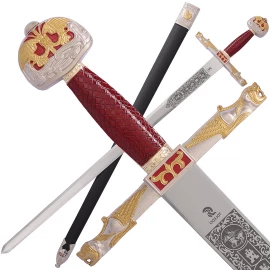
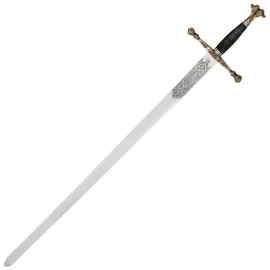
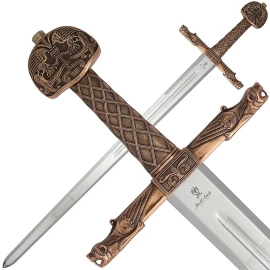
Sword of Charlemagne "Joyeuse", Replica of the French Coronation Sword
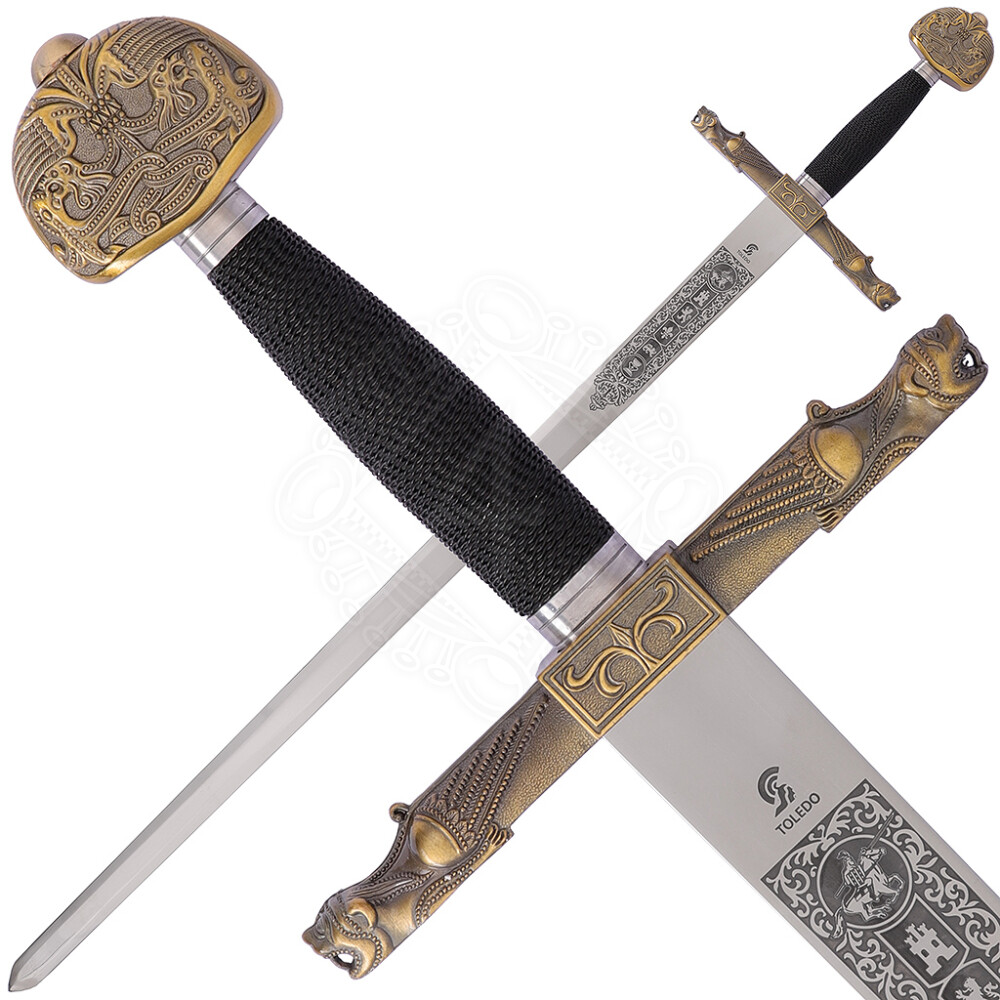
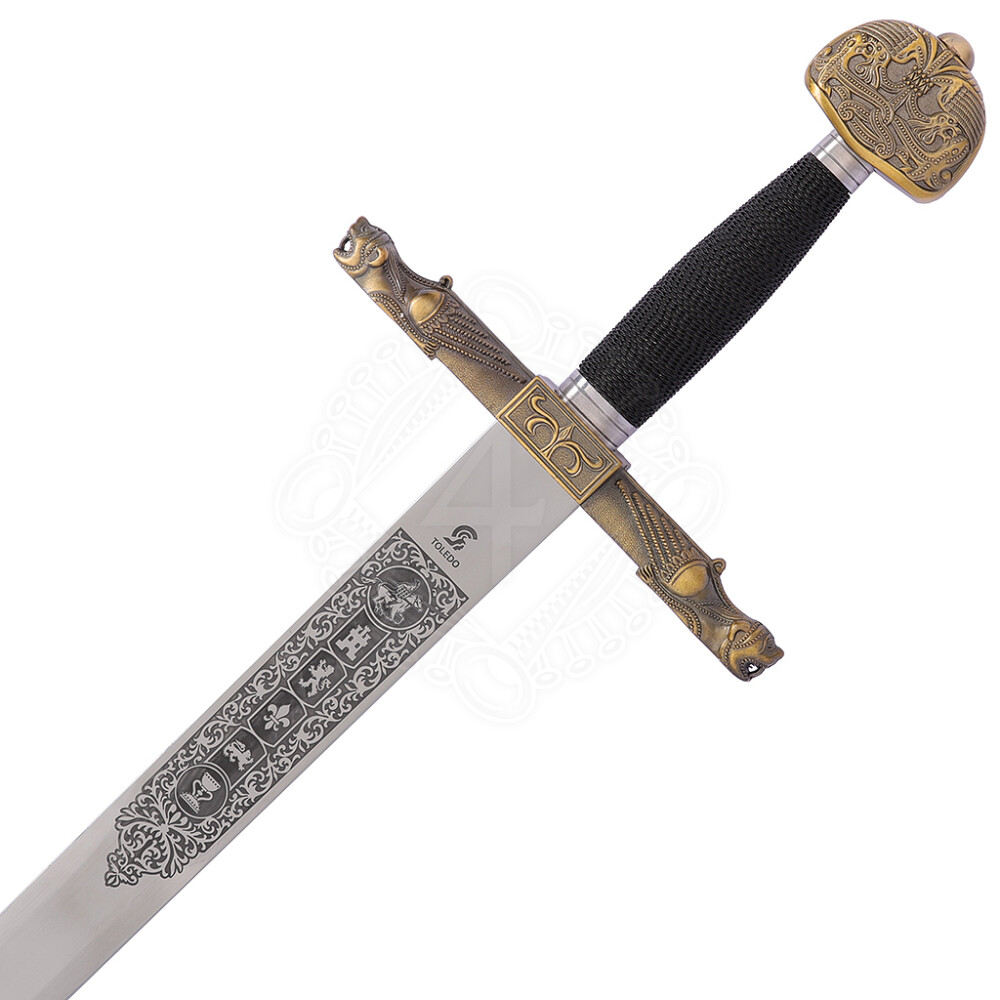
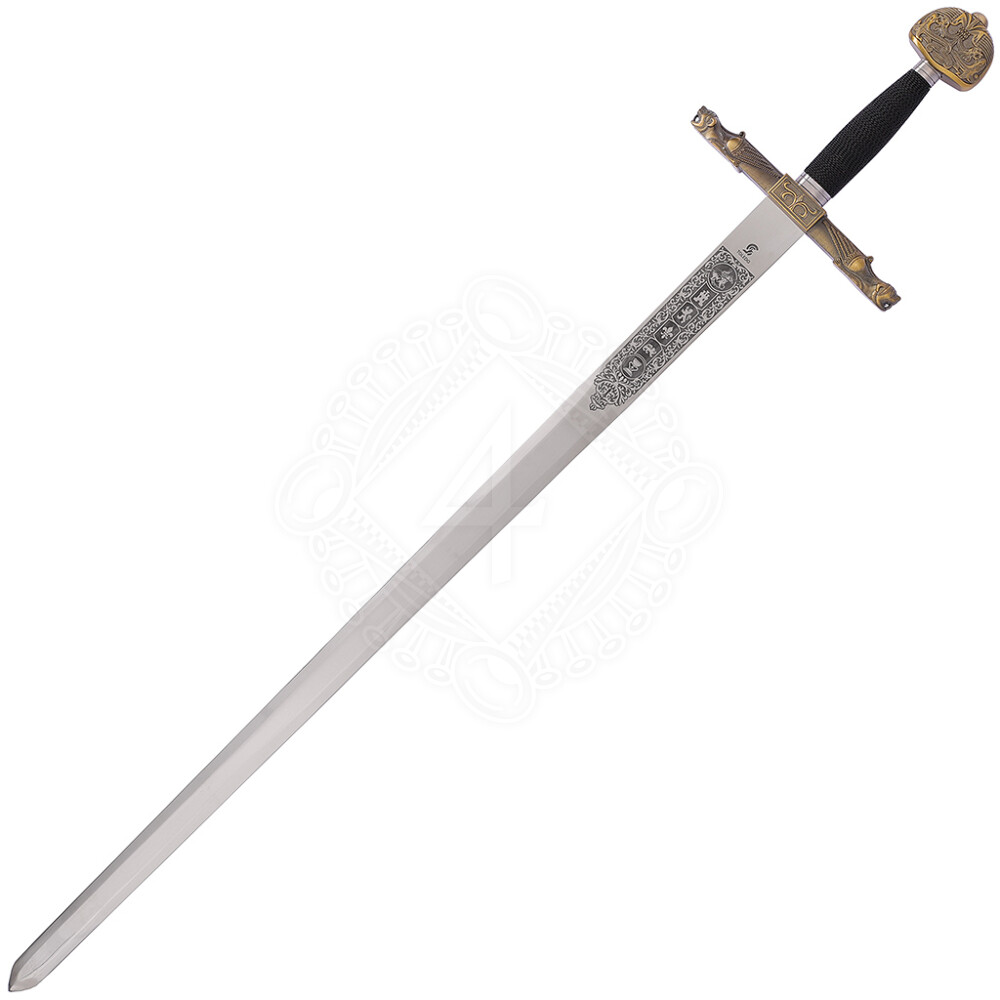
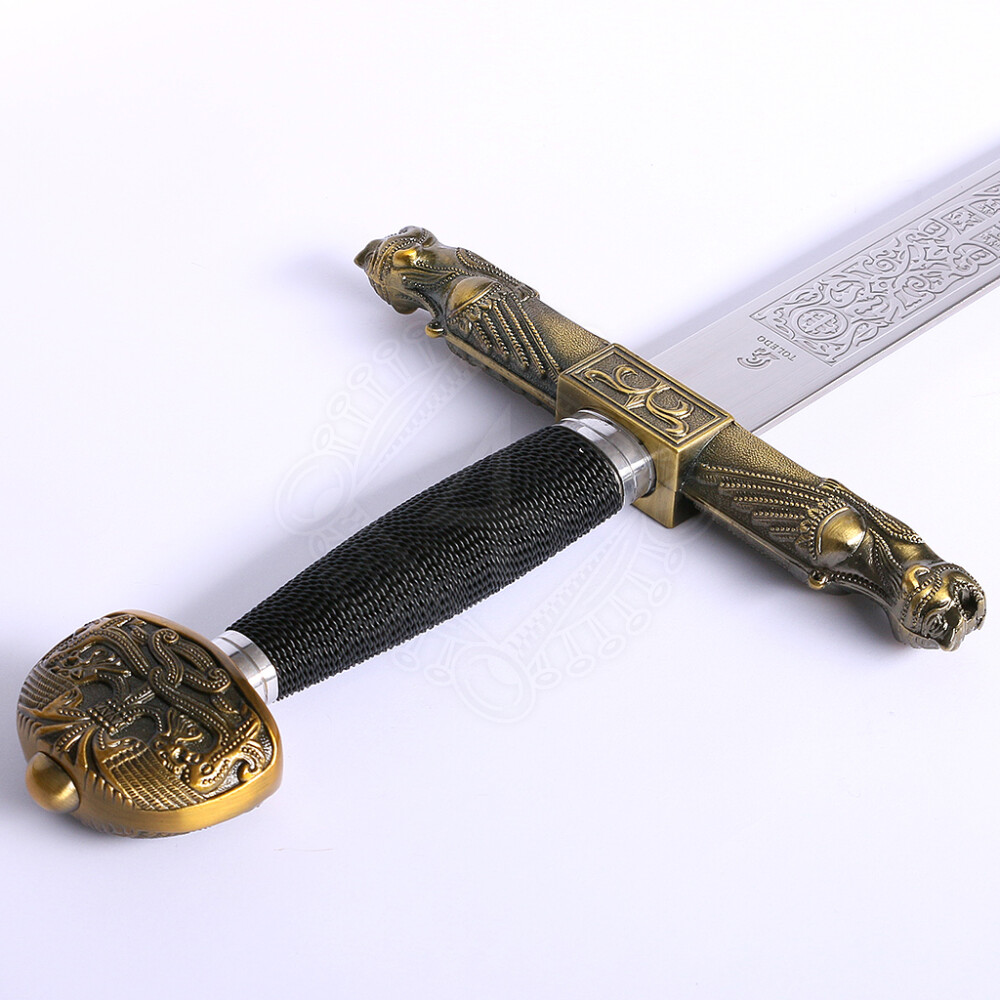
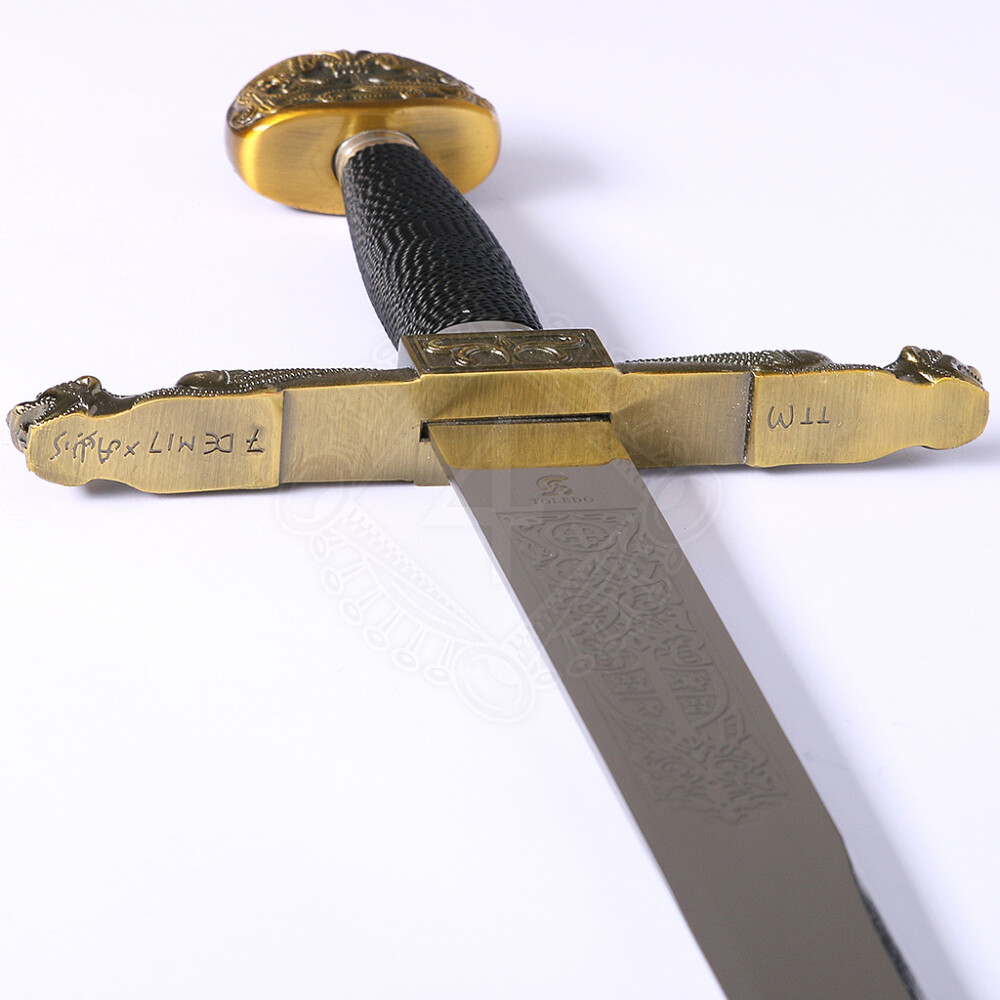
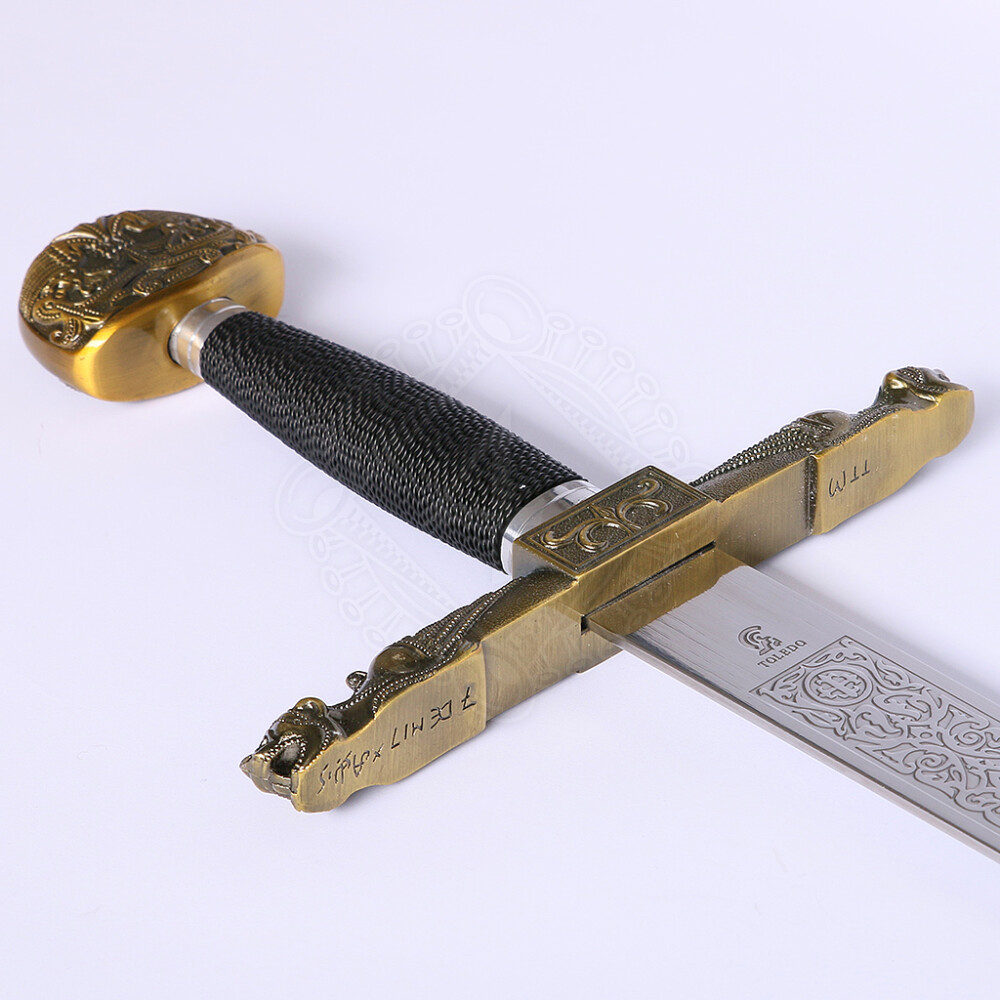

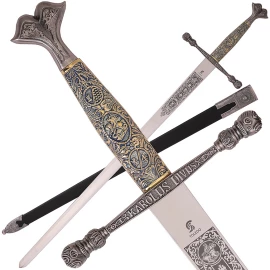
Feel the majesty of the French kings with this stunning replica of their coronation sword, the legendary "Joyeuse" (Joyful). Although inextricably linked to the figure of Charlemagne, this sword was the true symbol of power and the divine right of the French monarchy for centuries. Thanks to precise craftsmanship from the renowned city of Toledo, Spain, you are holding not just a decoration, but a piece of European history. Further product information ...

The following variants are currently available:
Sword of Charlemagne "Joyeuse", Replica of the French Coronation Sword
Royal Design and Meticulous Craftsmanship
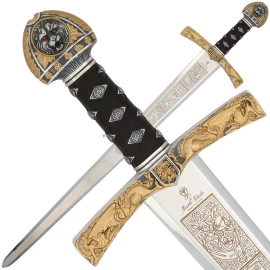
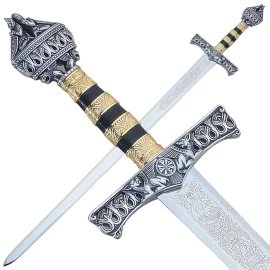
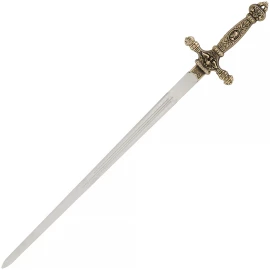
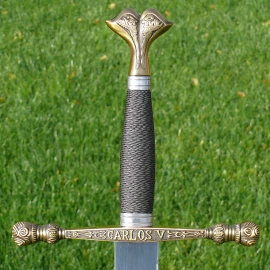
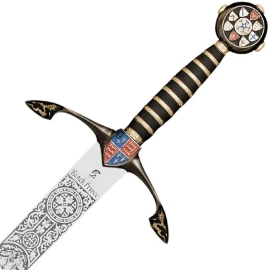
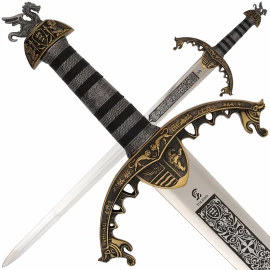
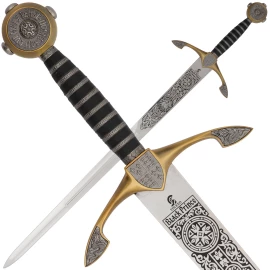
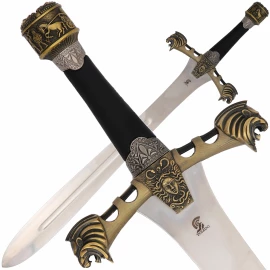
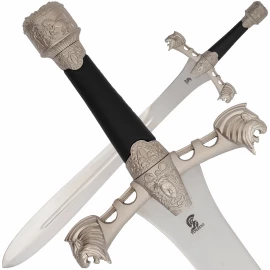
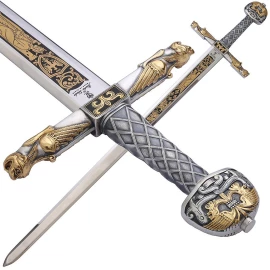
This sword is the embodiment of high medieval aesthetics. The guard and pommel, with an antiqued brass finish, are richly decorated. The straight guard terminates in stylized animal heads, and the brazil-nut-shaped pommel features a motif of intertwined dragons or birds. The grip is wrapped with a black cord for a firm hold. The broad 420 stainless steel blade has a distinct fuller and is decorated near the hilt with etched motifs, including a knight on horseback, a castle, and the proud mark of the Toledo manufacturer.
Modern-Day Uses: A Symbol of Power and Erudition
This replica is much more than just a piece of metal:
- A Prestigious Decoration: Hang the sword on your wall and transform your study, library, or living room into a space with historical depth.
- A King's Costume Accessory: Ideal for theatrical performances, historical festivals, or LARP events where you portray a monarch or a powerful nobleman.
- An Exclusive Gift: Looking for a gift for a lover of history, European heritage, or for someone who appreciates symbols of strength and legacy? You cannot go wrong with the Sword of Joyeuse.
The True History of the Sword Joyeuse
The original sword is one of the most precious artifacts in the Louvre Museum in Paris. Although legend says it belonged to Charlemagne (d. 814), historians date the surviving sword to a later period, around the 12th to 13th century. It is from this time that it was verifiably used in the coronations of French kings, who thus claimed the legacy of Charlemagne, the "Father of Europe." It is important not to confuse it with the so-called "sabre of Charlemagne," which was part of the Imperial Regalia of the Holy Roman Empire.
Typological Classification (Oakeshott)
From a weapon typology perspective, the sword belongs to the High Middle Ages. With its broad, fullered blade, it corresponds to Type XII of the Oakeshott classification. The pommel is a variation of Type I, and the simple straight guard corresponds to Style 2. This combination was typical for knightly swords of the 12th and 13th centuries.
How to Care for Your Sword
A little care will maintain its royal beauty:
- Regularly wipe all metal parts with a dry, soft cloth to prevent dust and moisture buildup.
- For enhanced shine and protection, you can apply a thin layer of conservation oil.
- Store the sword in a dry environment.
Important Notice
This is a purely decorative item. The 420 stainless steel blade is not hardened, and the sword is not constructed for fencing, cutting practice, or any other practical use. It is a display replica from the renowned manufacturer Art Gladius®.
Technical Specifications:
- Overall Length: approx. 1030 mm (40.6 in)
- Blade Length: approx. 831 mm (32.7 in)
- Guard Length: approx. 202 mm (8 in)
- Blade Width at Guard: approx. 37.8 mm (1.5 in)
- Point of Balance (POB): approx. 10 cm (3.9 in) from guard
- Weight: approx. 1390 g (3.06 lbs)
- Material: 420 stainless steel blade, Zamak hilt with brass finish
- Made in Toledo, Spain
- Optionally available with a beautifully decorated scabbard
We are here for you!