Čeština
 Deutsch


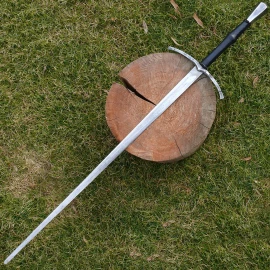
Gothic Two-Handed Sword Hadmar, Class B


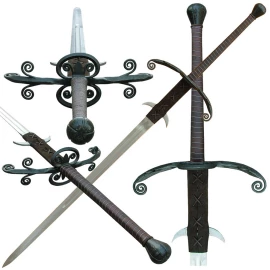
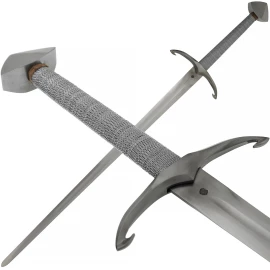
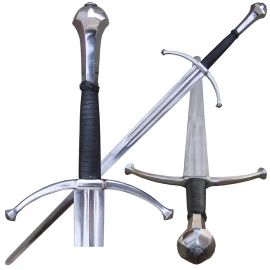
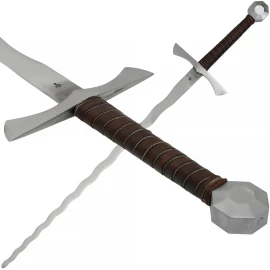
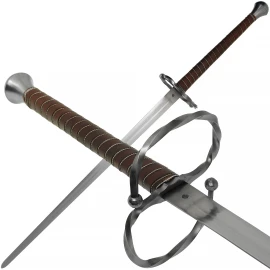
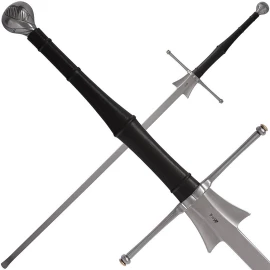
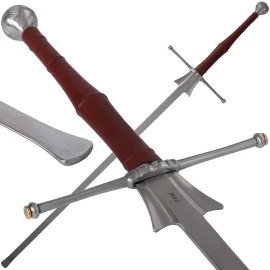
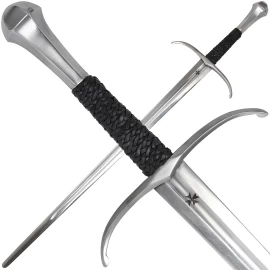
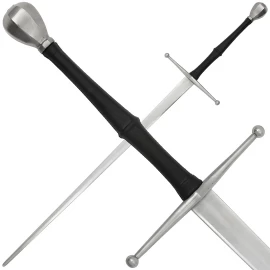
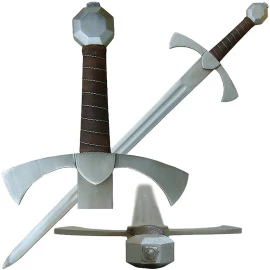
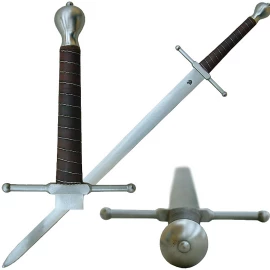
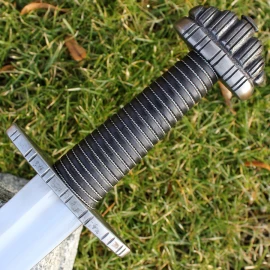
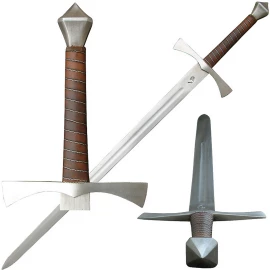
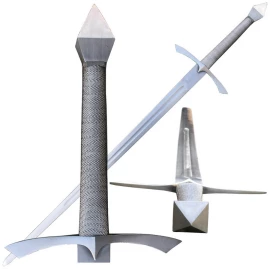
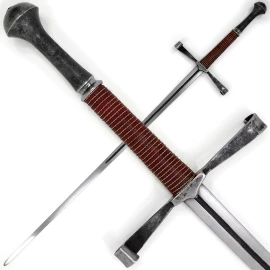
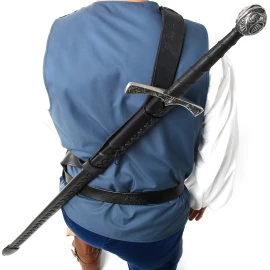
Are you looking for a dominant weapon that will command respect on any battlefield, during stage performances, or at reenactment events? The Gothic Two-Handed Sword Hadmar represents a high-quality Czech-made product crafted for demanding swordsmen. The blade, made of ČSN 14260 spring steel, is oil-hardened to approx. 47 HRC, providing exceptional elasticity and structural resistance during contact sparring. The long wooden grip wrapped in leather and wire, combined with the leather-bound ricasso, guarantees optimal handling and control. We recommend this sword as an uncompromising companion for every duel! Further product information ...

Gothic Two-Handed Sword Hadmar for Stage Combat
Historical Context and Construction
The design of this impressive two-handed sword originates from the transition period of the 15th and 16th centuries, when massive infantry weapons known as Zweihänder or Bidenhänder gained dominance on European battlefields. These weapons were wielded by elite mercenaries such as Swiss pikemen and German Landsknechts. Their primary battlefield purpose was to breach enemy pike squares, chop down spear shafts, and create tactical openings for advancing foot soldiers.
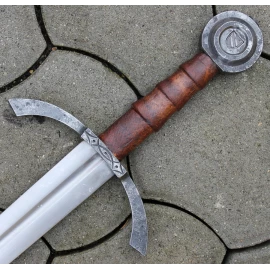
The hilt features a massive steel crossguard measuring approx. 35 cm / 13.78 in with gracefully curved quillons, paired with a heavy diamond-shaped pommel over which the tang is securely peened. A key structural element is the unsharpened ricasso near the guard, which is wrapped in laced leather to enable a safe second-hand grip for half-swording techniques. The ricasso is bordered by steel parrying hooks (Parierhaken) that protect the wielder's hand and trap opponent blades. According to Oakeshott typology, this blade design aligns with late Gothic Types XX or XXa. The stage combat version features a 2–3 mm edge thickness and a rounded tip suitable for practical reenactment combat.
The Legacy of the Name Hadmar
This sword is named in honor of the noble Kuenring family and the knight Hadmar, a legendary Austrian lord and castle ruler from the turn of the 12th and 13th centuries. Hadmar of Kuenring etched his name into history through unyielding courage, tactical prowess, and fierce leadership. Naming this two-handed war sword after him symbolizes sheer martial power, knightly pride, and battlefield dominance.
Technical Specifications
| Specification | Value (Metric / Imperial) |
|---|---|
| Overall Length | approx. 167 cm / 65.74 in |
| Blade Length | approx. 120 cm / 47.24 in |
| Crossguard Width | approx. 35 cm / 13.78 in |
| Blade Material | ČSN 14260 Spring Steel (oil-hardened) |
| Steel Hardness | approx. 47 HRC |
| Edge Thickness (Reenactment) | 2–3 mm (blunted tip) |
| Hilt Material | Wood core, leather, steel wire, steel pommel & guard |
| Ricasso Feature | Leather wrap with lacing, steel parrying hooks |
| Combat Rating | Class B according to sword classification |
| Origin | Made in Czech Republic |
Maintenance and Safety Guidelines
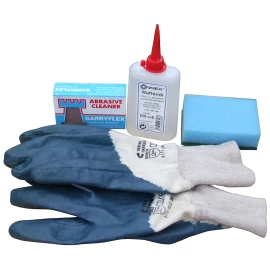
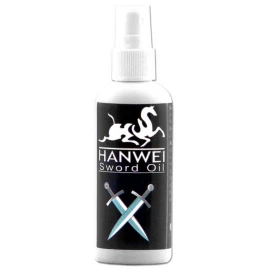
The spring steel blade is not rust-proof. To keep your sword in pristine condition, perform regular maintenance. Wipe the blade dry after every session and apply protective mineral or gun oil. Regularly treat the leather wraps on the grip and ricasso with leather conditioner. Never store the sword in damp conditions.
Safety Rules for Use:
- Inspect the blade carefully before every practice. File down any burrs or sharp nicks on the edges using a diamond file or sandpaper. Nicks are normal signs of wear.
- Parry incoming blows using the flat side of the blade rather than edge-to-edge. Execute strikes with martial discipline and proper force.
- Please note that this weapon is not protective equipment intended for high-impact full-contact fighting like Buhurt or Battle of the Nations.
- If the crossguard loosens over time, re-peen the pommel or tighten the assembly. A temporary fix involves wrapping fishing line tightly into the guard gap.
- All handling and combat practice are done strictly at your own risk. Always store out of reach of children!
- Directions for the Use of Bladed Weapons from Outfit4Events
Recommended Accessories
To complement your late 15th to 16th-century Renaissance kit, we recommend pairing this two-handed sword with:
- Padded Gambeson: A thick 15th–16th-century padded textile garment to absorb impacts.
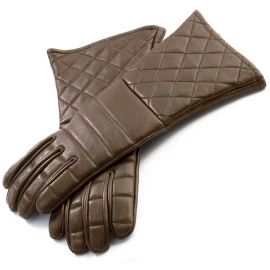
- Padded / Leather Fencing Gloves: Extended gloves to protect hands and forearms when handling large weapons.
- 16th Century Landsknecht Costume: Period-accurate attire for authentic reenactment appearances.
- Blade Maintenance Oil: For regular rust prevention on high-carbon spring steel.
We are here for you!