Čeština
 Deutsch


Japanese Greatsword Odachi Kawanakajima


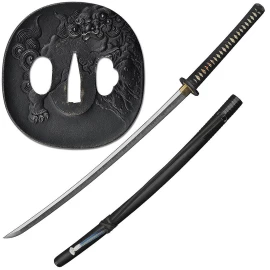
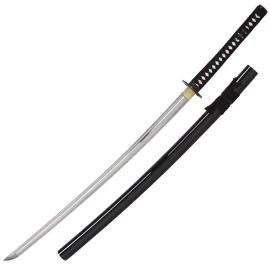
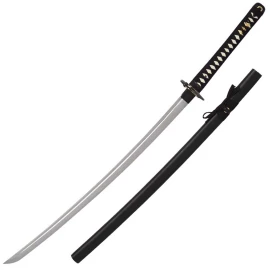
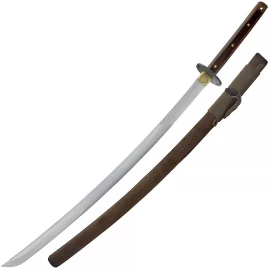
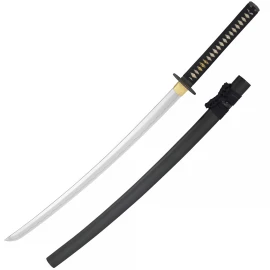
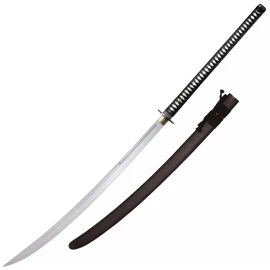
Are you looking for an imposing weapon whose grand scale and rich history will leave everyone breathless? The Japanese Greatsword Odachi Kawanakajima 14th Century represents the breathtaking peak of feudal Japanese swordsmithing. Featuring a hand-forged, differentially clay-tempered blade extending over 4 feet in length, this fully functional masterpiece honors the elite samurai shock troops of antiquity. The extra-long hilt lined with genuine ray skin provides tremendous leverage and cutting control. We recommend adding this magnificent greatsword to your collection today! Further product information ...

Would you like to be notified as soon as the item is in stock?
You will receive a short e-mail as soon as we have it back in stock.
Japanese Greatsword Odachi Kawanakajima 14th Century
History and Origins of the Battlefield Odachi
The historical inspiration for this massive field sword dates back to the 14th century, during the turbulent Nanboku-chō period (1336–1392), when civil war raged between Japan's Northern and Southern Courts. During this era, giant swords known as odachi or nodachi dominated the battlefield. Carried across the back or over the shoulder by elite foot soldiers, these blades were wielded to sever horse legs of charging cavalry and break through enemy pike formations. Forging a blade of this length required extraordinary smithing expertise and multiple assistants during the clay-tempering process.
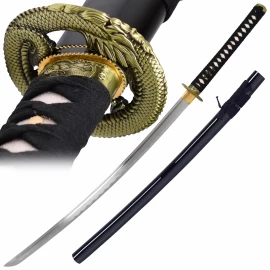
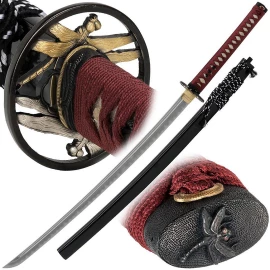
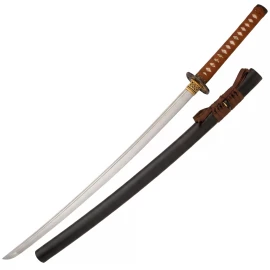
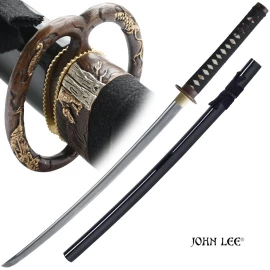
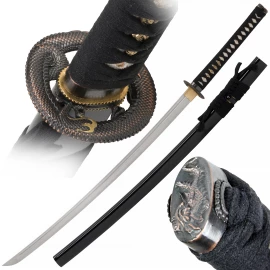
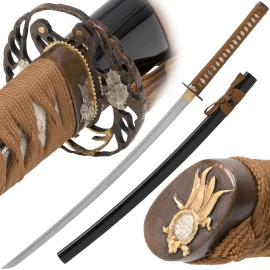
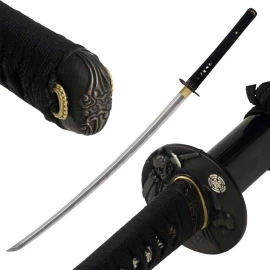
This sword is an authentic replica of historical museum pieces. The handguard (tsuba) is crafted from blackened iron in a classic lobed shape featuring traditional boar's eye (inome) heart-shaped cutouts, which served as protective symbols in Japanese folklore. The handle (tsuka) is built around a wooden core covered in genuine ray skin (same) and wrapped in black cotton cord (tsuka-ito). Brass dragon menuki ornaments accent the grip. The blade features a distinct temper line (hamon) seated into a brass collar (habaki). The wooden scabbard (saya) is finished in a sleek matte black lacquer.
Significance of the Name Kawanakajima
This sword proudly bears the name Kawanakajima in honor of the five legendary 16th-century Battles of Kawanakajima fought between the famed warlords Takeda Shingen and Uesugi Kenshin. In these iconic clashes, odachi greatswords were deployed by elite samurai in the fiercest hand-to-hand engagements.
Technical Specifications
| Specification | Value |
|---|---|
| Blade Material | High Carbon Steel (differentially clay-tempered) |
| Overall Length | 170.2 cm (67.0 in) |
| Blade Length | 124.5 cm (49.0 in) |
| Handle Length | 43.8 cm (17.25 in) |
| Weight | 2750 g (6.06 lbs / 97.0 oz) |
| Point of Balance (PoB) | 28 cm (11.0 in) in front of guard |
| Blade Width at Guard | 3.8 cm (1.5 in) |
| Blade Width at Tip | 2.9 cm (1.14 in) |
| Blade Thickness at Guard | 10 mm (0.39 in) |
| Blade Thickness at Tip | 6 mm (0.24 in) |
| Curvature (Sori) | 5.7 cm (2.24 in) |
| Handguard (Tsuba) | Blackened iron with inome cutouts |
| Handle (Tsuka) | Genuine ray skin, cotton wrap, brass dragon menuki |
| Scabbard (Saya) | Matte black lacquered wood |
Care Instructions and Safety Guidelines
High carbon steel is susceptible to rust and requires regular maintenance. After handling or practice, clean the blade thoroughly and apply a thin layer of protective mineral oil or clove oil (choji oil). Keep the handle wrap and ray skin dry.
Care and Maintenance of Samurai Swords and Japanese Swords
Safety Warning: This sword is fully functional and features a razor-sharp blade! It is intended strictly for target cutting tests (tameshigiri) on tatami mats, kata demonstrations, and collector displays. For safety reasons, it is strictly NOT intended for contact sparring, blade-on-blade parrying, or stage combat against partners. Handling such a large and sharp sword carries an inherent risk of severe or fatal injury! Use strictly at your own risk.
Recommended Accessories
To ensure proper care and authentic martial practice fitting the 14th–16th century Japanese traditions, we recommend adding these accessories:
- Japanese Sword Cleaning Kit (includes choji oil and uchiko powder ball).
- Tatami Target Mats for safe tameshigiri cutting practice.
- Extra-Large Wooden Sword Stand for displaying the odachi indoors.
- Traditional Keikogi and Hakama Attire for martial arts training.
We are here for you!