 Čeština
 Deutsch


Ravenna plate gauntlets with patinated brass cuffs
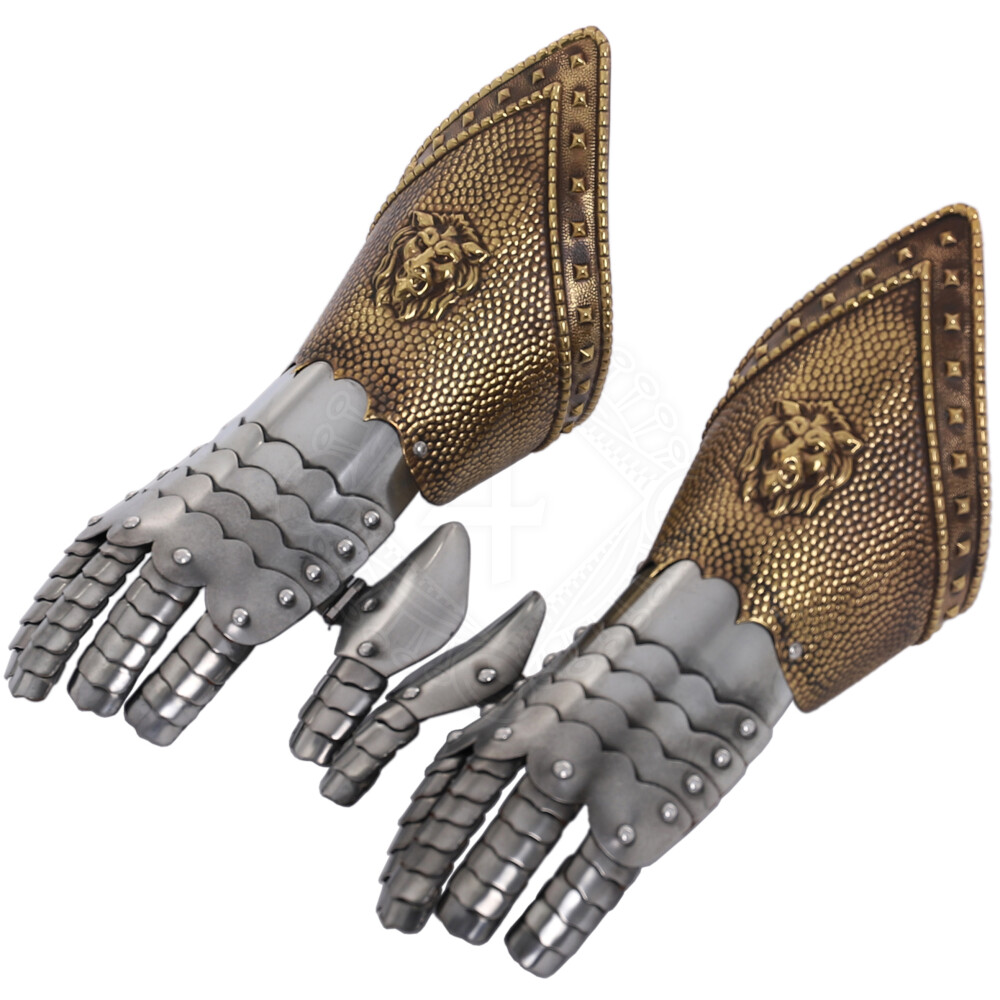
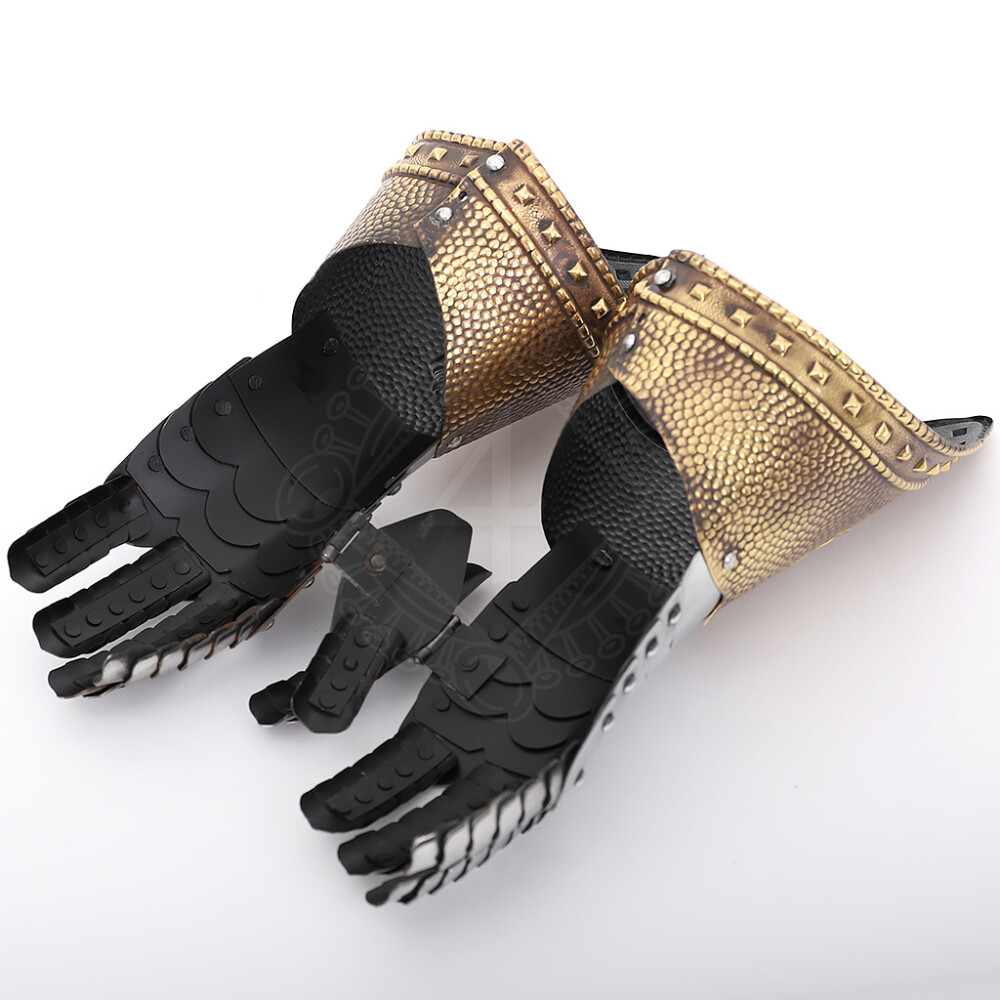
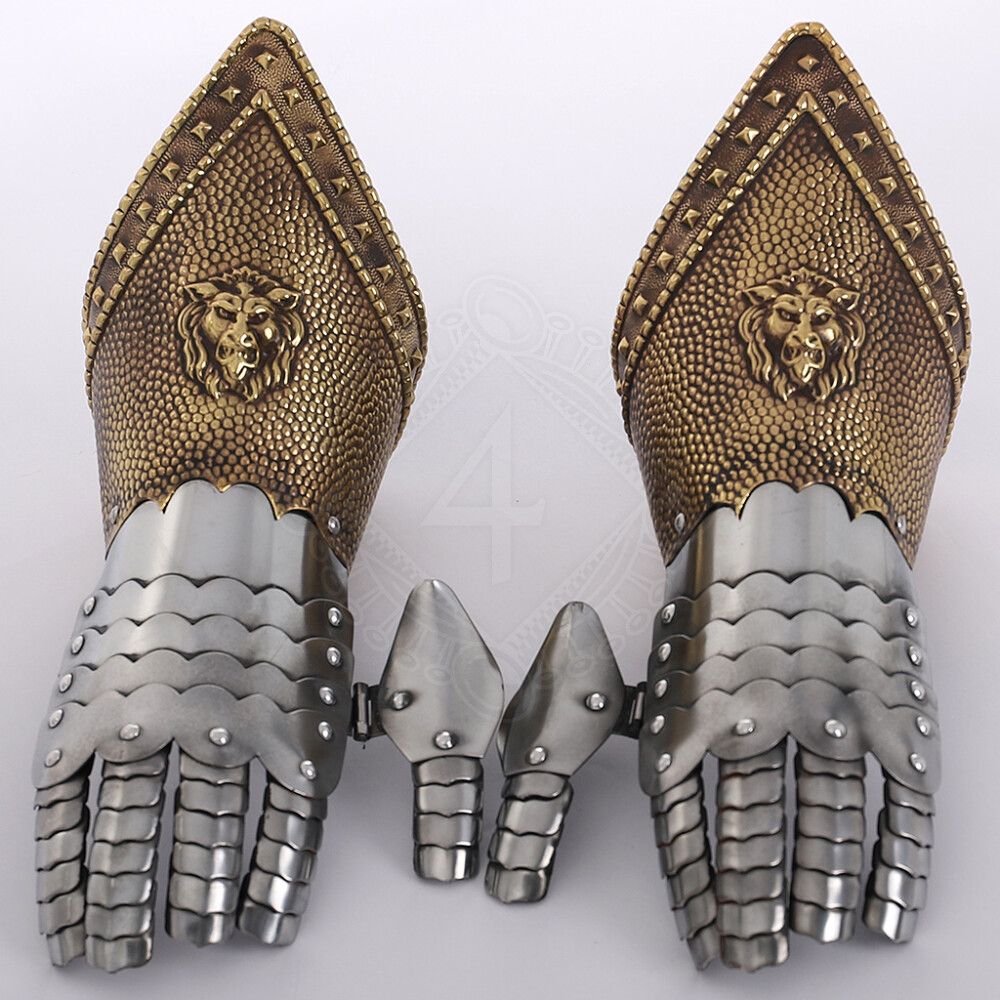
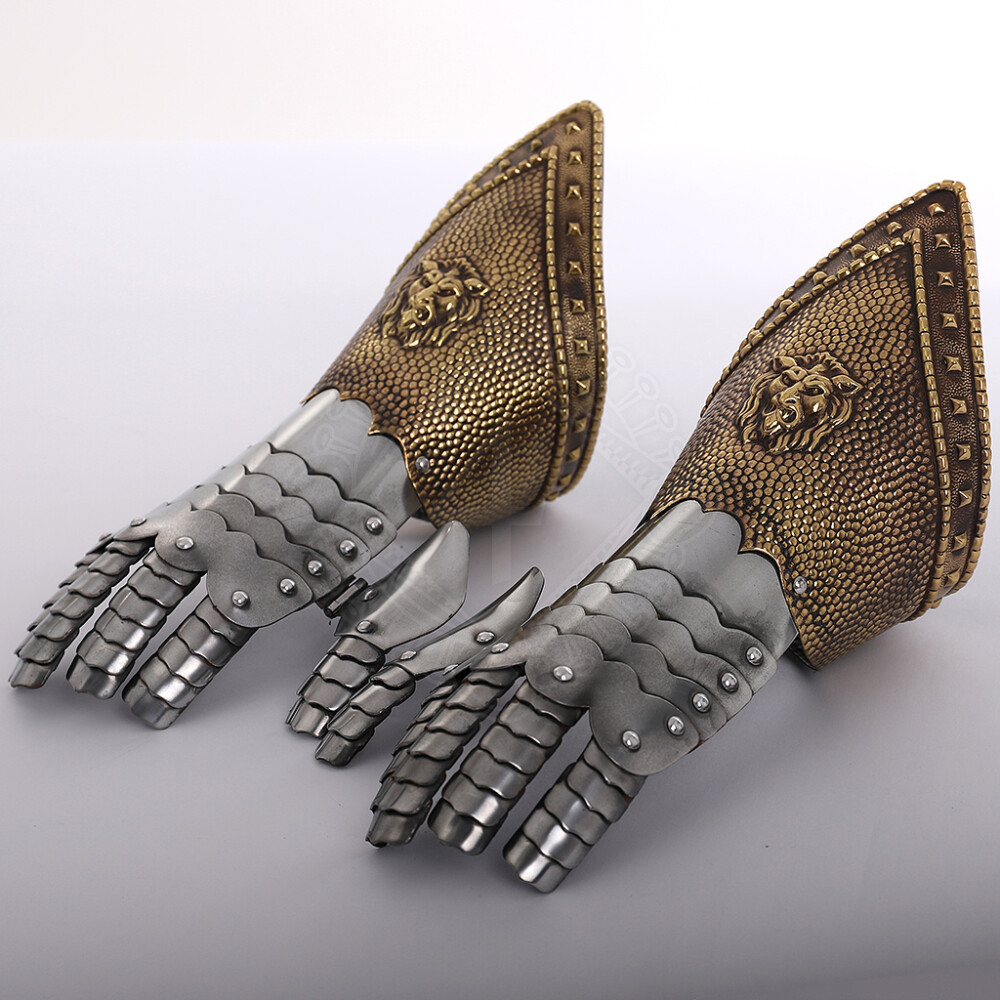

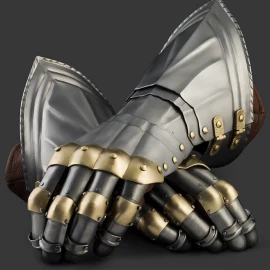
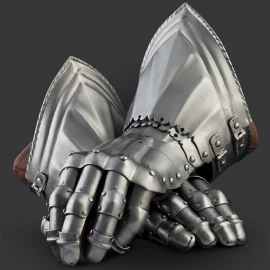
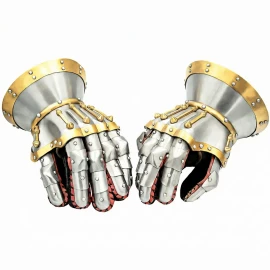
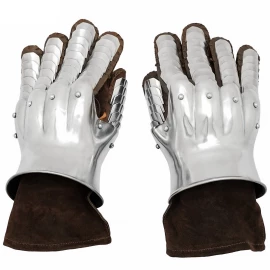
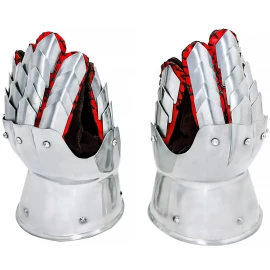
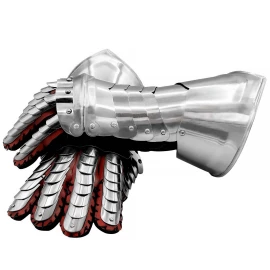
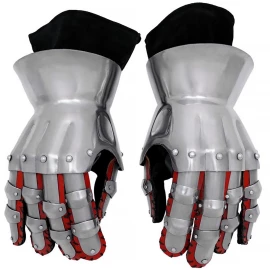
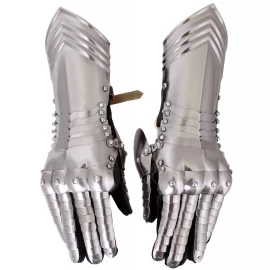
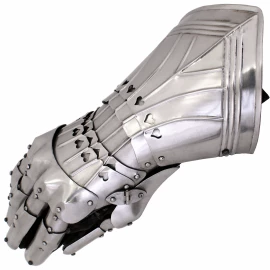
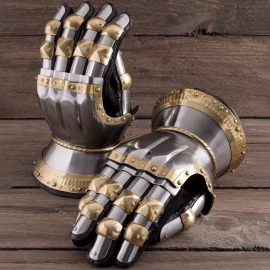
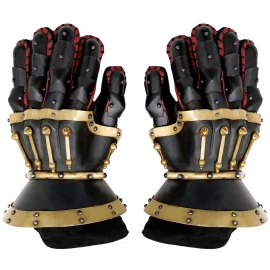
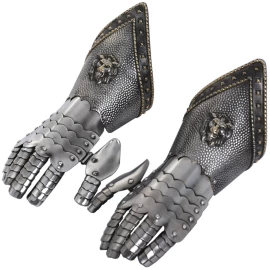
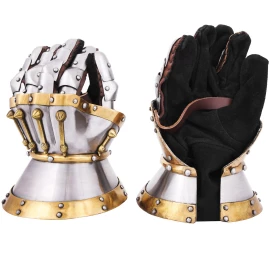
These decorative Ravenna plate gauntlets stand out through the contrast between their silver-coloured articulated fingers and tall brass cuffs with a patinated finish. The cuffs feature a pronounced textured surface, pointed profile, raised lion-head decoration and richly detailed borders. Overlapping plates across the backs of the hands and individual fingers evoke the sophisticated construction of genuine Renaissance gauntlets. Inspired by historical examples from the 16th century, this pair is nevertheless intended exclusively for decorative purposes. We recommend it for an arms and armour collection, a historically styled interior or display alongside other components of Renaissance plate armour. Further product information ...

Would you like to be notified as soon as the item is in stock?
You will receive a short e-mail as soon as we have it back in stock.
Ravenna plate gauntlets with patinated brass cuffs
Silver-coloured plates and patinated brass
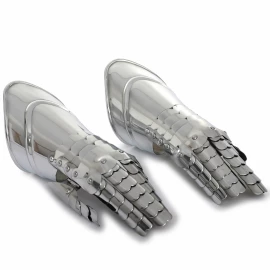
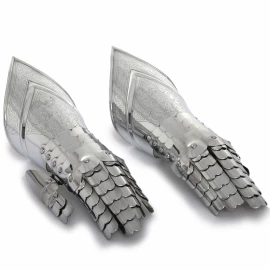
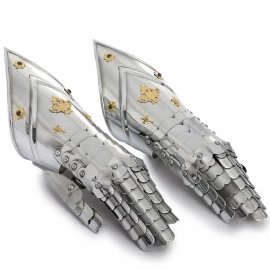
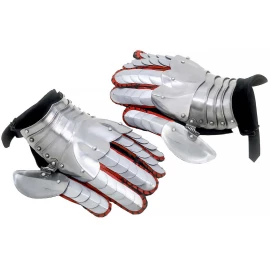
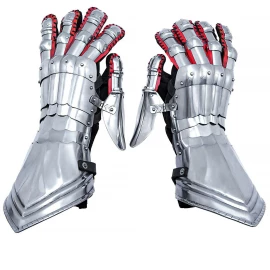
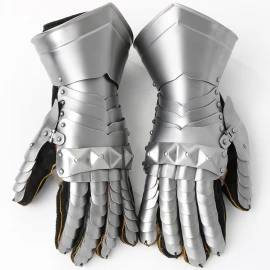
The back of each hand is formed from several overlapping plates with scalloped edges, followed by articulated finger segments. Visible rivets join the individual sections. This layered arrangement visually recalls the principle of historical fingered plate gauntlets, where protection had to be combined with sufficient articulation to allow the wearer to move the fingers.
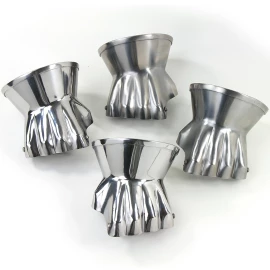
The dominant features are the tall pointed cuffs made from pressed brass with a patinated finish. Their surfaces have a finely raised texture with a prominent lion's head positioned centrally. A border of regularly spaced raised elements and ornamental edging follows the pointed outline. The warm golden-brown patina creates a striking contrast with the silver-coloured plates covering the hands and fingers.
Plate gauntlets in Renaissance armour
Fingered plate gauntlets were technically sophisticated components of European armour during the 16th century. Their purpose was to protect the wrist, back of the hand and fingers while retaining enough mobility for the wearer to handle a weapon. On functional historical examples, the metal segments were attached to an inner glove so that the overlapping plates could move with the wearer's hand.
Renaissance armour was not always purely utilitarian. Expensive armour garnitures could also serve as prestigious objects and were sometimes elaborately decorated. Relief ornament, contrasting metals and various surface treatments demonstrated both the armourer's craftsmanship and the owner's social standing. The striking cuffs of this decorative pair loosely reflect this representational aspect of Renaissance armour.
Why the name Ravenna
Ravenna refers to the northern Italian city and the Battle of Ravenna fought in 1512, an important engagement in the wars taking place in Italy during the early 16th century. We chose the name to evoke the military world of the period represented by the historical inspiration for these gauntlets. It does not imply that this product reproduces a particular pair of gauntlets associated with the battle.
Technical specifications
| Specification | Value |
|---|---|
| Type | decorative fingered plate gauntlets |
| Historical inspiration | 16th century |
| Gauntlet material | galvanised iron sheet |
| Cuff material | pressed brass |
| Cuff finish | patinated |
| Sheet thickness | approx. 0.035 in / 0.9 mm |
| Overall length from highest point to middle finger | approx. 10.24 in / 260 mm |
| Hand length from wrist to middle finger | approx. 8.27 in / 210 mm |
| Wrist diameter | approx. 4.72 in / 120 mm |
| Palm width | approx. 3.94 in / 100 mm |
| Weight | approx. 2.24 lb / 1,018 g |
| Decoration | raised texture, lion-head relief and ornamental cuff border |
| Intended use | decorative only |
| Manufacturer | Art Gladius |
| Made in | Toledo, Spain |
All stated dimensions and the weight are approximate and may vary slightly between individual pieces.
Use, care and safety
These gauntlets are not intended for fencing or use as protective armour. Do not use them for HEMA, contact reenactment, stage combat, buhurt, Battle of the Nations or any other activity in which they would be expected to protect the hands from impacts. They are best displayed as a collectable or decorative part of a suit of armour. A functional plate gauntlet would normally be worn with a suitable inner glove for comfort and attachment, but adding one to this decorative product will not turn it into protective equipment.
Keep the gauntlets in a dry environment and wipe them with a soft, dry cloth after handling. Do not clean the patinated cuffs with abrasives or aggressive metal polishes, as these could alter or remove the decorative patina. Do not force or excessively bend the articulated finger sections. Take care around plate edges and moving joints, where careless handling could pinch your fingers.
Recommended accessories
For a display inspired by the 16th century, we recommend combining these gauntlets with a Renaissance cuirass, plate arm defences, gorget and enclosed helmet of the corresponding period. A sturdy armour stand is useful for presenting a complete harness. A decorative sword, rapier or polearm based on 16th-century examples can further complement the military character of the display.
We are here for you!