 Čeština
 Deutsch


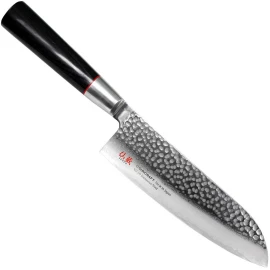
Kanetsu Damascus Santoku Knife
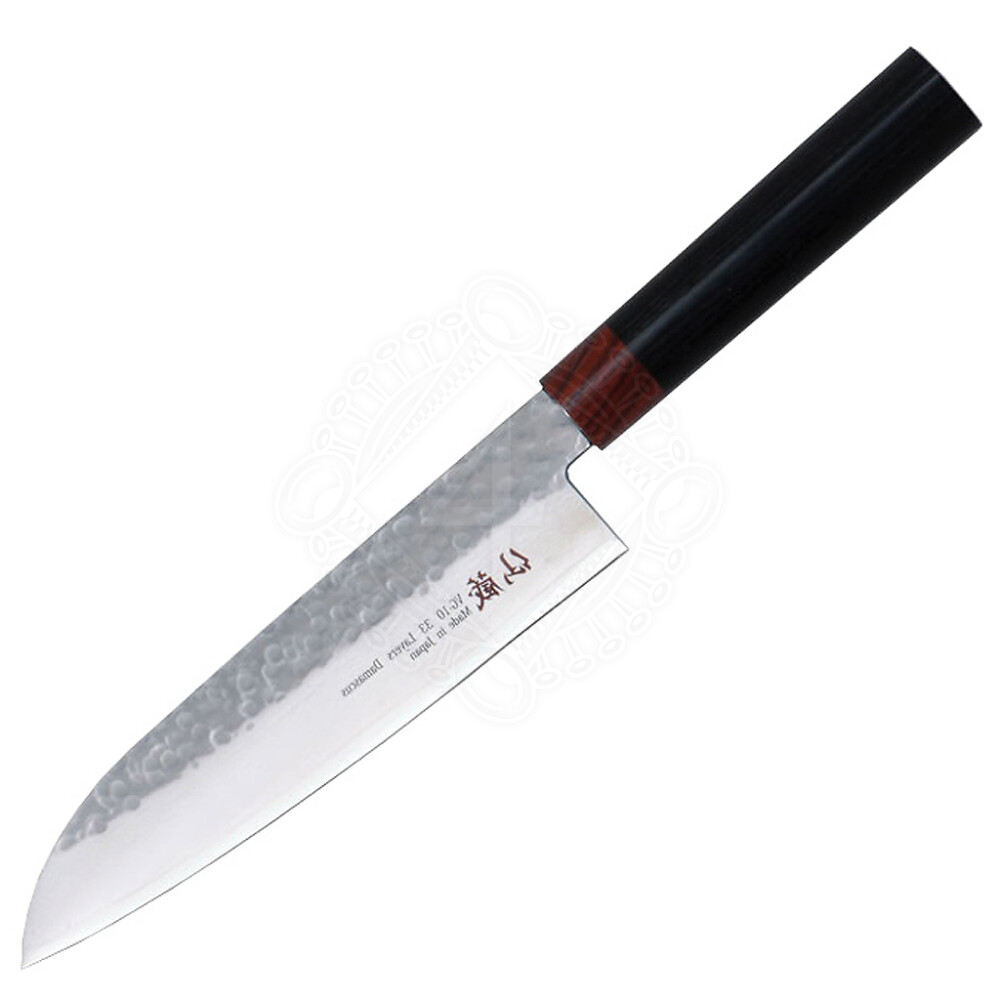
Are you looking for perfect balance and versatility in your kitchen? The Kanetsu Damascus Santoku Knife is a traditional Japanese tool whose name translates to "three virtues". This moniker refers to its incredible ability to excel at slicing, dicing, and mincing meat, fish, and vegetables. The blade, crafted from 33 layers of stainless Damascus steel with a core of premium VG-10 steel, ensures extreme sharpness that transforms every food preparation into an artistic experience. Its wide blade and ergonomic handle made of precious wood make this knife an indispensable partner for daily culinary challenges. Further product information ...
Would you like to be notified as soon as the item is in stock?
You will receive a short e-mail as soon as we have it back in stock.
Kanetsu Damascus Santoku Knife – Master of Three Virtues with 33 Layers of Steel
Premium Materials and Traditional Japanese Bladesmithing
The heart of this masterpiece is a core of high-carbon stainless VG-10 steel, achieving a hardness of 60–61 HRC on the Rockwell scale. This hardness ensures the knife remains incredibly sharp for a very long time. The core is protected by nickel and silver layers and clad with 15 layers of Damascus steel on each side, providing the blade with optimal flexibility and resistance to breaking. The upper part of the blade features machine-forged hammer marks (Tsuchime), which create air pockets to prevent food from sticking to the knife while slicing.
The handle is designed in a traditional "chestnut" profile using a combination of durable Pakkawood and Coccobolo. This ergonomic shape ensures a secure and comfortable grip, giving you maximum control even during extended periods of work in the kitchen.
Master the Art of Asian Cooking with Japanese Knives
Product Specifications
| Knife Type | Santoku (Multipurpose Kitchen Knife) |
| Blade Material | 33-layer Damascus steel, VG-10 core |
| Steel Hardness | 60–61 Rockwell (HRC) |
| Handle Material | Pakkawood and Coccobolo |
| Blade Length | 185 mm (approx. 7.3") |
| Overall Length | 310 mm (approx. 12.2") |
| Weight | 150 g (approx. 5.3 oz) |
| Origin | Japan |
History and Significance of the Santoku Knife
The Santoku knife originated in Japan in the mid-20th century as a modern alternative to traditional single-bevel knives. Its goal was to combine the advantages of the Japanese vegetable knife (Nakiri) and the Western chef's knife (Gyuto). Thanks to its wide blade, you can easily scoop sliced ingredients directly into a pot or pan. In Japanese culture, great emphasis is placed on the aesthetics of the cut, as a clean cut does not damage the cellular structure of food, preserving its natural flavour and freshness.
Maintenance and Safety Guidelines
To ensure your Kanetsu Santoku serves you for generations, it requires proper care:
- Hand Wash Only: Never put the knife in a dishwasher. Harsh chemicals and high temperatures will irreversibly damage the wooden handle and the delicate Damascus structure.
- Drying and Storage: Rinse the knife immediately after use with lukewarm water, dry with a soft cloth, and store in a knife block or on a magnetic strip.
- Sharpening: Use exclusively high-quality water whetstones for sharpening. Avoid cheap pull-through sharpeners that can chip the brittle edge.
- Sharpening a Knife Correctly
- Safety: The blade is extremely sharp. Never use the knife for prying, or for chopping bones or frozen foods, as this could lead to the edge chipping or the blade cracking.
For perfect care, we recommend purchasing a set of Japanese whetstones with different grit levels and a wooden cutting board that is gentle on the edge.
We are here for you!