
 Čeština
 Deutsch


Japanese Santoku Knife with Hammered Damascus Blade - Outlet
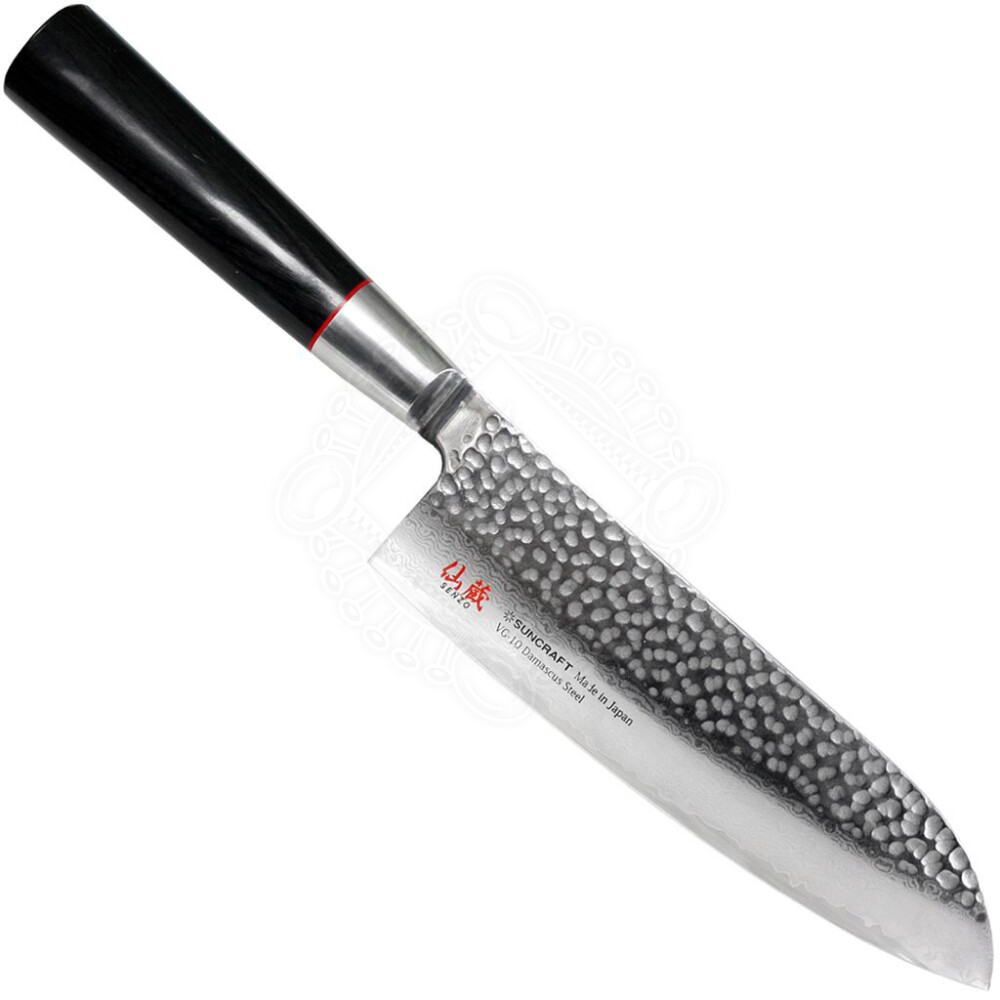
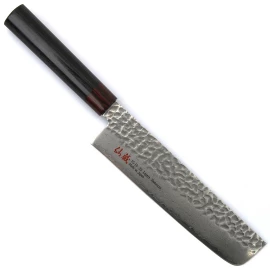
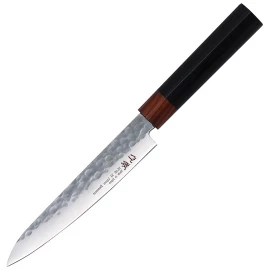
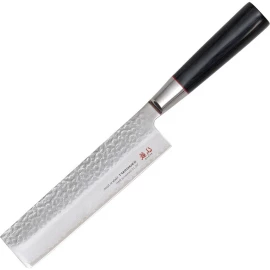
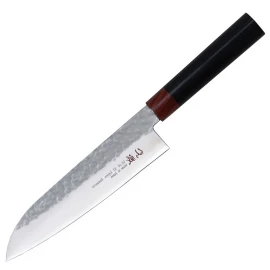
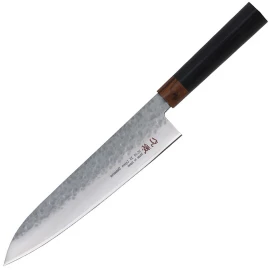
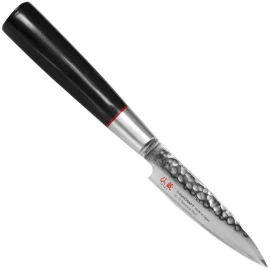
Are you looking for a single all-rounder for your kitchen that you can rely on when preparing 90% of your meals? Allow me to introduce the Santoku knife, an icon of Japanese culinary art. This model is a perfect example of how functional design blends with traditional aesthetics. The blade consists of 33 layers of steel, where an extremely hard VG10 steel core ensures uncompromising cutting performance, while the surrounding layers of Damascus steel add flexibility and durability. The ergonomic handle made of black Pakkawood, finished with a steel bolster and a red ring, fits your hand like a glove. Whether you are a professional or a home enthusiast, with this knife you will experience the feeling when a tool ceases to be a mere object and becomes an extension of your hand. Further product information ...

 Delivery options
Traditional Japanese Santoku Knife with Hammered Damascus Blade
Master of Three Virtues
The word Santoku means "three virtues" or "three uses" in Japanese. This name precisely defines the purpose of this knife – it is a master at slicing meat, fish, and vegetables. Compared to the European Chef's knife, the Santoku has a flatter edge profile and a more significantly rounded tip pointing downwards (sheep's foot shape). This makes it the ideal tool for:
- Vertical chopping motions and fast mincing of herbs or onions.
- Scooping sliced ingredients onto the wide blade and transferring them to a pot or pan.
- Precise slicing of thin cuts of meat and fish.
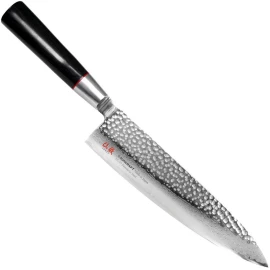
This specific model boasts a Tsuchime (hammered) finish on the upper part of the blade. These dimples are not just a decorative tribute to the blacksmith's craft. They act as air pockets that reduce friction and prevent slices of potatoes, cucumbers, or meat from sticking to the knife. The VG10 steel core reaches a hardness of 60-61 HRC, a value that ordinary kitchen knives can only dream of.
Technical Parameters
| Knife Type | Santoku (Knife of Three Virtues) |
| Core Material | VG10 Steel (Gold Steel) |
| Blade Construction | 33 Layers (San Mai Damascus) |
| Steel Hardness | 60-61° Rockwell (HRC) |
| Finish | Tsuchime (hammered look), Damascus |
| Handle Material | Pakkawood (stabilized wood), black |
| Handle Shape | Chestnut profile (D-shape) |
| Total Length | 300 mm (approx. 11.8 inches) |
| Blade Length | 175 mm (approx. 6.9 inches) |
| Weight | 200 g (approx. 7 oz) |
Historical Context and Maintenance
The Santoku knife emerged in Japan after World War II as a reaction to changing dietary habits and the need for a universal household knife that would replace specialized knives for fish (Deba) and vegetables (Nakiri). However, it quickly gained popularity worldwide thanks to its user-friendliness.
As a steel expert, I must warn you: Never wash this knife in a dishwasher! Aggressive chemicals and high temperatures will irrevocably damage the handle and dull the edge. Rinse the knife with lukewarm water after use, use a mild detergent if necessary, and dry it immediately. Although the blade is stainless, the high-carbon VG10 steel deserves care. Avoid chopping bones, frozen foods, and prying – the hard steel is brittle and chipping of the edge could occur. To maintain perfect sharpness, we recommend using high-quality water whetstones. A magnetic strip or a wooden knife block is ideal for safe storage.
We are here for you!





.3773623034.1696456237.png.webp)

.3773623034.1696456268.png.webp)
.3773623034.1696456247.png.webp)