
 Čeština
 Deutsch


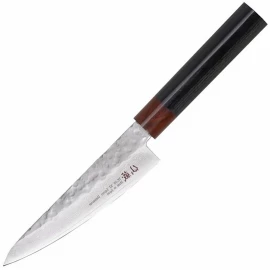
Japanese Sashimi Kitchen Knife of VG-10 Damascus Steel - Outlet
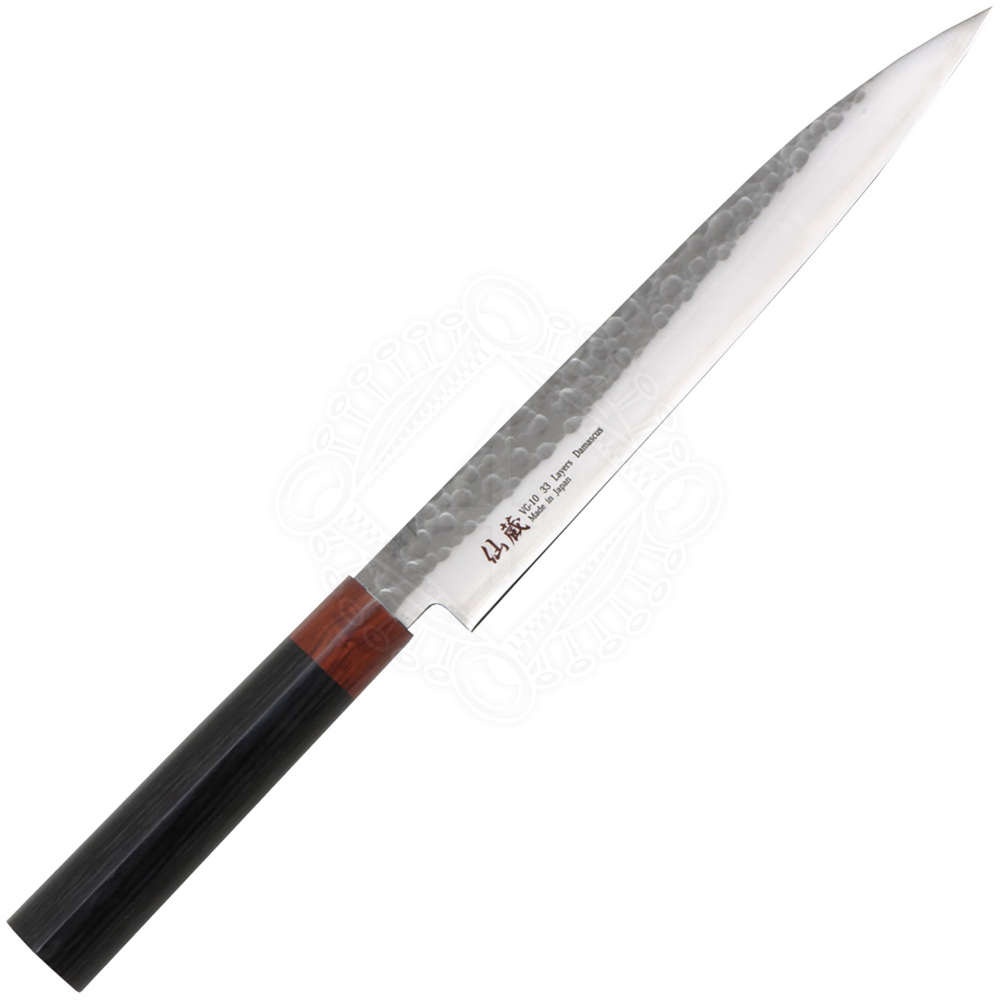
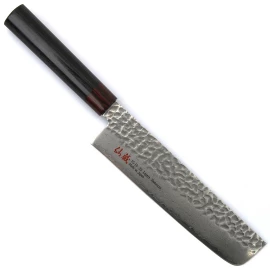
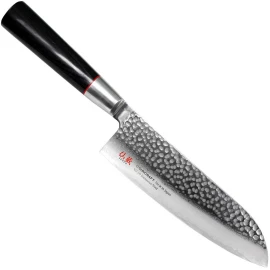
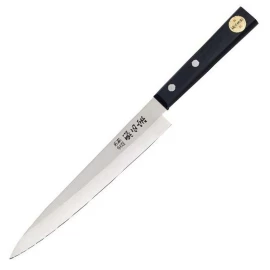
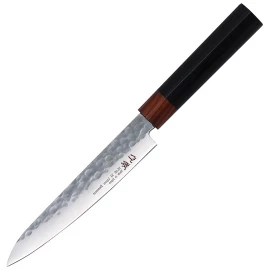
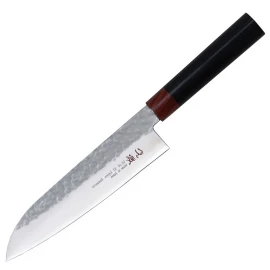
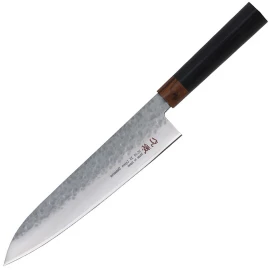
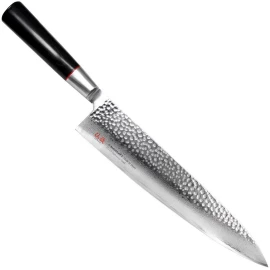
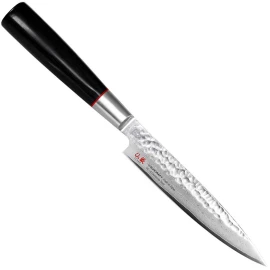
We present to you a masterpiece inspired by centuries of Japanese tradition – the Sashimi kitchen knife. If you love preparing thin slices of fish or meat, this traditional filleting tool will become your indispensable companion in the kitchen. The knife is manufactured from 33 layers of premium stainless damascus steel with an extremely hard VG-10 core, guaranteeing uncompromising sharpness and long blade life. Its surface is decorated with a unique hammered structure that prevents ingredients from sticking. The ergonomic handle made of exotic woods ensures that the knife fits perfectly and comfortably in your hand. Further product information ...

 Delivery options
Japanese Sashimi Kitchen Knife of VG-10 Damascus Steel
History and Culinary Purpose
As experts in historical blades and traditional craftsmanship, we hold Japanese forging techniques in the highest regard. The Sashimi knife (often sharing the shape of a Yanagiba) has its roots in Japan's rich culinary history. These knives were developed with a single goal: to ensure an absolutely clean and smooth cut through raw meat and fish. The long and slender blade allows the chef to make a cut in one fluid motion without sawing, ensuring the delicate fibers of the meat are not torn. The hammered surface of the blade is machine-pressed as a homage to traditional hand-forging techniques, while also serving the practical function of reducing friction during slicing.
Materials and Superior Craftsmanship
The core of this blade is forged from premium VG-10 steel, achieving an impressive hardness of 60-61 degrees Rockwell. This hard core is protected on both sides by a thin layer of nickel and silver, and then clad in 15 layers of stainless damascus steel on each side. The result is a blade consisting of 33 layers in total, offering maximum edge retention while maintaining the necessary flexibility. The traditional Japanese chestnut-shaped handle is made from a combination of dark Pakka wood and reddish Cocobolo wood. This specific shape and material combination provide perfect ergonomics and a secure grip.
Safe Use and Care Instructions
Please bear in mind that this is an exceptionally sharp cutting tool. For safety reasons, handle it with the utmost care and always keep it out of the reach of children. The knife is designed exclusively for slicing pure, boneless meat and fish. Never use it for chopping bones, cutting frozen foods, or opening cans, as this could cause irreversible chipping of the fragile edge. After use, we strongly recommend washing the knife by hand with lukewarm water and drying it immediately with a soft cloth. Under no circumstances should you put this knife in a dishwasher, as it would instantly ruin both the wooden handle and the blade. To maintain its flawless sharpness, we recommend purchasing a high-quality Japanese whetstone and a sturdy wooden cutting board from our range.
Product Specifications
| Blade Material | Stainless damascus steel, VG-10 core, nickel and silver layers |
| Handle Material | Pakka and Cocobolo wood |
| Total Length | 335 mm (approx. 13.19 inches) |
| Blade Length | 215 mm (approx. 8.46 inches) |
| Weight | 120 g (approx. 4.23 oz) |
| Steel Hardness | 60-61 HRC |
| Number of Steel Layers | 33 layers |
We are here for you!





.3773623034.1696456237.png.webp)

.3773623034.1696456268.png.webp)
.3773623034.1696456247.png.webp)