Čeština
 Deutsch


Renaissance Two-Handed Sword Odoaker, Class B


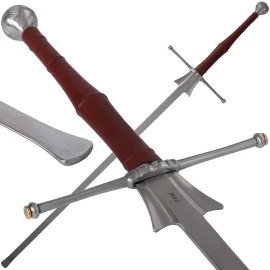
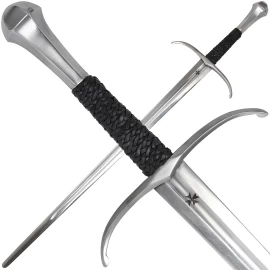
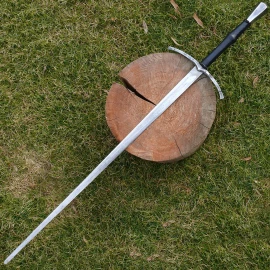
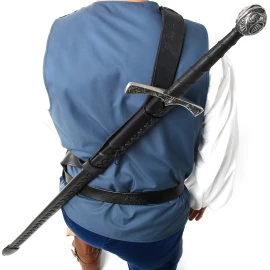
Are you looking for a dominant and uncompromising weapon that will capture everyone's attention on the battlefield or at historical festivals? The Renaissance Two-Handed Sword Odoaker is an impressive replica of the legendary two-handed war swords from the transition of the 15th to 16th centuries. Craftsmanship from the Czech Republic ensures high elasticity, great durability, and an authentic experience in historical fencing. The blade made of ČSN 14260 spring steel is oil-hardened to approx. 47 HRC, guaranteeing superb mechanical properties for contact combat. Featuring an extended leather-wrapped grip and a leather-covered ricasso, it allows for versatile gripping techniques. We recommend this two-handed sword for stage combat, reenactment, and as a majestic collector's item! Further product information ...

Renaissance Two-Handed Sword Odoaker for Stage Combat
Historical Context and Construction
Two-handed swords, famously known in German-speaking lands as Zweihänder or Bidenhänder, reached the peak of their military use during the 16th century in the Renaissance era. This was the golden age of mercenary infantry units such as the Landsknechts and Swiss Confederates. These massive swords were wielded by feared elite soldiers known as Doppelsöldner ("double-pay men"), whose dangerous task was to break through enemy pike formations, chop down spear shafts, and breach the line for following infantry. Thanks to its massive length and leverage, a skilled swordsman could hold multiple attackers at bay.
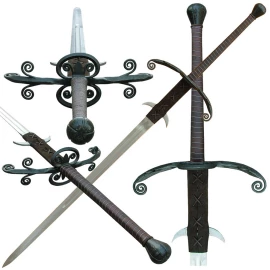
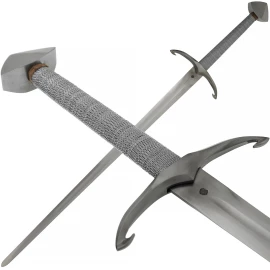
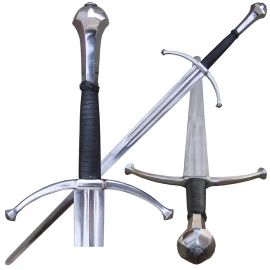
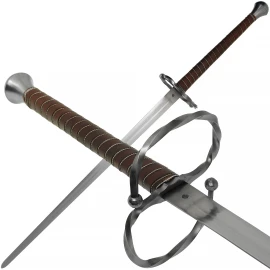
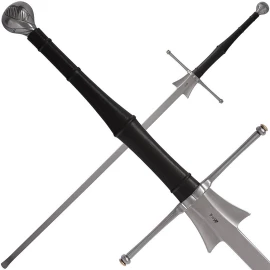
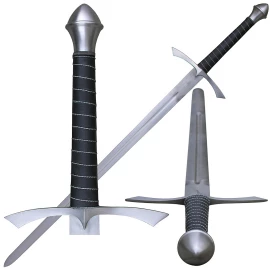
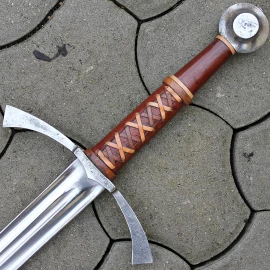
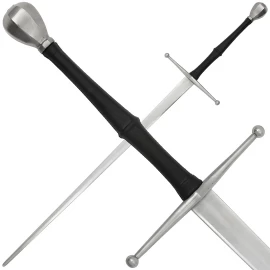
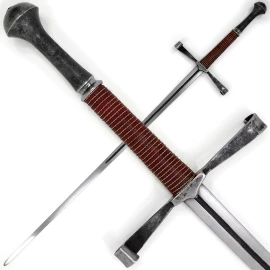
The construction of the Odoaker sword faithfully mirrors historical Renaissance models. The long blade features an unsharpened ricasso near the guard, which is wrapped in laced leather to allow a secure second hand grip for close-quarters techniques (half-swording). The ricasso is bordered by prominent parrying hooks (Parierhaken) that protect the user's hand and trap enemy blades. A massive crossguard measuring approx. 33.5 cm / 13.18 in and a heavy steel pommel effectively counterbalance the long blade. The full tang passes through the wooden grip core and is securely peened over the pommel.
The Legacy of the Name Odoaker
This sword carries the name Odoaker (c. 433–493) in honor of the Germanic military commander and first King of Italy. In 476 AD, he deposed the last Western Roman Emperor, Romulus Augustulus, effectively marking the end of the Western Roman Empire. Odoaker was renowned as a decisive commander whose military might reshaped the history of Europe. Naming this majestic sword after him symbolizes game-changing power, authority, and battlefield dominance.
Technical Specifications
| Specification | Value (Metric / Imperial) |
|---|---|
| Overall Length | approx. 165 cm / 64.96 in |
| Blade Length | approx. 118 cm / 46.45 in |
| Crossguard Width | approx. 33.5 cm / 13.18 in |
| Blade Material | ČSN 14260 Spring Steel (oil-hardened) |
| Blade Hardness | approx. 47 HRC |
| Edge Thickness (Reenactment) | 2–3 mm (blunted tip) |
| Hilt Material | Wood core, leather wrap, steel pommel & guard |
| Ricasso Feature | Leather-wrapped with lacing and parrying hooks |
| Combat Rating | Class B according to sword classification |
| Origin | Made in Czech Republic |
Maintenance and Safety Guidelines
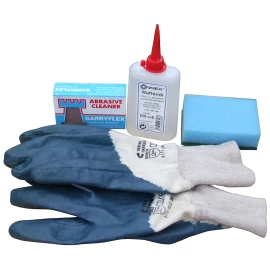
The spring steel blade is not stainless. To keep your sword in top condition, always wipe the blade and steel components dry after use and apply a protective layer of mineral or gun oil (such as Ballistol). Treat the leather grip and ricasso wrap with leather conditioner regularly. Never store the sword in damp environments.
Rules for Safe Handling:
- This sword is prepared for Class B stage combat and sparring (2–3 mm edge thickness, rounded tip). However, please note that it is not protective gear suitable for high-impact full-contact sports like Buhurt or Battle of the Nations.
- Inspect the blade thoroughly before every session. File down any burrs or sharp nicks on the edge using a diamond file or sandpaper to prevent injuring your sparring partners. Edge nicks are normal signs of wear.
- Block incoming strikes using the flat side of the blade rather than edge-to-edge. Execute strikes with martial discipline and proper force.
- If the crossguard becomes loose over time, re-peen the pommel or tighten the assembly. A temporary solution is to wrap fishing line tightly into the guard gap.
- All combat activities are performed strictly at your own risk. Always store out of reach of children!
- Directions for the Use of Bladed Weapons from Outfit4Events
Recommended Accessories
To complement your 16th-century Renaissance outfit and gear, we recommend pairing this two-handed sword with:
- Landsknecht Renaissance Costume (16th Century): Slash-and-puff styled tunics and trousers.
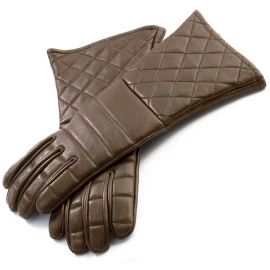
- Gauntlets / Fencing Gloves: Extended leather gloves to protect your hands and wrists when wielding large weapons.
- Padded Gambeson: 16th-century styled padded textile armor for torso protection.
- Maintenance Oil & Leather Balm: For ongoing rust prevention and care of the leather ricasso.
We are here for you!