Čeština
 Deutsch


El Cid patinated decorative shield
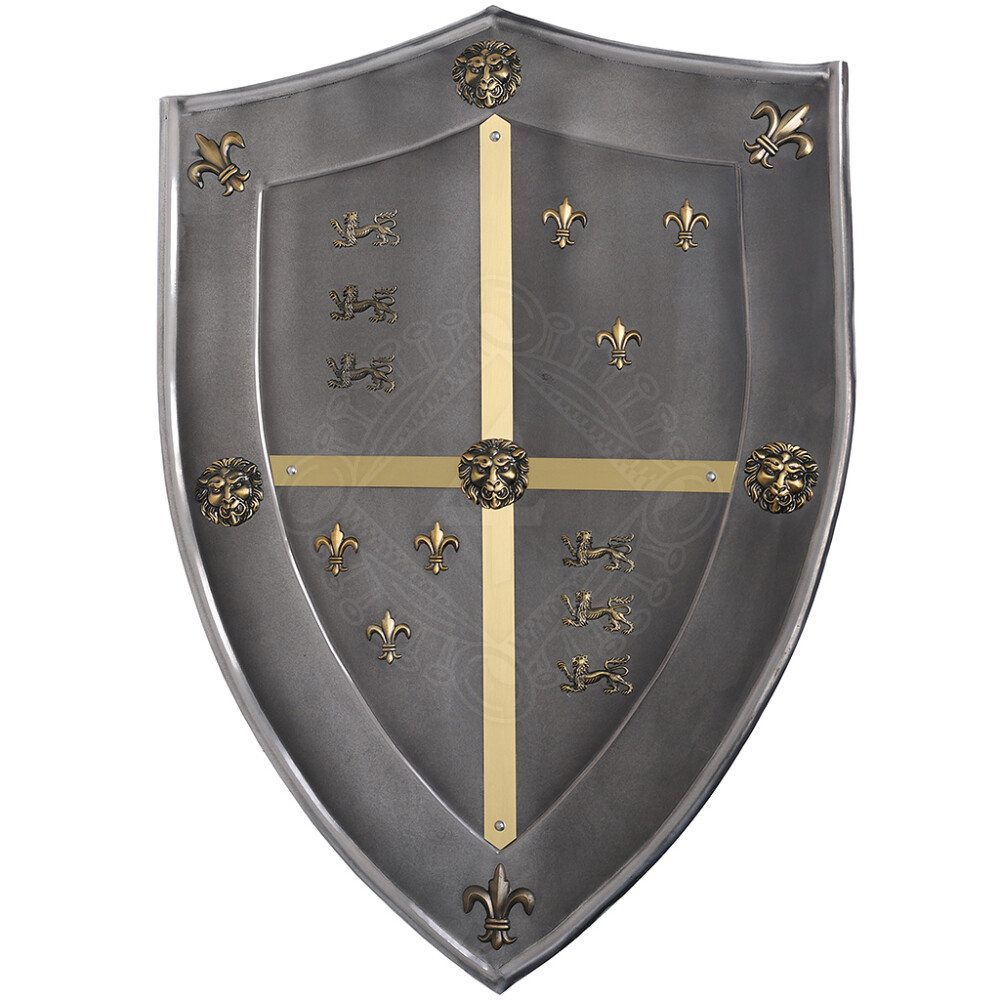
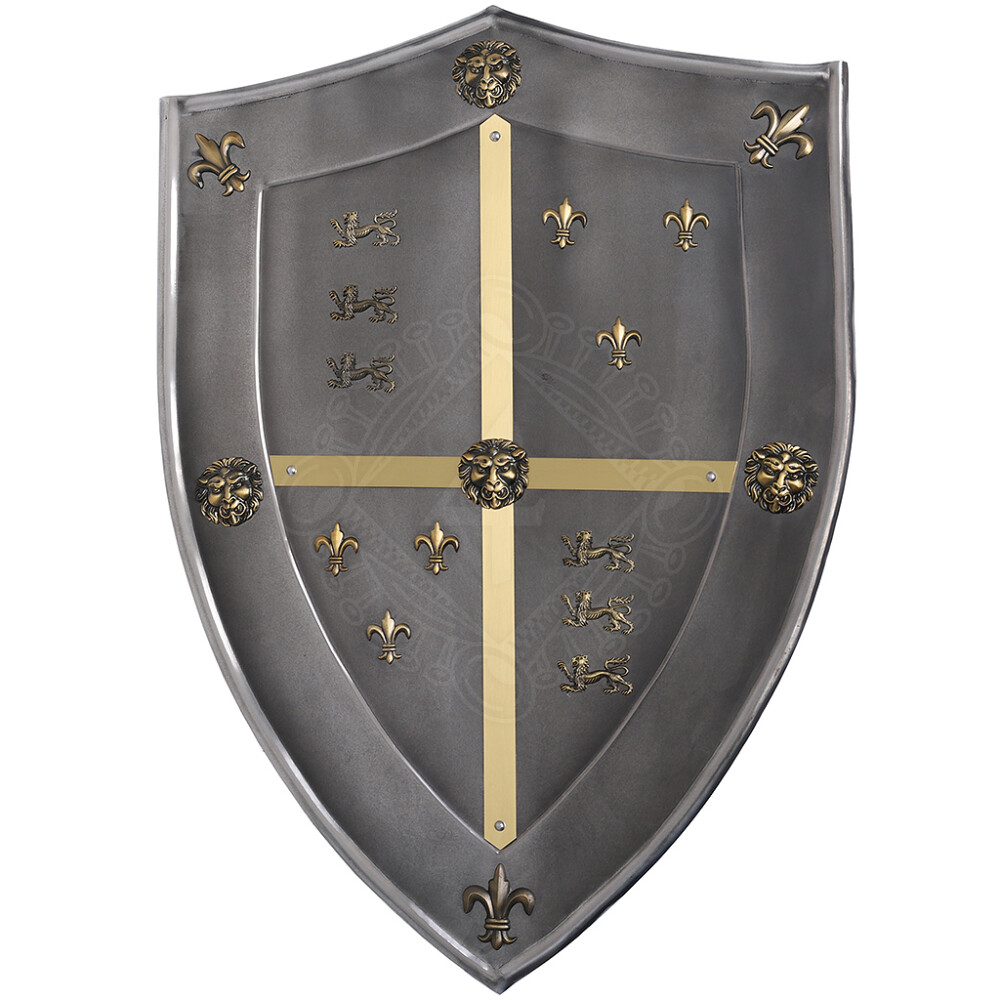
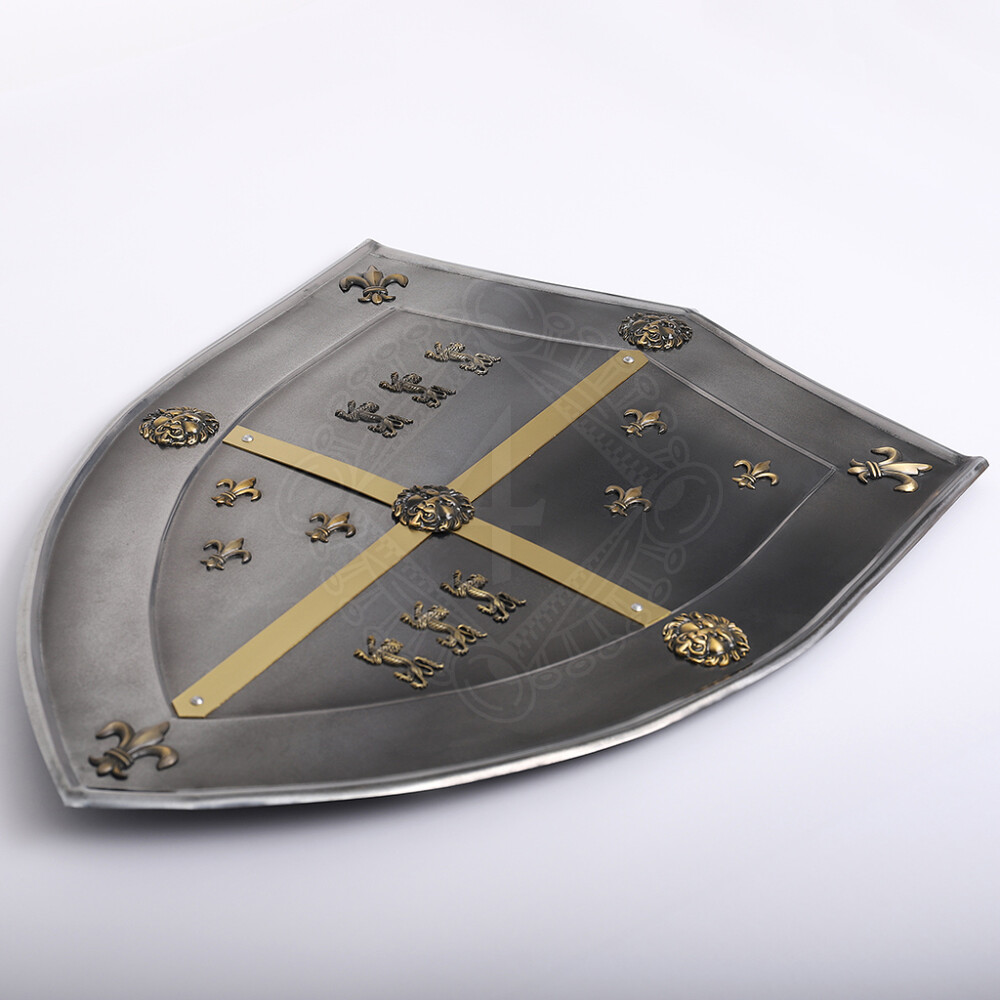
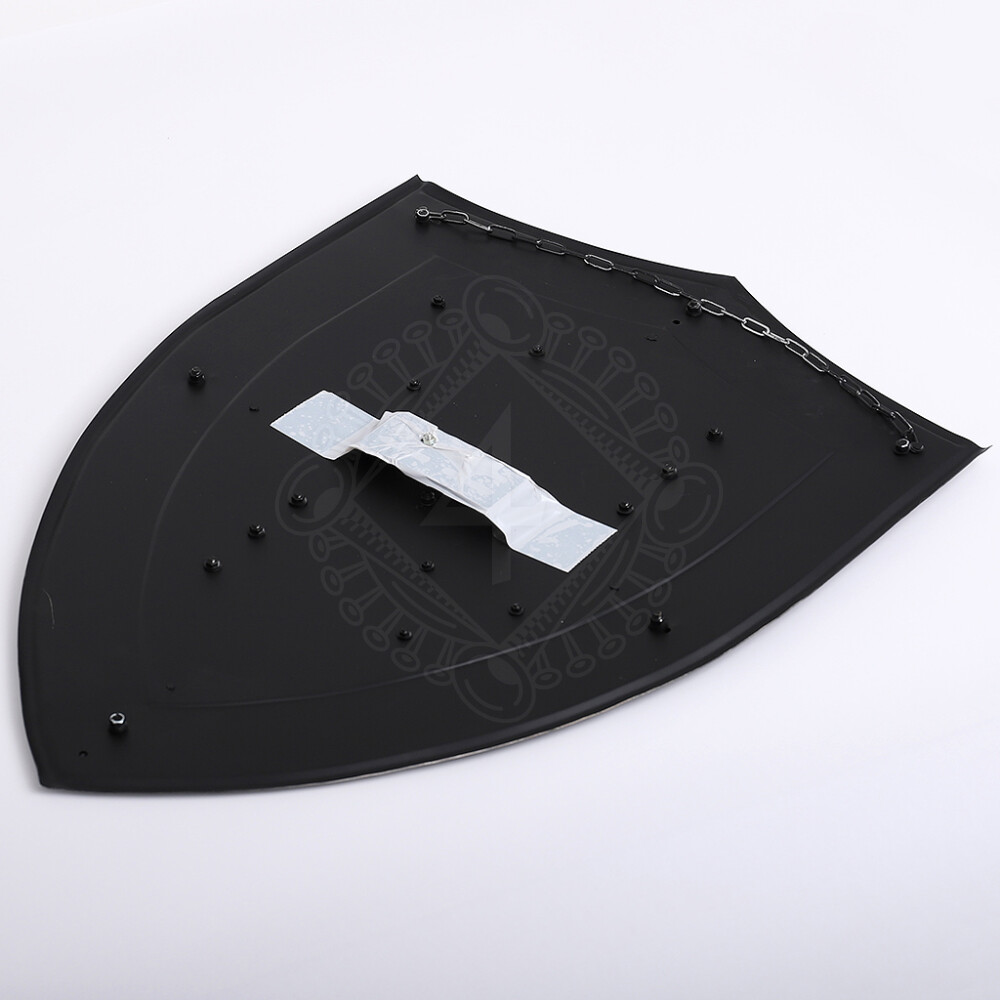

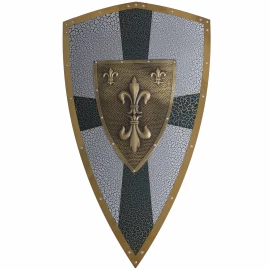
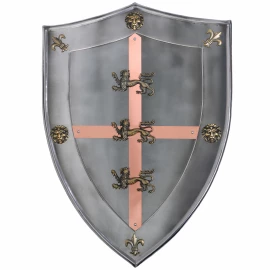
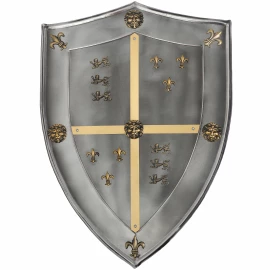
The El Cid decorative shield combines a grey patinated surface with a gold-coloured cross and prominent raised heraldic motifs. Groups of lions and fleurs-de-lis are complemented by striking lion heads, giving the piece a distinctive appearance for a collection of historically inspired decorations. Its curved profile adds visual depth, whilst a chain on the reverse makes it suitable for wall display. It works particularly well in a study, medieval-themed interior or alongside a collection of decorative swords. This shield is intended solely for decoration and is not designed for combat or protection. Further product information ...

Would you like to be notified as soon as the item is in stock?
You will receive a short e-mail as soon as we have it back in stock.
El Cid patinated decorative shield
Patinated finish and heraldic decoration
The shield is based on approximately 0.047 in / 1.2 mm thick iron sheet with an anti-corrosion finish. The front has a grey patinated appearance divided by a gold-coloured cross. The four quarters alternate between groups of three walking lions and three fleurs-de-lis. Further larger fleurs-de-lis decorate the outer field, whilst four raised lion heads complete the composition. The applications on the front are made from brass with a patinated finish.
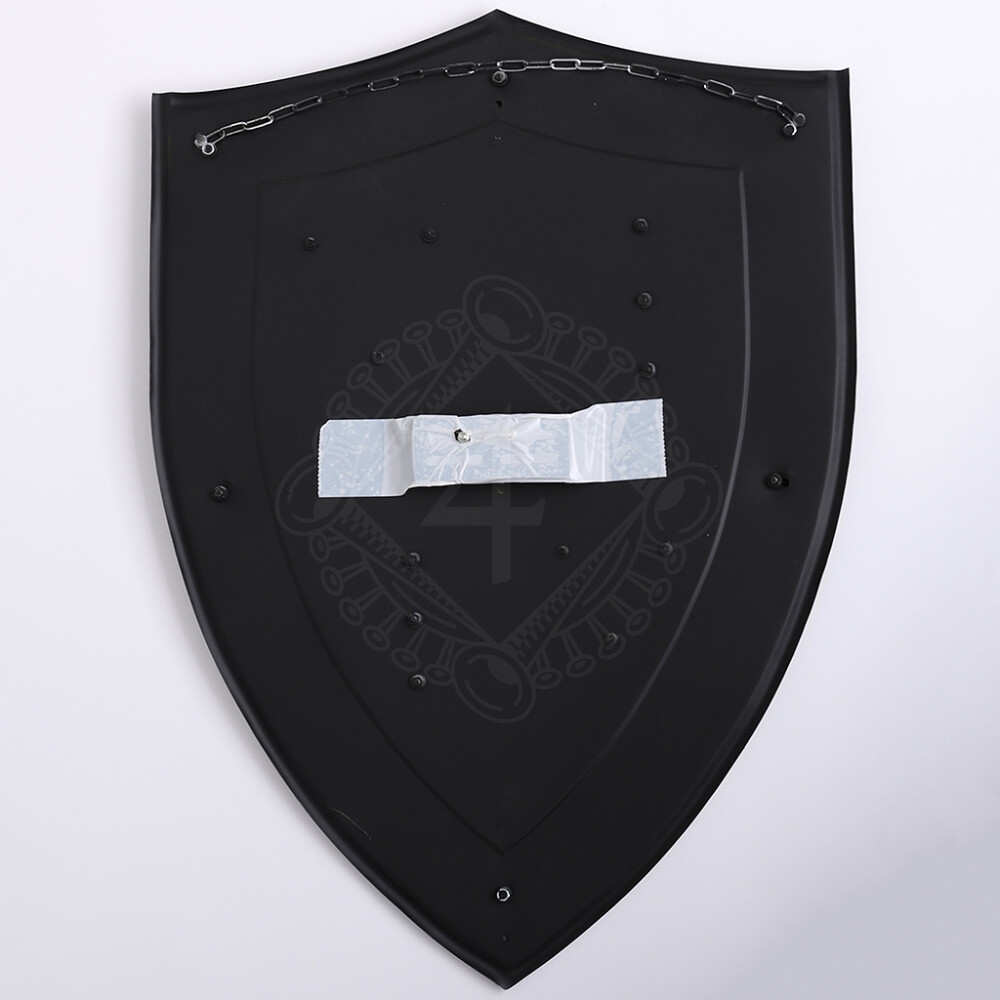
The reverse is black and fitted at the top with a chain for wall hanging. Use a sturdy hook or other fixing suitable for both the wall material and the weight of the shield. Before displaying it, always check that the chain and wall fixing are secure.
El Cid and the 11th-century world
The name El Cid refers to Rodrigo Díaz de Vivar, a Castilian warrior and military leader who lived approximately from 1043 to 1099. He operated in the politically complex world of the Iberian Peninsula, where Christian and Muslim realms fought one another but also formed alliances. In 1094 Rodrigo gained control of Valencia, which he ruled until his death.
Historical shields of the 11th century were primarily functional protective equipment and differed in decoration from this modern display piece. Developed European heraldry based on hereditary coats of arms only began to emerge during the 12th century. The lions, fleurs-de-lis and cross on this product are therefore best understood as medieval-inspired historicising decoration rather than an exact reconstruction of a documented shield belonging to El Cid.
Why the name El Cid
The epithet El Cid derives from a medieval Spanish form ultimately based on the Arabic word for “lord” or “master”. Rodrigo Díaz became one of the most famous figures in Spanish medieval tradition, and later heroic literature transformed him into a legendary knightly figure. The name of this decorative shield refers to that historical and literary tradition.
Technical specifications
| Specification | Value |
|---|---|
| Type | decorative wall shield |
| Name | El Cid |
| Overall dimensions | approx. 25.00 × 18.03 in / 635 × 458 mm |
| Cross dimensions | approx. 18.39 × 11.93 in / 467 × 303 mm |
| Weight | approx. 4.20 lb / 1,907 g |
| Base material | iron sheet |
| Sheet thickness | approx. 0.047 in / 1.2 mm |
| Base finish | anti-corrosion finish |
| Material of front applications | brass |
| Finish of applications | patinated |
| Visible decoration | cross, lions, fleurs-de-lis and lion heads |
| Hanging system | chain on the reverse |
| Intended use | decoration and collecting |
| Manufacturer | Art Gladius |
| Made in | Toledo, Spain |
All stated dimensions and the weight are approximate and may vary slightly between individual pieces.
Care and safe display
This shield is purely decorative and unsuitable for practical use. Do not use it for HEMA, contact reenactment, stage combat, buhurt, Battle of the Nations or for receiving weapon blows. It is neither constructed nor specified as protective combat equipment.
Remove dust with a soft, dry cloth. Avoid abrasive cleaners, wire brushes and aggressive chemicals, as these may damage the patina or anti-corrosion finish. Keep the shield indoors in a dry environment and regularly check the security of the wall fixing and hanging chain.
Recommended accessories
For a display inspired by El Cid, we recommend a sword, helmet or other decorative equipment in an 11th-century style. A banner or another medieval wall decoration can also complement the shield. For a more historically coherent display, choose pieces appropriate to the second half of the 11th century on the Iberian Peninsula.
We are here for you!