
 Čeština
 Deutsch


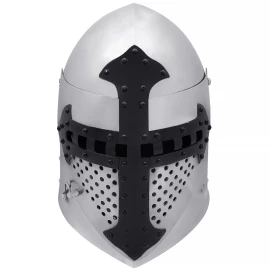
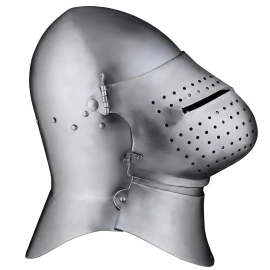
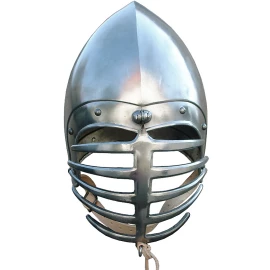
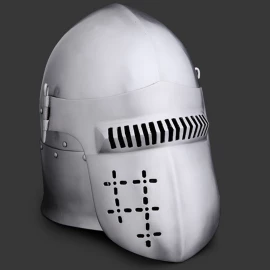
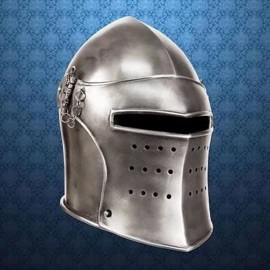
Hounskull Bascinet Helmet, 14th/15th C., 2 mm Steel
1x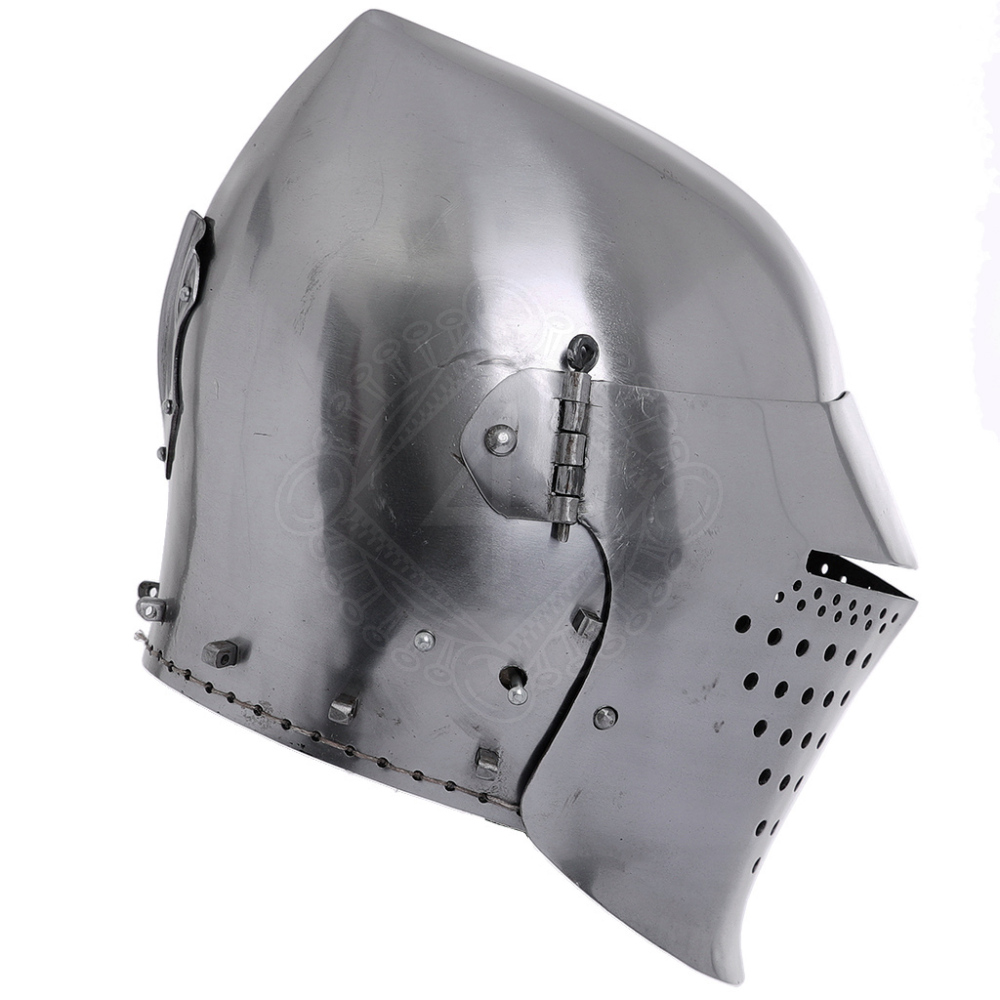
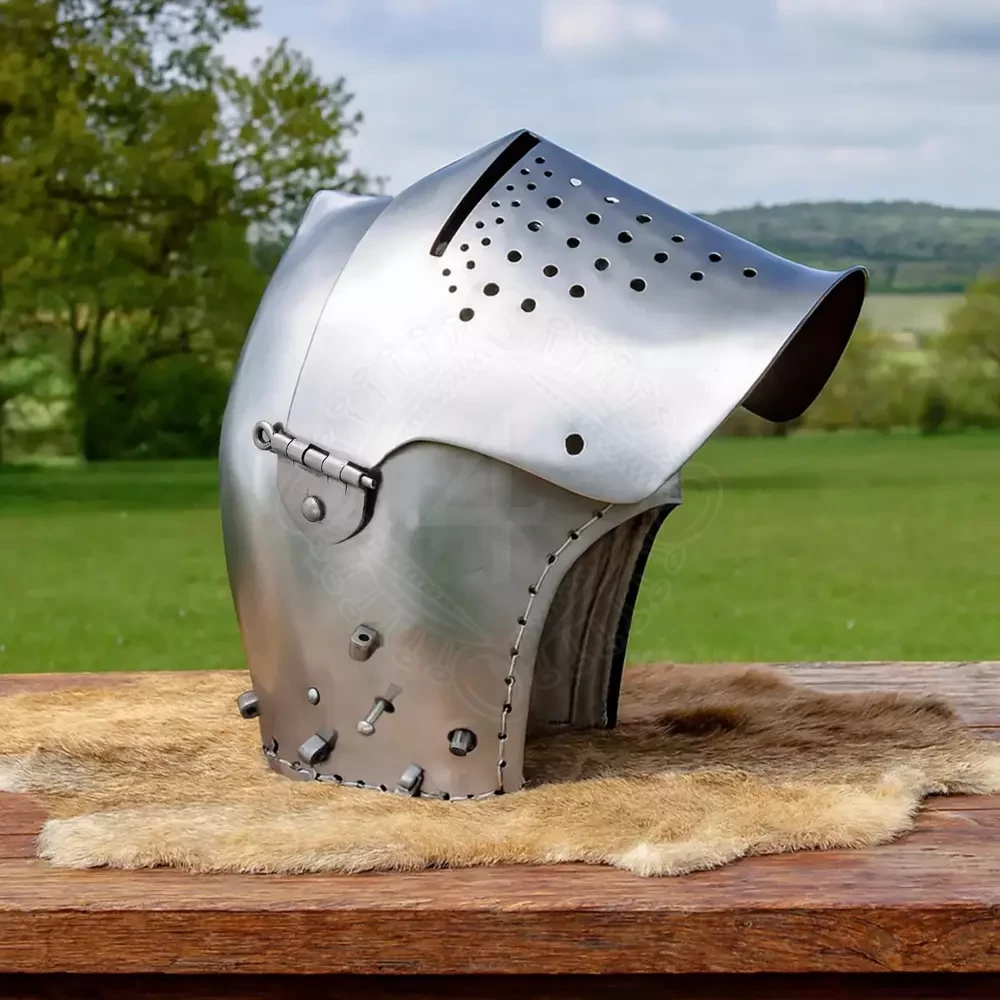
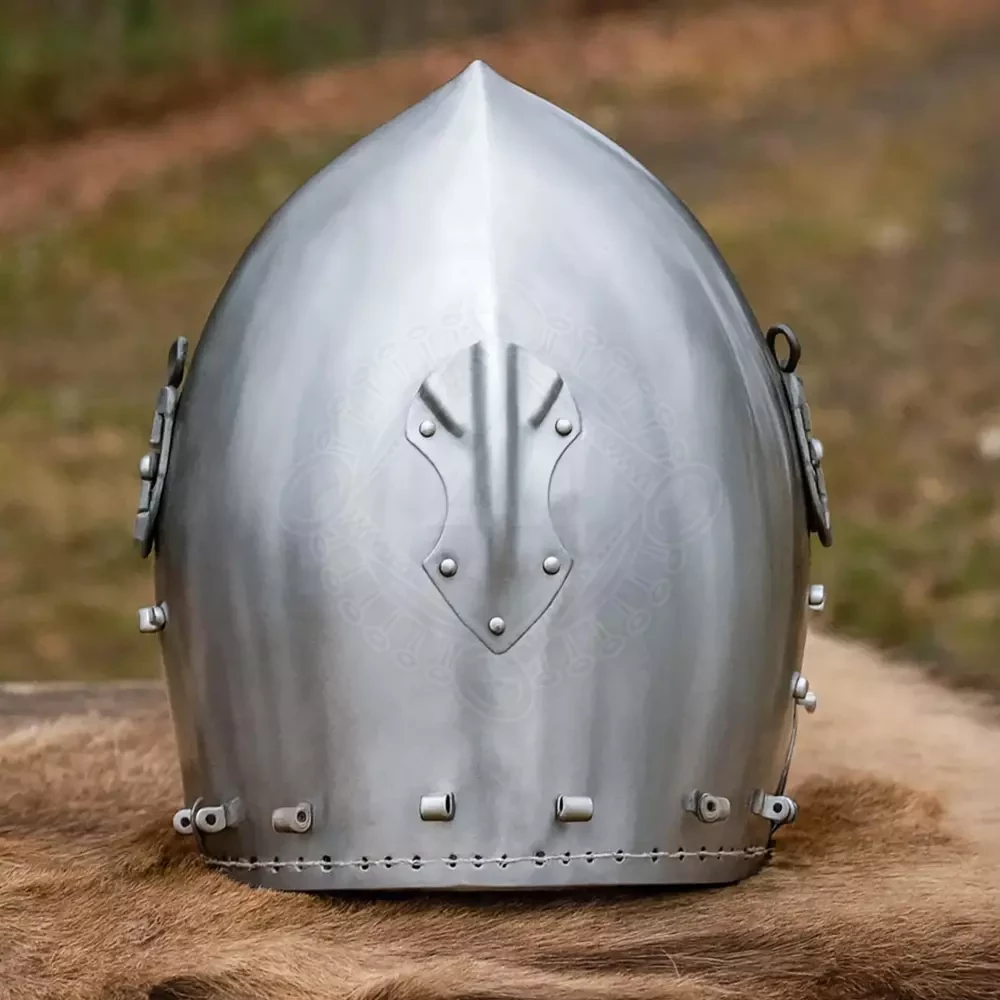

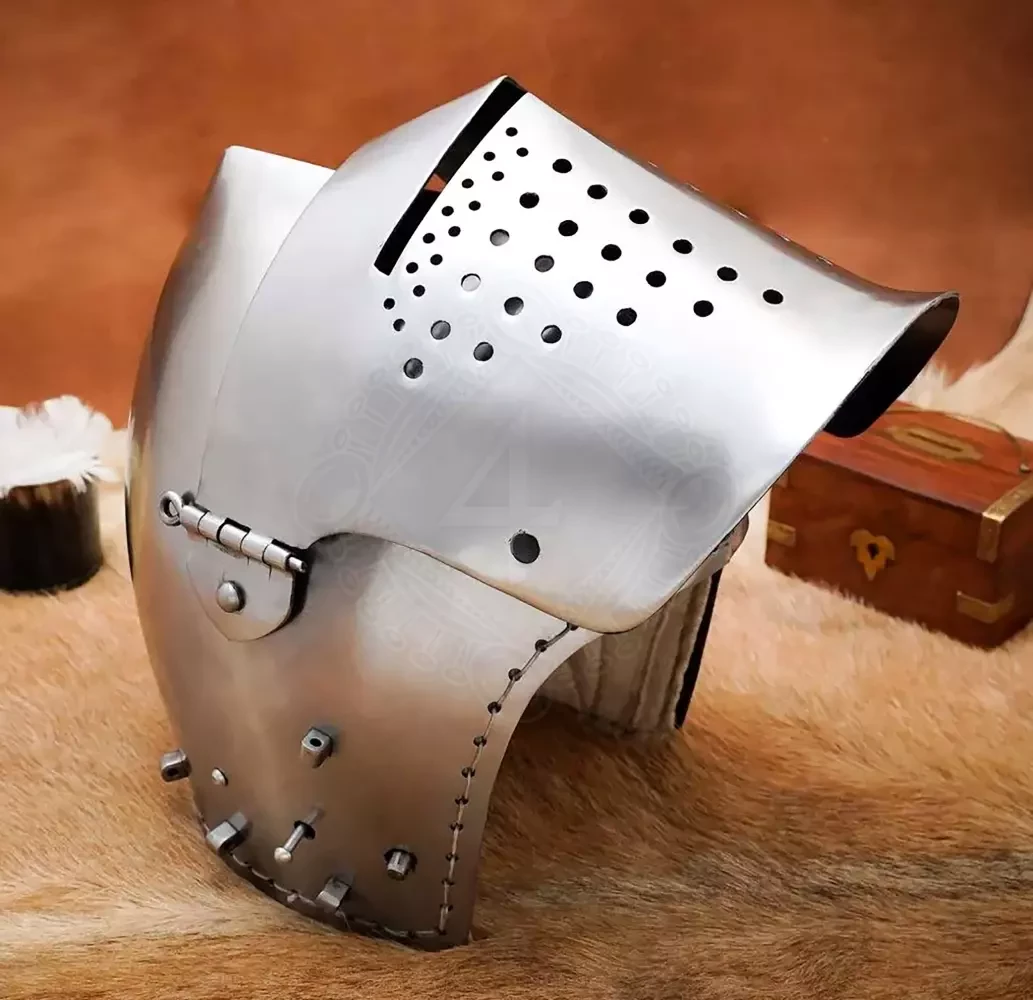

Prepare for full-contact battle with one of the most iconic helmets of the late Middle Ages! This massive Hounskull bascinet, crafted from 2 mm cold-rolled steel, is engineered to withstand the harshest conditions on the HMB and buhurt tournament field. Its unmistakable design ensures not only historical accuracy but, above all, the uncompromising protection and functionality you expect from top-tier armour. Further product information ...

Would you like to be notified as soon as the item is in stock?
You will receive a short e-mail as soon as we have it back in stock.
Hounskull Bascinet Helmet, 14th/15th C., 2 mm Steel
Detailed Description and Construction
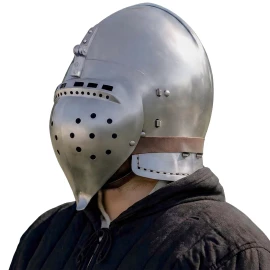
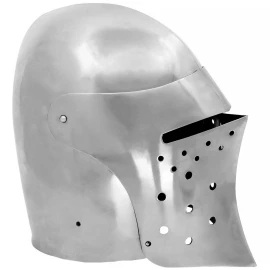
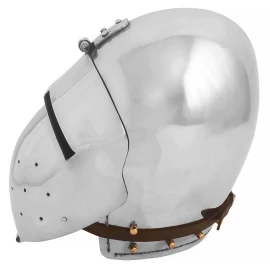
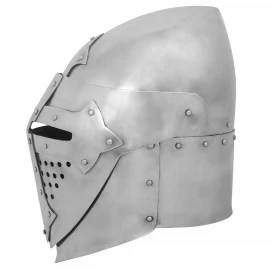
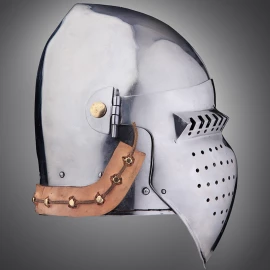
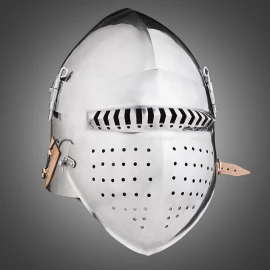
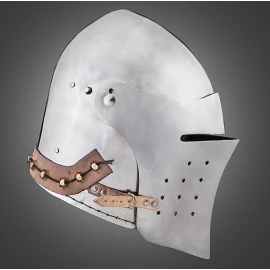
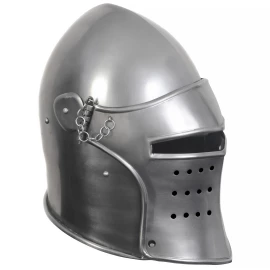
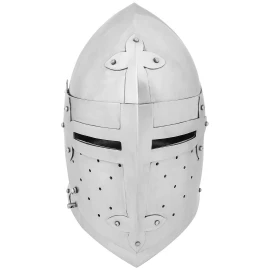
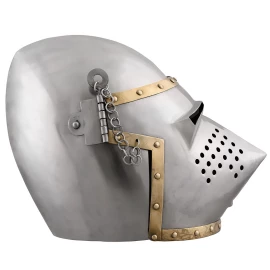
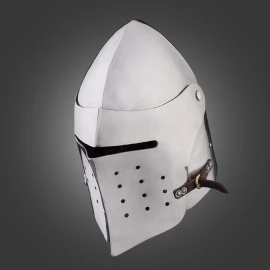
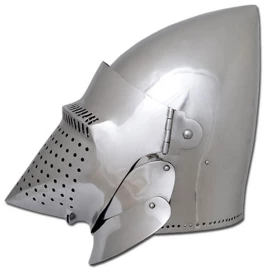
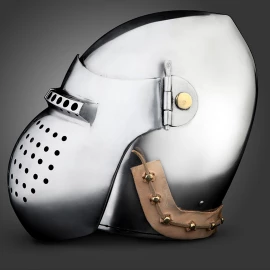
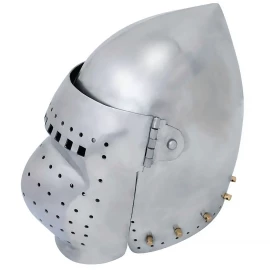
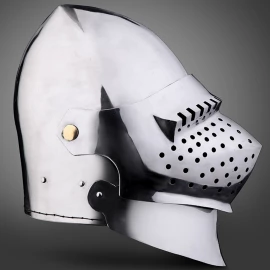
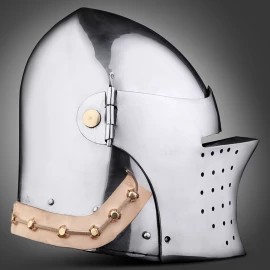
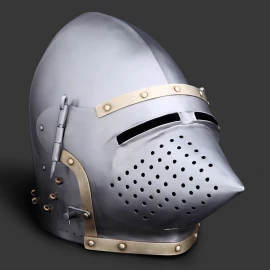
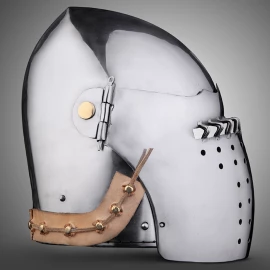
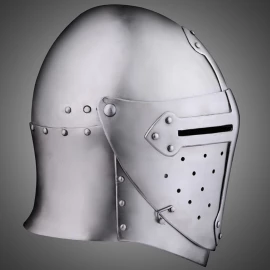
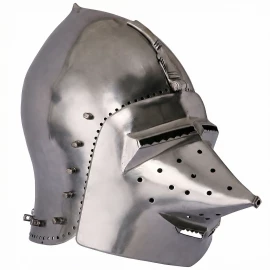
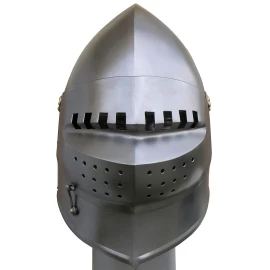
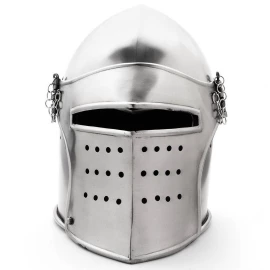
This helmet is a masterful replica, handcrafted from 2 mm (14-gauge) mild steel plate. The skull of the helmet has the typical pointed shape that effectively deflects blows. The main feature, however, is the prominent, conical visor (known as a Hounskull or "hound's skull"), which provides excellent facial protection while creating space for better breathing.
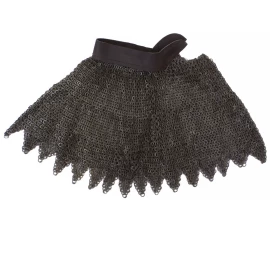
The visor is attached via robust side hinges and is fully detachable by removing the retaining pins. In the closed position, it is securely locked by a spring-pin mechanism. Ventilation holes on the right side of the visor ensure airflow. Riveted around the helmet's edge are brass vervelles for easy attachment of a chainmail aventail. Additionally, you will find a riveted plume holder on the back for the perfect knightly panache.
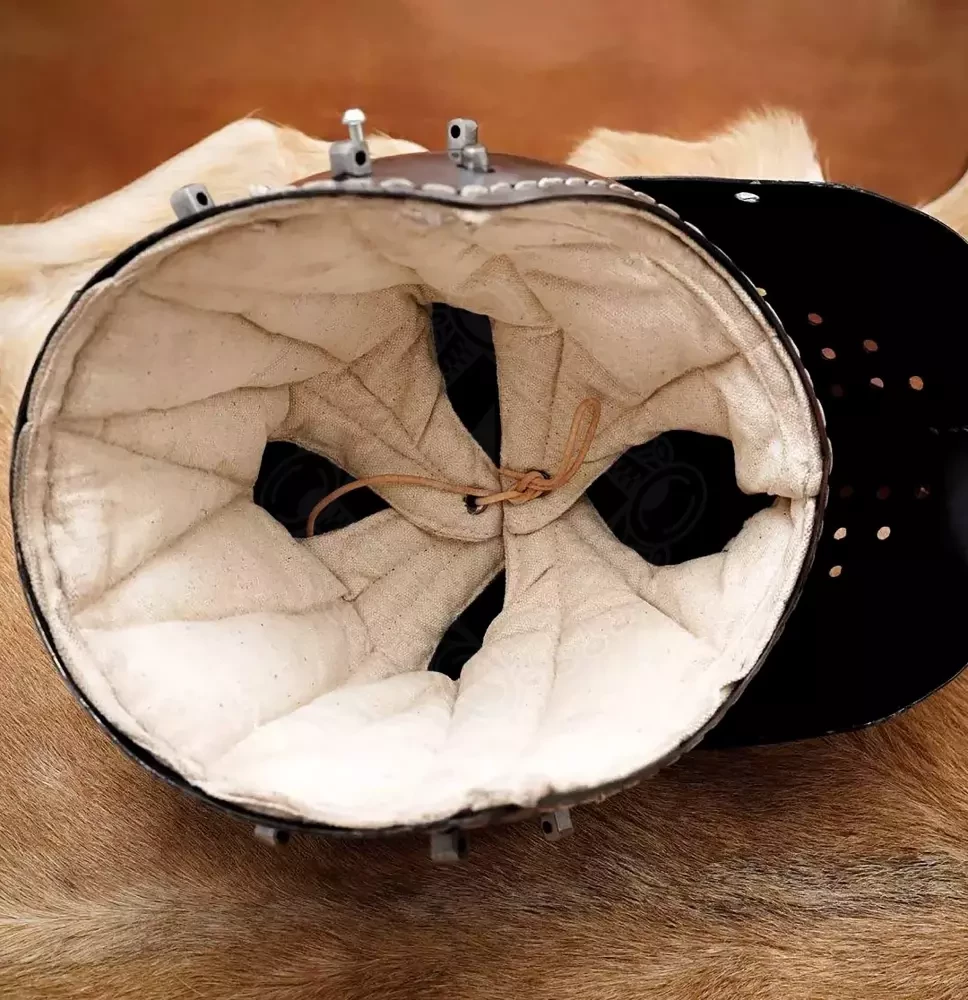
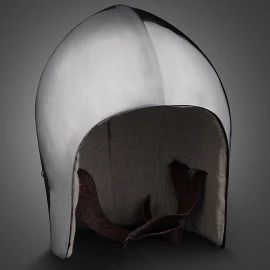
The interior is painted black to protect against corrosion and is fitted with a comfortable, adjustable, and firmly sewn-in padded cloth liner.
Engineered for Full-Contact Combat
Thanks to the material used and its robust construction, this helmet is directly intended for the most demanding applications:
- HMB (Historical Medieval Battle) / Buhurt: The helmet meets the material thickness requirements for most international tournaments.
- Full-Contact Historical Fencing: Offers maximum head and neck protection (when an aventail is attached).
- Reenactment and Living History: The perfect choice for portraying a knight from the turn of the 14th and 15th centuries.
A Note for Warriors: Although this helmet is manufactured to full-contact standards, always check the specific rules and equipment requirements of the event organizers before a tournament.
Size and Dimensions Chart
| Parameter | Value (cm / in) |
|---|---|
| Recommended Head Circumference | 58 - 61 cm / 22.8 - 24 in |
| Overall Height (A) | 24.5 cm / 9.6 in |
| Ocular (Visor Slit) Width (B) | 14 cm / 5.5 in |
| Ocular (Visor Slit) Height (C) | 0.8 cm / 0.3 in |
| Lower Opening Width (D) | 15 cm / 5.9 in |
| Lower Opening Height (E) | 16.5 cm / 6.5 in |
| Inner Depth Front-to-Back (F) | 28 cm / 11 in |
| Inner Width at Ear Level (G) | 21 cm / 8.3 in |
| Material Thickness | 2 mm (14 gauge) |
| Weight | Approx. 3.6 kg / 7.9 lbs |
A Glimpse into History
Why the "Hounskull"?
Hounskull bascinets (from the German Hundsgugel, or "hound's hood") appeared in the late 14th century as the pinnacle of bascinet evolution. The long, conical visor was not for show—its pointed shape was designed to best deflect the points of lances and swords away from the face and eye-slits. While this functional design led to somewhat unflattering nicknames like "pig-faced bascinet," on the battlefield, it represented the cutting edge of technology and was popular throughout Europe until the mid-15th century.
Fun Fact
Besides protection, the conical shape of the visor offered another advantage: more internal space. This not only improved ventilation, which was crucial during physically demanding combat, but also altered the acoustics. Sounds from the outside were muffled, and the warrior's own breath echoed inside the helmet, creating a unique sensory environment in the midst of battle's chaos.
Care and Maintenance
This combat helmet requires adequate care:
- The helmet is delivered coated in a protective layer of oil. Wipe it off with a dry cloth after unpacking.
- Always store it in a dry place. After every use, especially in rain or after heavy perspiration, allow it to dry thoroughly, inside and out.
- Regularly treat the steel surface with a preservation oil (e.g., Ballistol) to prevent corrosion.
- Periodically inspect the condition of the rivets, hinges, and locking pin. Given its intended use for full contact, ensuring all components are in flawless condition is crucial.
 Ověřený zákazník
We are here for you!





.3773623034.1696456237.png.webp)

.3773623034.1696456268.png.webp)
.3773623034.1696456247.png.webp)