Čeština
 Deutsch


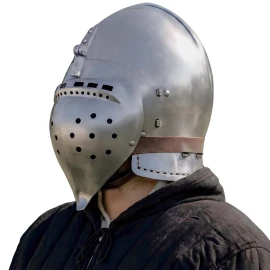
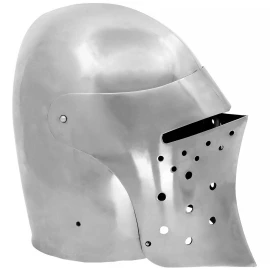
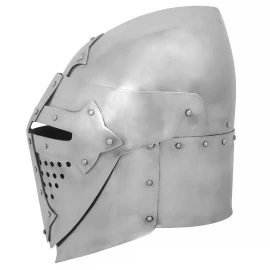
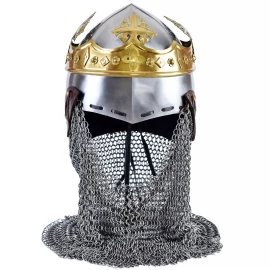
Poitiers Bascinet Helmet, Open-Faced 14th Century

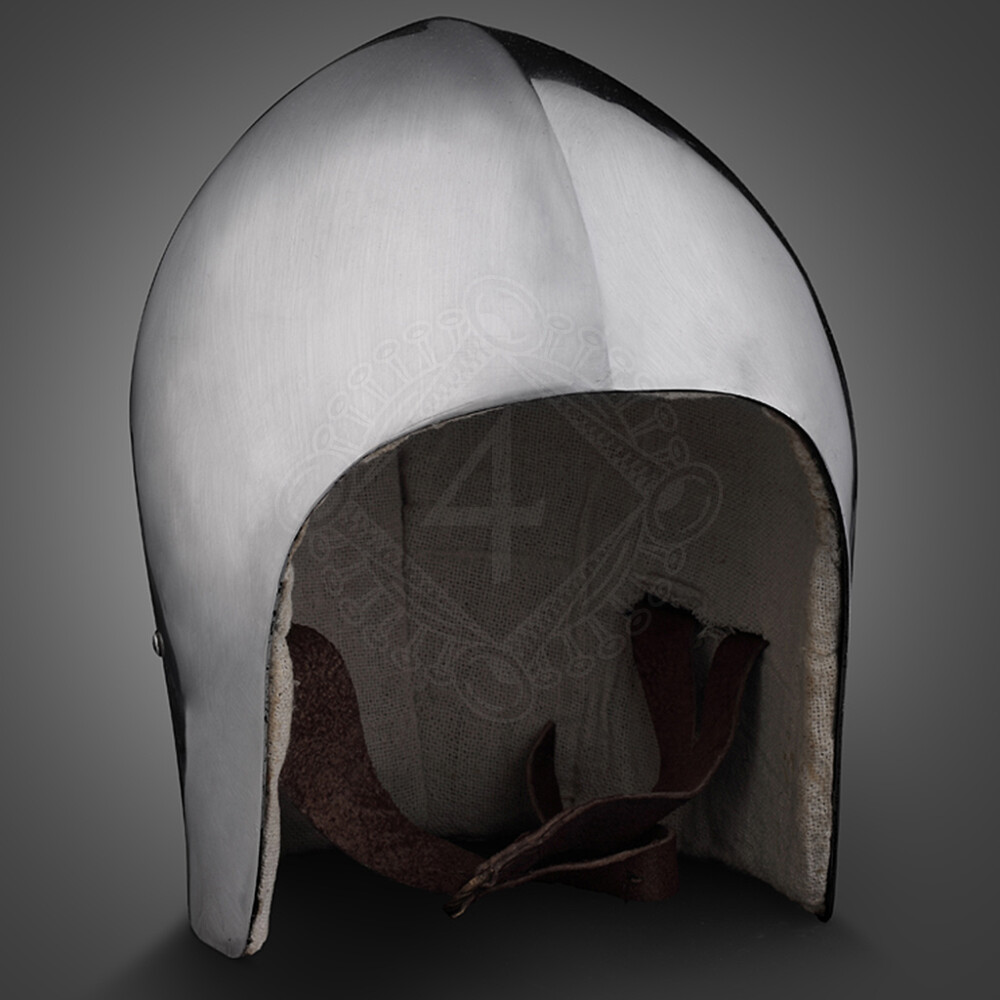
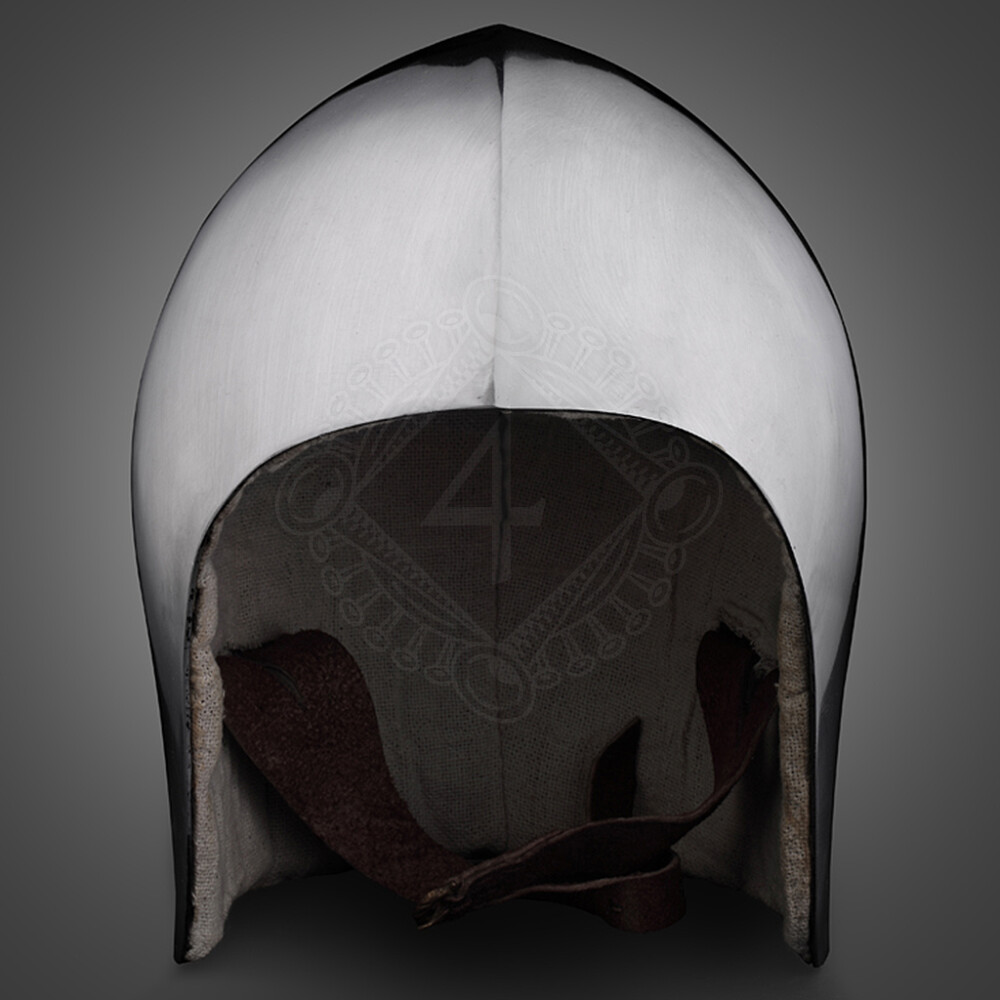
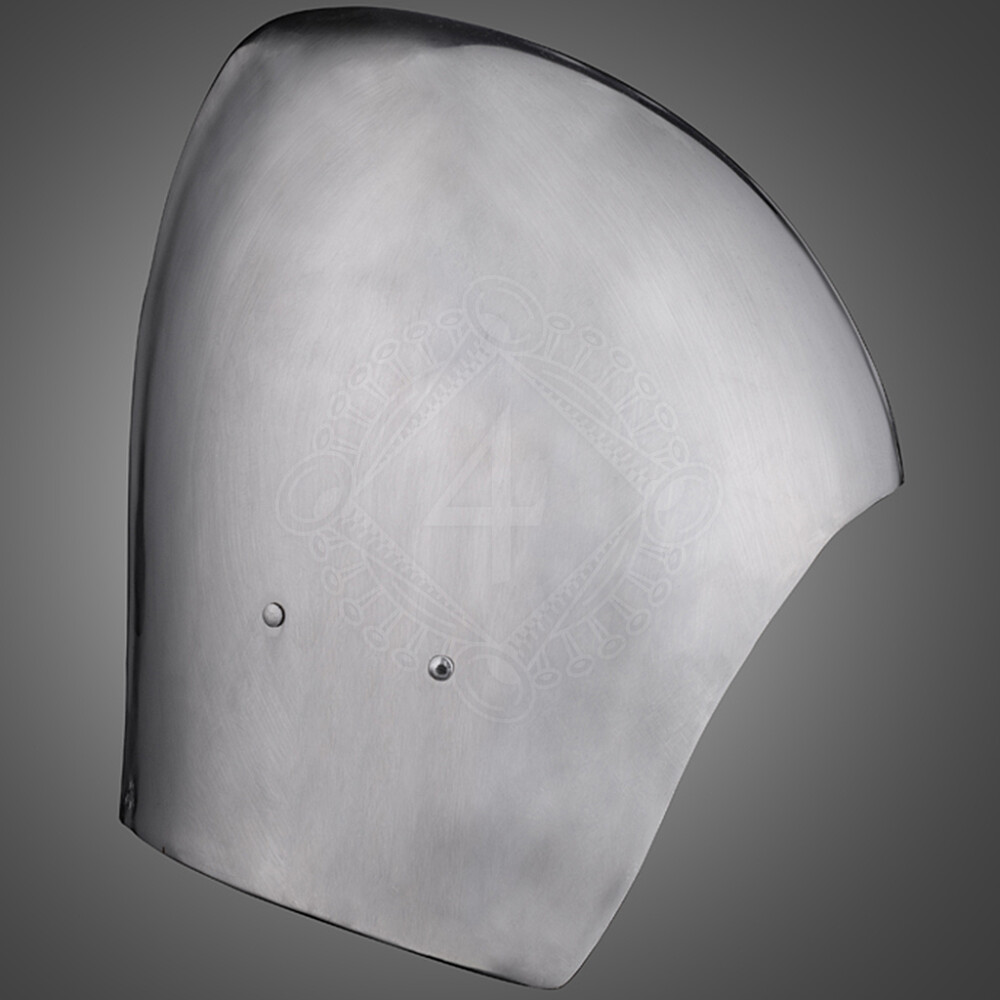
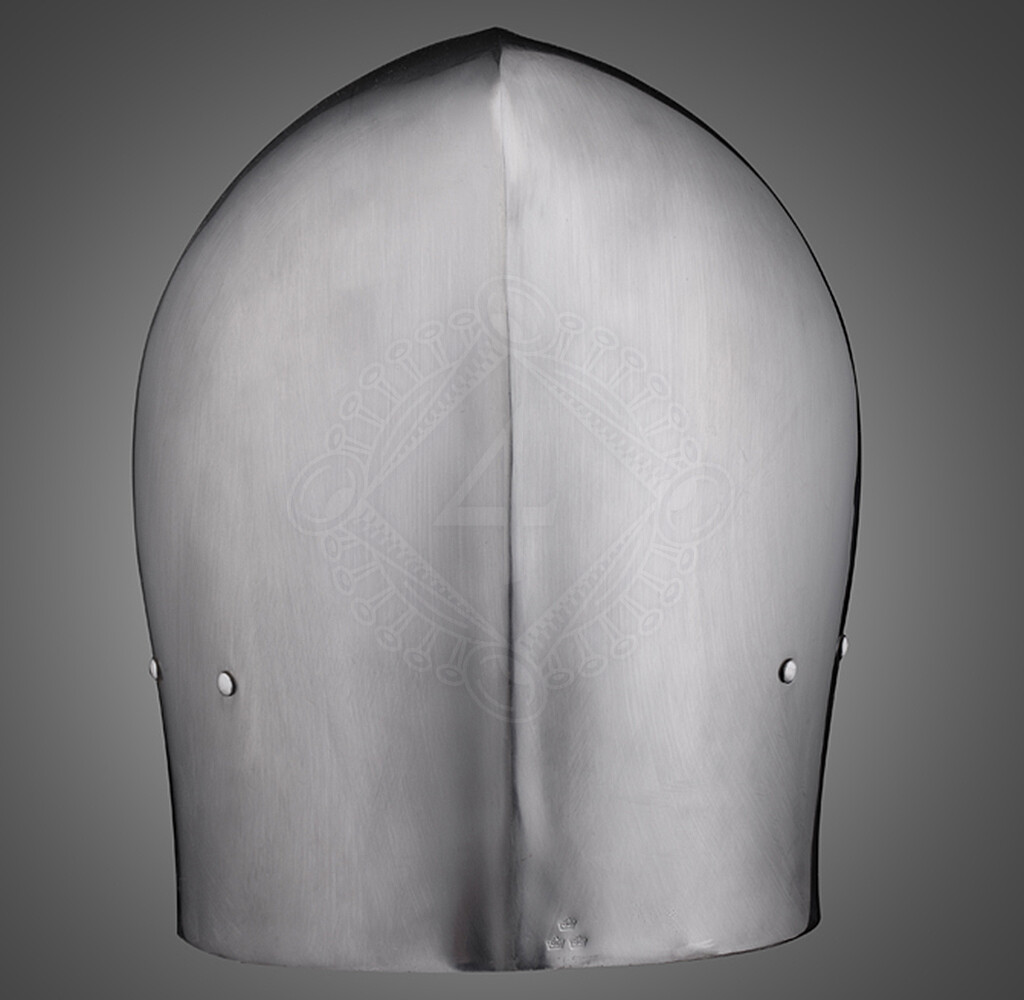

Looking for a simple yet striking medieval helmet to complete your knightly outfit? The Poitiers bascinet helmet captures the distinctive appearance of 14th-century European head armour with its pointed skull, smooth steel finish and open face. Its understated design, without a visor, provides a clear field of vision and makes communication easier during historical events. The hand-raised helmet is made from approximately 1.6 mm steel plate and features a fabric lining and a leather chin strap with a metal buckle. It makes an attractive addition to a 14th-century-inspired knight's outfit for reenactment, medieval fairs, LARP and historical costume displays. Further product information ...

Would you like to be notified as soon as the item is in stock?
You will receive a short e-mail as soon as we have it back in stock.
Poitiers Medieval Bascinet Helmet, Open-Faced 14th Century Design
A Simple Design with a Distinctive Pointed Skull
The bascinet was one of the most widespread European helmet types of the 14th century. This model represents a straightforward open-faced version, distinguished by its clean lines and lack of unnecessary decoration.
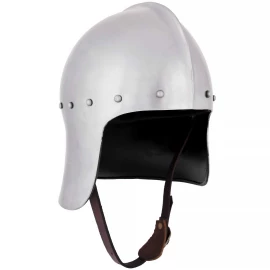
The helmet has a smooth, slightly elongated skull rising to a pronounced point. A central ridge runs down the front and rear, contributing to its distinctive appearance. The sides and back extend below the upper edge of the facial opening, providing partial coverage for the temples and back of the head.
The steel surface features a smooth, silvery finish with subtle grinding marks. Individual rivets are visible along the sides. The helmet has no visor or separate metal face guard.
Inside, a light-coloured fabric lining separates the wearer's head from the metal skull. A brown leather chin strap with a metal buckle secures the helmet beneath the chin.
Historical Background of the Bascinet
The bascinet developed in Europe from the late 13th century and became an important part of the equipment worn by infantrymen and armoured horsemen during the 14th century. Its relatively compact construction provided head protection while allowing different forms of additional facial and neck armour to be incorporated.
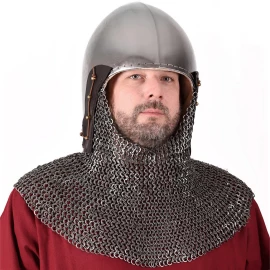
Open-faced bascinets could be worn with a mail aventail, a flexible curtain of interlinked metal rings intended to protect the neck, nape and, depending on its design, parts of the face. Other versions featured detachable or hinged visors. Among their best-known developments was the hounskull bascinet, recognised by its prominent, snout-shaped visor.
This particular model has neither a visor nor a mail aventail. Its simple design makes it a suitable starting point for a historically inspired portrayal of a 14th-century warrior.
Why Is It Called Poitiers?
The name Poitiers refers to the French city near which one of the most significant battles of the Hundred Years' War took place in 1356. An English army led by Edward, known as the Black Prince, defeated the French forces and captured King John II of France.
The Battle of Poitiers is an important event from the 14th century, when bascinet helmets were widely used throughout Europe. The name commemorates this historical period rather than identifying the helmet as a documented reproduction of an artefact recovered from the battlefield.
Technical Specifications
| Feature | Specification |
|---|---|
| Helmet type | Medieval bascinet |
| Historical period | 14th century |
| Design | Open-faced helmet without visor |
| Helmet material | Steel plate |
| Plate thickness | Approx. 1.6 mm (0.063 inches) |
| Manufacturing method | Hand-raised |
| Finish | Smooth, silvery metallic finish |
| Size | One size |
| Suitable head circumference | Approx. 59–61 cm (23.2–24.0 inches) |
| Internal lining | Fabric |
| Fastening | Leather chin strap with metal buckle |
| Visor | Not included |
| Colour | Silver, natural metallic appearance |
Because the helmet is hand-raised, the actual plate thickness may vary slightly across its surface.
How to Wear Your Bascinet
Before putting the helmet on, measure your head circumference with a flexible tape measure, approximately above your eyebrows and ears. The helmet should remain stable without creating uncomfortable pressure.
- For additional comfort, we recommend wearing a thin padded arming cap or helmet liner underneath.
- Before use, inspect the fabric lining and leather chin strap for damage.
- Fasten the chin strap firmly enough to prevent the helmet slipping, but not so tightly that it restricts your breathing or movement.
- Once the helmet is fitted, turn your head and check that your movement and field of vision remain unrestricted.
Safety and Maintenance
Important safety information: This helmet is not specified as protective equipment for heavy full-contact combat, buhurt, HMB or competitions such as Battle of the Nations. Do not use it for these activities without documented safety suitability and approval under the relevant organisation's rules. Its open-faced construction does not protect your face against direct weapon strikes.
To keep your helmet in good condition, we recommend the following care:
- After every use, wipe the steel surface with a soft, dry cloth.
- Apply a very thin layer of suitable protective oil to help prevent corrosion.
- If the helmet becomes damp, allow the fabric lining and leather strap to dry thoroughly at room temperature.
- Treat the leather chin strap with a suitable leather conditioner when necessary.
- Avoid aggressive chemical cleaners and coarse abrasive materials.
- Store the helmet in a dry environment, protected from dust and moisture where possible.
- After any significant impact, inspect the steel skull for deformation and check the lining and rivets for damage or looseness.
Recommended Accessories
To complete a 14th-century medieval outfit, we recommend combining this bascinet with a padded arming cap, gambeson, mail shirt or period-style surcoat. A medieval leather belt, leather gloves and a suitable replica sword can further enhance your impression of a knight or man-at-arms. If you wish to recreate the appearance of a more heavily equipped warrior, a separate mail neck defence may also be appropriate, although you should check its compatibility with this helmet before use.
We are here for you!