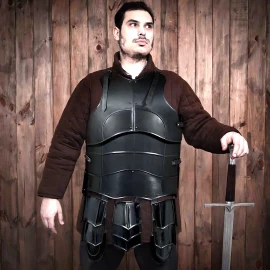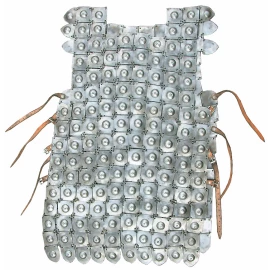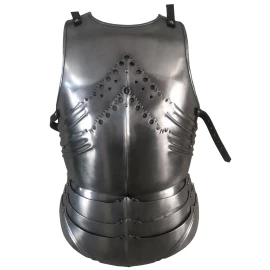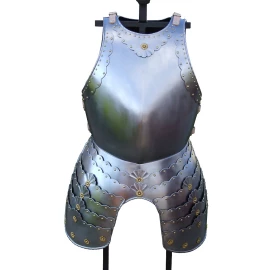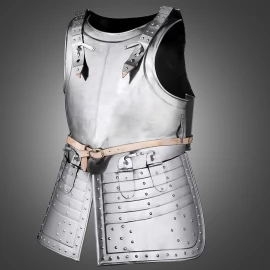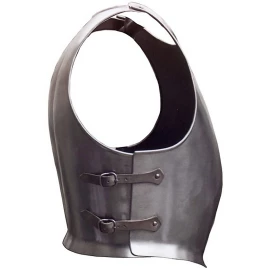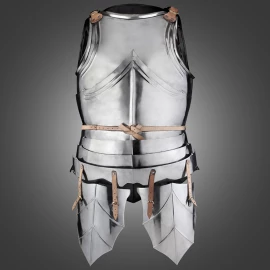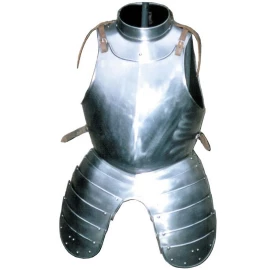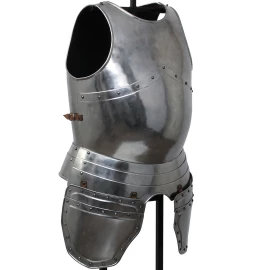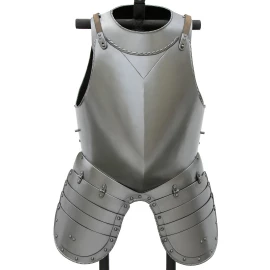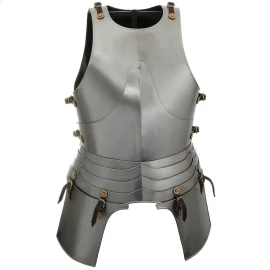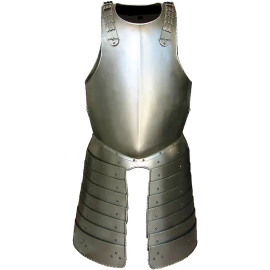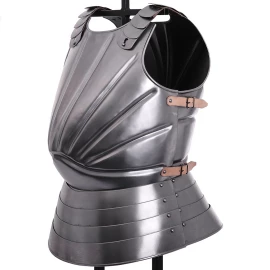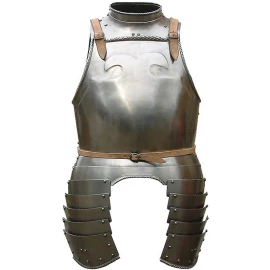

Gothic Cuirass, 1480-1495

Gothic Cuirass, 1480-1495
Free shipping

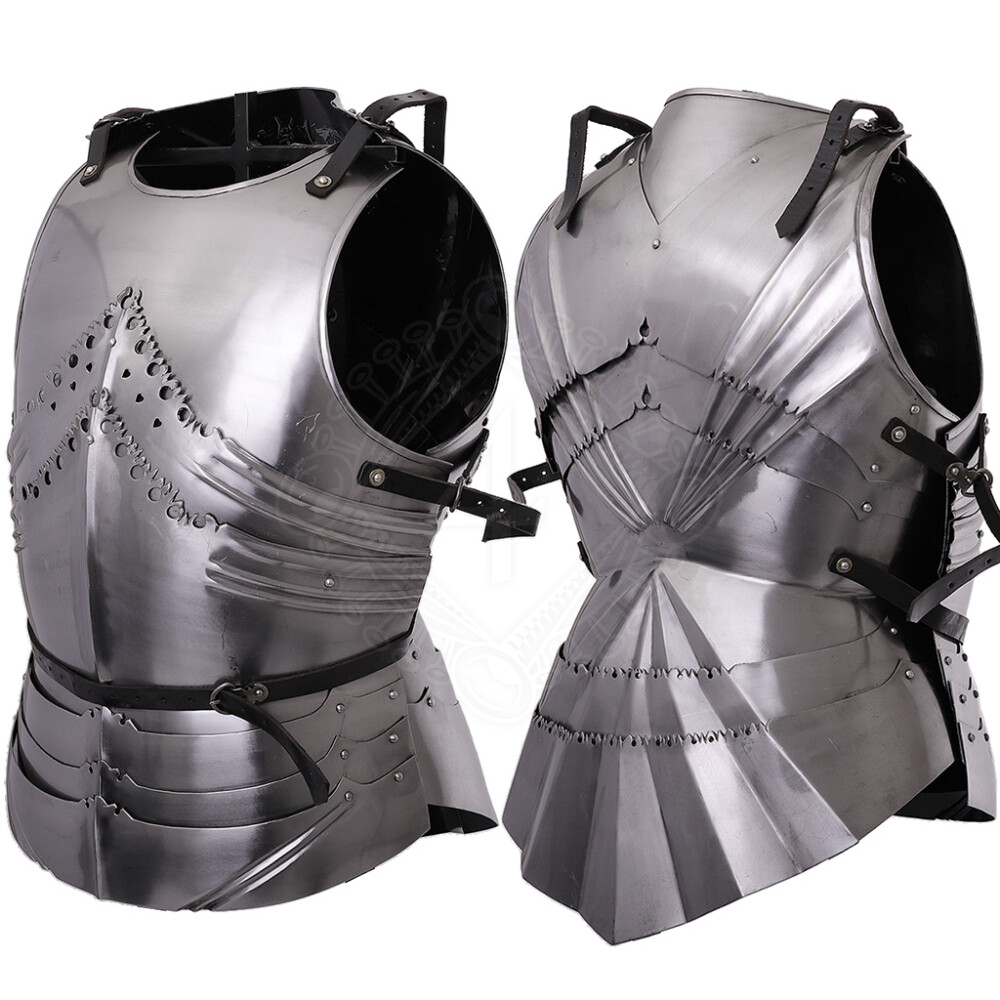
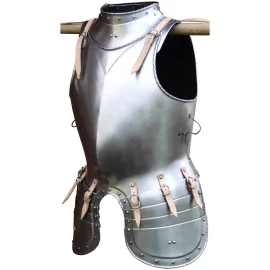
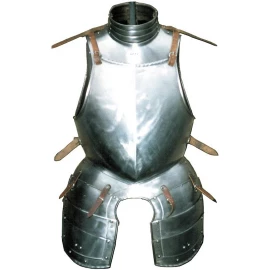
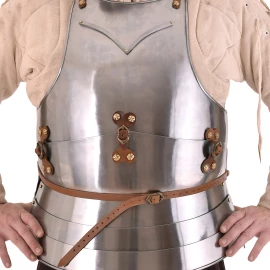
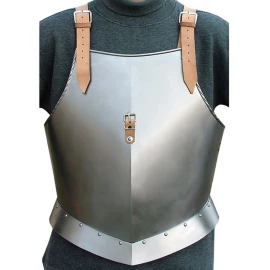
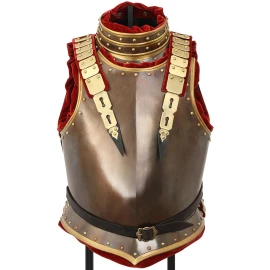
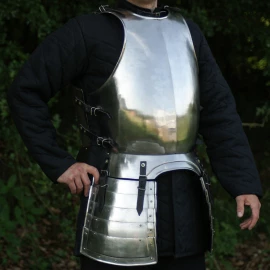
Step into the imposing silhouette of a late fifteenth-century knight with this Late Gothic steel cuirass, inspired by German plate armour dating from approximately 1480–1495. Polished breast and back plates enclose the torso, whilst overlapping waist lames provide greater freedom when walking, turning and bending. Pierced ornament, cusped edges and radiating flutes give the armour its unmistakable Gothic appearance. Adjustable leather straps allow you to fit the cuirass over an arming doublet or light gambeson. We recommend it for re-enactment, LARP, theatre, film, ceremonial processions, photography and armour displays. Further product information ...

On order - order now and goods will be dispatched on: 16-Mar-2027 Delivery options
220,00 €
181,82 € excl. VAT
Add to cart
First, select a variant

Late Gothic Steel Cuirass with Articulated Fauld

Elaborately Shaped Late Gothic Plate Armour

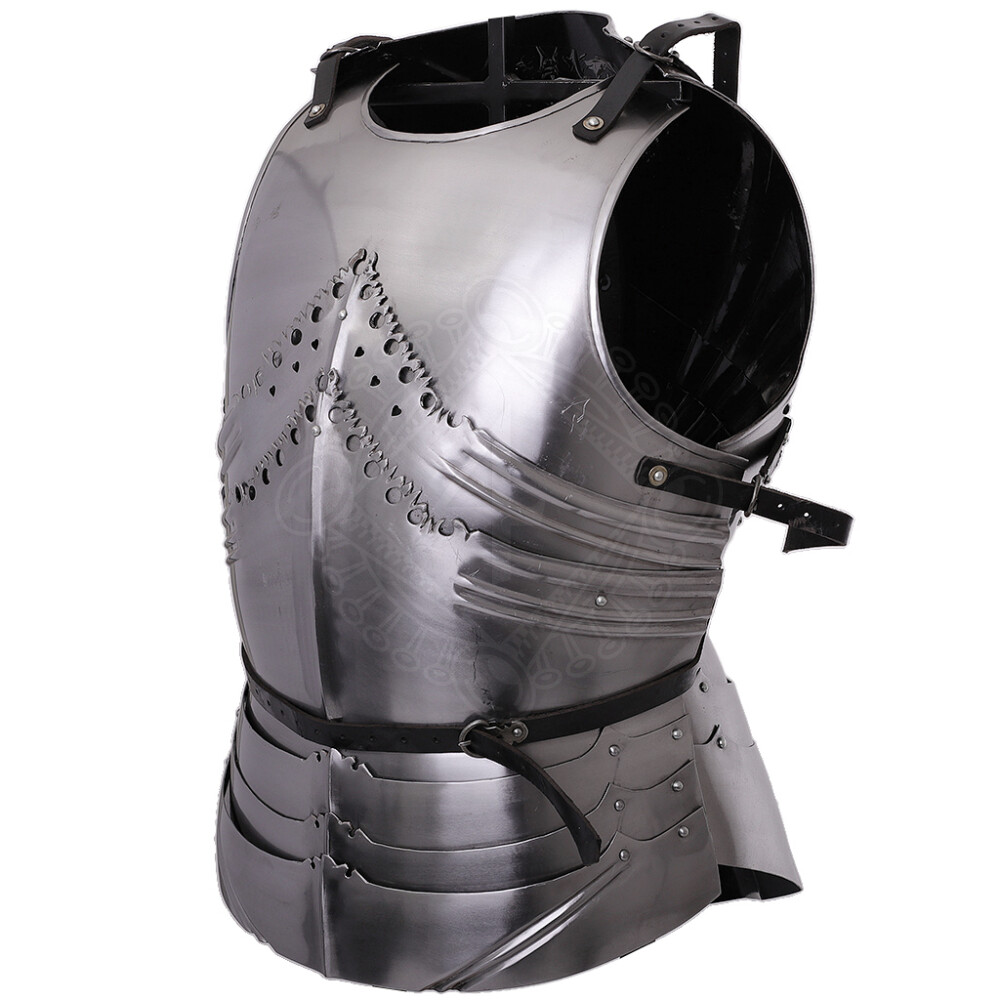
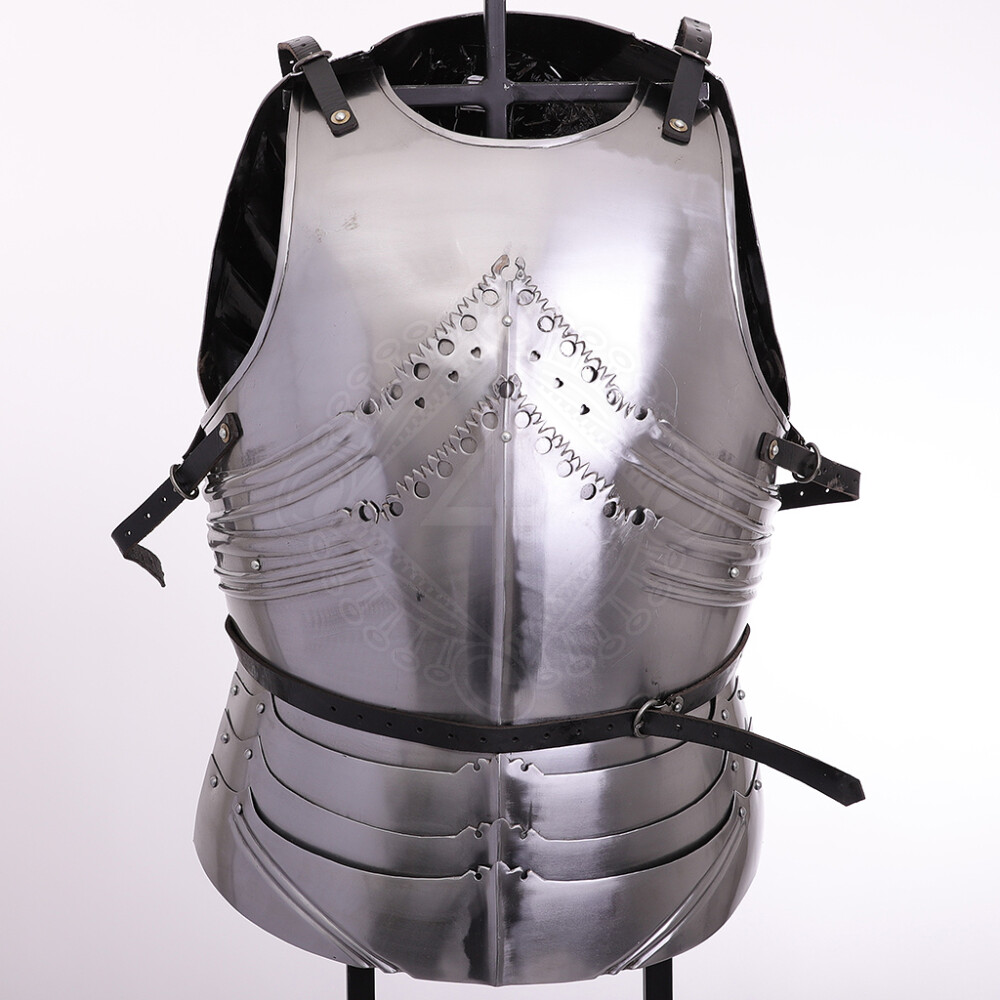
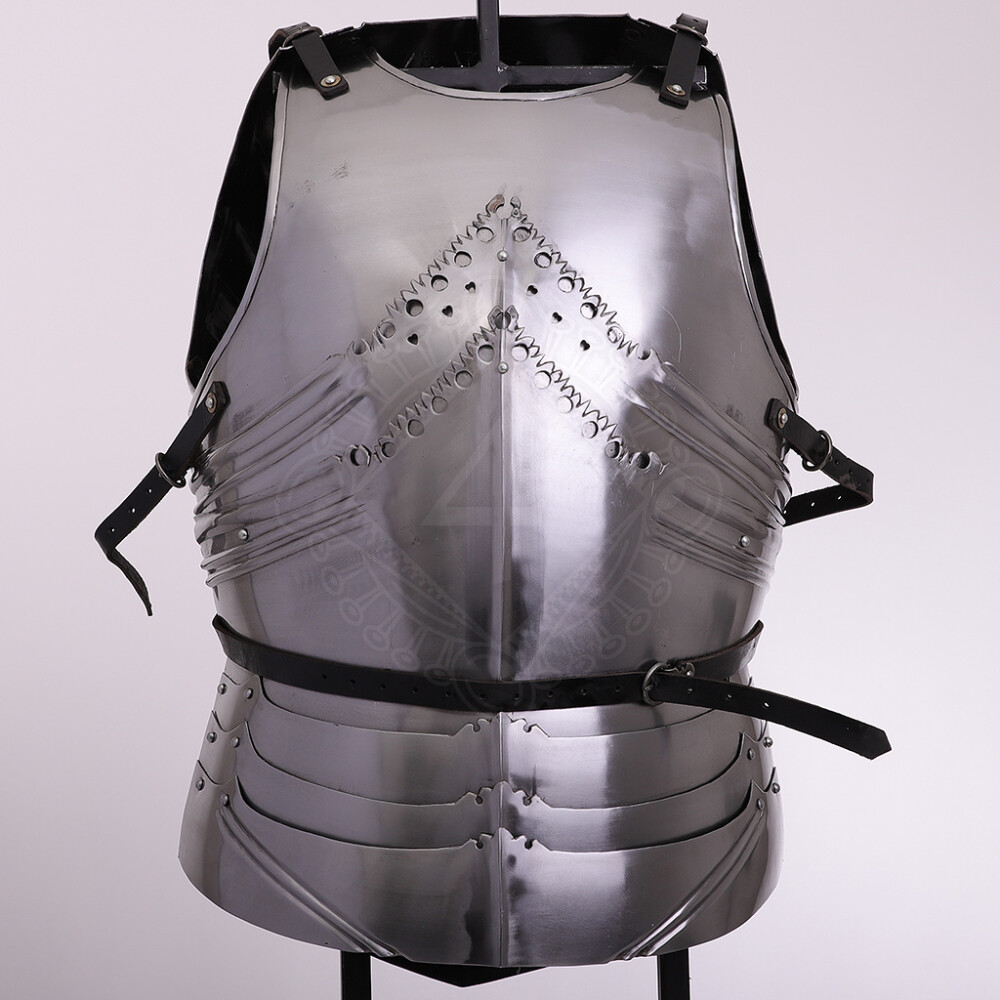
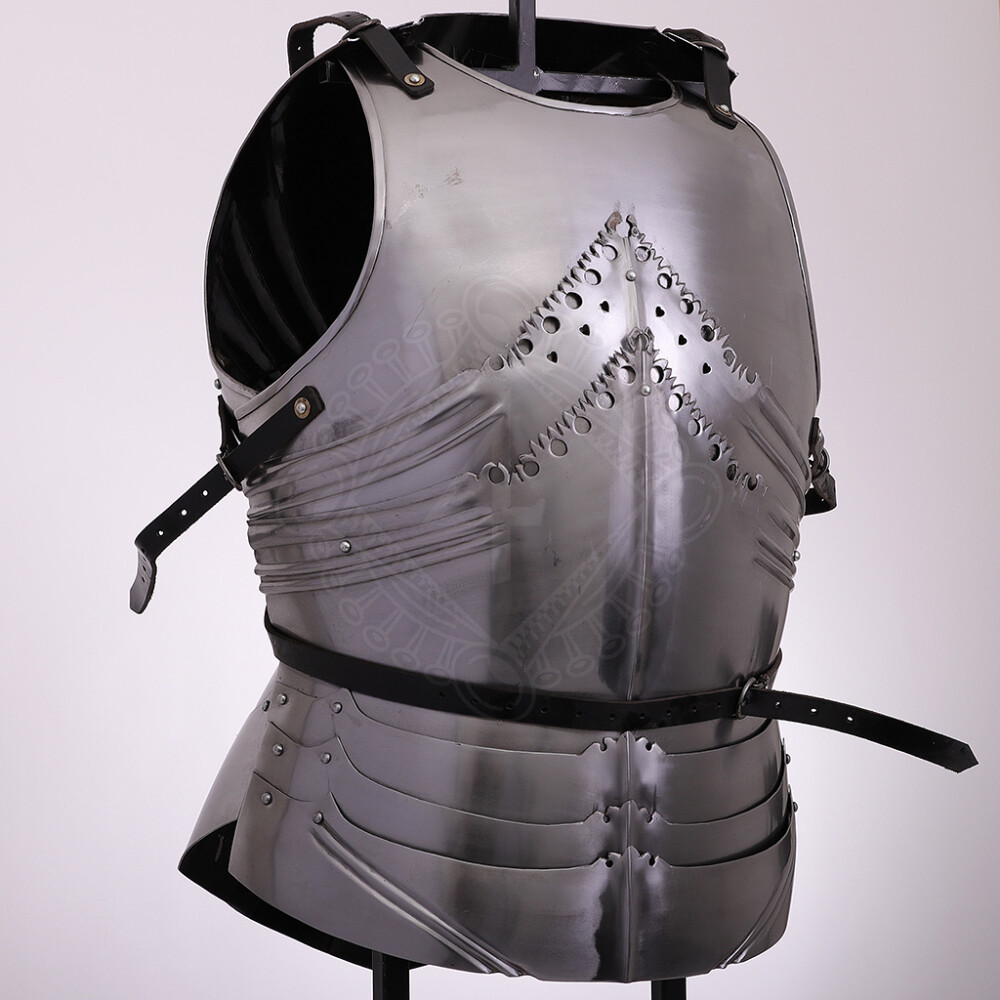
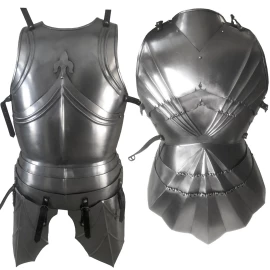
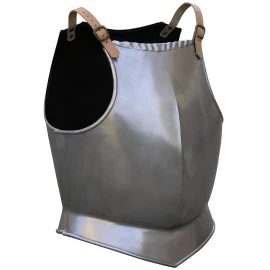
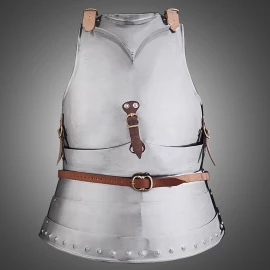
The cuirass consists of an anatomically shaped steel breastplate and backplate. A pronounced central ridge runs down the front from the upper chest towards the waist, creating the narrow, angular silhouette associated with German armour of the late fifteenth century.

Two nested triangular compositions decorate the upper breast. Circular piercings, smaller cut-outs and fleur-de-lis-like points form a striking geometric design. Several horizontal flutes strengthen the side areas and produce a visual rhythm reminiscent of gathered folds in contemporary clothing.

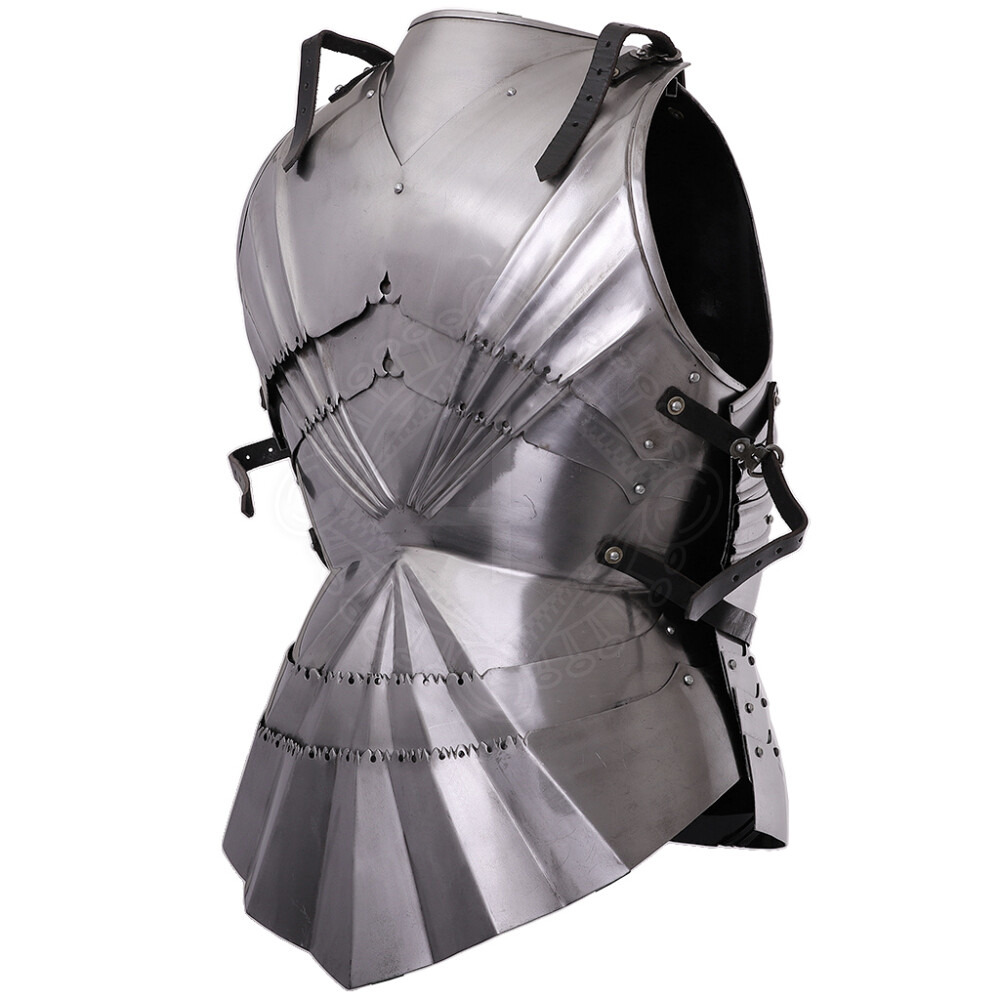
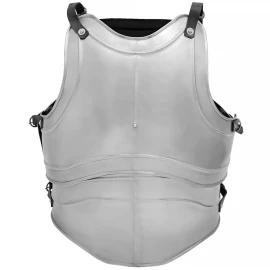
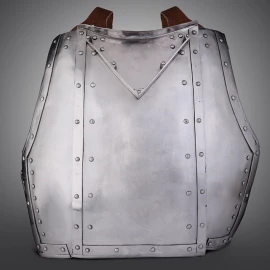
The backplate is even more extensively modelled. Long flutes radiate from the waist across the back, whilst overlapping plates are finished with pointed and cusped edges. The richly shaped rear surface ensures that the armour remains visually impressive from every angle rather than serving merely as a plain support for the breastplate.

Articulated Waist and Hip Lames

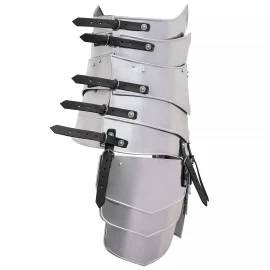
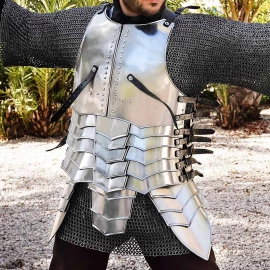
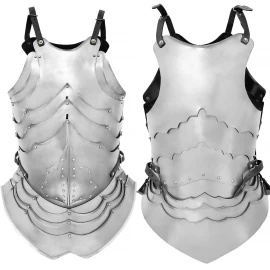
The lower part of the cuirass is formed from several overlapping steel lames. The front fauld protects the lower abdomen and upper hips, whilst the rear skirt covers the lower back and upper seat. Individual plates are connected by rivets and can move over one another within a limited range.

This articulated construction permits easier walking, turning and moderate bending than a single long rigid plate. Before putting the armour on, check that every lame moves freely and has not been obstructed by dirt, dried oil or a distorted rivet.

Historical Inspiration from 1480–1495

The cuirass is based on the tradition of South German Late Gothic armour dating from approximately 1480–1495. Its stated source is associated with Augsburg armour-making and with late fifteenth-century cuirass elements preserved in the Hofjagd- und Rüstkammer of the Kunsthistorisches Museum in Vienna.

Augsburg was one of Europe’s most important armour-making centres during the late fifteenth century. Its craftsmen produced sophisticated harnesses for nobles, knights and the Habsburg court. Slender silhouettes, prominent ridges, deep fluting, pierced decoration and intricately cut plate edges formed part of the distinctive late Gothic vocabulary.

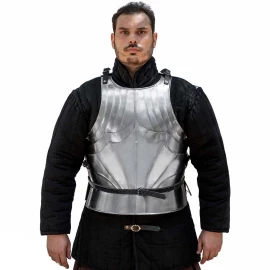
A cuirass of this type formed the central section of a complete field or cavalry harness. It protected the chest, back, abdomen and hips, whilst separate plates covered the neck, shoulders, arms and legs. Beneath the steel, the wearer used a close-fitting padded arming doublet to improve comfort and provide attachment points for other elements of the armour.

How to Put On and Adjust the Cuirass

  • Begin by putting on a properly fitted arming doublet or light gambeson.
  • Loosen both shoulder straps, both side straps and the leather belt around the waist.
  • Place the backplate against your back and position the breastplate over your chest. Because of the weight, we recommend assistance from a second person.
  • Adjust the shoulder straps first so that the lower edge rests at the correct height above your hips.
  • Fasten the side straps and then secure the waist belt with its brass buckle.
  • Tighten all straps evenly. The armour should remain stable without restricting a deep breath or pressing painfully against your neck, armpits or ribs.
  • Raise your arms, rotate your torso, bend slightly and walk several steps. Readjust the straps where necessary.

Choosing the Correct Fit

The cuirass is recommended for a chest circumference of approximately 122–135 cm or 48–53.1 in, measured over the intended undergarment. Depending on body proportions and the thickness of the padded layer, maximum strap adjustment may reach approximately 141 cm or 55.5 in. We do not recommend relying on the absolute maximum if it prevents comfortable breathing or movement.

The waist area is intended for a circumference of approximately 105–110 cm or 41.3–43.3 in. Measure yourself over the same gambeson or arming doublet that you intend to wear beneath the armour. Chest measurement alone cannot guarantee a correct fit, as shoulder width, torso length and armhole position are also important.

Technical Specifications

Feature Specification
Product type Late Gothic plate cuirass
Historical period Approximately 1480–1495
Historical style German Late Gothic, South German and Augsburg tradition
Construction Breastplate and backplate with articulated waist and hip lames
Plate material Steel
Steel thickness 18 gauge, approximately 1.2 mm or 0.047 in
Outer finish Polished steel
Inner finish Black protective coating against corrosion
Front height Approximately 60–61 cm or 23.6–24 in
Back height Approximately 72 cm or 28.3 in
Recommended chest circumference Approximately 122–135 cm or 48–53.1 in
Maximum chest adjustment Up to approximately 141 cm or 55.5 in, depending on padding and body proportions
Recommended waist circumference Approximately 105–110 cm or 41.3–43.3 in
Shoulder fastenings Two adjustable genuine leather straps
Side fastenings Two adjustable genuine leather straps
Waist fastening Leather belt with brass buckle
Total weight Approximately 9,450 g or 20.8 lb
Suitable uses Re-enactment, LARP, theatre, film, photography, processions and display
Included Breastplate, backplate, articulated lower plates and connecting straps
Not included Armour stand, gambeson, helmet, limb armour and other accessories

Size Chart

Measurement Size How to Measure
Recommended chest circumference Approximately 122–135 cm or 48–53.1 in Measure over the intended arming garment
Maximum chest circumference Up to approximately 141 cm or 55.5 in Depends on strap setting and body proportions
Waist circumference Approximately 105–110 cm or 41.3–43.3 in Measure at the level of the leather waist belt
Front height Approximately 60–61 cm or 23.6–24 in From the upper edge to the bottom of the fauld
Back height Approximately 72 cm or 28.3 in From the upper edge to the bottom rear lames

All measurements are approximate. Hand-shaped plates, genuine leather straps and rivet positions may differ slightly between individual examples.

Care of the Steel Cuirass

  • After every use, wipe the steel with a soft, dry cloth.
  • Remove perspiration, moisture, dust and fingerprints as soon as possible.
  • Regularly apply a very thin coating of preservation oil suitable for steel armour or weapons.
  • Apply oil sparingly to articulated joints, taking care not to saturate the leather straps.
  • Should the cuirass become wet, open it fully, dry every surface and allow it to air at room temperature.
  • Condition the leather straps occasionally with a suitable treatment for genuine leather.
  • Store the armour in a dry, ventilated room, preferably on a strong armour stand.
  • Do not leave it for prolonged periods in a damp bag, cellar, vehicle or unheated garage.
  • Do not clean the surface with a wire brush, coarse abrasives or aggressive household chemicals.

Safety and Limitations

This cuirass is not protective armour intended for buhurt, Battle of the Nations, full-contact fighting or other forceful combat disciplines. Its approximately 1.2 mm or 0.047 in steel and decorative pierced areas are primarily intended for re-enactment, costume and presentation.

  • Always wear the cuirass over an appropriate arming doublet or gambeson.
  • Inspect all rivets, articulated lames, leather straps, buckles and plate edges before every use.
  • Replace split, brittle or severely dried leather straps before wearing the armour again.
  • Keep your fingers clear of moving lames and the space between the breastplate and backplate.
  • Do not sit or stand on the cuirass and do not place heavy objects upon it.
  • Do not reshape the plates with a hammer unless you have suitable armour-making experience.
  • Any use in choreographed stage combat must first be approved by the person responsible for safety.

Recommended Accessories

  • A fifteenth-century arming doublet or gambeson distributes pressure and protects the steel from perspiration.
  • A Late Gothic sallet with bevor dating from approximately 1470–1500 provides suitable head and neck armour.
  • Gothic pauldrons and arm defences complete the protection around the open shoulders and arms.
  • Late Gothic plate gauntlets provide a coherent finish for the hands and forearms.
  • Mail voiders, a mail standard or a mail shirt can cover exposed gaps between adjoining plates.
  • Late fifteenth-century thigh and lower-leg armour will help you assemble a complete Gothic harness.
  • A heavy-duty armour stand provides safer storage, easier maintenance and an impressive display.

Similar products (44)