Čeština
 Deutsch


Single-Handed Sword Denquez in Spring Steel


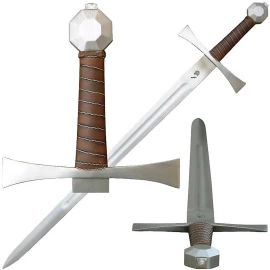
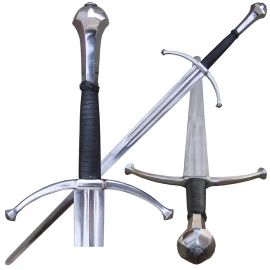
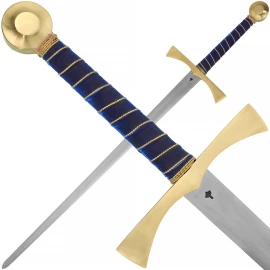
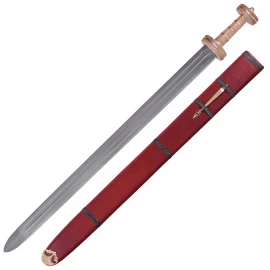
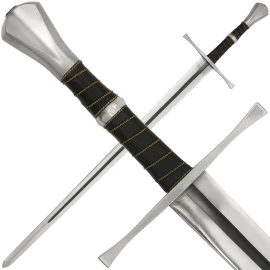
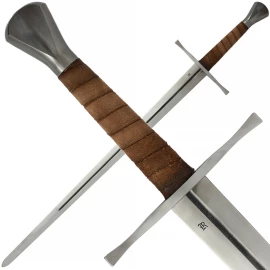
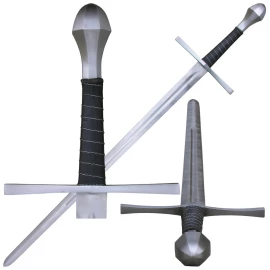
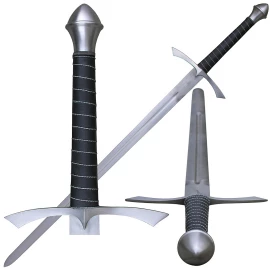
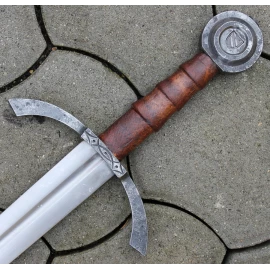
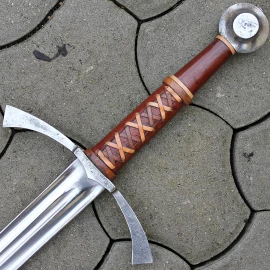
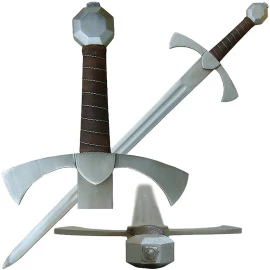
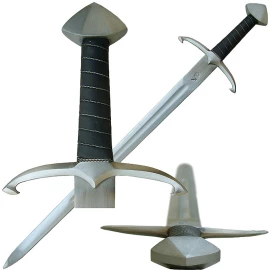
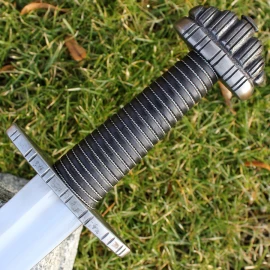
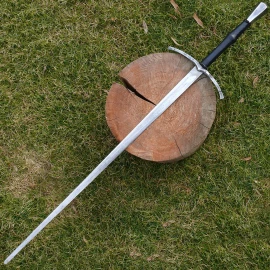
Are you looking for a solid and visually striking weapon for stage combat, intense historical fencing, or re-enactment, warrior? This Gothic single-handed arming sword Denquez will capture your attention with its subtly curved crossguard with a central peak and its distinctive ringed disc pommel. Hand-forged from high-quality spring steel and oil-hardened for superior resilience, its wood-cored hilt is wrapped in leather and steel wire to ensure a firm grip even in combat gauntlets. We recommend this Czech-crafted sword for fencing practice and festival battles. Further product information ...

Gothic Single-Handed Sword Denquez in Spring Steel
Historical Context and Weapon Architecture
The design of this arming sword draws inspiration from the transitional period between the 12th and 13th centuries (Transitional Romanesque to Early Gothic style). The prominent crossguard features quillons that curve slightly toward the blade to help catch and deflect opponent strikes. According to the Oakeshott typology, the blade with a broad central fuller corresponds to Type Xa or XI, while the recessed disc pommel (Type G or J) ensures superb balance and handling.
During the 13th century, a single-handed sword of this design served as the primary sidearm for knights and heavy infantrymen (measuring approx. 40.16 in / 102 cm overall). Used alongside a kite shield or buckler, its purpose was to deliver crushing cuts against mail armour and padded gambesons. This combat version features blunt edges (2–3 mm / 0.08–0.12 in thick) and a rounded safety tip for contact re-enactment.
Significance of the Name Denquez
The name Denquez is inspired by historic noble houses and knights of Southwestern Europe during the era of the Crusades. It symbolizes courage, endurance, and unyielding fortitude in battle. A weapon named in his honor pays tribute to warriors who relied on honest steel through tough trials.
Safe Usage Guidelines and Combat Advice
To ensure safety and maximize the lifespan of your sword, please adhere to the following recommendations:
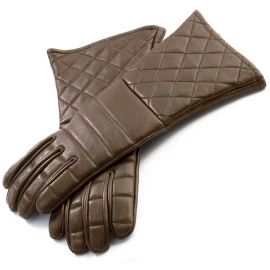
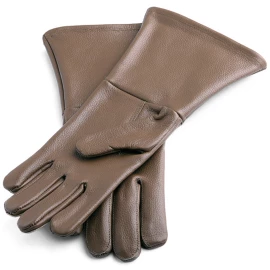
- Protective Gear: Always wear approved protective gear during combat—including a padded gambeson, mesh fencing mask, joint protectors, and heavy leather fencing gloves.
- Inspection: Carefully inspect the blade before every combat session. File down any burrs or sharp nicks along the edges immediately using a diamond file or fine sandpaper.
- Fencing Technique: Deliver cuts with proper martial form without excessive force. Parry incoming strikes primarily with the flat of the blade rather than edge-to-edge to avoid deep notches.
- Hilt Maintenance: Heavy use may cause the crossguard to loosen over time. Re-peening or tightening the pommel will resolve this. A temporary field fix involves wrapping tight wire or fishing line into the gap between the guard and grip.
- Liability Notice: All combat activities are performed strictly at your own risk. Edge notches and normal wear are inherent to combat use and are not covered under warranty. Keep out of reach of children.
- Classification of Battle-Ready-Weapons
Technical Specifications
| Parameter | Value |
|---|---|
| Product Type | Historical single-handed sword for stage combat |
| Fencing Classification | Class B according to combat weapon classification |
| Historical Era | 12th–13th century (Transitional Romanesque/Early Gothic) |
| Typology (Oakeshott) | Blade Type Xa/XI, Disc Pommel (Type G/J) |
| Blade Material | Spring Steel (oil-hardened to approx. 47 HRC) |
| Handle Material | Wood core wrapped in brown leather and steel wire |
| Guard & Pommel Material | Cast/forged steel |
| Overall Length | approx. 102 cm / 40.16 in |
| Blade Length | approx. 80 cm / 31.50 in |
| Guard Width | approx. 23 cm / 9.06 in |
| Edge Thickness | 2–3 mm / 0.08–0.12 in (blunt for combat) |
| Blade Tip | Rounded (safety tip) |
| Weight | approx. 2.10 kg / 4.63 lbs |
| Origin | Made in the Czech Republic |
Care and Maintenance
The spring steel blade is not stainless and requires regular maintenance:
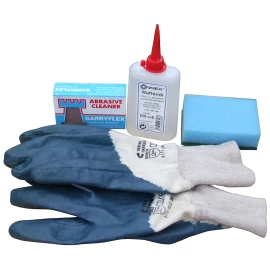
- Rust Protection: After each use or contact with bare hands, wipe the blade dry with a clean cotton cloth and apply a protective layer of gun oil (such as Ballistol or WD-40).
- Storage: Store the sword in a dry place out of reach of children. Avoid leaving it inside a damp leather scabbard for extended periods.
- Directions for the Use of Bladed Weapons from Outfit4Events
Recommended Accessories
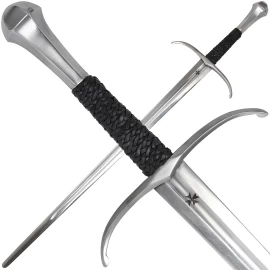
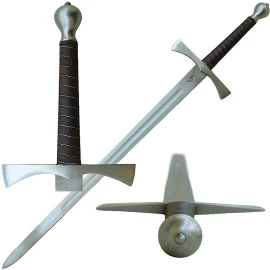
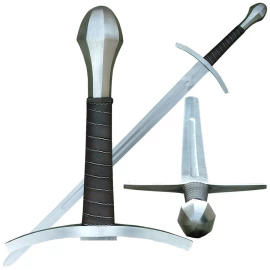
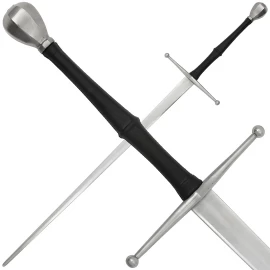
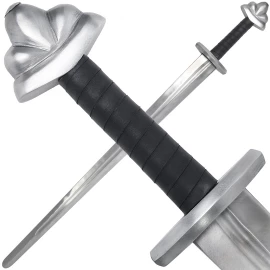
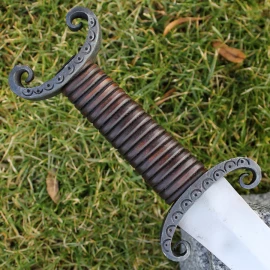
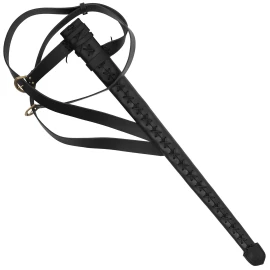
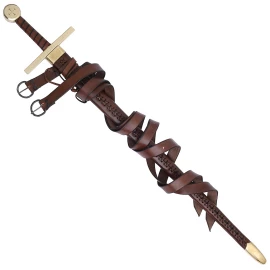
We recommend pairing this Gothic arming sword with a 13th-century leather-covered wooden scabbard with belt suspension, leather fencing gloves, a padded gambeson, and a steel buckler for a complete historical kit.
We are here for you!