 Čeština
 Deutsch


Japanese Deba Knife - Outlet
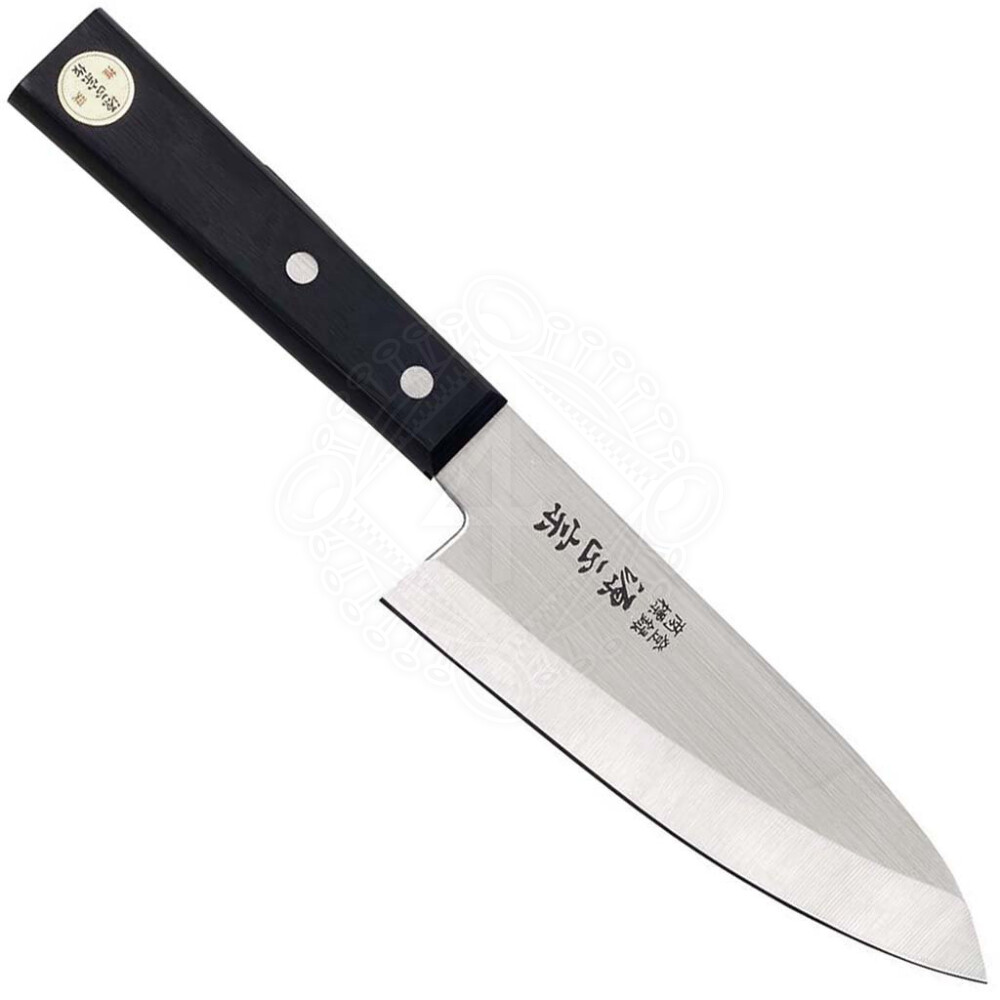
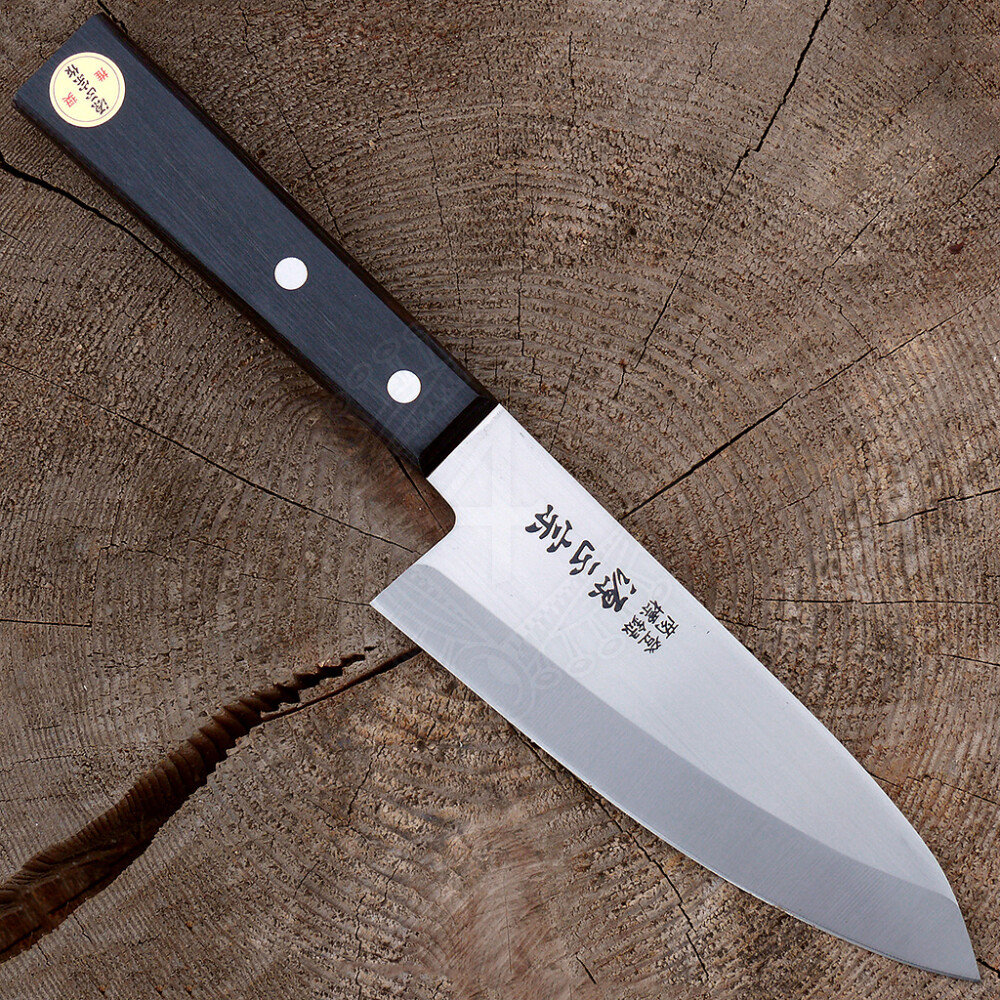
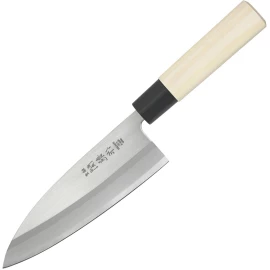
Do you want to bring the precision of Japanese masters into your kitchen? This traditional Japanese kitchen knife of the Deba type is a specialist for heavy work. It was developed for filleting fish and cutting fish bones, but thanks to its robust construction and heavy blade, it easily handles poultry butchery or meat slicing. It is a tool that combines the power of a cleaver with the sharpness of a razor. Further product information ...

Japanese Deba Knife – Meat and Fish Cleaver – 155 mm
The Power of Single Bevel Grind
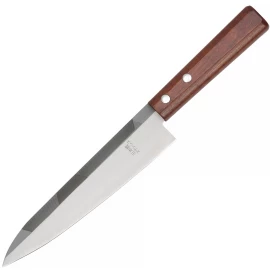
Like most traditional Japanese knives, this Deba has a single bevel grind (Kataba). This means it is sharpened only on one side at a steep angle, while the other side is flat. This profile ensures extreme sharpness and allows you to make cuts close to the bone without wasting meat. The blade is made of high-quality stainless steel, a modern concession for easier maintenance – the knife is resistant to corrosion, and you don't have to worry about it as much as carbon blades. Traditional Japanese characters (kanji) are stamped on the blade, adding an authentic look to the knife.
Western Style Handle
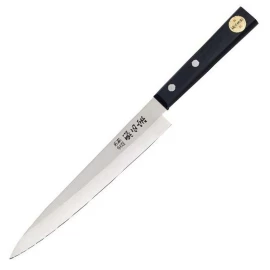
For European chefs, switching to Japanese knives can be challenging due to different handles. However, this model offers a compromise – a "Western" style handle (Yo-Deba). It is made of black wood (or durable composite) and is firmly riveted to the knife tang with two rivets. As a result, the knife fits in your hand as you are used to and provides a secure and firm grip even during forceful chopping.
Specifications
| Knife Type | Deba (Fish and Meat) |
| Total Length | 275 mm (approx. 10.8 inches) |
| Blade Length | 155 mm (approx. 6.1 inches) |
| Blade Material | Stainless Steel |
| Handle | Riveted, Black |
| Weight | approx. 300 g (approx. 10.6 oz) |
Care and Maintenance
Although this knife is made of stainless steel, it deserves gentle handling. Never put it in the dishwasher! Wash it with water after work and dry it immediately. Use only water whetstones for sharpening; a sharpening steel could damage the edge. When cutting, avoid chopping frozen foods or thick bones (beef, pork), as there is a risk of chipping the edge.
Safety Warning
The knife is heavy and very sharp. Exercise extra caution when working. Thanks to its weight, the knife cuts almost "by itself"; there is no need to apply great pressure.
We are here for you!