 Čeština
 Deutsch


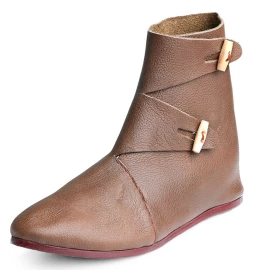
Ankle-High Leather Viking Boots Hedeby
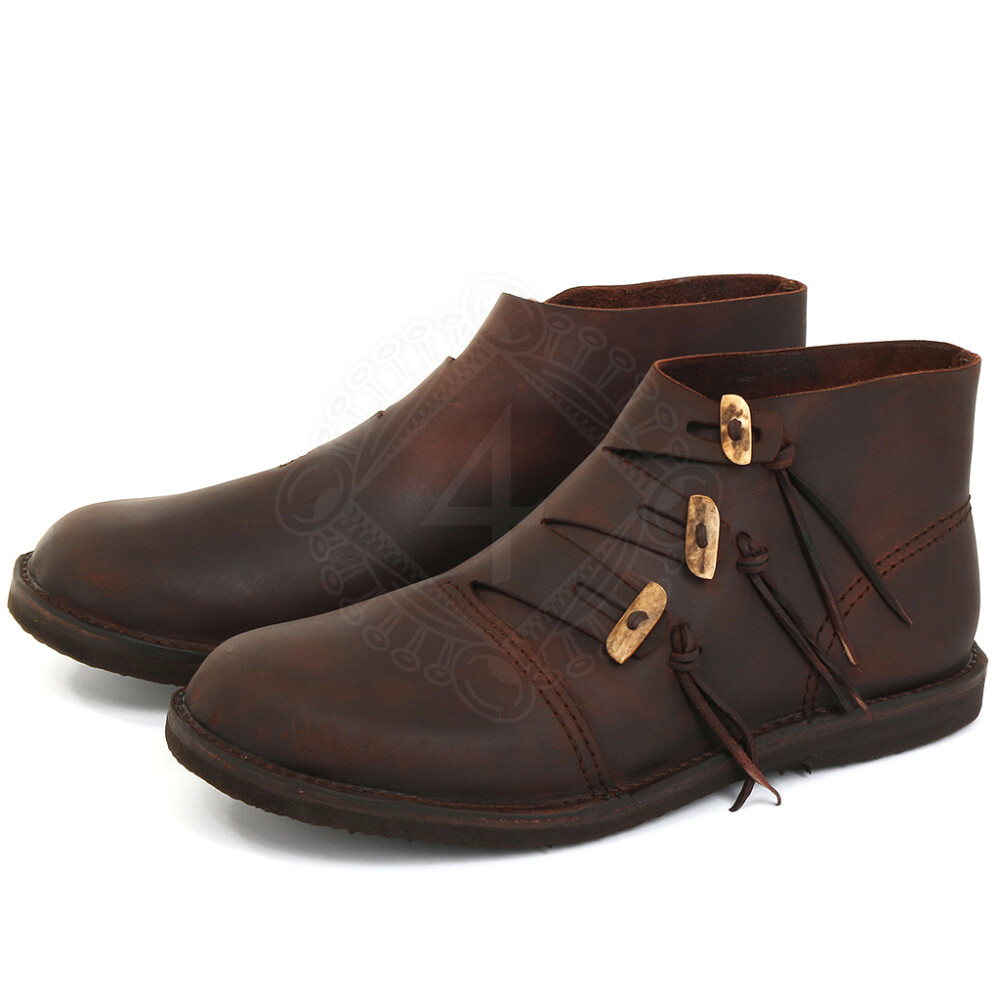
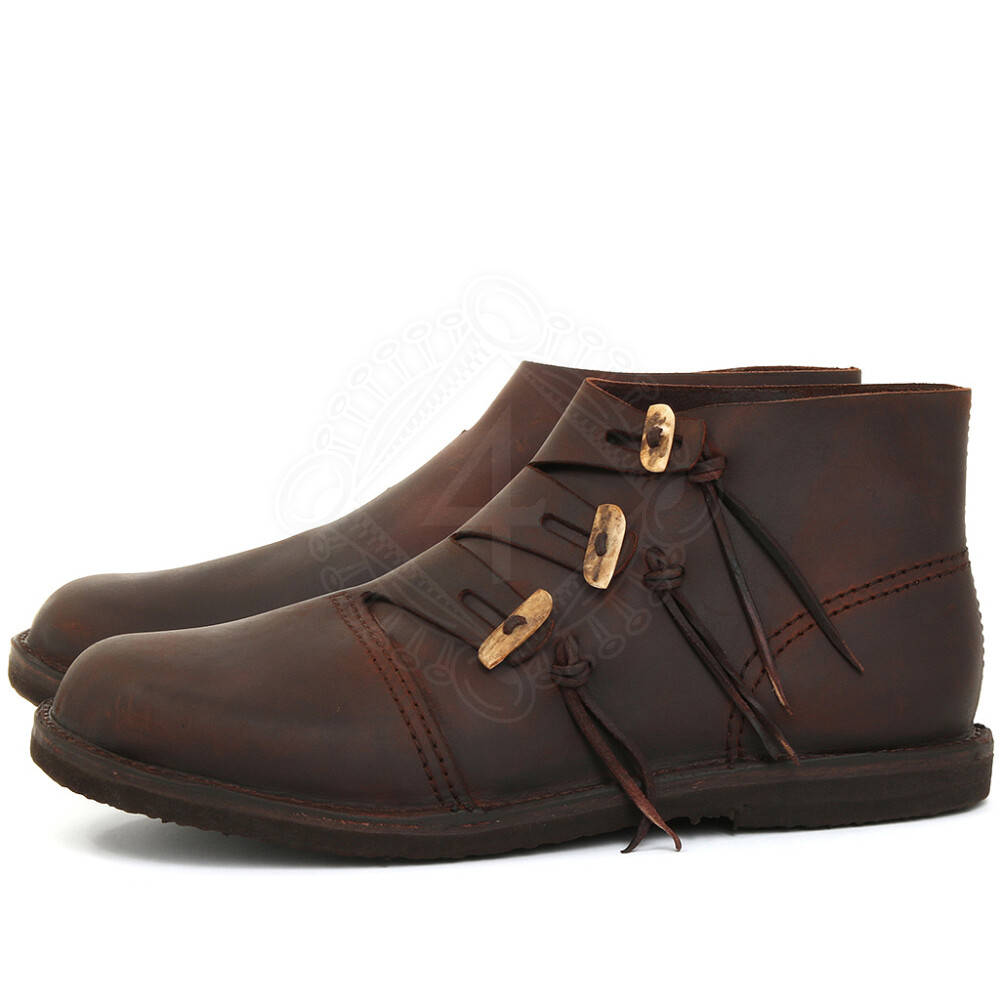
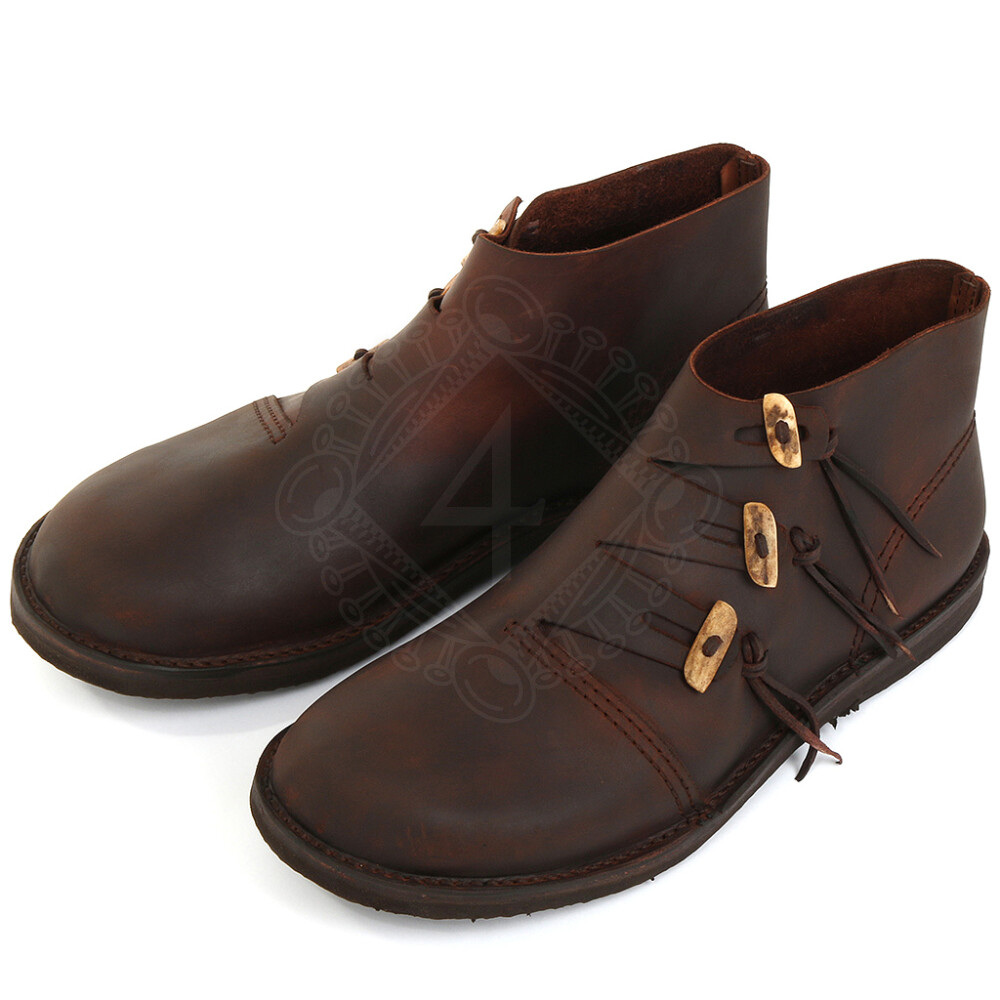
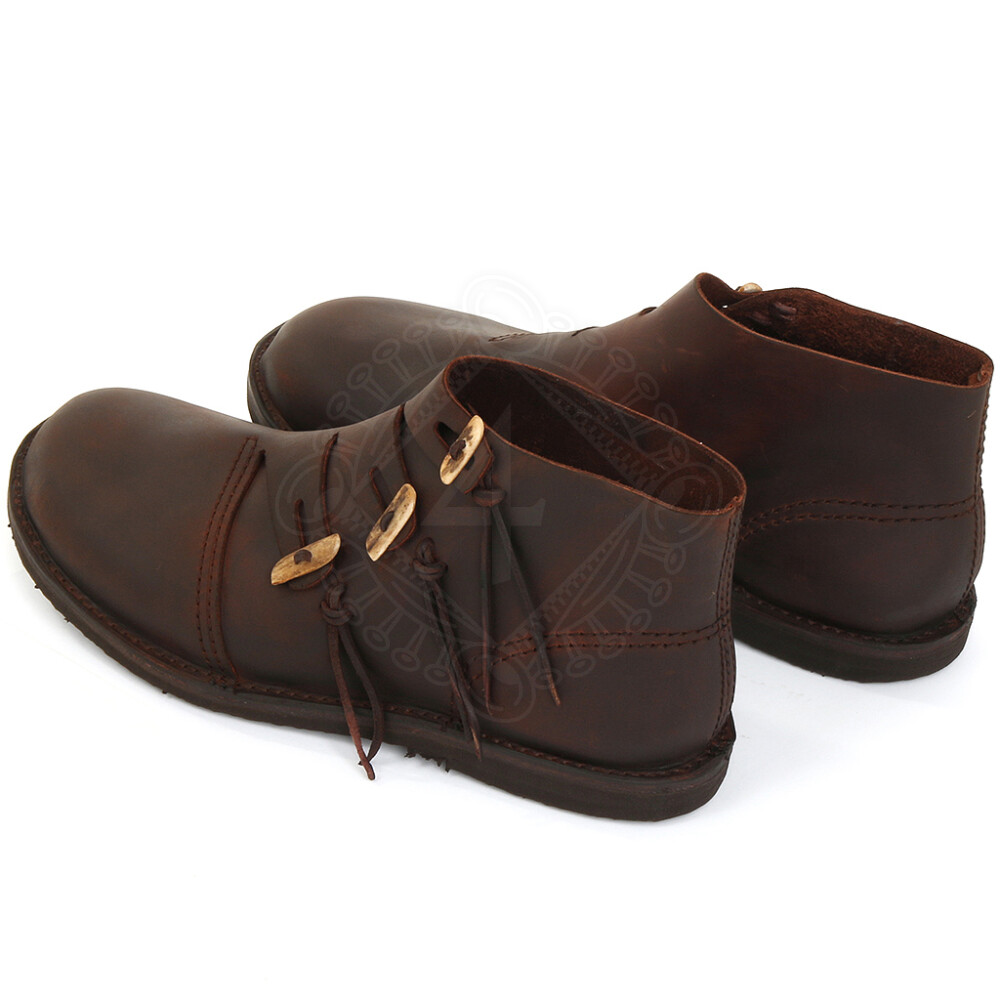
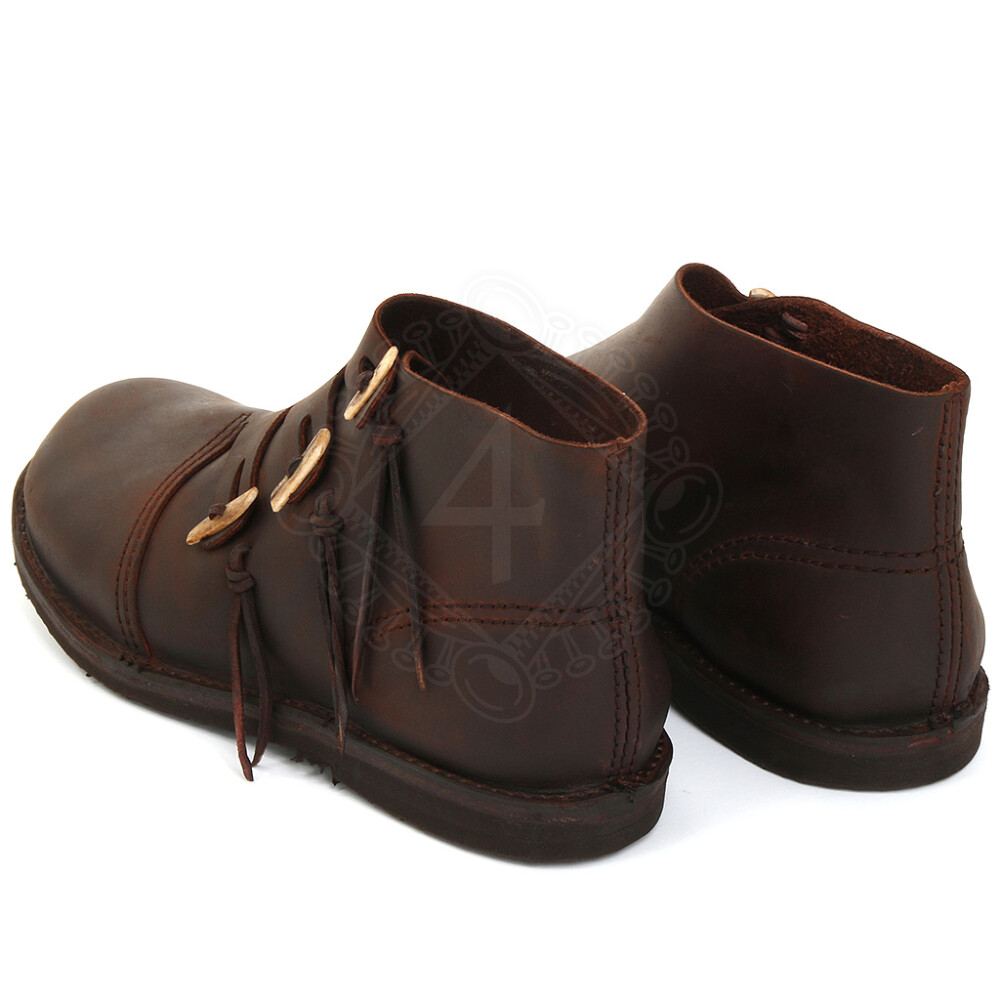
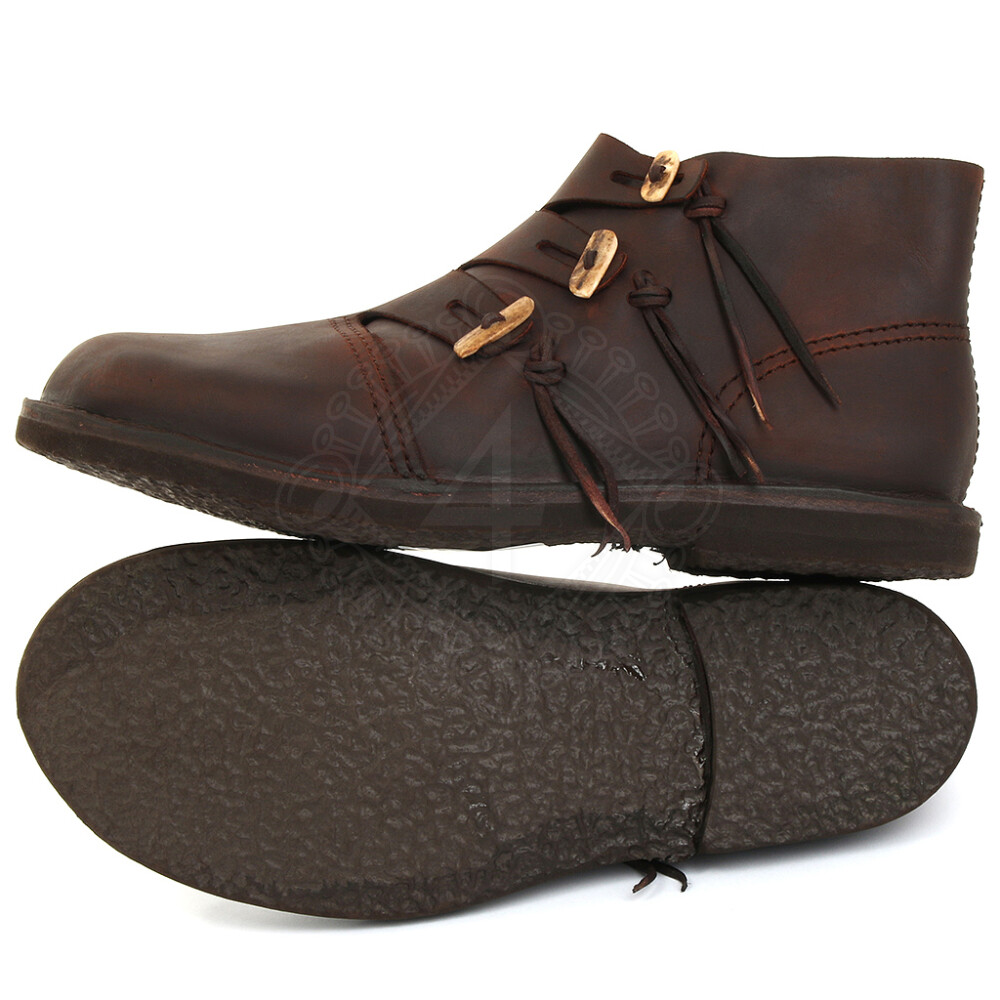
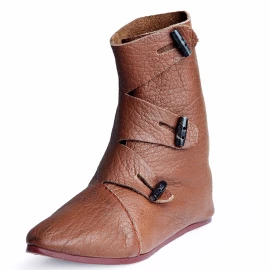
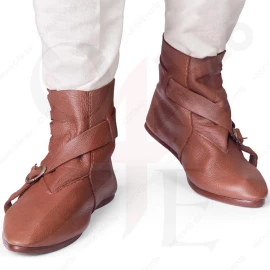
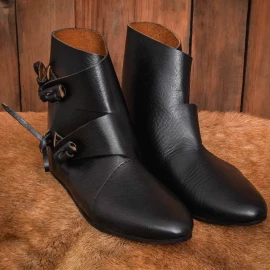
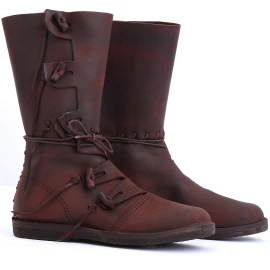
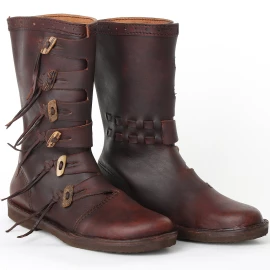
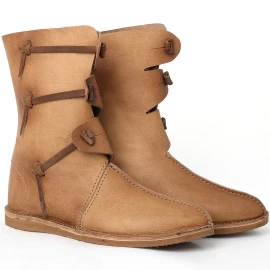
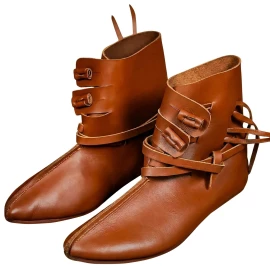
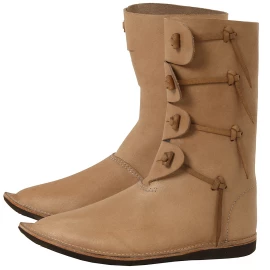
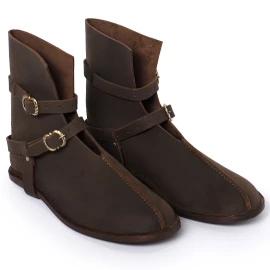
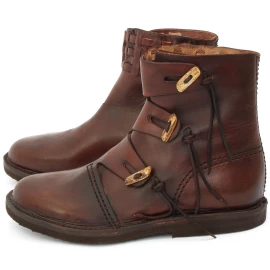
Step confidently into the Early Middle Ages with these sturdy ankle boots, drawing inspiration from the rich archaeological finds in the legendary trading centre of Hedeby. This footwear, typical for the period from the 8th to the 12th century, is the ideal choice for your Viking or Slavic costume, whether you are preparing for a historical reenactment festival, a LARP, or stage combat. The asymmetric fastening on the outer side of the leg using three horn or bone toggles gives the boots an authentic Nordic appearance. Thanks to the sophisticated cut and adjustable lacing, the boots will provide you with maximum support and comfort even during all-day wear in demanding terrain. Further product information ...
Ankle-High Leather Viking Boots Hedeby with Three Horn Toggles
Historical Context and Custom Adjustment
The excavations in Danish Hedeby (Haithabu) revealed ingenious methods of securing shoes to the foot. These ankle boots utilise a system of leather straps and solid toggles. If the shoe feels too tight or too loose around the instep or the ankle, its circumference can be easily adjusted. Simply untie the knots on the leather straps that secure the toggles to the shoe (a nail or an awl can be carefully used for easier untying) and shorten or lengthen the strap accordingly. This will help you achieve a perfect fit.
Material, Sole, and Colour Options
The upper of the footwear is crafted from high-quality cowhide. A major advantage of this model is the thick sole with a pronounced tread, which, although a modern functional element, guarantees safe movement. Unlike historical smooth leather soles, these shoes present a significantly lower risk of slipping on wet grass, mud, or modern smooth surfaces.
By default, the leather is available in black, dark brown, and light brown (natural) colours. Other colour shades are achieved by applying a special topcoat dye. Please note that this dye shares the properties of patent leathers – over time and due to stress, small cracks may appear, or the coating may crumble locally (especially in the flex zones). This is a natural phenomenon. However, if you are looking for footwear for occasional celebrations or weekend events, the coated dye will serve you reliably.
Shoe Care and Safety Guidelines
From the workshop, the boots are treated with a beeswax balm that softens, impregnates, and gives the leather a slightly darker patina. To maintain a long lifespan and flexibility, the leather must be regularly nourished. You can use waxes, leather oils, or standard shoe polish. Shoe polish can also be used to tint the shade and cover scuffs acquired during combat or marching through the forest. Never dry the boots near a direct heat source, such as an open fire or a radiator, as the leather would harden and crack irreversibly.
If you order the custom-made variant and wear orthotic insoles, it is essential to send these insoles to us in advance. They will be precisely integrated directly into the shoe, ensuring the footwear fits you perfectly.
Technical Parameters
| Upper Material | Cowhide leather |
| Sole | Thick sole with anti-slip tread |
| Fastening Method | Three leather straps with horn/bone toggles |
| Historical Period | Early Middle Ages (approx. 8th - 12th century) |
| Standard Boot Height | approx. 13 cm (5.1 in) |
| Weight per Pair | approx. 900 - 1000 g (1.98 - 2.2 lbs) depending on size |
| Factory Treatment | Impregnated with beeswax balm |
With these sturdy boots, we highly recommend acquiring traditional linen trousers and woollen leg wraps, which will help you achieve a perfectly looking and practical historical outfit for colder days.
We are here for you!