Čeština
 Deutsch


Jorvik Viking Leather Ankle Boots, Brown
3x


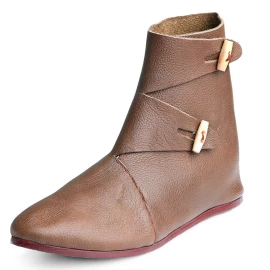
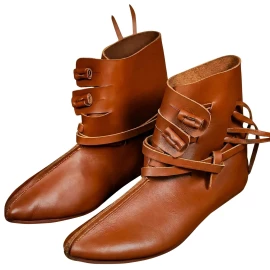
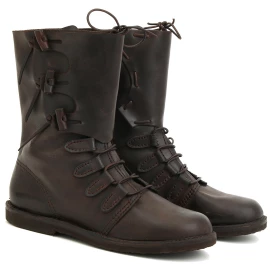
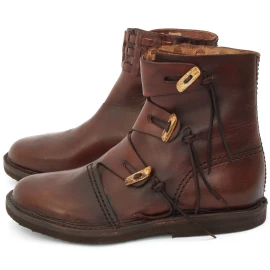
Preparing for a Viking festival, historical encampment or your next adventure? These brown Jorvik Viking leather boots bring the atmosphere of early medieval Scandinavia and Anglo-Saxon England to your outfit. Their design draws inspiration from archaeological footwear discovered in Viking-age York, dating to the 9th–10th centuries. Three leather straps with dark horn toggles provide a distinctive fastening system across the instep and ankle. The uppers are made from cowhide leather, complemented by thick 8 mm (0.31-inch) leather soles. Ideal for historical reenactment, LARP and costume events, these ankle boots complete the appearance of a Viking warrior, merchant or craftsman. Further product information ...

 Delivery options
The following variants are currently available:
Jorvik Viking Leather Ankle Boots with Horn Toggles, Brown
Historically Inspired Design and Construction
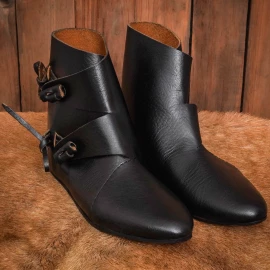
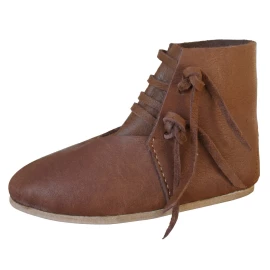
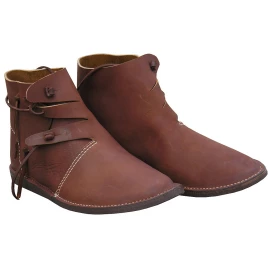
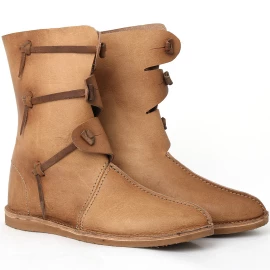
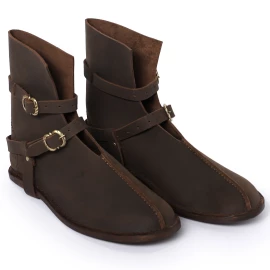
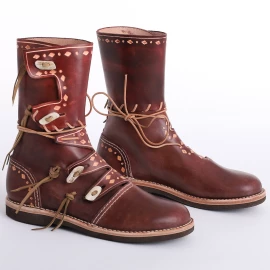
The boots feature an ankle-high cut with a slightly flared upper, a narrow, gently rounded toe and a flat sole without a pronounced heel. They are crafted from brown cowhide leather with natural grain variations. The subtly creased surface highlights the character of genuine leather.
The most distinctive feature is the fastening system consisting of three overlapping leather straps running diagonally across the front and side of each boot. Each strap features an opening through which a dark, elongated toggle is passed. The toggles are made from natural horn or, depending on the production batch, buffalo horn or bone.
The higher upper covers the ankle, while the simple construction without modern decorative elements makes the boots particularly suitable for period clothing. The photographs also reveal the seams joining the individual leather sections and the lighter suede-like inner surface of the hide.
The hardened leather sole is approximately 8 mm (0.31 inches) thick. It is attached to the upper by stitching and additional small nails. Numerous nail heads can be seen arranged around the perimeter of the outsole.
Historical Background: Viking-Age Jorvik
The name Jorvik is the Old Norse name for the English city of York, which became an important trading and craft centre during the Viking Age. In AD 866, a Viking army captured the city, and a significant Scandinavian settlement developed there over the following decades.
Archaeological excavations at Coppergate in York uncovered exceptionally well-preserved everyday objects, including numerous leather artefacts and footwear remains. The waterlogged ground conditions helped preserve organic materials that would normally have decayed.
Early medieval footwear was predominantly made from leather, and one widely used construction method was the turnshoe technique. The upper and sole were stitched together inside out before the completed shoe was turned right side out. This produced flexible footwear suited to the needs of the time.
Strap fastenings with toggles or buttons are also documented in early medieval footwear. This model takes its visual inspiration from Viking-age shoemaking traditions, although its reinforced leather sole and additional nails are practical adaptations for modern use. It should therefore not be considered an entirely exact reproduction of the original historical construction method.
Why Are These Boots Called Jorvik?
The name commemorates the important Viking settlement of Jorvik, modern-day York in northern England. During the 9th and 10th centuries, Scandinavian and Anglo-Saxon cultural influences met in this flourishing settlement. Archaeological finds from the city provide valuable evidence about clothing, craftsmanship and everyday life during the period.
The name Jorvik therefore highlights the connection between these boots, early medieval leather footwear and Viking culture in the British Isles.
How to Put On and Wear the Boots
- Before putting the boots on, undo all three leather straps and loosen the opening.
- Slide your foot inside and adjust the upper around your ankle.
- Bring the straps across the instep in sequence and pass the horn toggles through the corresponding openings.
- Check that the fastenings are secure and that the leather does not create uncomfortable pressure points.
- Break in new boots gradually by wearing them for shorter periods at first. The natural leather will become more supple and adapt to your feet over time.
For a more historically convincing appearance, pair the boots with woollen socks or period-style leg wraps. When choosing your size, remember to allow for the thickness of the socks you intend to wear.
Leather soles feel different underfoot from modern trainers. We recommend trying the boots on a safe, dry surface first and gradually becoming accustomed to their different grip, flexibility and cushioning.
Technical Specifications
| Feature | Specification |
|---|---|
| Product type | Early medieval Viking leather ankle boots |
| Model | Jorvik |
| Historical inspiration | York (Jorvik), 9th–10th centuries |
| Upper material | Natural cowhide leather |
| Colour | Brown |
| Sole material | Hardened leather |
| Sole thickness | Approx. 8 mm (0.31 inches) |
| Boot height | Approx. 19 cm (7.48 inches) in EU size 40 |
| Fastening | 3 leather straps with horn or bone toggles, depending on production batch |
| Upper-to-sole attachment | Stitched and additionally nailed |
| Toe shape | Elongated and gently rounded |
| Manufacturer | Marshal Historical |
All measurements are approximate. Boot height may vary depending on size. As genuine leather is a natural material, individual pairs may show slight differences in colour, grain and surface texture.
How to Care for Your Leather Boots
Regular care helps maintain the leather's flexibility and extends the useful life of your footwear.
- Cleaning: Remove mud and dust after wearing with a soft brush or slightly damp cloth.
- Leather conditioning: Regularly apply a suitable leather grease, beeswax-based treatment or another conditioner intended for smooth natural leather. Test it on an inconspicuous area first.
- Drying: Allow wet boots to dry slowly at room temperature. Never place them directly beside a fire, on a radiator or close to intense heat.
- Sole maintenance: Inspect the leather soles, seams and fixing nails regularly. Have excessively worn soles repaired by an experienced cobbler.
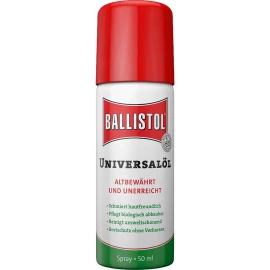
- Toggle care: Horn components may occasionally be treated with a suitable horn-care product. Avoid prolonged exposure to water or high temperatures.
- Storage: Keep the boots in a dry, ventilated place, ideally stuffed with paper or fitted with suitable shoe trees to help retain their shape.
Safety and Usage Advice
Leather soles can be very slippery on smooth or wet surfaces. Take particular care on paving stones, polished floors, wet rocks and other slippery ground. If you intend to wear the boots frequently in town, consider asking a cobbler about adding a thin anti-slip rubber layer. Be aware that this modification will change their historical appearance.
These boots do not feature modern protective toe caps, certified slip-resistant soles or specialised protection against mechanical injury. They are not intended to be used as safety or industrial footwear.
During historical combat demonstrations or fencing events, always follow the organiser's safety rules and the requirements of the activity. Their period appearance does not mean that the boots provide sufficient protection for full-contact combat.
Recommended Accessories
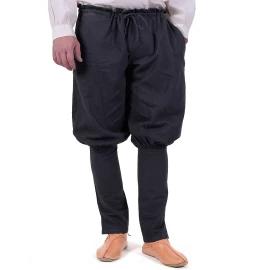
We recommend pairing the Jorvik Viking boots with woollen socks or leg wraps inspired by the 9th and 10th centuries, linen or wool tunics, Viking trousers and a leather belt with a period-style buckle. To complete the outfit of a merchant or craftsman, add a leather pouch, shoulder bag or woollen cloak reflecting early medieval Scandinavian or Anglo-Saxon clothing traditions.
We are here for you!