
 Čeština
 Deutsch


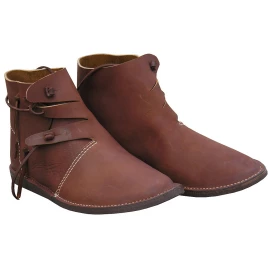
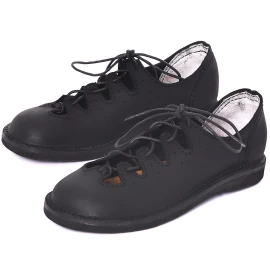
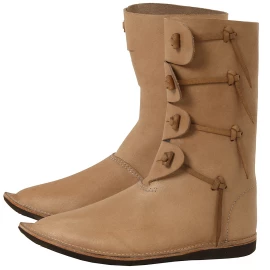
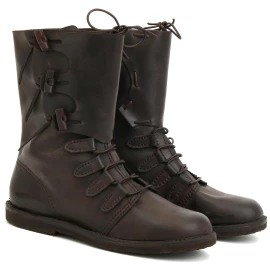
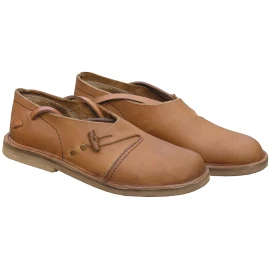
Ing Child’s Viking-Style Leather Shoes with Side Lacing EU 28


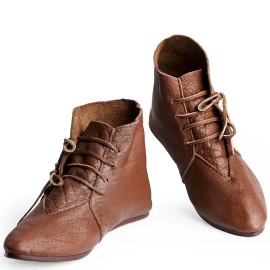
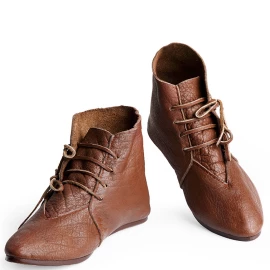
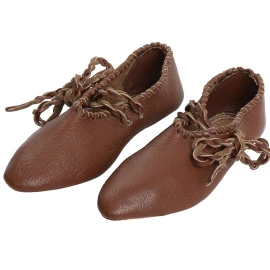
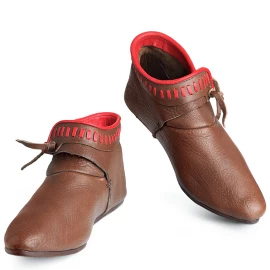
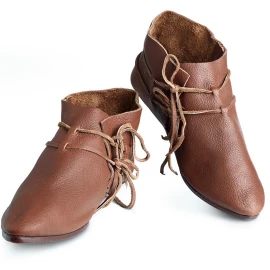
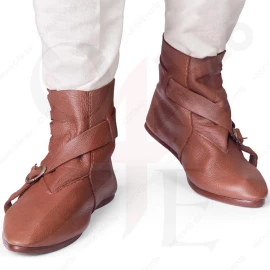
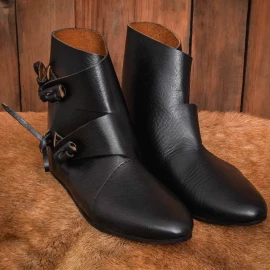
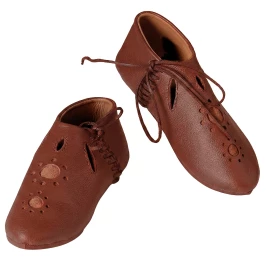
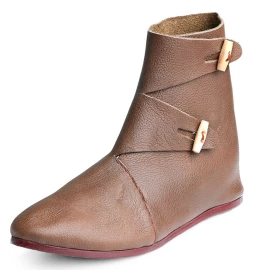
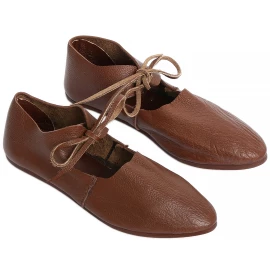
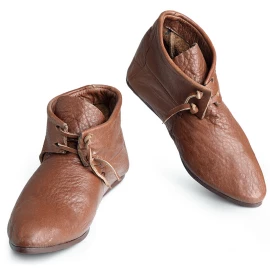
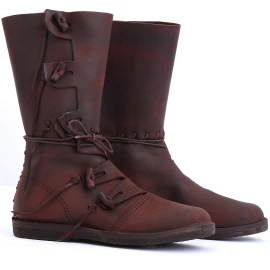
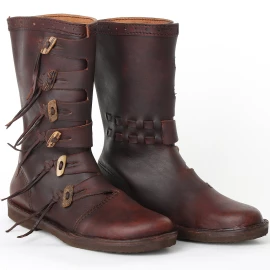
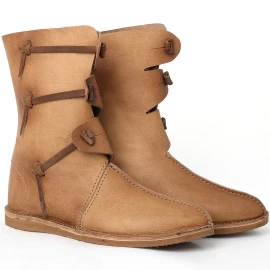
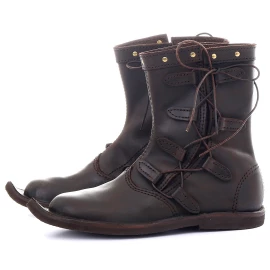
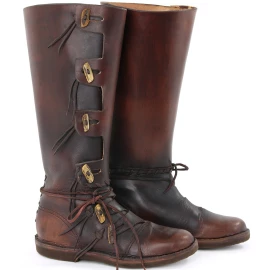
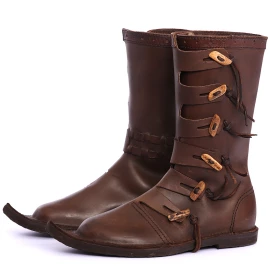
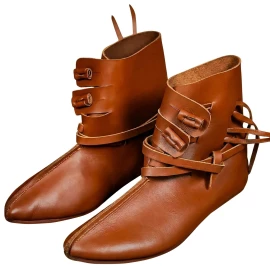
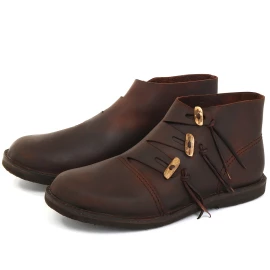
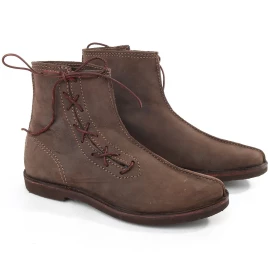
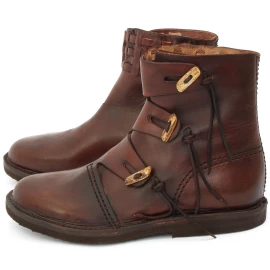
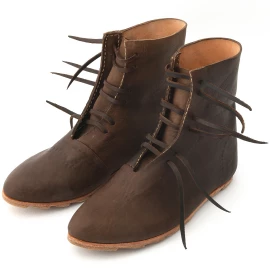
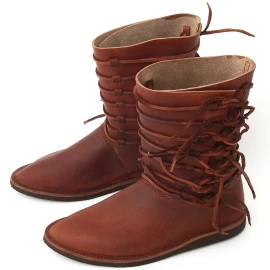
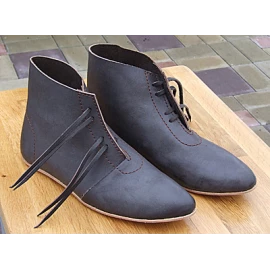
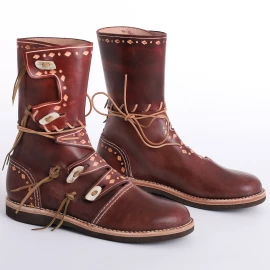
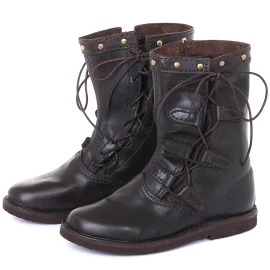
Equip your young adventurer for their next historical journey with the Ing leather shoes. These shoes bridge the gap between early Viking designs and the late medieval period, offering a versatile look for any re-enactment event. Hand-crafted from high-quality, vegetable-tanned cowhide, they feature a durable nailed sole designed to withstand the rigours of the field. The lateral lacing provides excellent ankle support and a snug fit for growing feet. Whether for LARP, cosplay, or educational history days, these boots provide the authentic touch and reliability every young hero needs to explore the past. Further product information ...

Ing Child’s Viking-Style Leather Shoes with Side Lacing
Construction and Practical Use
Ing boots are constructed with a focus on active children's movement. The upper is made of approx. 2 mm (0.08 in) thick cowhide, which protects the foot but remains flexible enough for a comfortable stride. The sole is attached to the boot using a stable nailing method (durchnagelung), ensuring high mechanical resistance and a historically accurate profile. The side lacing allows the shoe to be easily loosened or tightened according to the width of the child's instep.
We recommend treating the footwear with a suitable leather wax or oil before the first use. This will not only increase water resistance but also speed up the softening process of the leather. For maximum comfort and authenticity, these shoes should be supplemented with woollen socks or linen leg wraps (wadenwickel), which complete the historical look and ensure warmth in colder weather.
Technical Specifications
| Product Type | Historical children's footwear |
| Material | Natural vegetable-tanned cowhide |
| Upper Leather Thickness | approx. 2 mm (0.08 in) |
| Sole Leather Thickness | approx. 7 mm (0.28 in) |
| Construction Method | Stable nailed sole (durchnagelung) |
| Historical Period | 14th–15th century (pattern based on Viking designs) |
| Size Range | 24–34 |
Historical Context and Fun Facts
The cut of these shoes is based on finds typical of the Early Middle Ages, particularly from Viking settlements. However, shoes with side lacing appeared in various forms throughout Europe until the 15th century. Lateral lacing was highly practical – it prevented dirt from easily entering the shoe while allowing for a firm fix without expensive metal buckles. In the Middle Ages, children's shoes were often made as miniature versions of adult models, as specialised children's fashion did not exist. A young squire or apprentice would look exactly like their elders.
Maintenance and Safety
- Cleaning: After each use, clean the shoes with a damp cloth to remove mud and let them air dry at room temperature.
- Drying: Never place the boots directly on a radiator or near an open fire, as the leather may become brittle and crack.
- Maintenance: Regularly rub in a leather balm with beeswax to keep the material supple.
- Surface Care: These shoes are sensitive to modern asphalt, concrete, and gravel. We recommend adding rubber soles or using wooden pattens (trippen) to prevent excessive wear.
- Safety: Leather soles can be slippery on wet grass or smooth stones; ensure the child takes care in such terrain.
Recommended Accessories
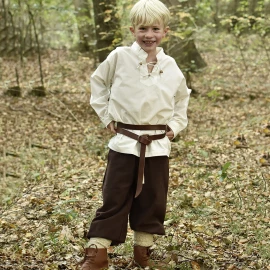
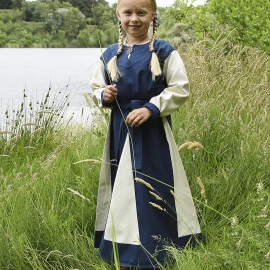
We recommend purchasing woollen leg wraps and a historical child's tunic to complete the outfit. Other accessories shown in the photos, such as belts or shirts, are not included in the delivery.
Manufacturer Information
Mittelalterschuhe.com
Nicole Witte
Varreler Str. 7
49419 Wagenfeld
Germany
info@mittelalterschuhe.com
Tel: +49 57745564964
Mobile: +49 151 29888061
We are here for you!





.3773623034.1696456237.png.webp)

.3773623034.1696456268.png.webp)
.3773623034.1696456247.png.webp)