 Čeština
 Deutsch


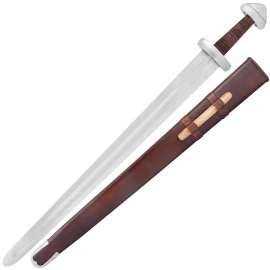
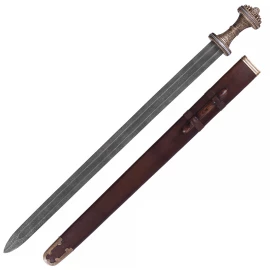
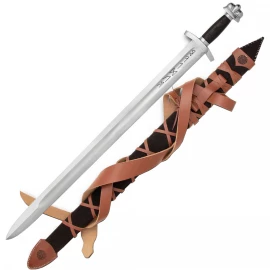
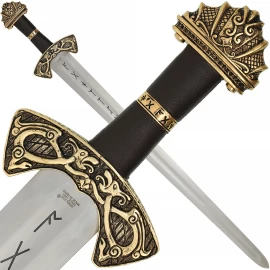
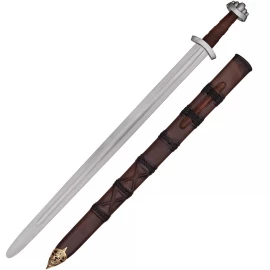
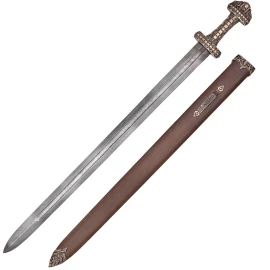
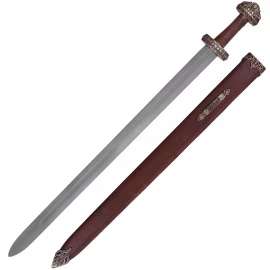
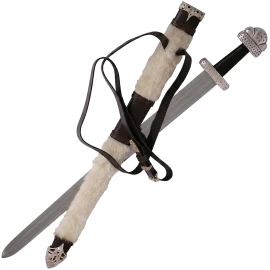
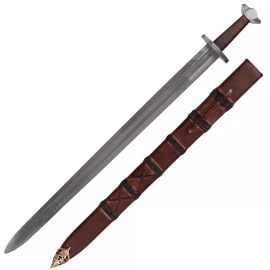
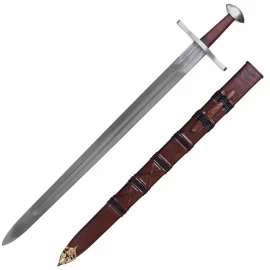
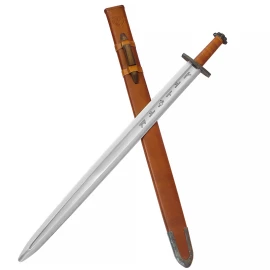
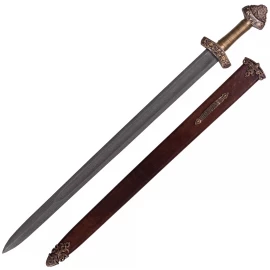
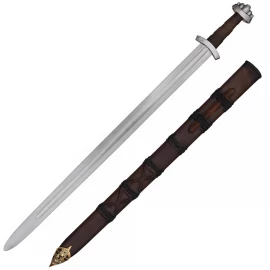
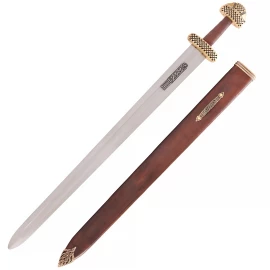
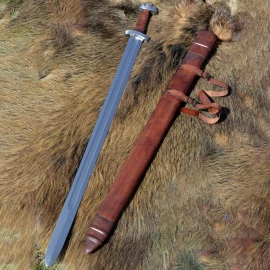
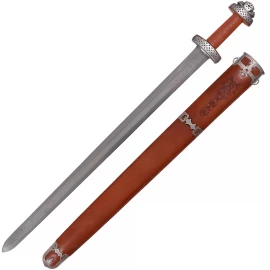
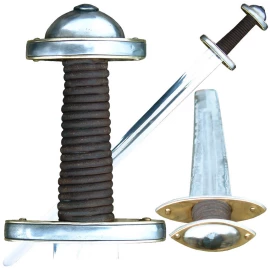
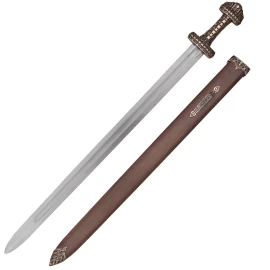
Viking Sword Jarl Haakon with Scabbard, Spring Steel
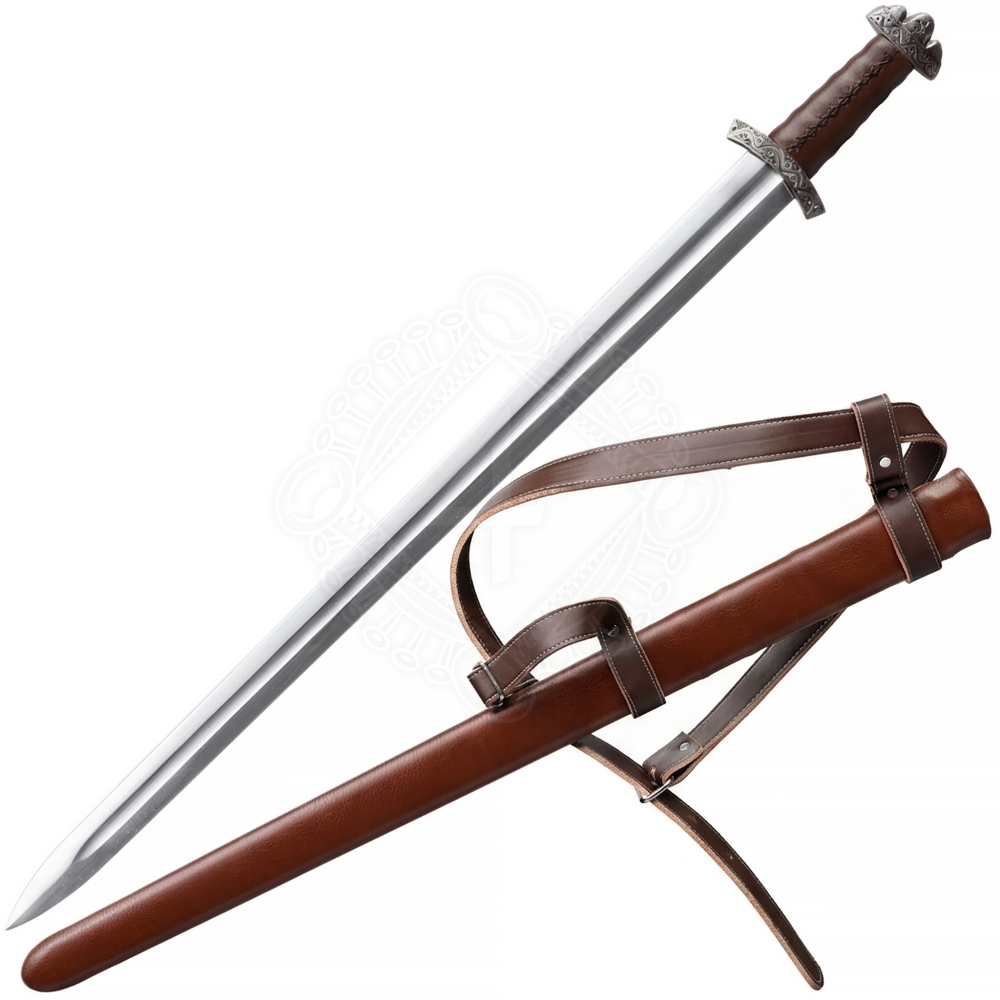




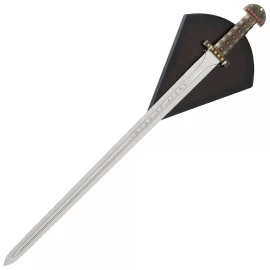
Transport yourself to the uncompromising era of the early Middle Ages with this fully functional Viking sword, blending historical elegance with cold steel. We present to you a weapon designed for history enthusiasts, collectors, and practitioners of test cutting. The forged spring steel blade provides excellent properties for cutting and slashing, while the decorated hilt, featuring a pommel and crossguard cast from white copper, gives the weapon an authentic Norse character. This model from our upgraded SWM series is the ideal compromise between affordability and full functionality. Prepare to hold a piece of fascinating Viking history that will become the crown jewel of your collection and a reliable tool for your martial arts training. Further product information ...
Would you like to be notified as soon as the item is in stock?
You will receive a short e-mail as soon as we have it back in stock.
Viking Sword Jarl Haakon with Scabbard, Spring Steel
Sword Design and Construction
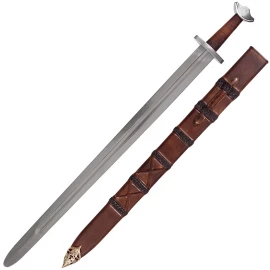
At first glance, you will notice the broad and powerful blade, equipped with a prominent fuller (blood groove). This serves to reduce the weight of the weapon while maintaining its maximum structural integrity. The blade is precisely forged from high-quality spring steel, which has undergone a careful heat treatment process. Because this is the upgraded SWM series, the tempering and quenching processes are outsourced to trusted local workshops to ensure stable quality control at higher volumes. The hardness of the blade thus ranges optimally between 49-53 HRC, granting the weapon toughness and excellent edge retention.
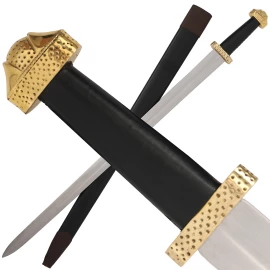
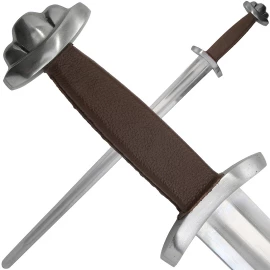
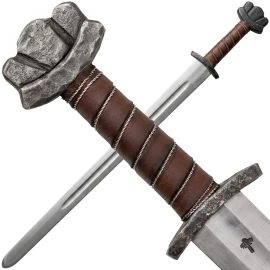
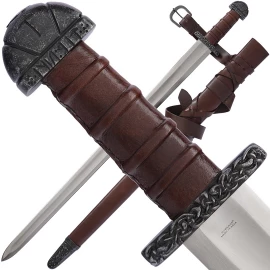
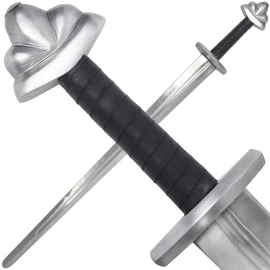
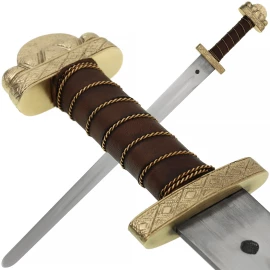
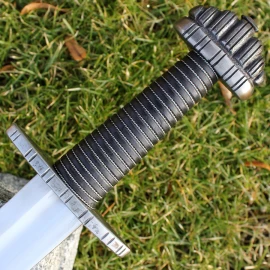
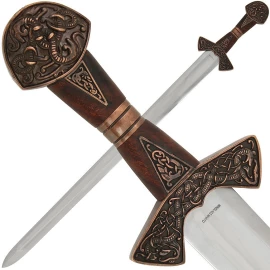
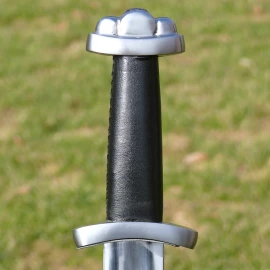
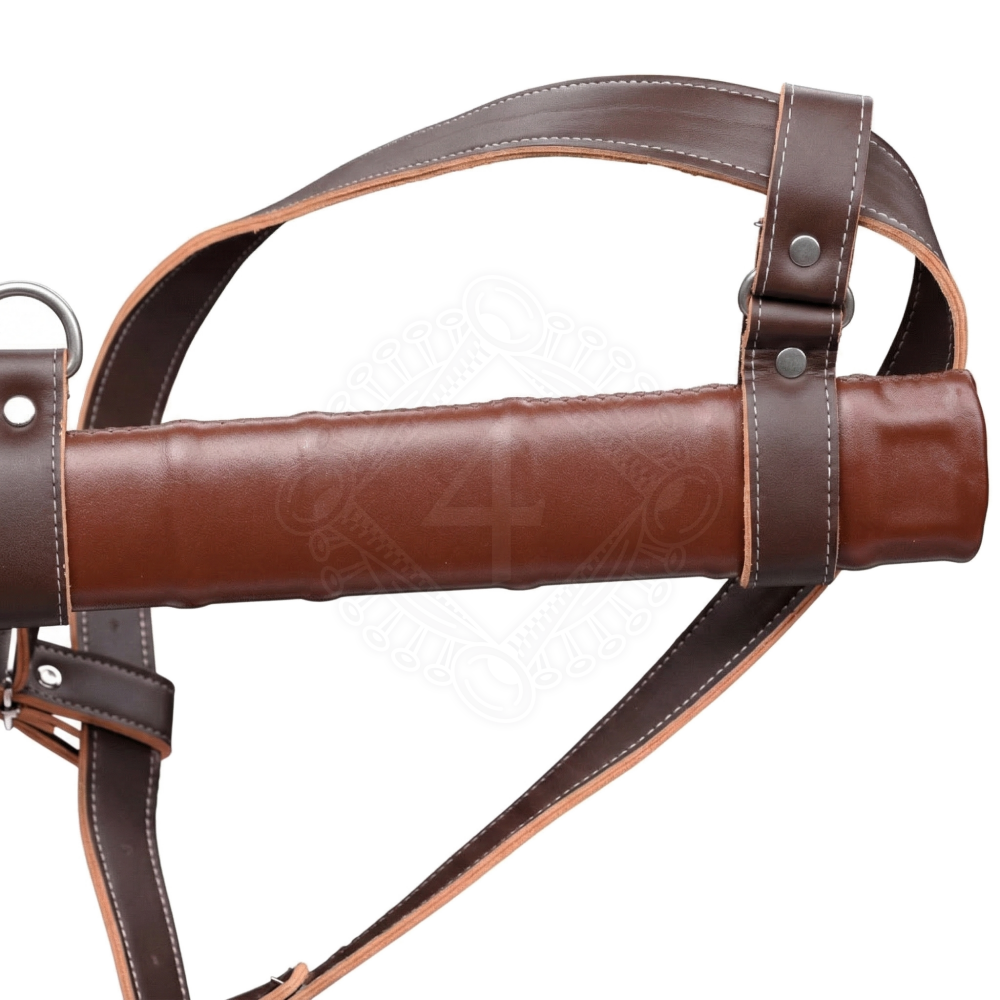
The grip consists of a wooden core covered in stitched synthetic leather (PU leather), ensuring a firm hold. The same material covers the included wooden scabbard, which features an ingeniously integrated baldric system for carrying over the shoulder or on a belt. The metal fittings of the hilt—the massive lobated pommel and the short crossguard—are cast from white copper (nickel silver) and decorated with raised geometric patterns inspired by surviving historical artifacts.
Historical Context and Usage
Originals of similar swords were predominantly used from the 9th to the 11th century, during the peak expansion of Norse warriors. According to Dr. Jan Petersen's typology, this sword exhibits features typical of late Viking Age weapons. The shorter crossguard and the massive, five-lobed pommel were designed to lock the warrior's hand in place, allowing them to deliver devastating cuts from behind the safety of a shield. The point of balance, shifted further towards the tip (here 15 cm / 5.91 inches from the guard), clearly indicates that the weapon's primary purpose was a heavy, crushing blow.
Interestingly, in the early Middle Ages, a sword was an incredibly expensive possession. A common warrior fought with an axe or a spear. Only a Jarl (chieftain), an experienced Huscarl, or a wealthy merchant could afford a sword. It was often passed down from father to son, and it was believed that the blade possessed its own soul and the memory of the battles it had seen.
Technical Specifications
| Blade Material | Spring Steel (Hardness 49-53 HRC) |
| Full Length | 96 cm (37.8 inches) |
| Blade Length | 71 cm (27.95 inches) |
| Blade Width (at guard) | 4.5 cm (1.77 inches) |
| Blade Thickness | 0.8 cm (0.31 inches) |
| Handle Length (grip area) | 10.5 cm (4.13 inches) |
| Point of Balance (PoB) | 15 cm (5.91 inches) from guard |
| Net Weight | 1,080 g (2.38 lbs) |
| Weight with Scabbard | 1,640 g (3.62 lbs) |
| Guard and Pommel Material | White Copper (Nickel Silver) |
| Scabbard and Grip Material | Wooden Core covered with PU Leather |
Care and Maintenance
To ensure this beautiful piece stays looking new for as long as possible, it requires regular care. Carbon-based steel is susceptible to ambient humidity and can rust. After every use—whether after test cutting or simply handling the blade with bare hands—wipe it down thoroughly with a dry cloth and apply a protective layer. We highly recommend using specialized gun oils or microcrystalline wax. Never store the weapon inside its scabbard for long periods. The leather and wood can draw in moisture and cause the blade to corrode. For long-term storage, choose a dry place and display or rest the sword outside of the scabbard.
Safety Warnings and Disclaimer
Warning: This replica is fully functional and comes with a sharp blade. The weapon is intended exclusively for individual test cutting practice (tameshigiri) on appropriate targets (e.g., soaked tatami mats or plastic water bottles) and as a display or collector's piece. Under no circumstances is it designed for historical European martial arts (HEMA sparring), stage combat, or any form of person-to-person contact fighting! Striking the weapon against steel or other hard materials will ruin the edge and risks dangerous material splintering. Using this weapon is entirely at your own risk. Neither the manufacturer nor the seller assumes any liability for injuries, property damage, or death caused by improper or unsafe handling of this sword.
Recommended Accessories
To accompany this Viking sword, we gladly suggest acquiring a sturdy round shield, which was an inseparable part of early medieval combat styles. For proper maintenance, a cleaning and preservation kit for bladed weapons will prove extremely useful. If you plan to use the sword for historical reenactment or as part of a costume, it pairs perfectly with a period-accurate linen tunic and a high-quality leather belt featuring a bronze buckle.
We are here for you!