
 Čeština
 Deutsch


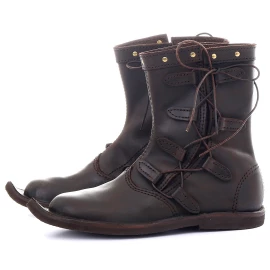
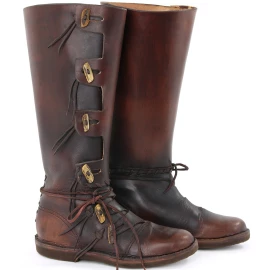
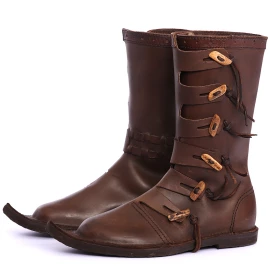
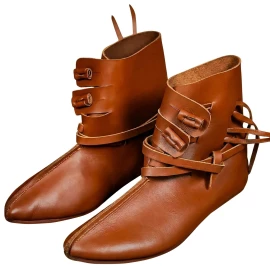
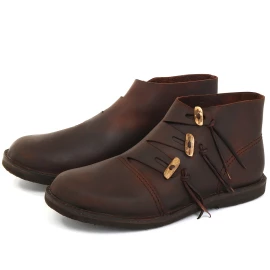
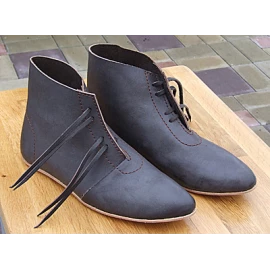
Early Medieval Viking Turn-Shoes, Jorvik Style (9th-10th Century), black
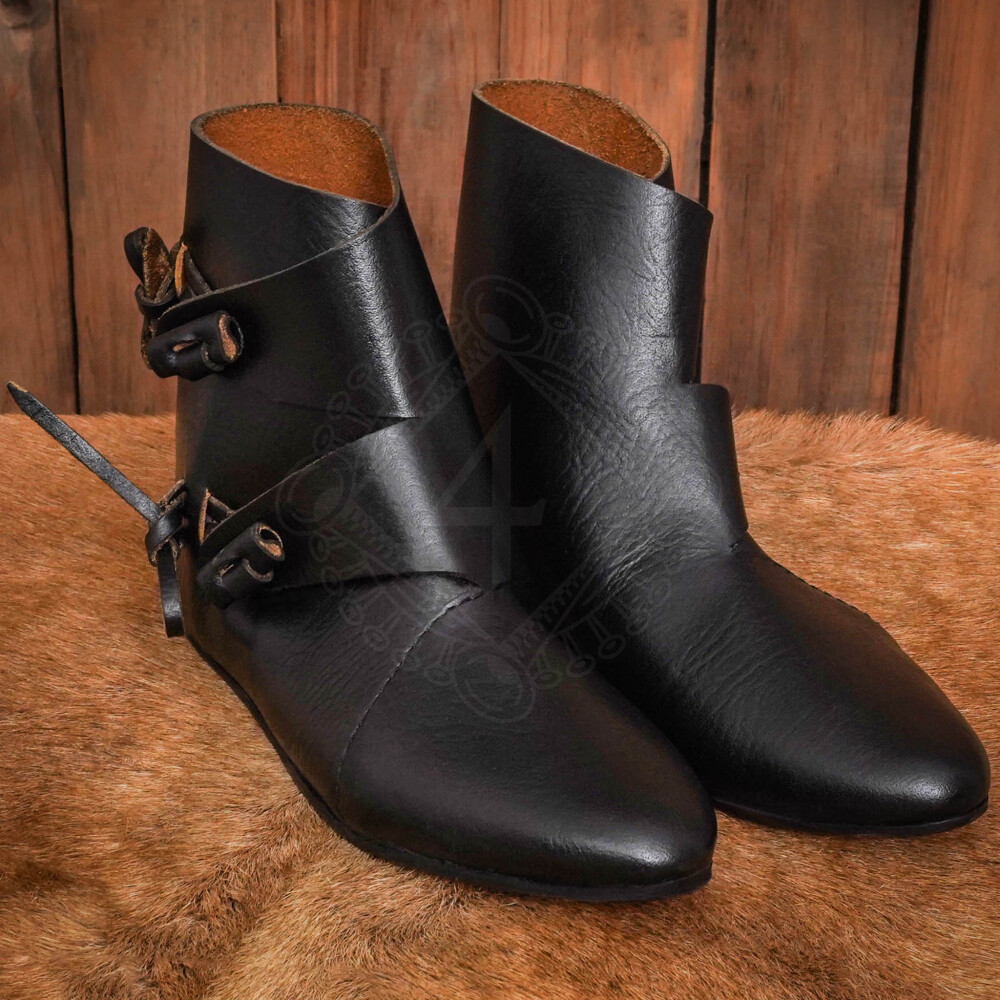
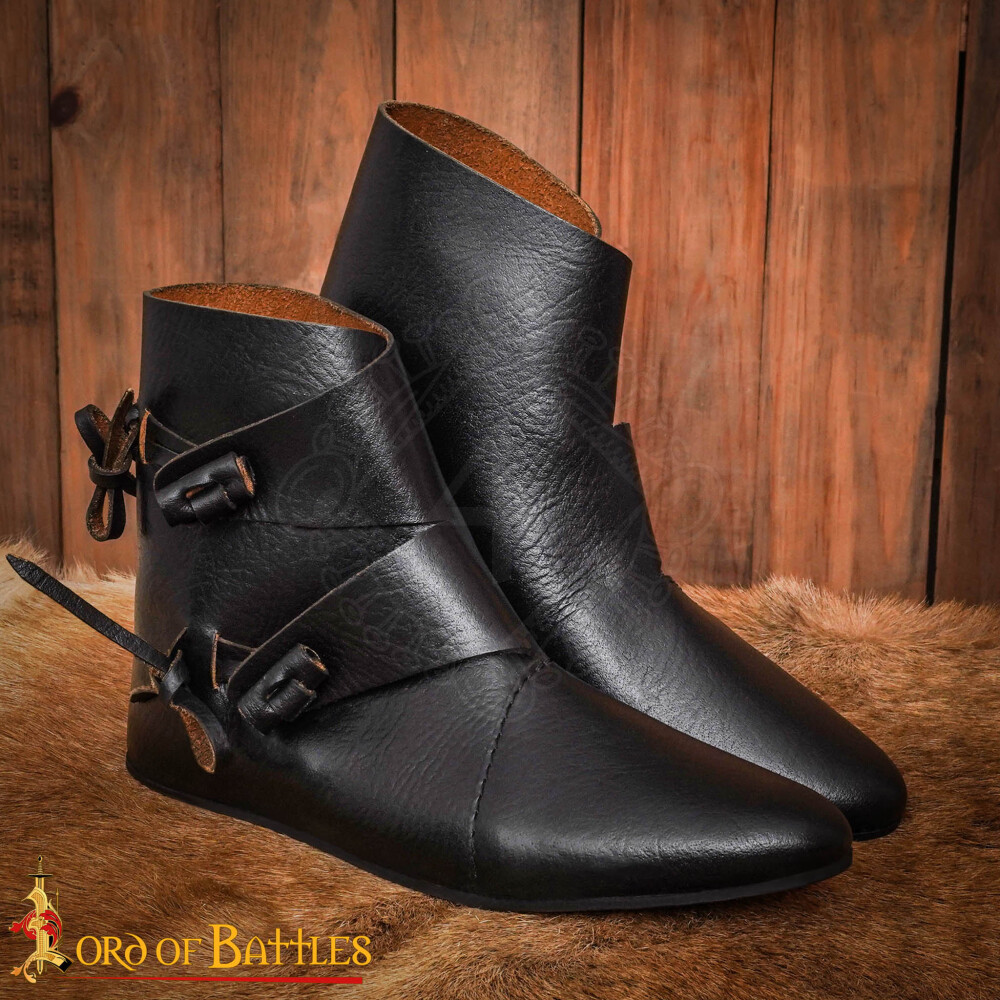
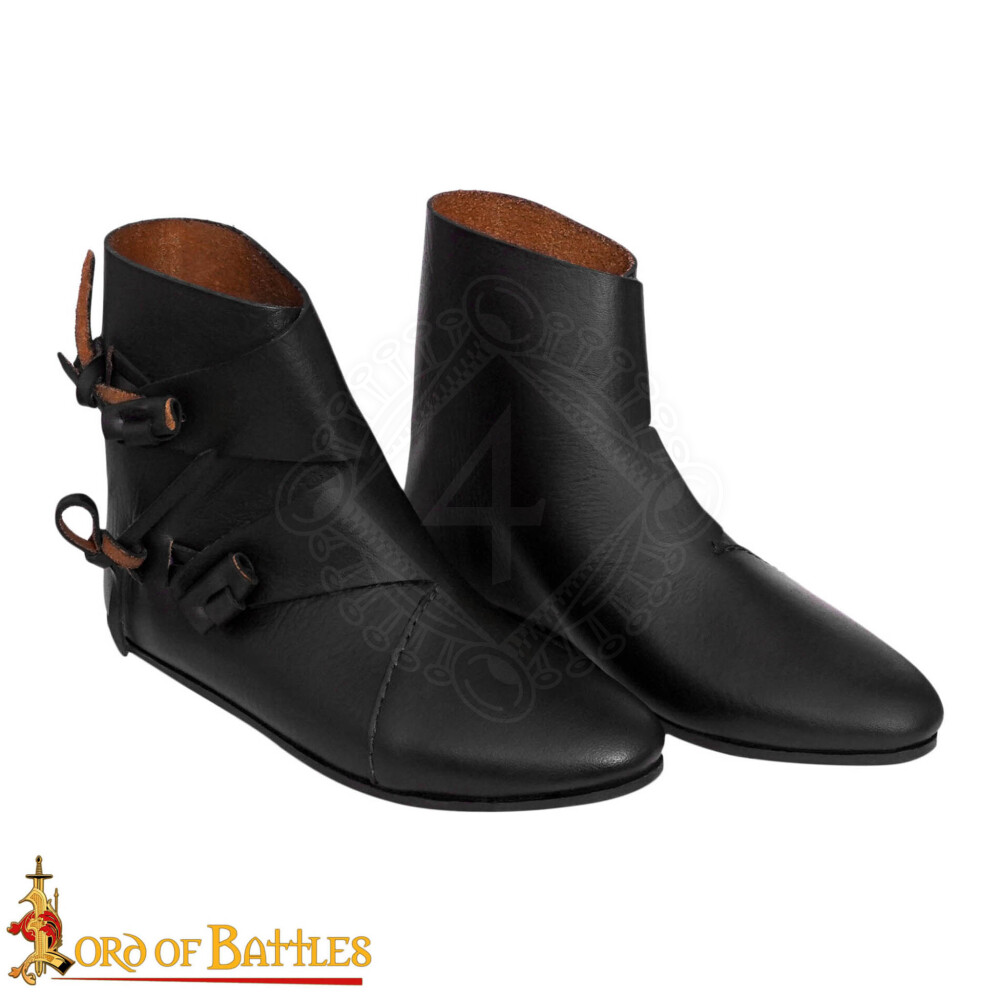
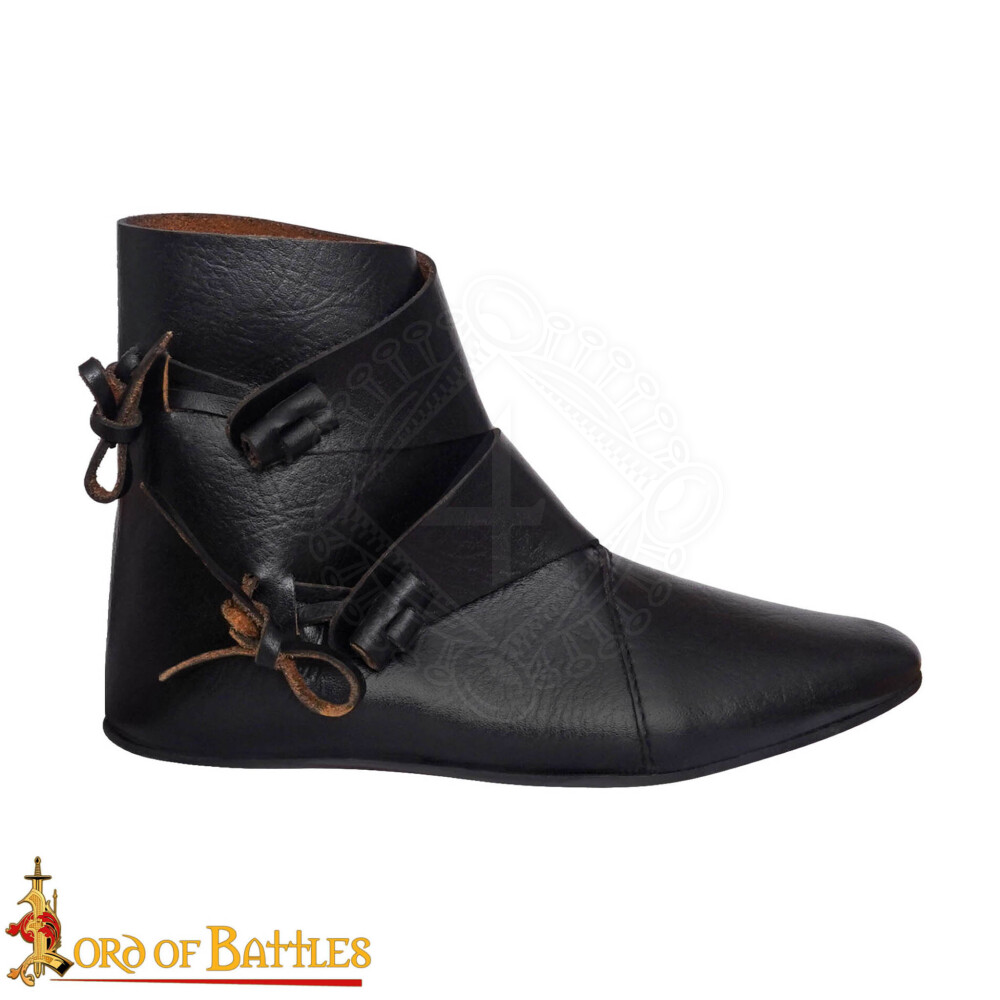
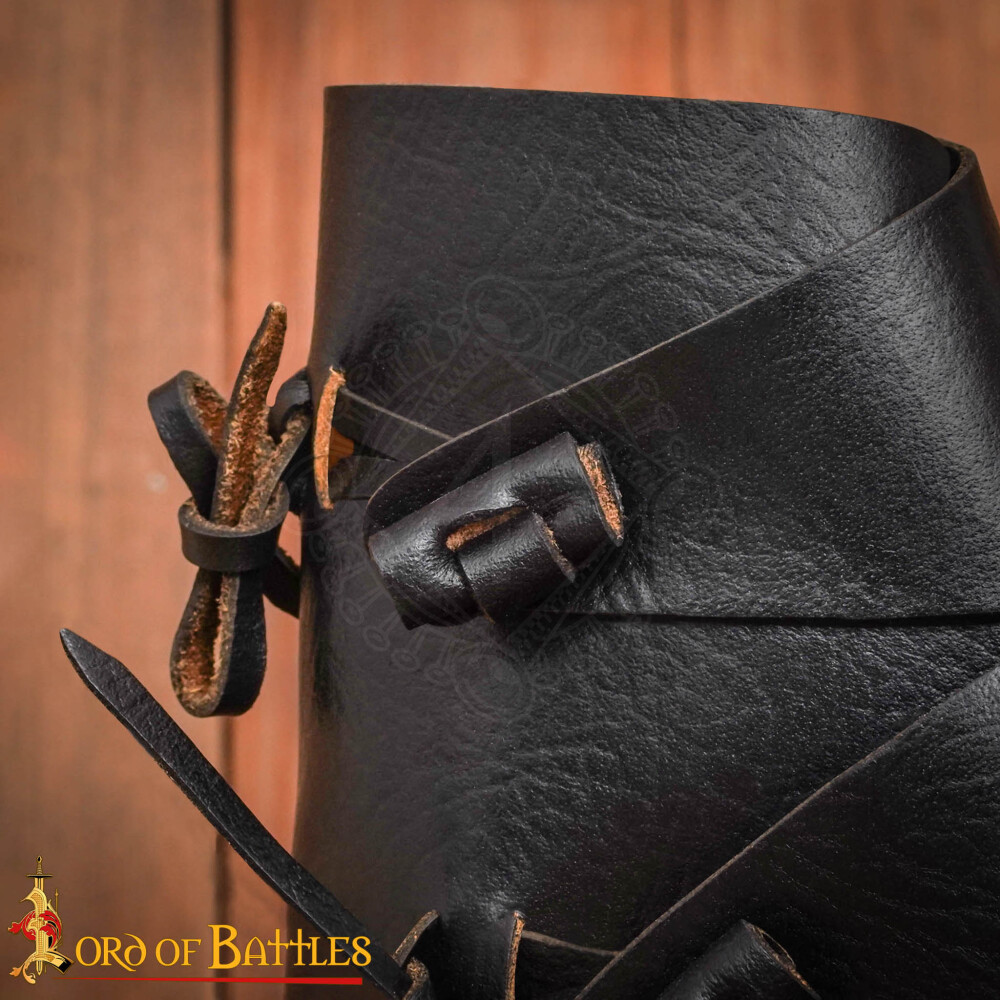
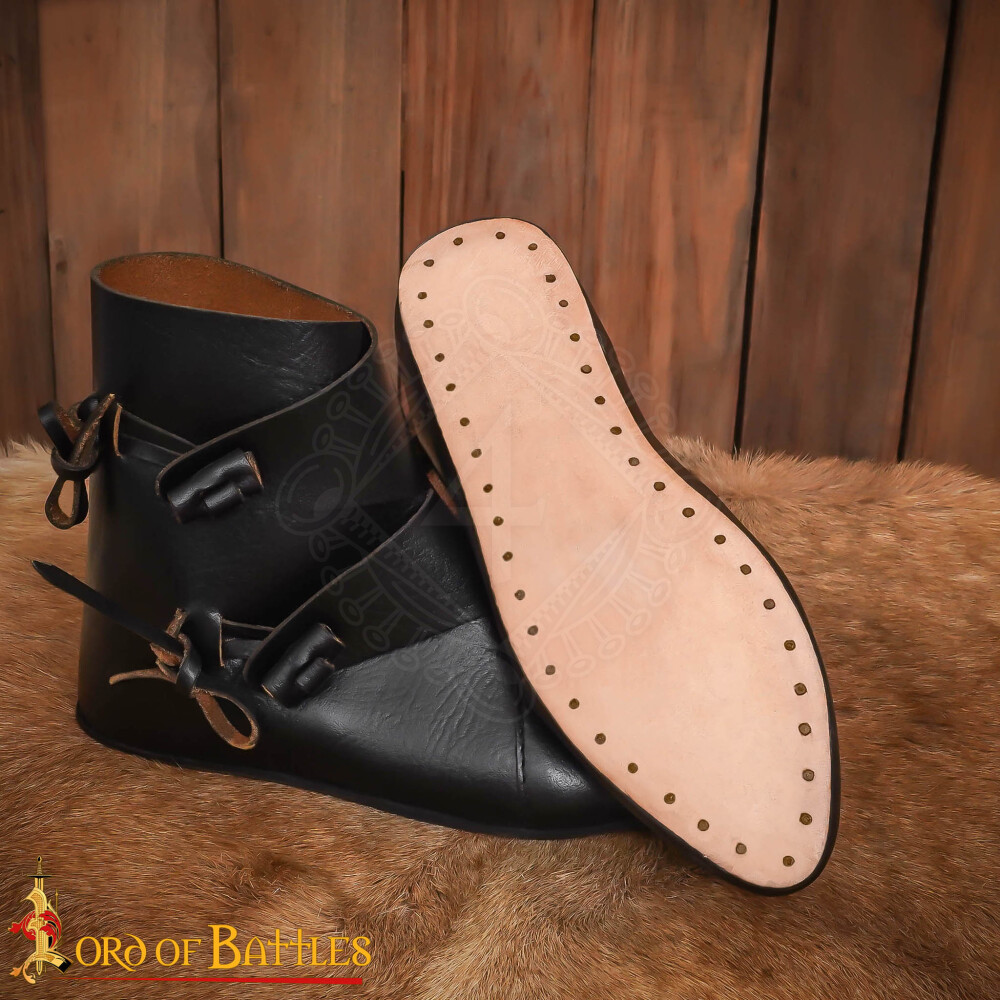

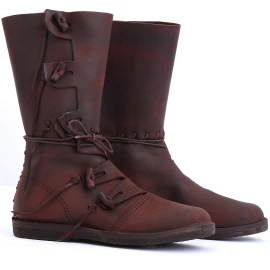
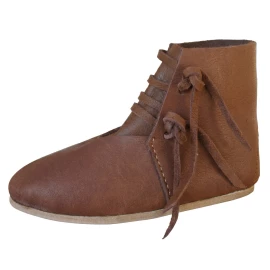
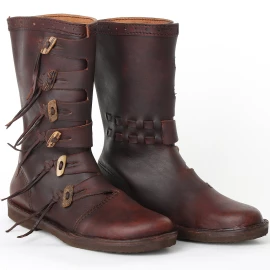
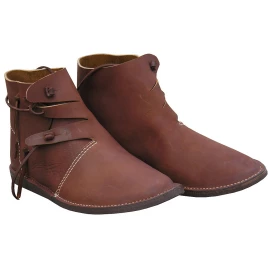
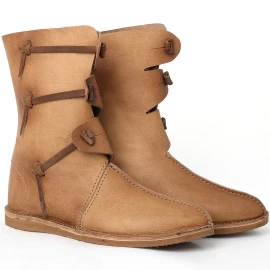
Step back in time with these authentic early medieval boots, inspired by archaeological finds from the Viking settlement of Jorvik, modern-day York in England. These hand-stitched, genuine leather ankle boots are a precise replica of the footwear worn by Norse warriors, settlers, and Anglo-Saxons during the 9th and 10th centuries. With their historically accurate construction and distinctive toggle fastening, they are the perfect finishing touch for your reenactment costume, LARP gear, or historical fair attire. Further product information ...

 Delivery options
The following variants are currently available:
Early Medieval Viking Turn-Shoes, Jorvik Style (9th-10th Century), black
Design and Construction
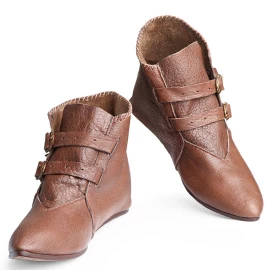
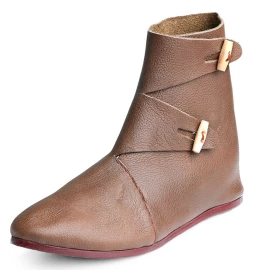
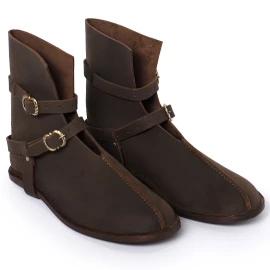
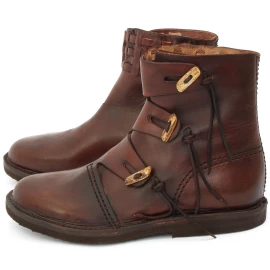
These are ankle-high boots with a slightly asymmetrical topline for enhanced mobility. The upper part of the boot features two overlapping leather flaps across the instep, a design that ensures a snug and comfortable fit around the foot.
The fastening system consists of two leather straps that are threaded through loops and secured with rolled leather toggles. This type of closure was characteristic of the period and allows for easy adjustment.
The sole is flat and crafted from sturdy leather, approximately 5 mm thick. It is attached to the upper with nails, consistent with period techniques. The entire boot is made using the traditional turn-shoe construction method, which guarantees both durability and an authentic appearance.
A Step Back in Time: The Footwear of Jorvik
The design for these boots is based on footwear fragments unearthed from the archaeological layers of Jorvik, which was one of the most significant centres of Viking settlement in England during the 9th and 10th centuries. This was common, everyday footwear, designed for life and movement on natural terrain. Its simple yet functional design was worn by both men and women across different social strata.
A Snippet of History
The turn-shoe method of construction was the dominant shoemaking technique for many centuries. The shoe was sewn together inside-out and then turned right-side-out upon completion. This cleverly hid most of the constructional seams on the inside, protecting them from abrasion and significantly extending the shoe's lifespan.
How to Wear and Use Your Shoes
To put the boots on, first loosen the straps, slide your foot in, and then tighten the straps and secure them with the toggles. For maximum comfort and historical accuracy, we recommend wearing the boots with woollen socks or leg wraps (winningas).
Important Notice: These boots feature a historically accurate leather sole. It is not designed for modern hard surfaces such as concrete, tarmac, or gravel. Walking on such surfaces will cause rapid wear to the sole. The boots are ideal for soft, natural terrain—grass, dirt, forest floors, and the like.
Care for Your Leather Footwear
- Cleaning: Gently wipe away dirt with a soft, slightly damp cloth. Never soak the boots completely.
- Conditioning: Regularly treat the leather with a natural leather balm or beeswax. This will prevent it from drying out and cracking.
- Drying: If the boots become wet, allow them to air-dry slowly and naturally at room temperature. Never place them near a direct heat source (radiator, fire, direct sunlight).
- Storage: Keep them in a cool, dry place, ideally stuffed with newspaper to help them retain their shape.
Product Specifications
| Material | Genuine Leather |
| Sole Thickness | Approx. 5 mm (nailed leather sole) |
| Fastening | Two rolled leather toggles with straps |
| Construction | Hand-stitched, turn-shoe technique |
| Height | Ankle-high |
| Historical Period | 9th–10th Century (Early Medieval, Viking Age) |
| Based On | Finds from Jorvik (modern-day York, England) |
Please note: As this is a product made from genuine leather, variations in grain, texture, and shade are normal and lend each pair a unique, one-of-a-kind character.
We are here for you!





.3773623034.1696456237.png.webp)

.3773623034.1696456268.png.webp)
.3773623034.1696456247.png.webp)