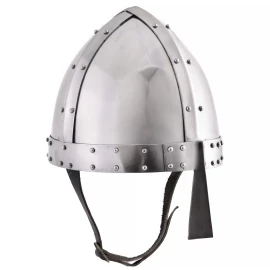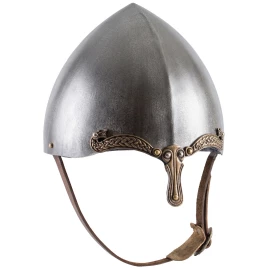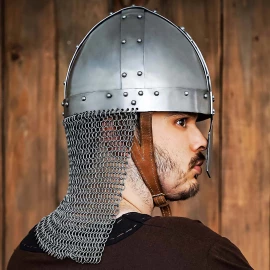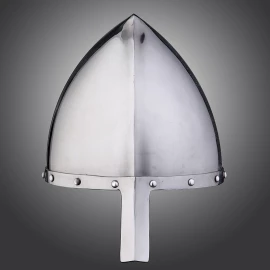

Early Medieval Leather Spangenhelm with Steel Nasal
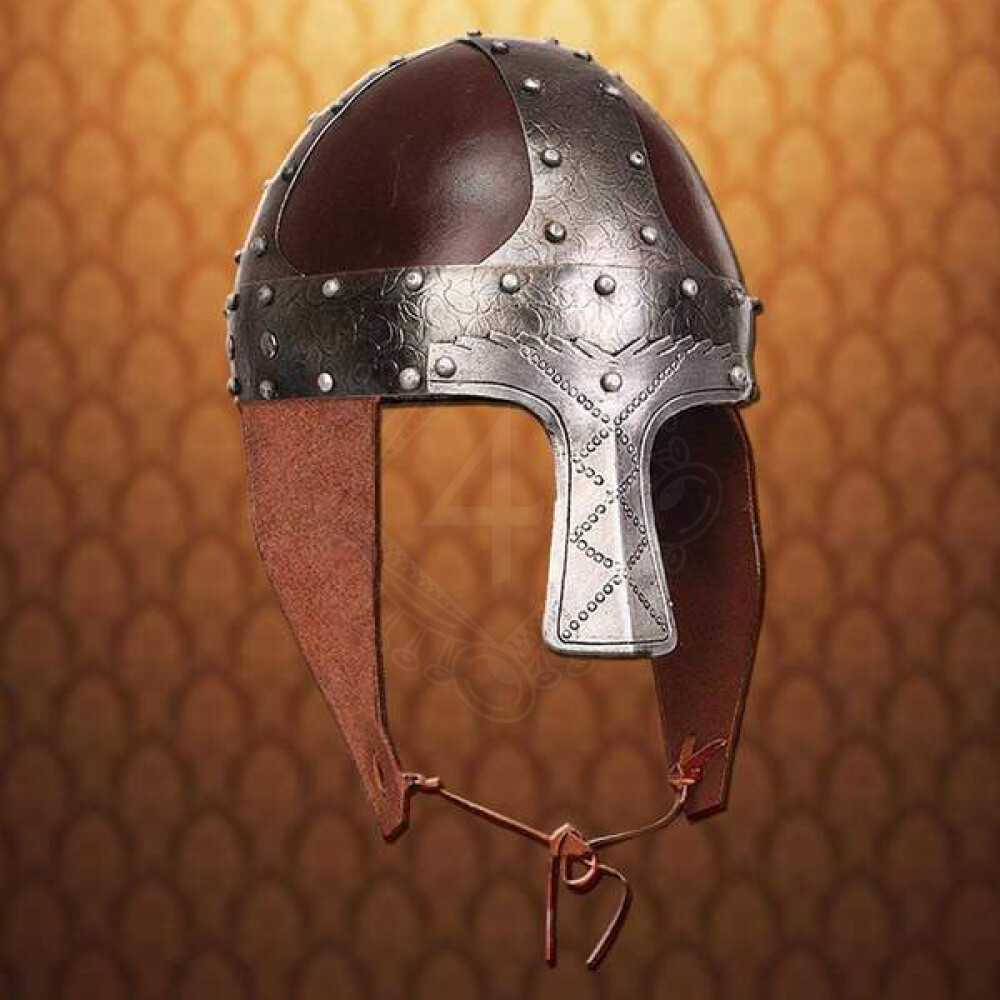
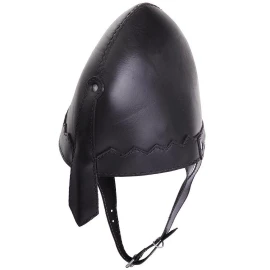
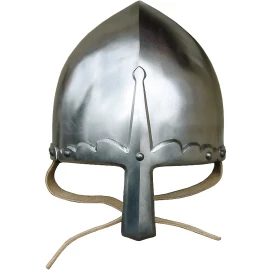
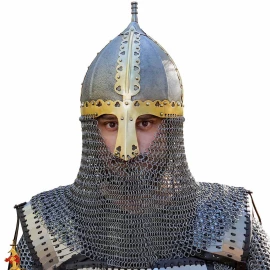
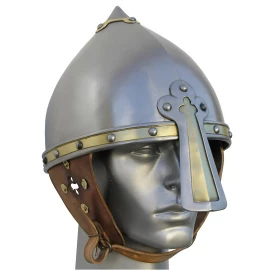
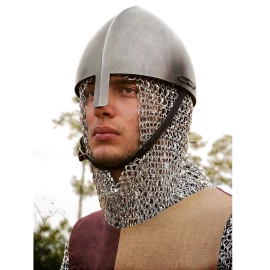
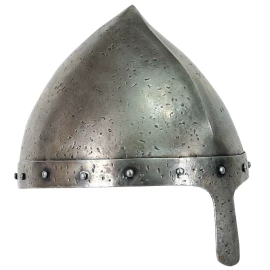
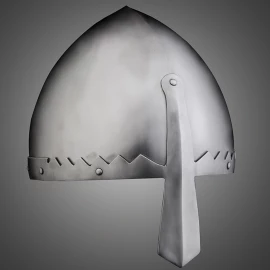
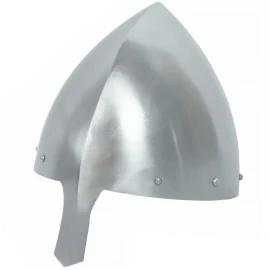
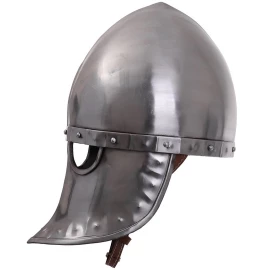
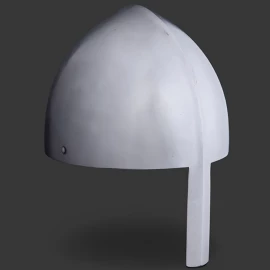
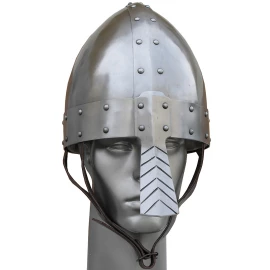
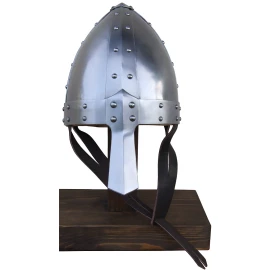
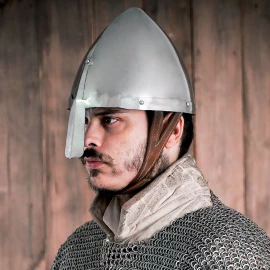
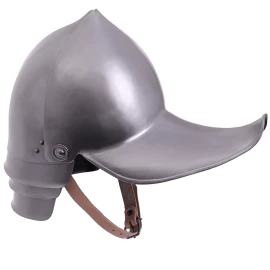
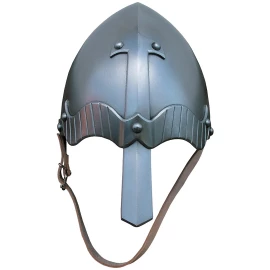
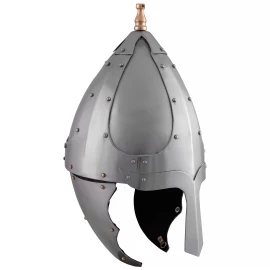
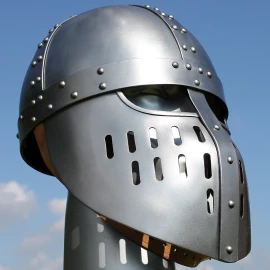
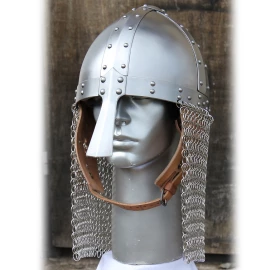
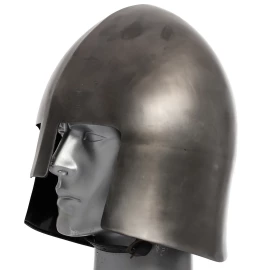
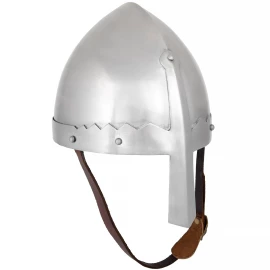
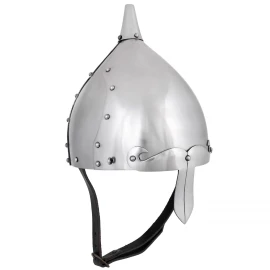
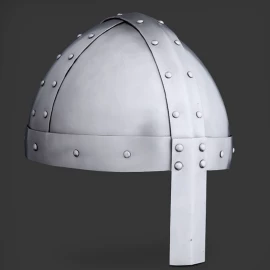
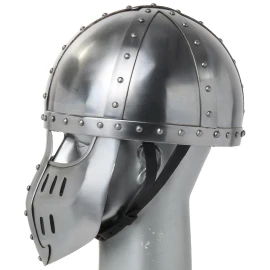
Step into the role of a Norman warrior, Viking retainer or early medieval man-at-arms with a helmet combining hardened leather, decorated steel bands and a prominent nasal guard. Its riveted segmented construction evokes the characteristic Spangenhelm worn in various forms throughout the Early Middle Ages. Long suede cheek guards cover the sides of the face and part of the neck, while a soft adjustable liner and chin strap provide a secure, comfortable fit. We recommend this striking medieval helmet for LARP, costume events, historical festivals, theatre, film, photography and an impressive display in your collection. Further product information ...
Early Medieval Leather Spangenhelm with Steel Nasal
Riveted Leather and Steel Construction
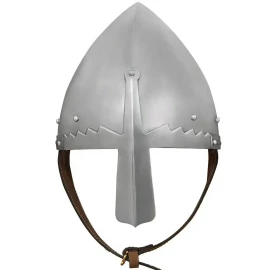
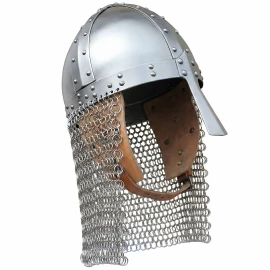
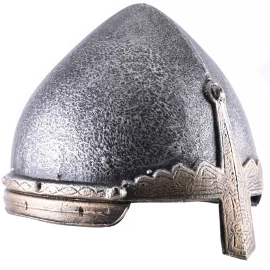
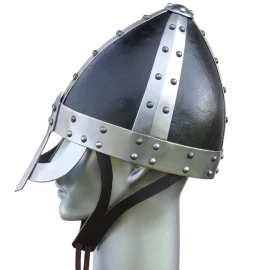
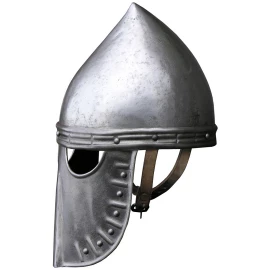
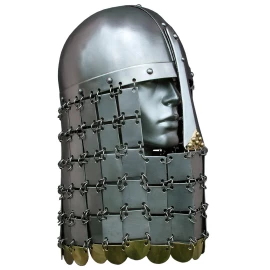
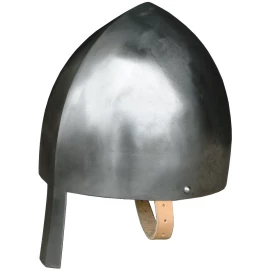
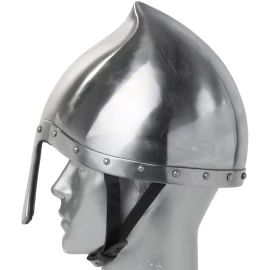
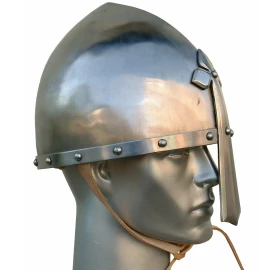
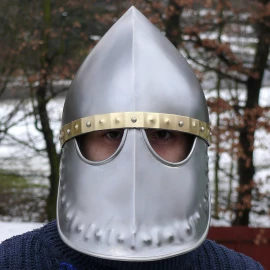
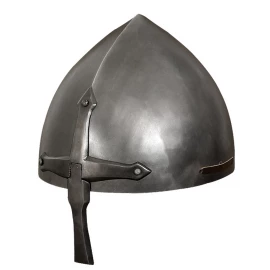
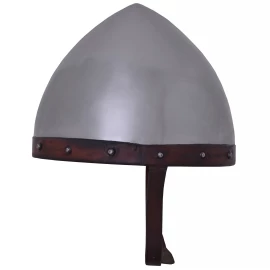
The skull is assembled from several sections of brown hardened leather, reinforced by a steel brow band and steel straps running over the crown. Numerous rivets secure the individual components and emphasise the distinctive framework of a segmented early medieval helmet.
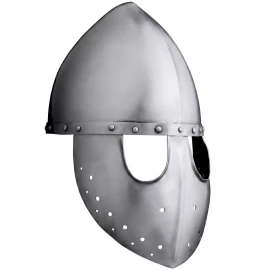
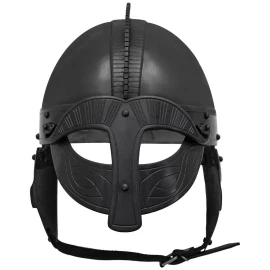
The steel fittings feature an irregular hammered texture together with small punched decorative details. A long steel nasal extends down the front, creating a commanding silhouette while partially covering the nose. Two elongated suede cheek guards protect the sides of the face and part of the neck without seriously restricting vision.
The Historical Spangenhelm
Segmented helmets of the type now commonly called the Spangenhelm were used in Europe and neighbouring regions from approximately the 5th to the 11th century. Their structure consisted of a supporting framework of metal bands with separate plates fitted between them. This method allowed armourers to produce a strong helmet from several smaller pieces at a time when raising a large one-piece iron skull required considerably more demanding metalworking.
Different forms were worn by Late Roman and Byzantine soldiers, Germanic warriors and members of early medieval military elites. Related banded helmet constructions later influenced equipment associated with Vikings, Normans and other European fighting cultures. This particular model is a stylised reproduction combining the historical principle with an especially decorative leather-and-steel appearance.
How to Fit the Helmet
Adjust the internal liner before wearing so that the helmet sits level and does not slide down over the forehead. The nasal guard should remain centred in front of your face. Tighten the chin strap enough to keep the helmet stable during ordinary movement without restricting breathing or jaw movement. For improved comfort, we recommend wearing a padded arming cap, helmet liner or mail coif underneath. A suitable padded layer reduces pressure points, absorbs perspiration and helps keep the helmet stable.
Recommended Uses
- LARP and fantasy costumes
- Norman and early medieval character outfits
- medieval fairs and historical festivals
- theatre, film and photography
- collecting and decorative display
Technical Specifications
| Specification | Details |
|---|---|
| Product type | Segmented helmet in the Spangenhelm style |
| Style | Early medieval with Norman and Germanic inspiration |
| Historical inspiration | Approximately 5th–11th century |
| Main material | Handcrafted hardened leather |
| Reinforcement | Steel brow band and crown straps |
| Construction | Segmented and riveted |
| Facial protection | Extended steel nasal guard |
| Side protection | Two suede cheek guards covering the cheeks and part of the neck |
| Interior | Soft adjustable liner |
| Retention | Chin strap |
| Colour | Brown leather with steel-grey fittings |
| Decoration | Hammered texture, punched ornament and exposed rivets |
| Delivery condition | Lined and ready to wear |
| Suitable for | LARP, costume, theatre, film, historical events and display |
Care and Safe Use
After wearing, allow the helmet to dry naturally at room temperature and wipe the inside with a soft dry cloth. Treat the leather occasionally with a small amount of suitable leather balm free from aggressive solvents. Keep the steel bands dry and apply a thin coat of weapon oil or neutral corrosion inhibitor from time to time. Do not store the helmet in damp conditions, direct sunlight or next to a heater. Never soak it in water or dry it with hot air, as the leather may harden, crack or lose its shape.
This helmet is not protective armour intended for buhurt, Battle of the Nations or comparable full-contact fighting. Do not rely on it for protection against forceful blows from sharp or blunt weapons unless its suitability has been expressly confirmed under the rules of the relevant event. Inspect the rivets, leather components, liner and chin strap before every use.
Recommended Accessories
For comfortable wear, we recommend a padded arming cap or helmet liner suitable for a 10th–13th-century impression. Complete a Norman or early medieval outfit with a mail coif, mail shirt, gambeson, wool tunic, leather belt and Norman kite shield. For a Viking-inspired impression, add a round shield, axe, wool cloak and leather belt pouch appropriate to the 9th–11th century.
We are here for you!