
Italo-Norman Steel Mask Helmet with Leather Liner

Italo-Norman Steel Mask Helmet with Leather Liner
Free shipping

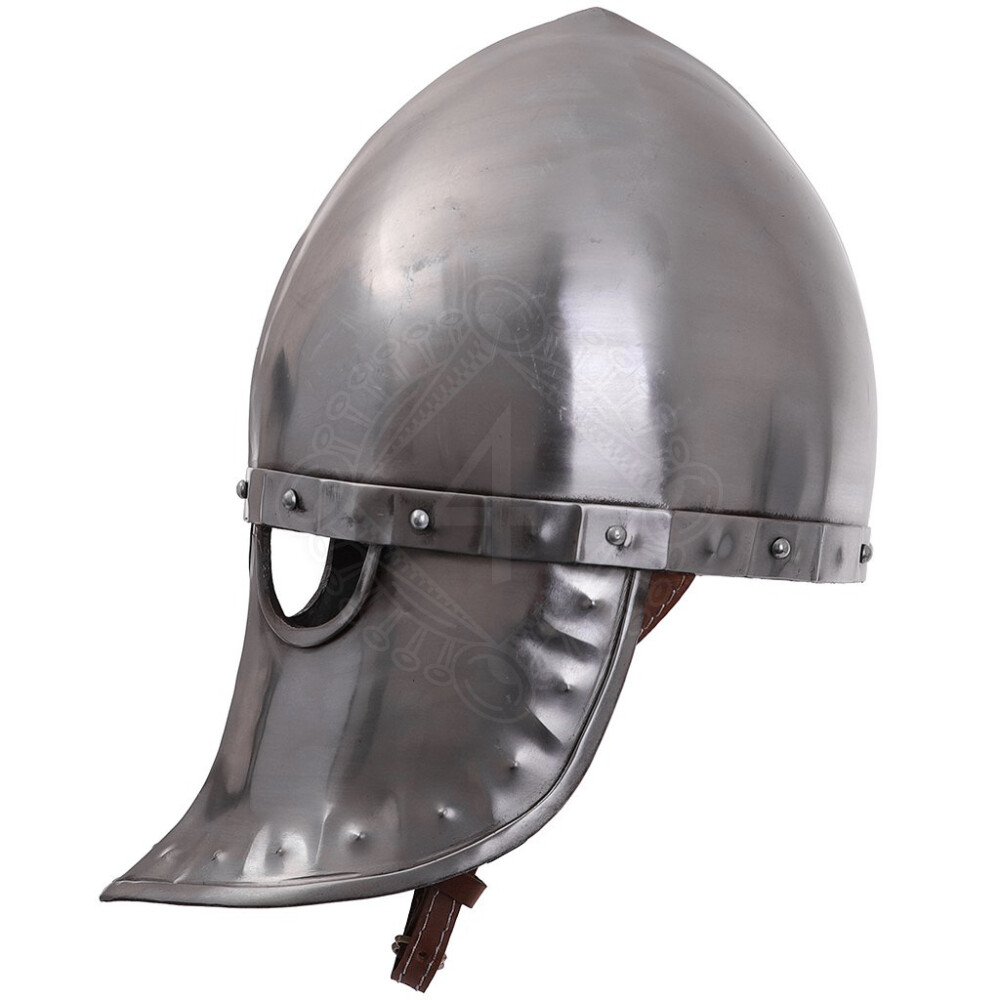
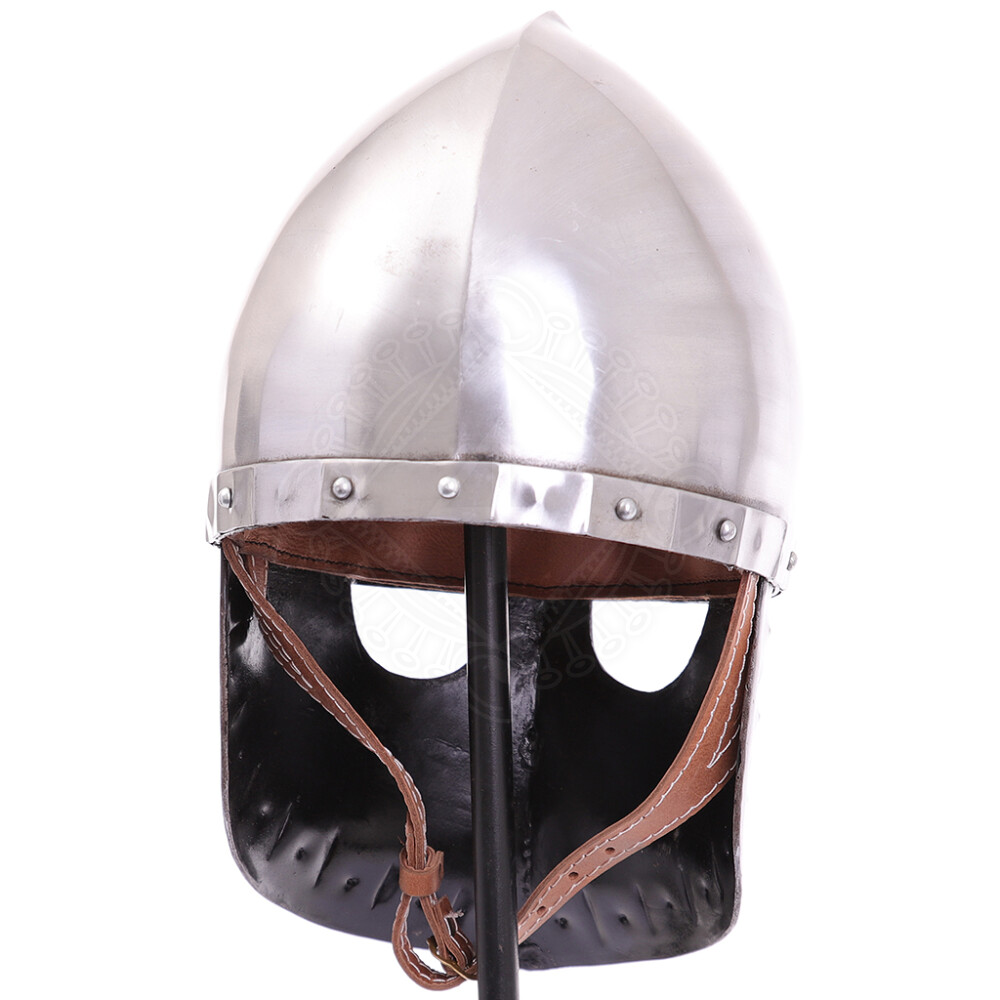
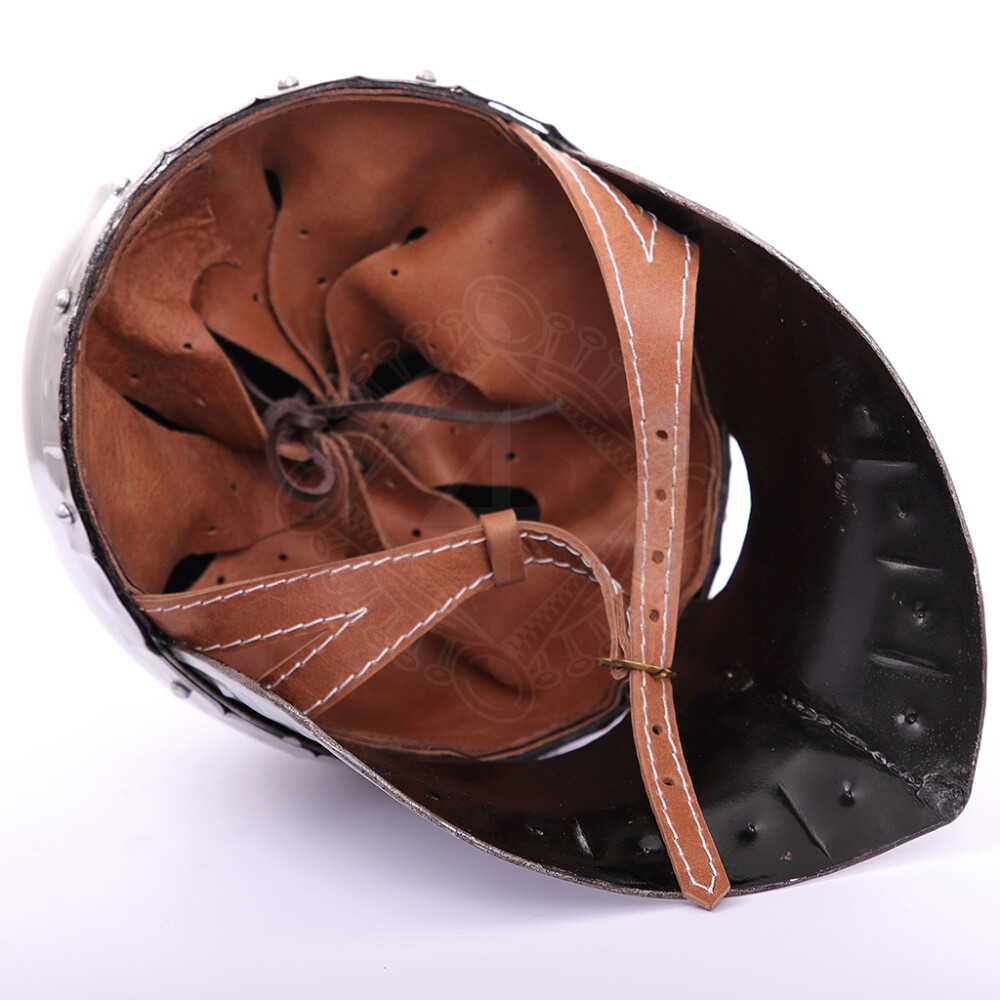
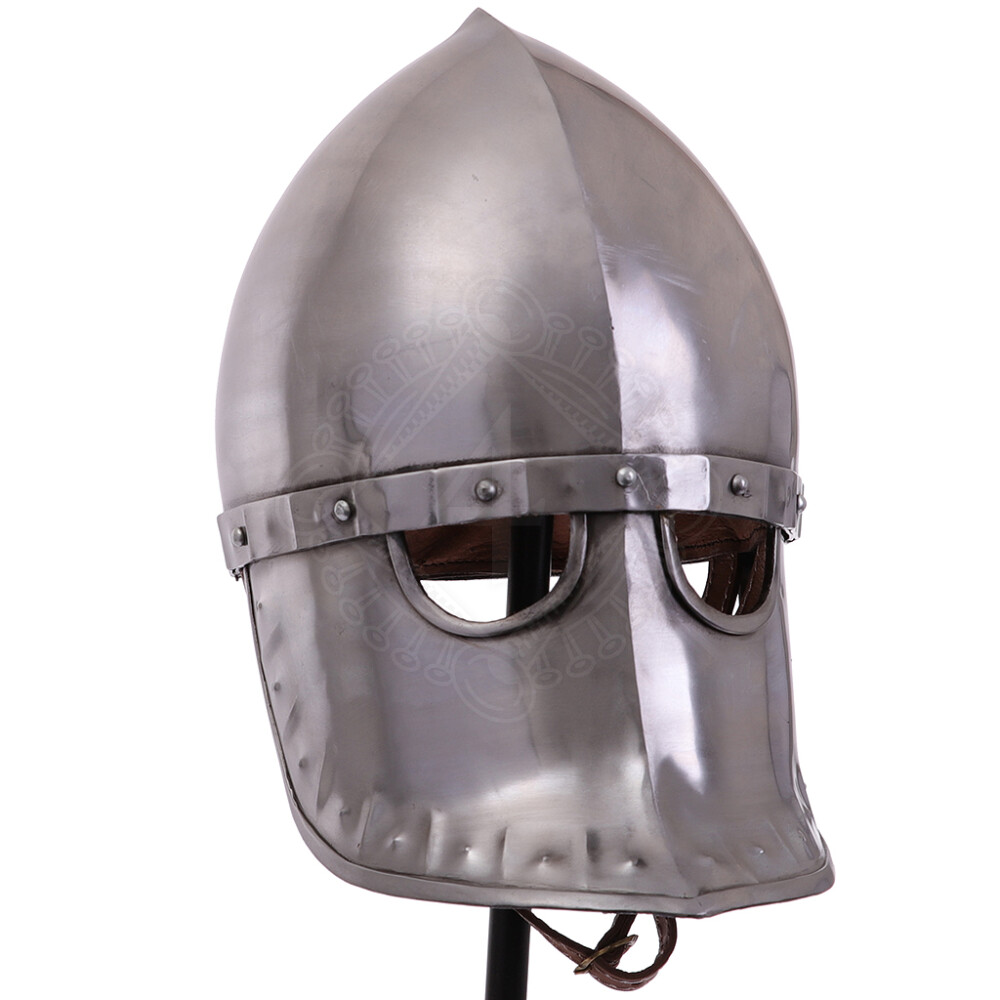
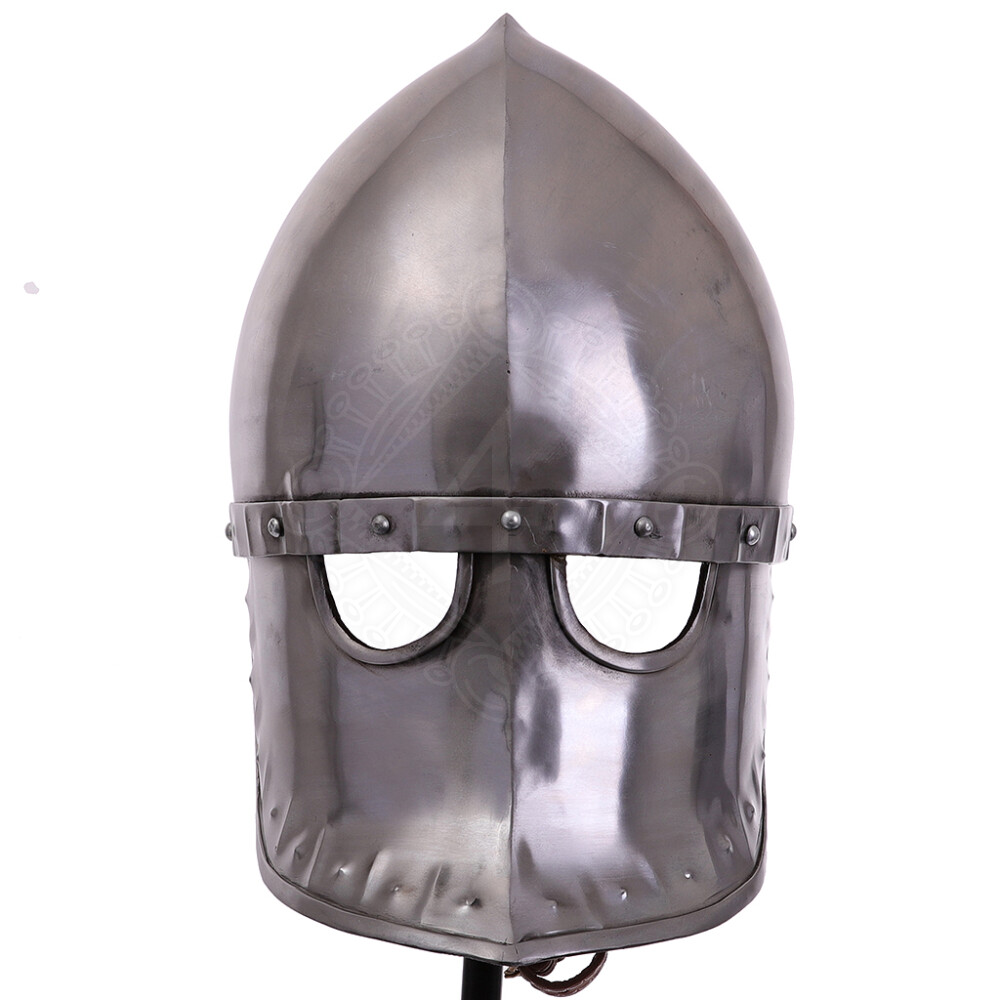
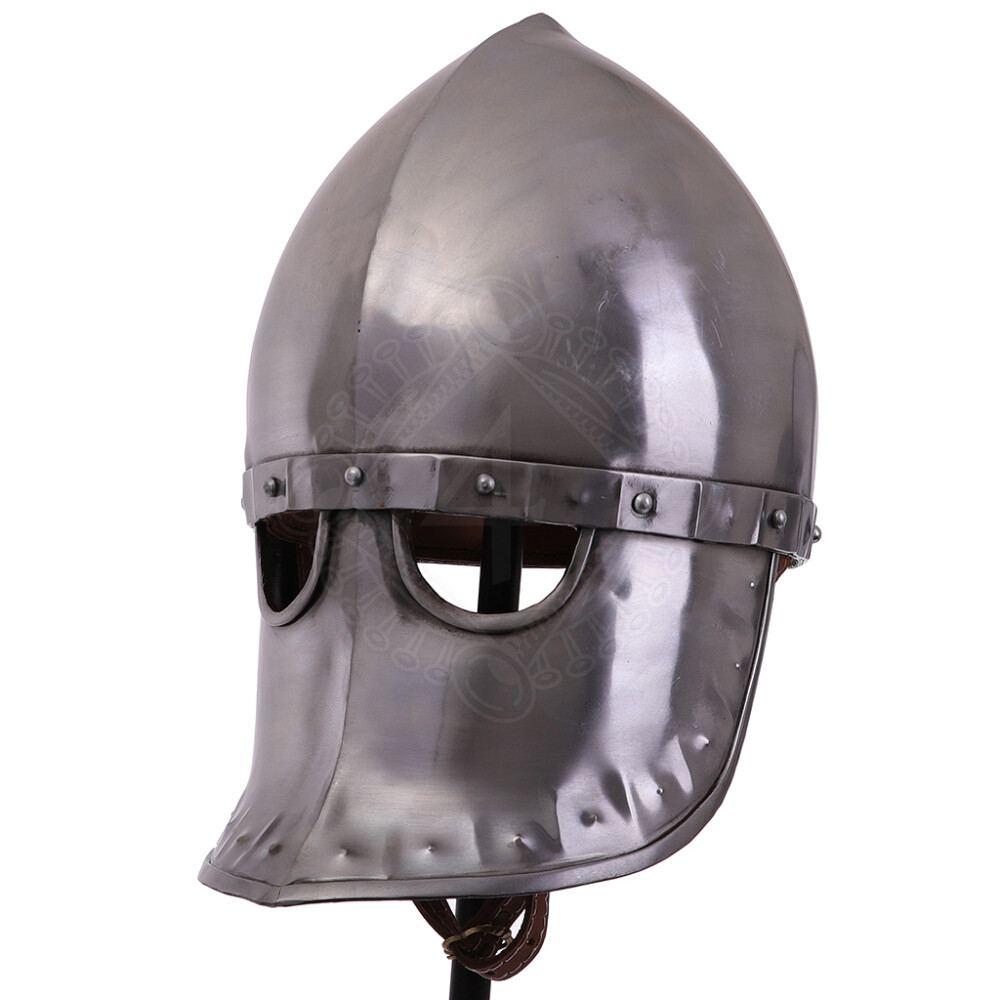
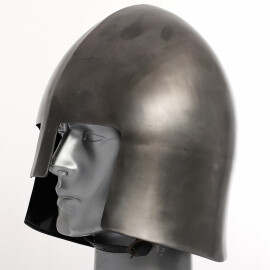
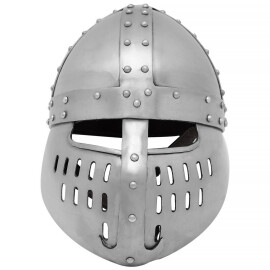
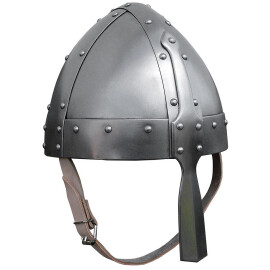
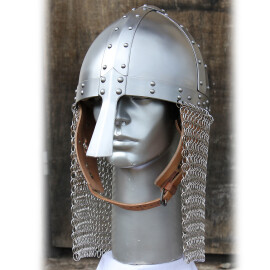
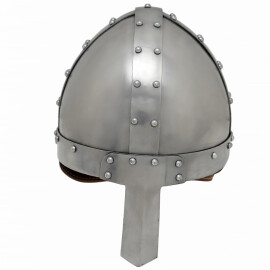
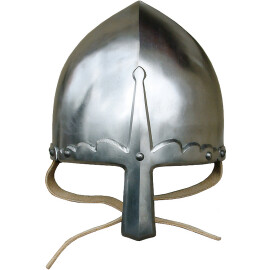
Step into the role of a Norman knight, warrior, with this imposing medieval helmet inspired by the 11th and 12th centuries. Its tall skull, riveted face defence and narrow eye openings create the unmistakable silhouette of a warrior from Southern Italy or Sicily. Made from 16-gauge steel, the helmet is fitted with an adjustable leather suspension liner and a genuine leather chin strap. It is an excellent choice for historical reenactment, LARP, costume events, film and theatre productions or an impressive armour display. The extensive faceplate also gives your Norman or early Crusader character a distinctive and formidable appearance. Further product information ...

In stock last piece
Item physically stored in our Warehouse in Kadan
, dispatch on: Today
Delivery options
143,00 €
118,18 € excl. VAT
SKU: LB_2289PL16

Italo-Norman Steel Mask Helmet with Leather Liner

A Helmet of the Italo-Norman Warriors

The historical inspiration for this helmet belongs primarily to the development of Norman armour during the 12th century. Norman mercenaries began arriving in Southern Italy during the early 11th century and gradually established their own territories. By 1071, they had captured Bari, the last major Byzantine stronghold in Southern Italy, and subsequently completed the conquest of Sicily.

Norman military equipment evolved as Western European, Byzantine and Mediterranean traditions encountered one another. The familiar Norman helmet normally had a conical skull and a narrow nasal bar protecting the nose. The broad facial defence of this reproduction represents the transition towards increasingly enclosed helmets, which eventually developed into the face-covering great helms of the late 12th and 13th centuries.

Construction and Appearance

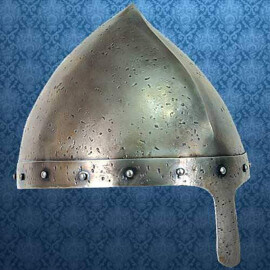
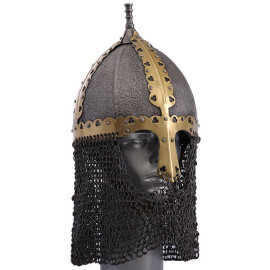
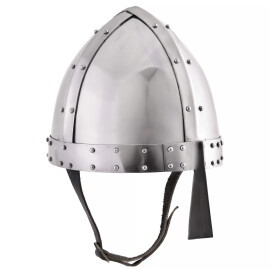
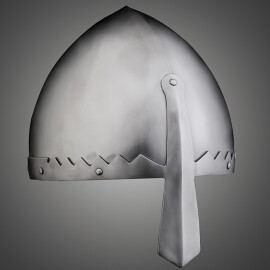
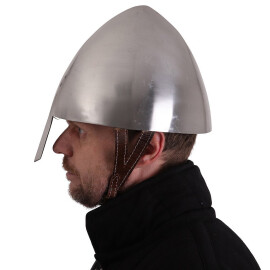
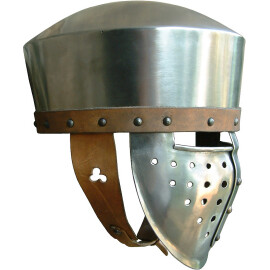
The tall helmet skull rises to a gently angular peak. This profile recalls earlier Norman conical helmets and helps to direct an incoming blow away from the head. A riveted steel brow band reinforces the lower edge of the skull and joins it to the prominent faceplate.

A vertical central ridge stiffens the face defence. Its lower portion flares away from the mouth and chin, providing additional internal space. Small worked indentations near the lower edge help reinforce the plate and contribute to the handmade medieval appearance. The steel is polished by hand and may therefore retain minor marks from forming and finishing. Such variations are a natural feature of individually made armour.

How to Fit the Helmet

Before wearing the helmet, adjust the leather suspension liner so that it rests evenly around your head rather than placing all its weight on the crown. The eye openings must sit at the correct height without their edges obstructing your direct line of sight. Fasten the leather chin strap firmly enough to prevent the helmet from shifting when you turn or lower your head, but do not tighten it so far that it restricts breathing or jaw movement.

For greater comfort, we recommend wearing a thin padded arming cap or coif underneath. The padded layer absorbs perspiration, reduces pressure points and fills minor gaps between the liner and the head. Avoid excessively thick padding, as it may raise the eye openings above your natural eye level.

Technical Specifications

Feature Specification
Helmet type Italo-Norman full-face mask helmet
Historical period 11th–12th century, particularly Norman Southern Italy and Sicily
Helmet material Mild steel
Steel thickness Approx. 1.6 mm / 16 gauge
Thickness of the rolled faceplate edge Approx. 3.4 mm / 0.13 in
Finish Hand-polished steel
Construction Formed skull with riveted reinforcing band and faceplate
Liner Stitched leather suspension liner, adjustable by lacing
Fastening Genuine leather chin strap with buckle
Overall height Approx. 36 cm / 14.2 in
Internal width from side to side Approx. 18.5 cm / 7.3 in
Internal length from forehead to back Approx. 22 cm / 8.7 in
Width of each eye opening Approx. 6 cm / 2.4 in
Height of each eye opening Approx. 3.5 cm / 1.4 in
Weight Approx. 2.6 kg / 5.7 lb
Suitable uses Reenactment, LARP, costume, theatre, film, exhibition and display
Manufacture Handmade; minor variations in dimensions, weight and finish may occur

Size Guide

Size Wearer’s Head Circumference How to Measure
L/XL Approx. 58–61 cm / 22.8–24 in Measure horizontally around the forehead, approximately 2 cm / 0.8 in above the eyebrows and over the ears

The stated circumference is an approximate fitting range. Allow additional space for your padded arming cap when choosing the helmet. Individual head shape may also affect the fit even when your measured circumference falls within the recommended range.

Steel and Leather Care

  • Wipe away perspiration, moisture and dirt with a soft dry cloth after every use.
  • Apply a thin coating of protective oil or microcrystalline wax to the steel regularly.
  • Store the helmet in a dry, ventilated place rather than leaving it inside a damp equipment bag.
  • Allow the leather liner to dry naturally away from radiators, open flames and direct sunlight.
  • Condition the natural leather occasionally with a suitable leather-care product.
  • Do not use steel wool or aggressive cleaning chemicals that may scratch the polished surface.

Safe Use

Inspect the rivets, liner, adjustment lacing and chin strap before every use. The narrow eye openings and enclosed design reduce peripheral vision, hearing, airflow and spatial awareness. Do not run across uneven ground while wearing the helmet, and maintain a safe distance from other participants during group activities.

This reproduction is not intended for full-contact combat, including buhurt, Battle of the Nations or similar high-impact disciplines, unless it has been specifically approved by the event organiser. A steel helmet alone cannot prevent concussion, neck injuries or penetration by a weapon. Never use it without suitable padding, appropriate protective equipment, proper supervision and relevant training.

Recommended Accessories

  • Padded arming cap or coif in an 11th–13th-century style for a safer and more comfortable fit.
  • Mail coif suitable for an 11th–13th-century portrayal, covering the neck, back of the head and shoulders.
  • Long mail hauberk for the equipment of an 11th–12th-century Norman knight.
  • Norman kite shield, widely associated with mounted and dismounted warriors of the 11th and 12th centuries.
  • Single-handed Norman sword or spear in an 11th–12th-century style.
  • Woollen tunic, leather belt and cloak for a complete Norman or early Crusader costume.

Similar products (50)