
 Čeština
 Deutsch


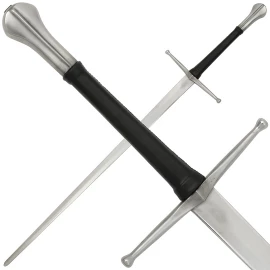
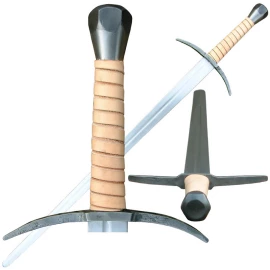
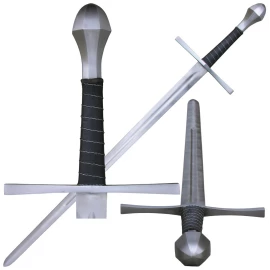
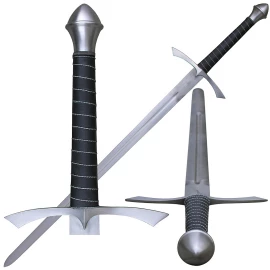
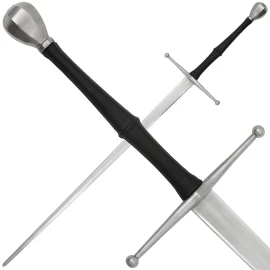
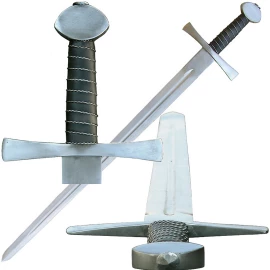
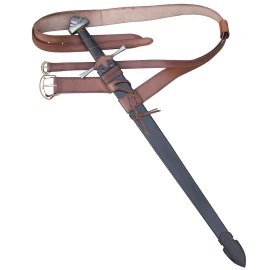
One-and-a-half-handed sword Emory, Class B
2x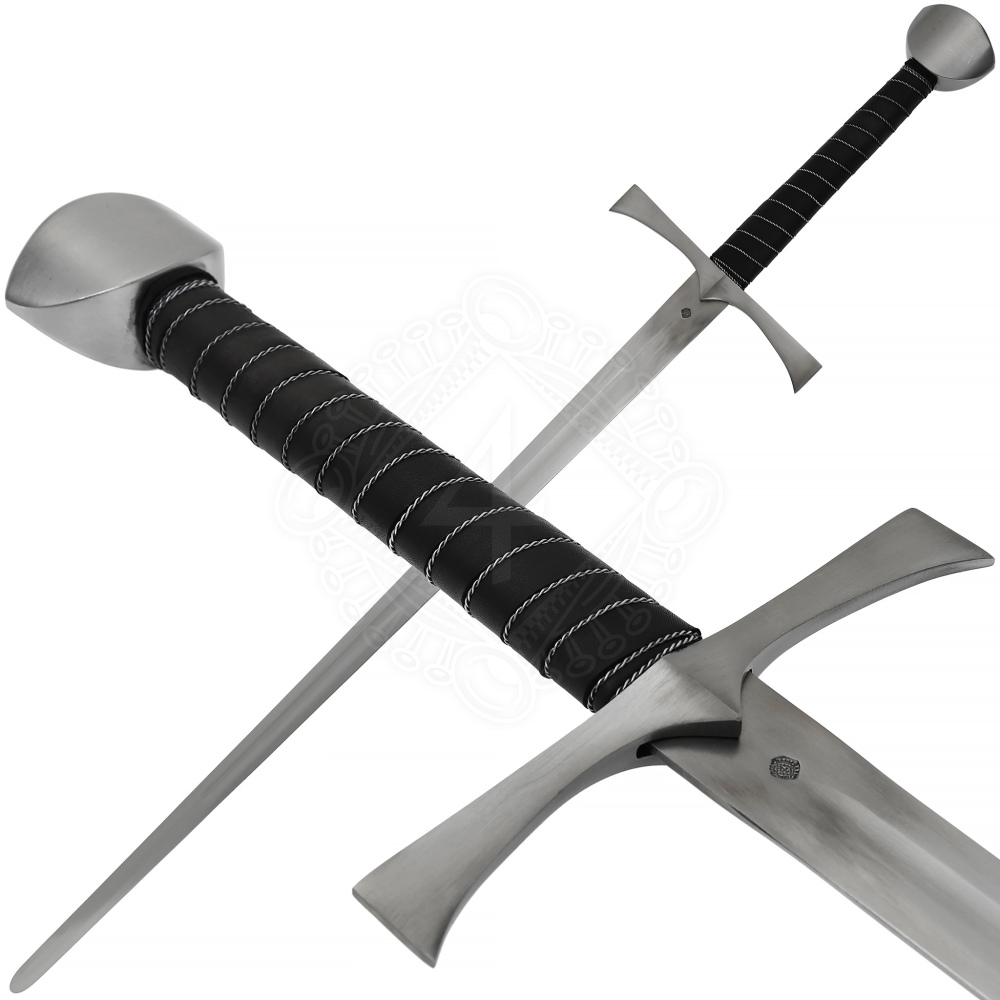
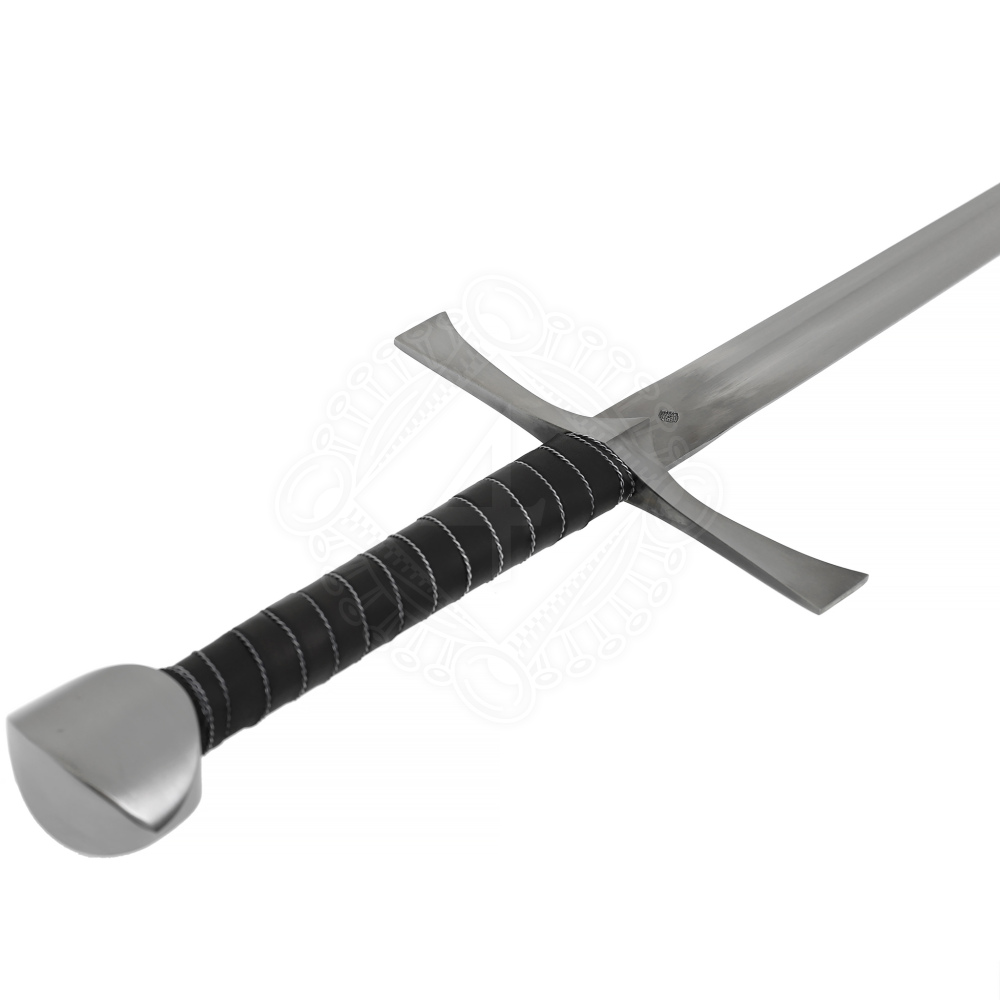
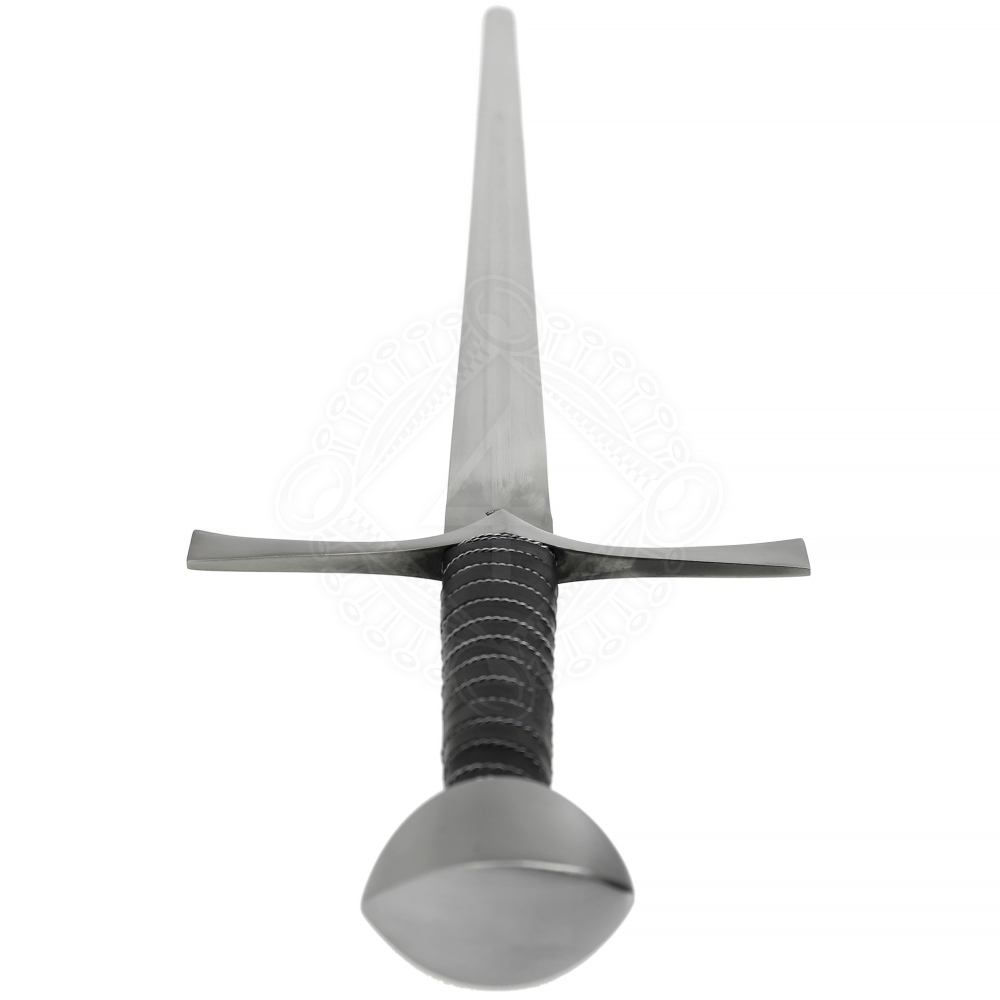

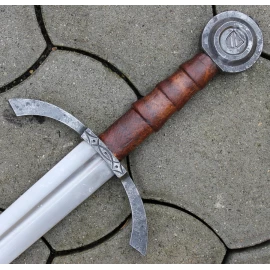
This "Emory" hand-and-a-half sword is a robust and reliable edged weapon, a quality product from the workshop of the experienced Czech blacksmith Pavel Leier of Rašovice u Týniště nad Orlicí. Pavel has been dedicated to the craft since 1992, and his artistry and long-standing practice are reflected in every detail of this sword. At first glance, it impresses with its classic yet striking design, reminiscent of European late medieval swords. Please note that due to its handcrafted nature, specific parameters may vary slightly from piece to piece. Further product information ...

One-and-a-half-handed sword Emory
Sword class B
Key Specifications of the "Emory" Sword
- Overall Length: 119 cm (approx. 46.9 in)
- Blade Length: 90.5 cm (approx. 35.6 in)
- Guard Length: 22.5 cm (approx. 8.9 in)
- Grip Length (actual grip area): 22 cm (approx. 8.7 in)
- Pommel Width (maximum): 8 cm (approx. 3.15 in)
- Fuller Length: 60 cm (approx. 23.6 in)
- Blade Width at Guard: 39.8 mm (approx. 1.57 in)
- Blade Width 10 cm (approx. 3.9 in) from Tip: 22.2 mm (approx. 0.87 in)
- Point of Balance (blunt version, measured from the guard): 3 cm (approx. 1.2 in)
- Weight (blunt version): 2227 g (approx. 4.91 lbs)
Appearance and Construction: Masterful Craftsmanship by Pavel Leier
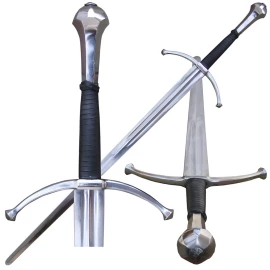
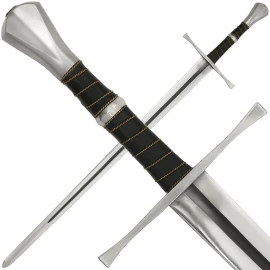
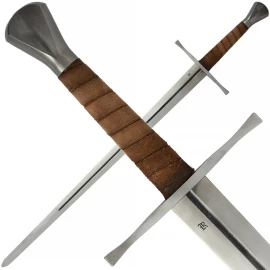
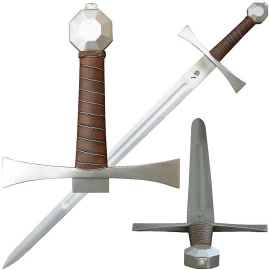
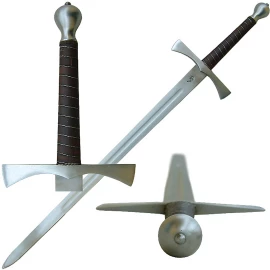
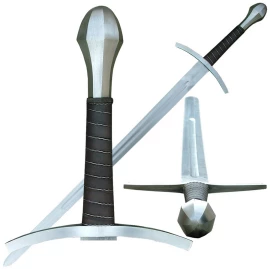
The sword has an overall length of 119 cm (approx. 46.9 in). Its dominant feature is the straight, double-edged blade, 90.5 cm (approx. 35.6 in) long, featuring a 60 cm (approx. 23.6 in) long fuller that improves balance and reduces weight. The blade, with a width of 39.8 mm (approx. 1.57 in) at the guard, tapers smoothly to a sharp point (on the sharp version) or a rounded tip (on the blunt version). Near the guard, the blade bears Pavel Leier's stamped maker's mark in the shape of an eagle's head. It is crafted from proven ČSN 14260 spring steel, oil-hardened to approximately 47 HRC, giving it resilience and flexibility. Keep in mind that this steel is not stainless and requires maintenance.
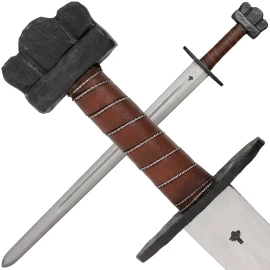
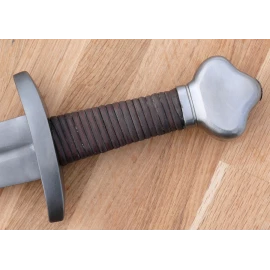
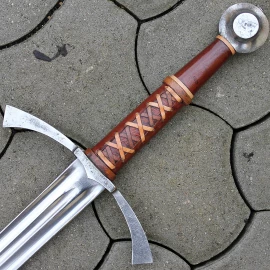
The robust steel guard has a span of 22.5 cm (approx. 8.9 in). Its arms are straight, slightly flaring towards the ends, and chamfered, providing good hand protection. The long hilt, with a 22 cm (approx. 8.7 in) grip, is designed for comfortable one- or two-handed use. Its core is the blade's steel tang, overlaid with wood and meticulously wrapped with durable cowhide leather and a twisted pair of wires for a secure grip. The sword is finished with a massive steel pommel with a maximum width of 8 cm (approx. 3.15 in) in the shape of a "perfume stopper" (similar to Oakeshott Type T), which not only completes the historical look but also balances the weapon. The point of balance (POB) for the blunt version is approximately 3 cm (approx. 1.2 in) from the guard, contributing to the sword's excellent handling. The weight of the blunt version is 2227 g (approx. 4.91 lbs). Every aspect of the construction testifies to the care and experience of blacksmith Pavel Leier.
Historical Classification: A Late Medieval Longsword
With its overall shape, long blade, type of guard, and especially the characteristic Type T-like pommel, the "Emory" sword aligns with the types of longswords (or bastard swords) used in Europe around the 14th and 15th centuries. Although not a direct replica of a specific historical original, its design elements, crafted with the attention to detail typical of Pavel Leier, are characteristic of this period.
Variants and Usage: From Collector's Item to HEMA Re-enactment Sword
You can order this sword in two variants:
- Sharp Variant: Suitable as a collector's item, an imposing decoration, or for practicing cutting techniques (tameshigiri) on appropriate materials (requires experience and utmost caution).
- Blunt Variant (Class B): This version has a blade edge thickness of 2-3 mm and a rounded tip. It is specially designed for contact historical or stage combat. Thanks to its construction, weight of 2227 g (approx. 4.91 lbs), and point of balance at 3 cm (approx. 1.2 in) from the guard, it provides a realistic feel and excellent control during practice and performances. It is perfectly suited for historical fencing groups, re-enactment, theatrical performances, or as a training tool for HEMA (Historical European Martial Arts).
Safety Guidelines and Care for Your Hand-and-a-Half Sword
When handling the sword, especially the sharp variant, utmost caution is necessary.
- Always remember that any use of the sword is entirely at your own risk.
- Never point the sword at people or animals unless it is part of controlled and safe training or performance with the blunt variant and protective gear.
- During fencing, try to parry blows with the flat of the blade, not edge-on-edge, to minimize damage. Use appropriate force and correct technique.
- Before each use, inspect the condition of the sword, especially the tightness of the guard and pommel, and the state of the blade. File down any nicks or sharp spots on the edge of the blunt blade with a diamond file or sandpaper.
- The blade is not stainless, so clean and oil it after each use (especially after contact with bare hands) to prevent corrosion.
- Keep the sword out of reach of children.
- If the guard or pommel becomes loose, professional repair (tightening, re-peening) is necessary.
The "Emory" sword from Pavel Leier's workshop is an impressive and functional weapon that can serve you well in your activities, whether it's sword combat training, historical events, or enriching your collection. Its solid workmanship, the quality from a renowned blacksmith, and its classic appearance make it a piece you will surely appreciate.
Please read our: Directions for the use of bladed weapons.
We are here for you!







.3773623034.1696456237.png.webp)

.3773623034.1696456247.png.webp)