 Čeština
 Deutsch


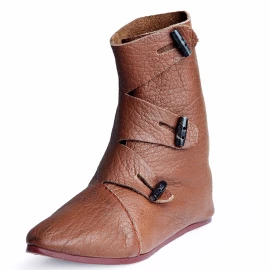
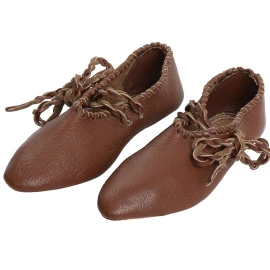
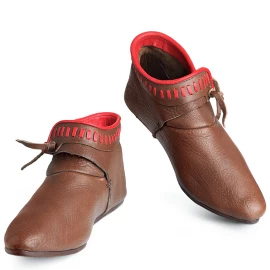
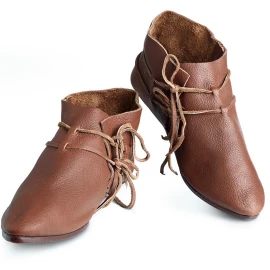
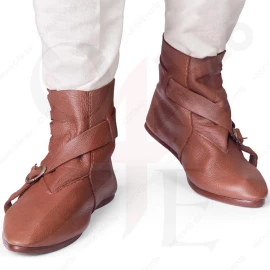
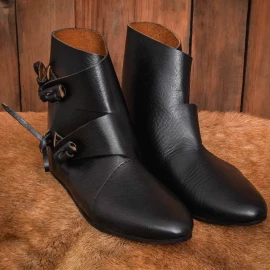
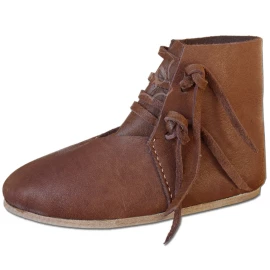
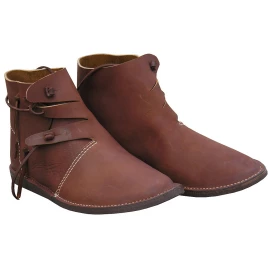
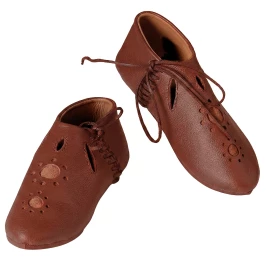
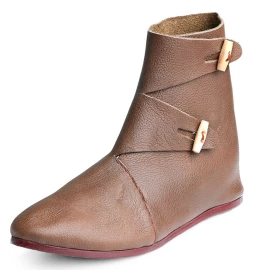
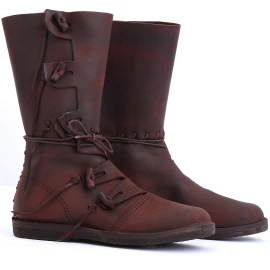
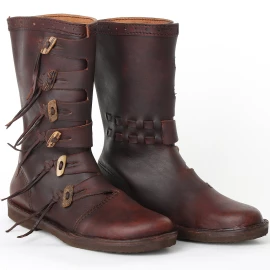
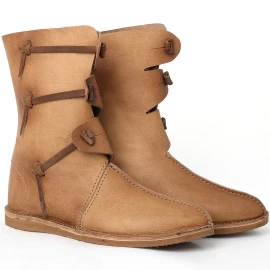
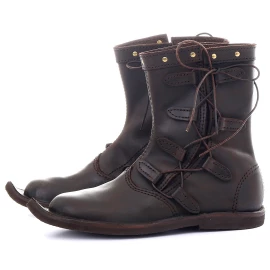
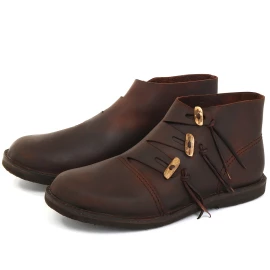
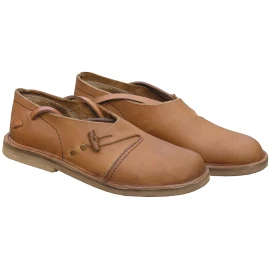
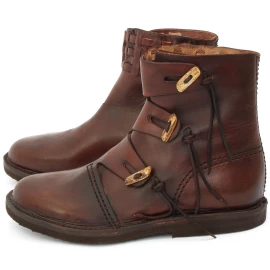
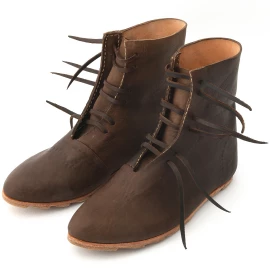
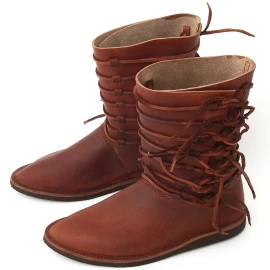
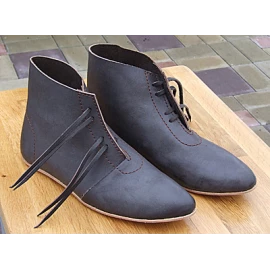
Low Leather Viking Hedeby Turnshoes
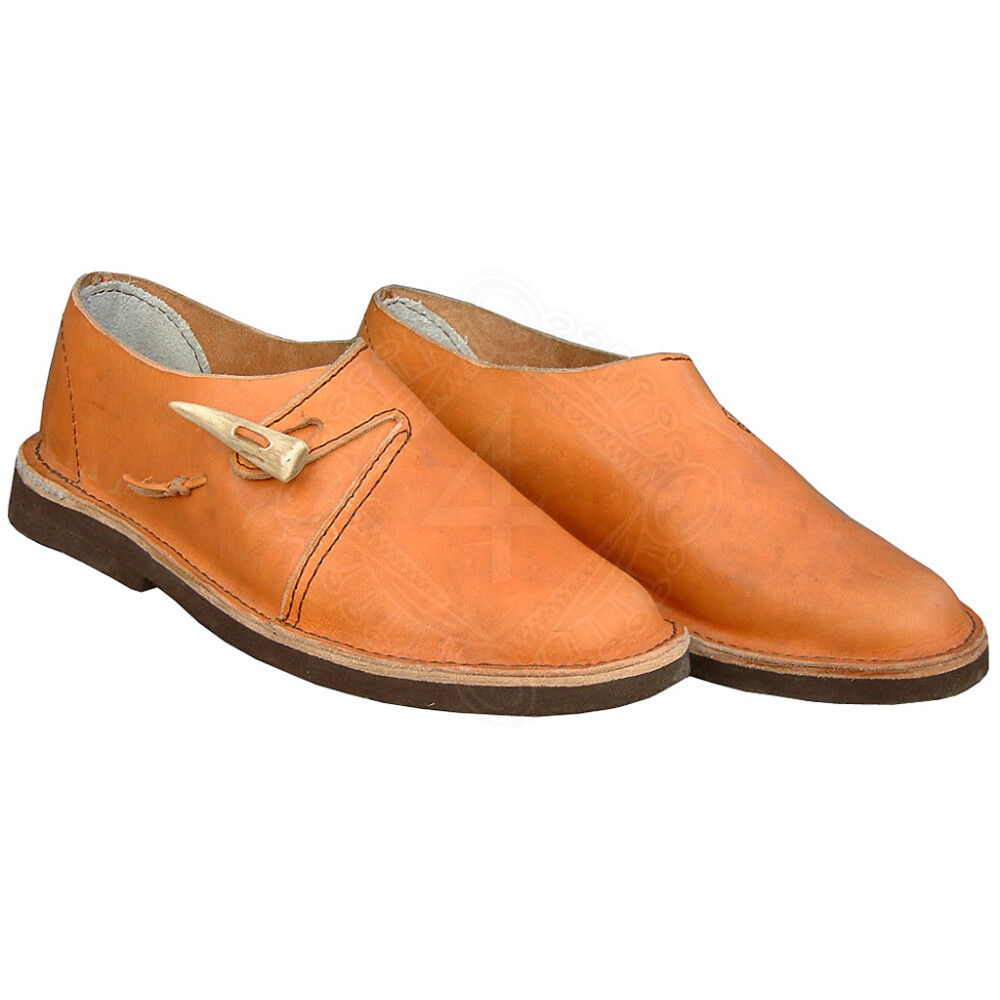
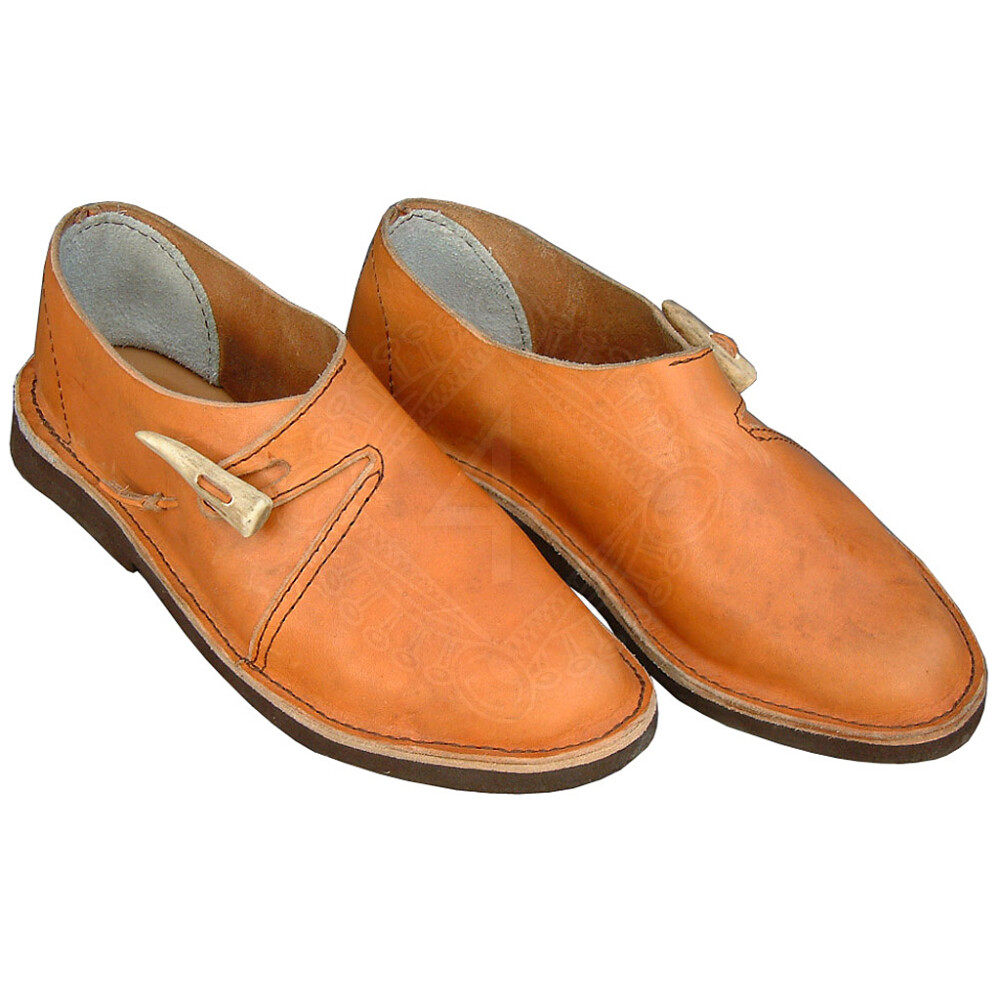
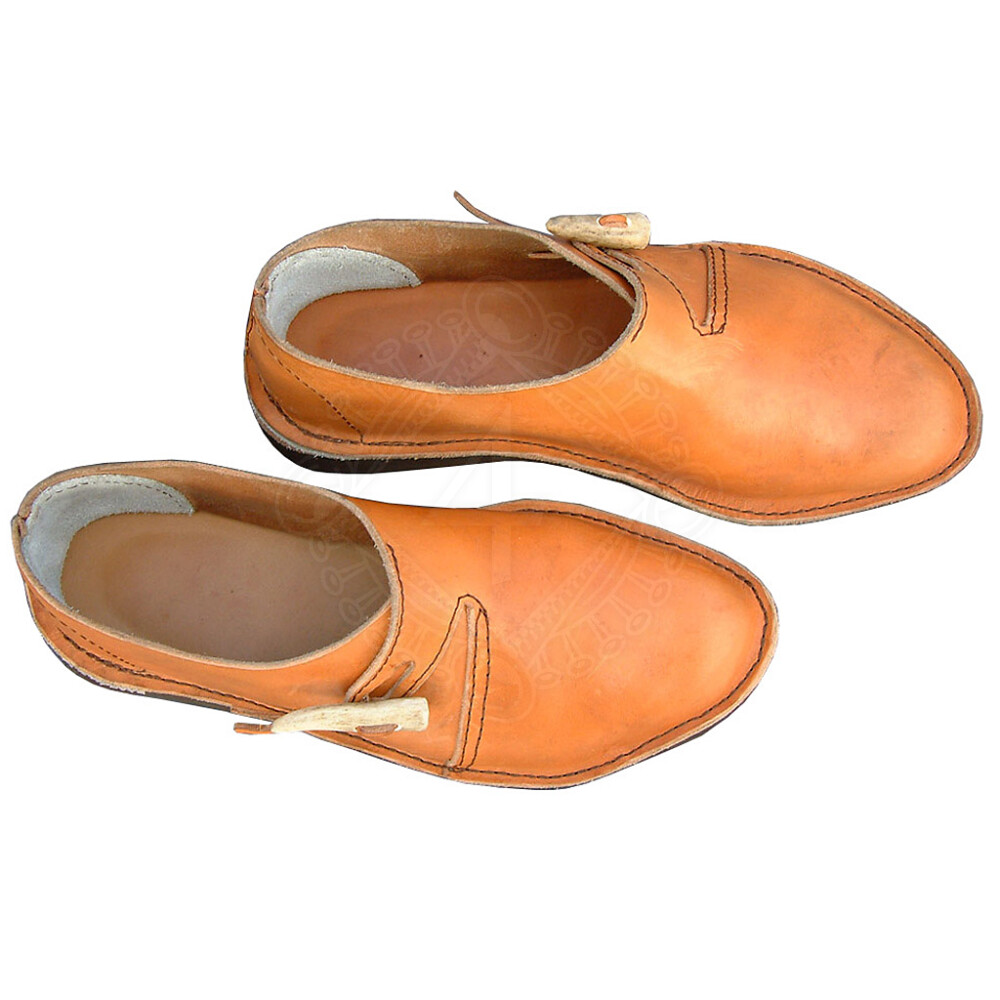
Step into the world of the Early Middle Ages with these authentic leather shoes, inspired by archaeological finds from the legendary Viking trading centre of Hedeby. This low footwear, typologically worn extensively from the 6th to the 15th century, will provide you with the perfect historical foundation for your next reenactment festival or LARP. The fastening with a stylish horn toggle on the outer side gives the shoes an unmistakable Nordic character. The natural leather perfectly adapts to your foot, ensuring comfort even during long marches. Complete your Norman or Viking costume with a detail that truly matters. Further product information ...
Low Leather Viking Hedeby Turnshoes with Horn Toggle
Historical Context and Proper Use
The excavations in Danish Hedeby (Haithabu) provide us with a valuable insight into the shoemaking of the 9th to 11th centuries. Turnshoes with a lateral fastening via a leather strap and an antler or bone toggle are among the iconic elements of Scandinavian clothing in the Early Middle Ages. This footwear is ideal for portraying Vikings, Normans, and commoners of Europe at that time. Today, the shoes will serve excellently in historical encampments, LARP battles, and stage fencing. The leather will yield after a few wears and mould exactly to the specific shape of your foot.
Material, Colours, and Shoe Care
The shoes are meticulously crafted from high-quality cowhide. By default, the leather is available in black, dark brown, and light brown (natural). Other colour shades are achieved by applying a special topcoat dye. Please note that this special dye suffers from the natural weakness of patent and coated leathers – over time, small cracks may appear, or the coating may crumble in the most stressed areas (e.g., the flex of the toe). This is a common occurrence that needs to be considered when choosing a non-standard colour. However, if you are looking for footwear for a one-off celebration or occasional events, the coated dye will safely serve its purpose.
The footwear is treated from production with a beeswax balm. This balm softens, impregnates, and slightly darkens the leather. For a long lifespan and to maintain its properties, the shoes must be regularly treated with available leather care products. You can use waxes, leather oils, or standard shoe polish, which can also be used to tint the shade and cover minor scuffs from regular wear. Never dry the shoes near a direct heat source (open fire, radiator), as the leather would harden and crack.
Safety Warnings and Custom Sizing
Historical footwear with a smooth leather sole can be slippery on wet grass, mud, or modern smooth surfaces (tiles, tarmac). Exercise extra caution during combat or fast running to prevent injury. If you choose the custom-made option and are accustomed to wearing orthotic insoles, it is essential to send these insoles to us in advance. They will be precisely fitted directly into the shoe, ensuring the footwear fits you like a glove.
Technical Parameters
| Upper Material | Cowhide leather |
| Sole Material | Cowhide leather |
| Upper Leather Thickness | Approx. 2 mm (0.08 in) |
| Sole Thickness | Approx. 4 - 5 mm (0.16 - 0.20 in) |
| Fastening Method | Leather strap with horn/antler toggle |
| Historical Period | Early to High Middle Ages (approx. 6th - 15th century) |
| Standard Colour Variants | Black, dark brown, light brown (natural) |
| Factory Treatment | Impregnated with beeswax balm |
With these shoes, we highly recommend purchasing traditional woollen leg wraps and a linen tunic, with which you will create an absolutely perfect and functional historical outfit.
We are here for you!