 Čeština
 Deutsch


Gothic Two-Handed Sword 'Edmund' for HEMA, Class B

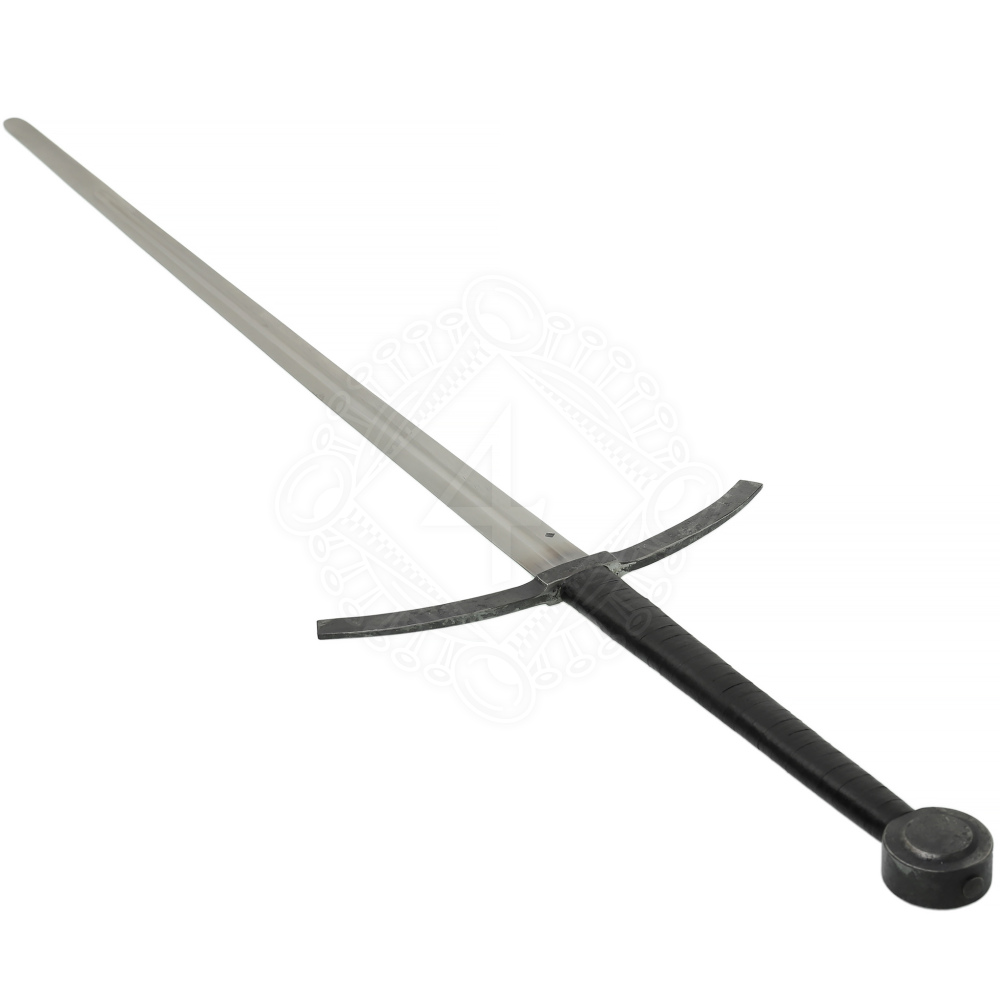


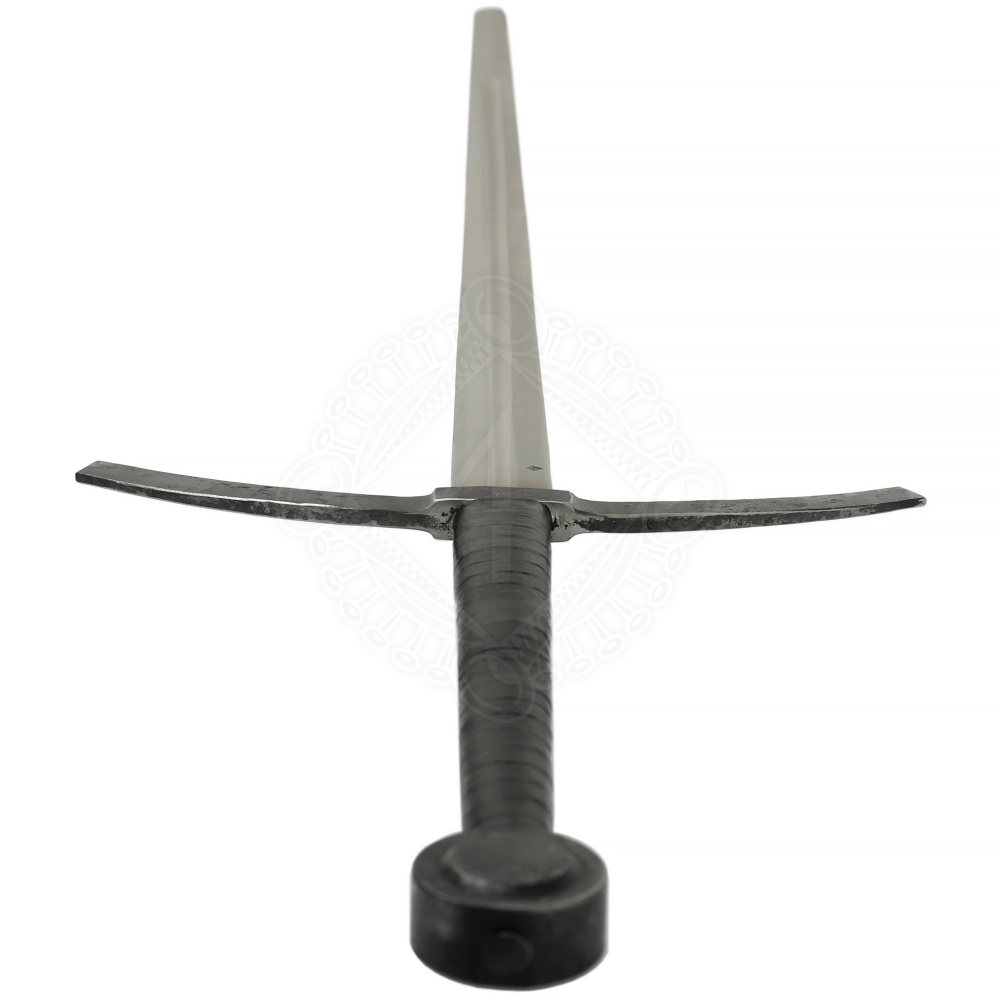

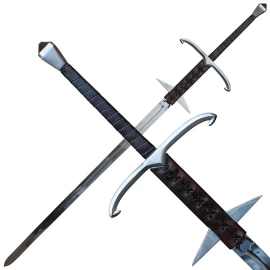
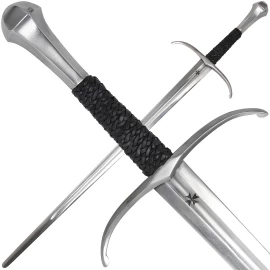
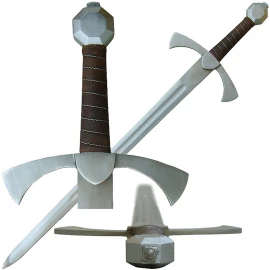
Introducing 'Edmund', an imposing and fully functional replica of a Gothic two-handed sword, designed specifically for the demands of Historical European Martial Arts (HEMA) and stage combat. Classified as a Class B sword, it is the ideal choice for fencers seeking a reliable and durable weapon with an authentic appearance. Its robust construction and excellent balance make it not only a superb tool for training and competition but also a stunning collector's piece. Further product information ...
Gothic Two-Handed Sword 'Edmund' for HEMA, Class B
Sword class B
Features and Design of the Sword
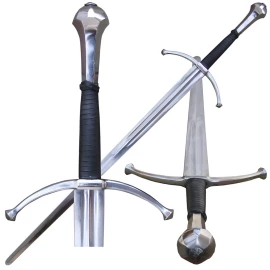
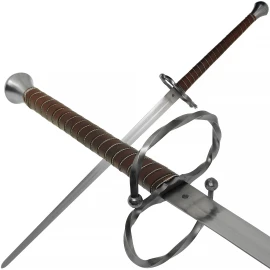
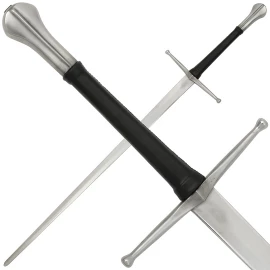
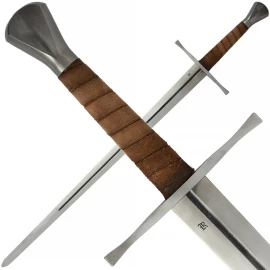
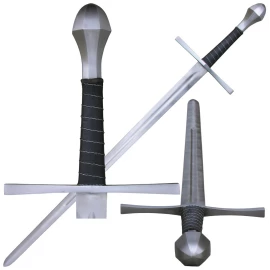
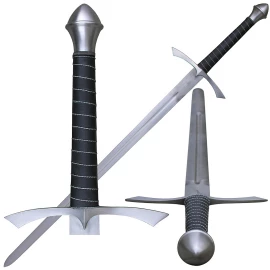
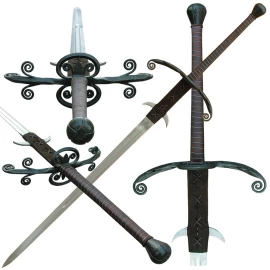
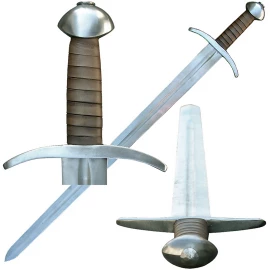
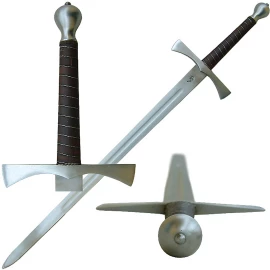
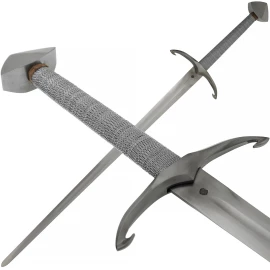
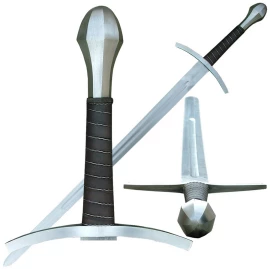
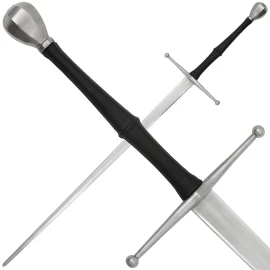
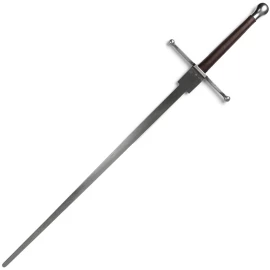
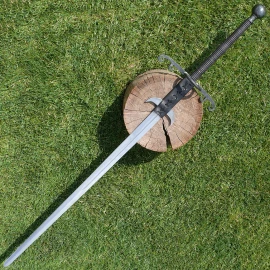
At first glance, this two-handed sword captivates with its grand dimensions and precise craftsmanship. Its dominant feature is the long, straight blade, forged from high-quality ČSN 14260 spring steel. The blade has a distinct diamond cross-section, which provides the necessary rigidity and durability. A small maker's mark from Kovex Ars, in the shape of a trefoil, is stamped onto the blade near the crossguard.
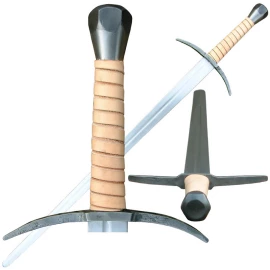
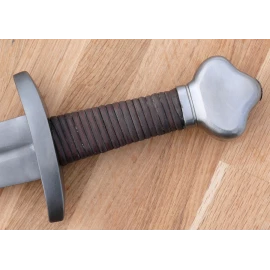
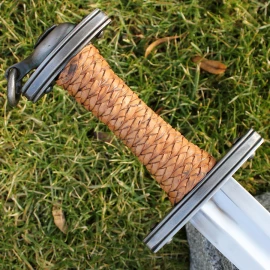
The guard is made of steel, simple yet elegant, with arms that curve slightly towards the blade, a characteristic feature of late Gothic swords. The long handle is designed for a comfortable and secure two-handed grip, with its wooden core carefully wrapped in black leather. The sword is completed by a massive, disc-shaped steel pommel that perfectly counterbalances the long blade and is securely peened to the end of the tang.
Use in Practice and in History
Modern Application
Thanks to its construction, blunted edge, and rounded tip, the 'Edmund' sword is safe for contact historical fencing (HEMA) and practicing combat techniques. It is a reliable partner for both sparring and tournaments. It also serves excellently as a prop for theatrical or film performances, or as a commanding centrepiece for your collection of historical weapons.
Historical Context
Two-handed swords of this type, often called greatswords or the German Zweihänder, appeared on European battlefields in the late Middle Ages, particularly in the 15th and 16th centuries. They were the weapons of specialised infantry soldiers, such as the German Landsknechte. Their primary role was to cut through dense pike formations, break enemy spears, and protect standard-bearers. Wielding such a sword required immense strength, skill, and years of training.
An Interesting Fact
Some greatswords reached such enormous sizes and weights that they were no longer practical for combat and served purely ceremonial purposes as so-called parade or bearing swords. They were symbols of the power and status of city guards or a nobleman's personal bodyguard.
Technical Specifications (Version with blunted blade)
| Parameter | Value |
| Overall Length | approx. 149.8 cm |
| Blade Length | approx. 108.5 cm |
| Guard Length | approx. 36 cm |
| Blade Width at Guard | approx. 44 mm |
| Blade Edge Thickness | approx. 2-3 mm |
| Point of Balance (PoB) | approx. 3.5 cm from guard |
| Overall Weight | approx. 2550 g |
| Blade Material | Spring Steel ČSN 14260 |
| Blade Hardness | approx. 53 HRC |
This is a Czech-made product. The given data is approximate and may vary slightly from piece to piece.
Care and Maintenance
The blade is made from spring steel, which is not stainless. To keep your sword in perfect condition, it is essential to clean it of moisture and fingerprints after each use and then preserve the blade with a thin layer of oil (e.g., WD-40 or a specialised gun oil). Store the sword in a dry environment. It is advisable to treat the leather grip with a leather care product from time to time.
Safety and Disclaimer
Important Notice: Although this sword is intended for fencing, it is still a weapon that can cause serious injury. Always use certified protective gear (fencing mask, gloves, torso protector, etc.) during any handling, especially during fencing. Everything you do with the sword is done entirely at your own risk. The manufacturer and the seller bear no liability for any personal injury or property damage resulting from its use.
During use, natural wear and tear, such as nicks on the blade's edge (burrs), may occur. These are not grounds for a complaint. Inspect the sword before each use and file down any sharp edges created by nicks with a file or sandpaper. Keep your sword secure and out of the reach of children.
We are here for you!