
 Čeština
 Deutsch


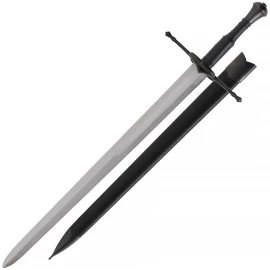
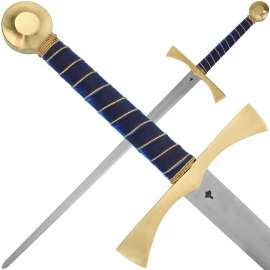
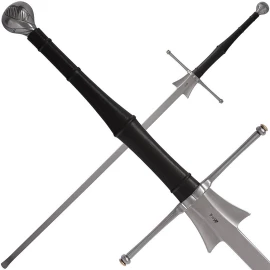
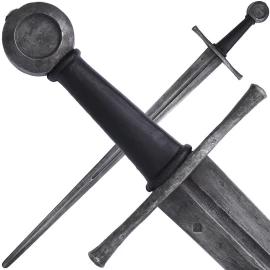
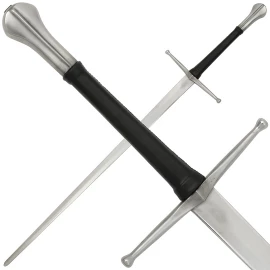
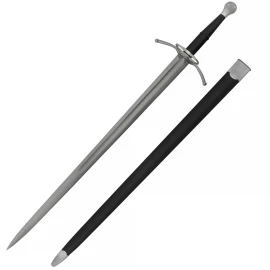
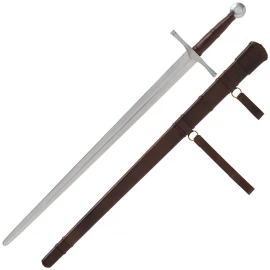
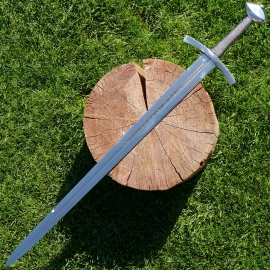
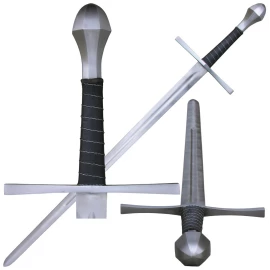
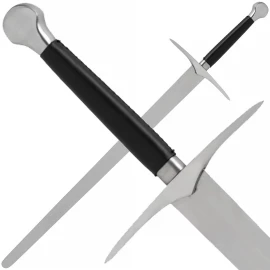
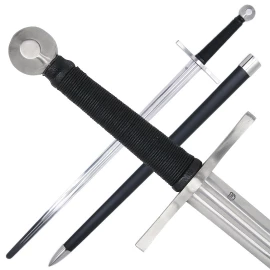
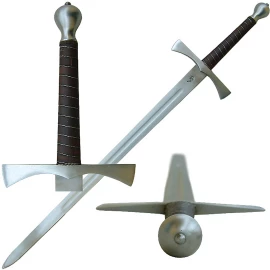
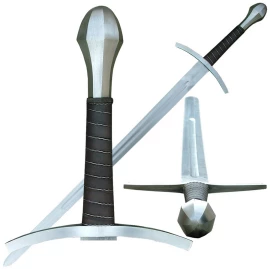
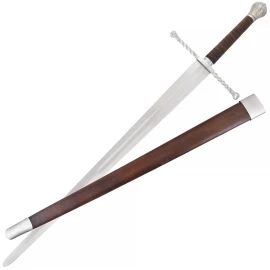
Gothic Bastard Sword for Light Fencing
1x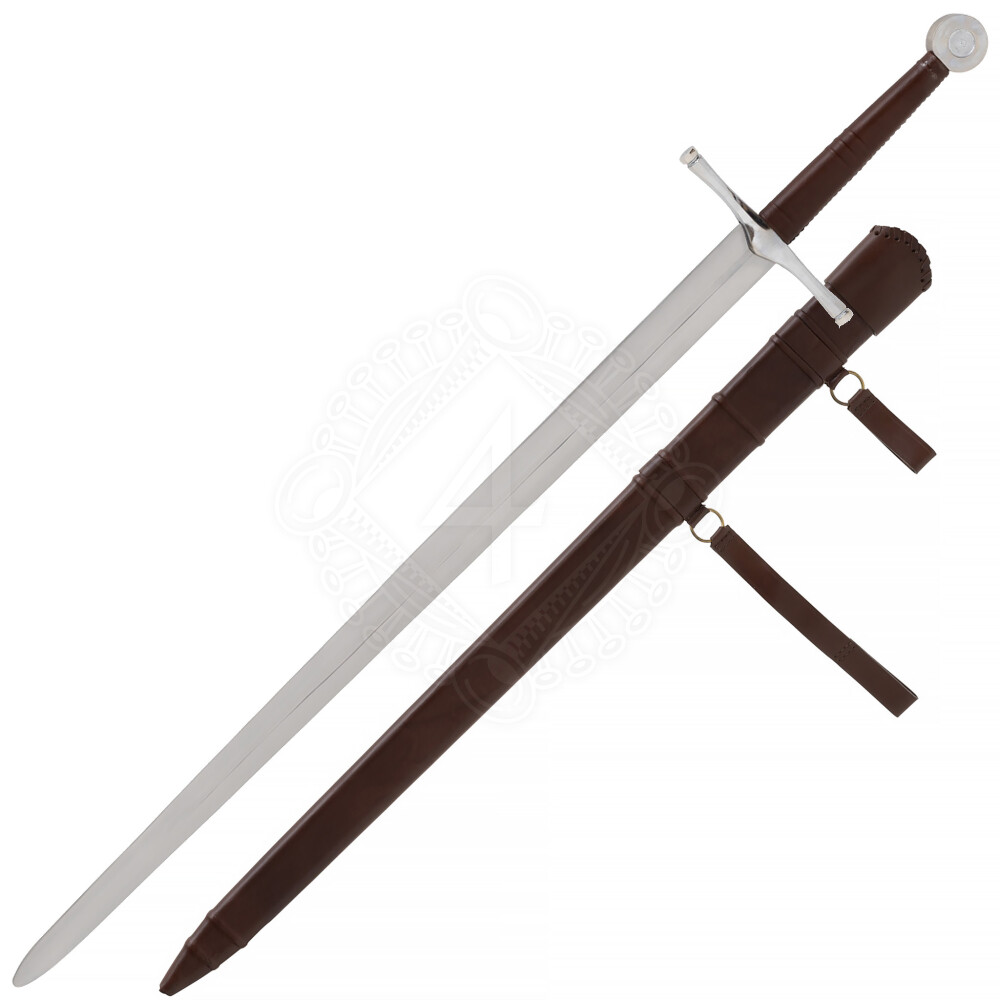
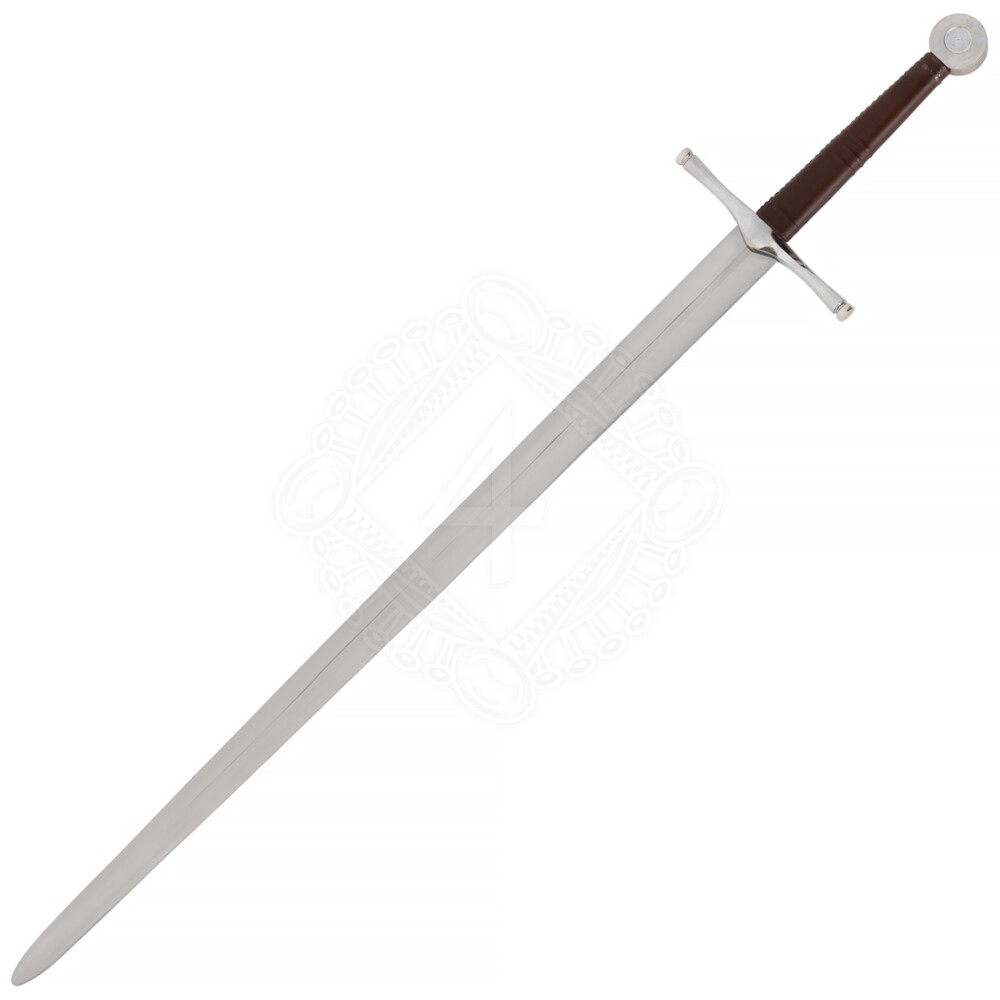
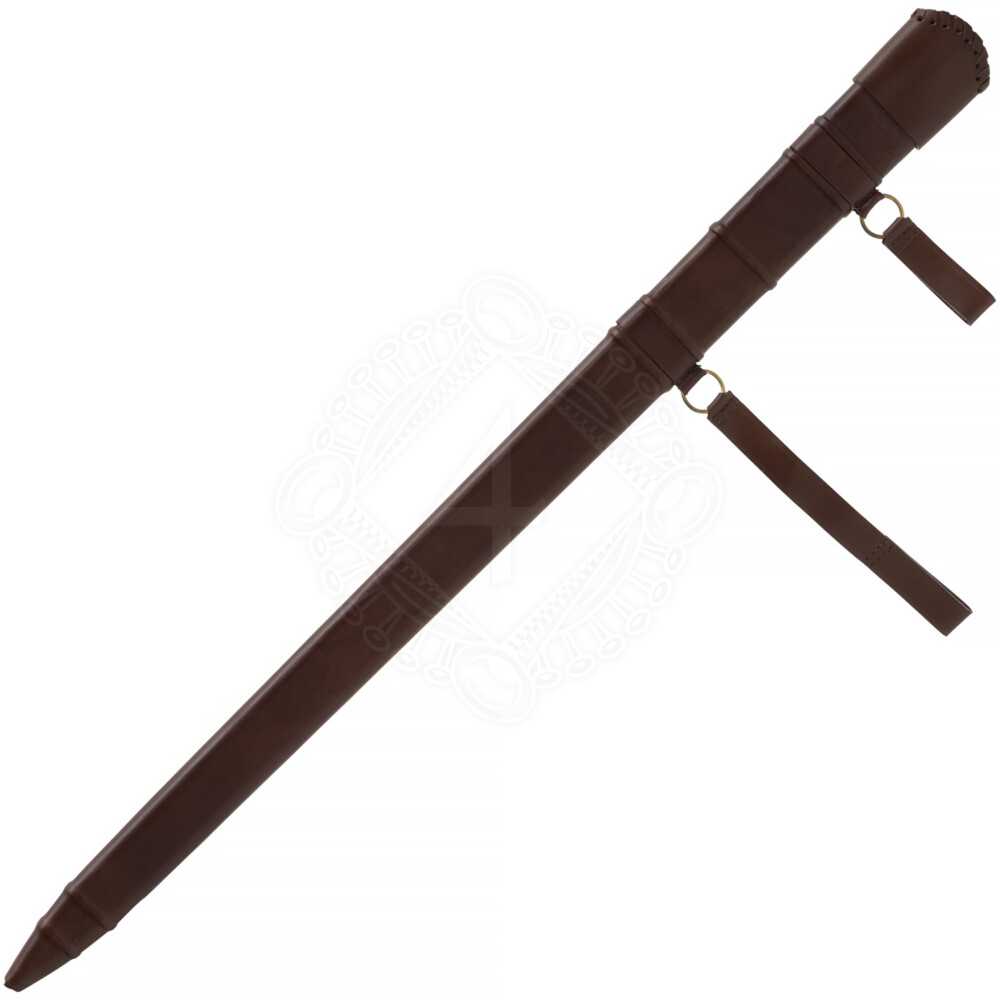
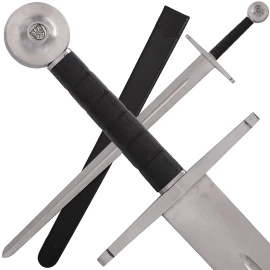
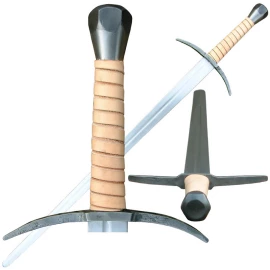
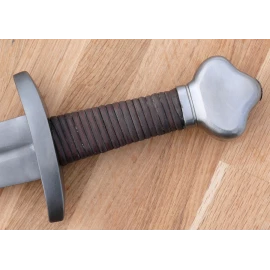
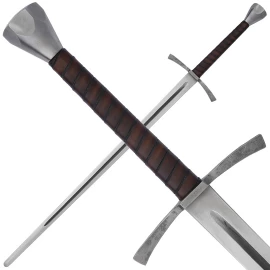
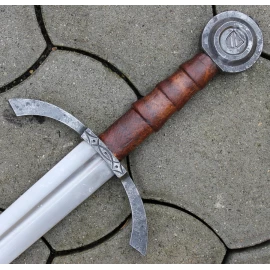
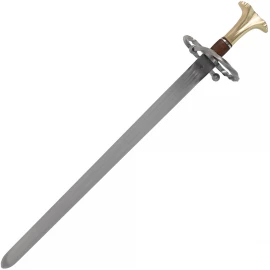
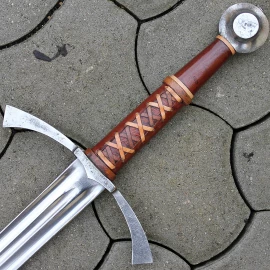
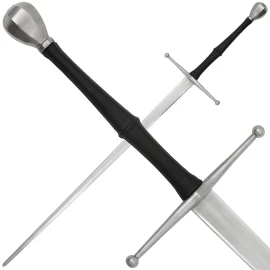
Are you looking for an affordable and reliable tool for your beginnings in historical fencing or martial arts training? We present to you this hand-and-a-half sword, inspired by classic European weapons of the Late Middle Ages. It is constructed with maximum regard for safety during training, boasting a rounded safety tip and a thick striking edge. The carbon steel blade, combined with a solid steel crossguard and pommel, provides a great feel in combat. The leather-wrapped grip guarantees a firm and secure hold whilst wearing a glove. Additionally, you will receive a stylish wooden scabbard equipped with a leather suspension harness. This is the ideal choice for technique practice, light LARP battles, or as a robust prop for your knightly costume. Further product information ...

Would you like to be notified as soon as the item is in stock?
You will receive a short e-mail as soon as we have it back in stock.
Gothic Bastard Sword for Light Fencing with Leather Scabbard
Historical Context and Typology
Typologically, this weapon corresponds to the so-called hand-and-a-half swords (often referred to as bastard swords), which reached their peak during the 14th and 15th centuries. They represented the ideal compromise between a one-handed knightly sword and a heavy two-hander. The extended grip allowed the fighter to engage the second hand in the strike, significantly increasing the leverage and penetrative power of the weapon, whilst the weight and balance still allowed for one-handed combat if necessary (for example, in combination with a buckler). The disc pommel and straight steel crossguard are typical features of Gothic swordsmithing.
Weapon Construction and Safe Use
The blade is forged from carbon steel and, for safety reasons, features a rounded tip and a blunt striking edge approximately 2.5 mm (0.1 inches) thick. Structurally, the sword is designed so that the blade tang passes through the grip, and the pommel is secured to it with a countersunk nut. This sword falls into Class C according to the fencing weapons classification. It is intended exclusively for light stage combat, technique practice without forceful contact, or as a prop. Under no circumstances should you use the sword for full-contact combat (buhurt, Battle of the Nations, heavy HEMA sparring) or for cutting tests. Hard edge-to-edge impacts can damage the blade and loosen the threaded assembly, which could lead to injury. Always wear adequate protective gear, such as a fencing mask, gambeson, and gloves, during practice.
Directions for the Use of Bladed Weapons from Outfit4Events
Care and Maintenance
To ensure your weapon serves you as long as possible, it requires regular care. Carbon steel is prone to rust. After every training session or bare-hand contact, carefully wipe the blade with a dry cloth and apply a thin layer of gun or conservation oil. Occasionally treat the leather parts of the grip and scabbard with a leather balm so the material does not dry out and crack. Before every use of the weapon, check the tightness of the nut on the pommel; if it has loosened, tighten it carefully to prevent the hilt from coming apart during handling.
Technical Specifications
| Blade Material | Carbon steel |
|---|---|
| Fencing Class | Class C (light practice and stage combat) |
| Hilt Assembly | Pommel secured with a countersunk nut (threaded) |
| Total Length of Sword | 115 cm (45.3 inches) |
| Blade Length | 88 cm (34.6 inches) |
| Crossguard Length | 20.5 cm (8.1 inches) |
| Striking Edge Thickness | approx. 2.5 mm (0.1 inches) |
| Weight of Sword | 1560 g (3.44 lbs) |
To ensure maximum safety during your training, we highly recommend purchasing padded fencing gloves and a thick gambeson alongside this practice sword, as they form the fundamental protective layer for every fighter.
We are here for you!




.3773623034.1696456237.png.webp)

.3773623034.1696456247.png.webp)