
 Čeština
 Deutsch


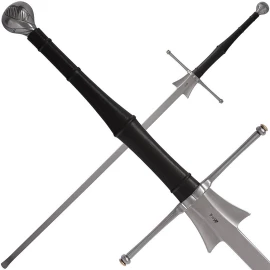
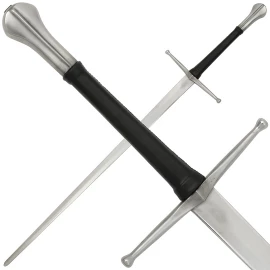
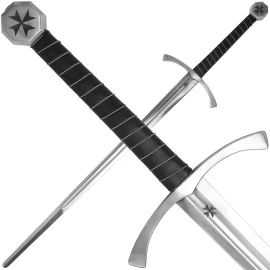
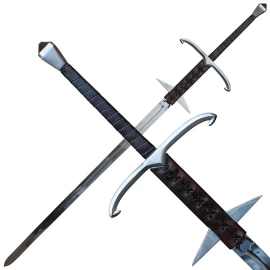
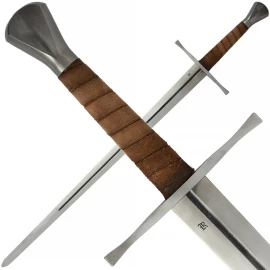
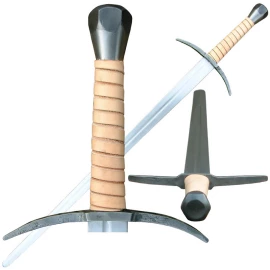
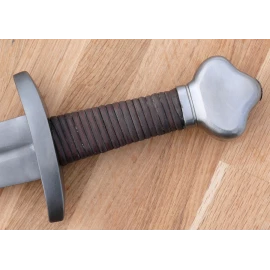
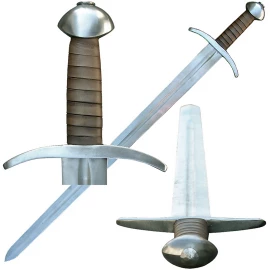
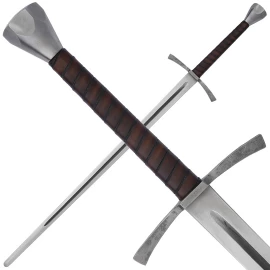
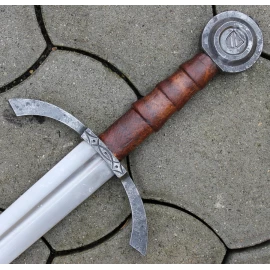
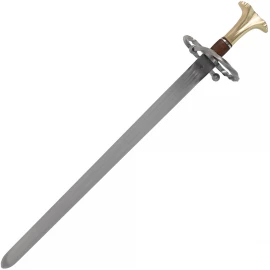
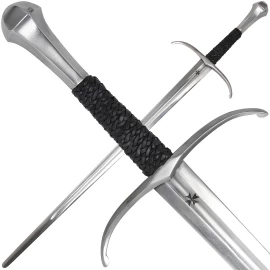
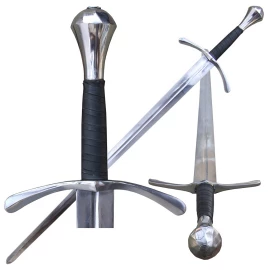
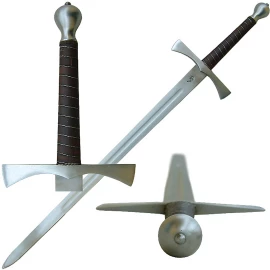
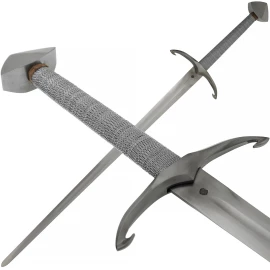
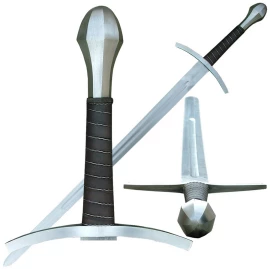
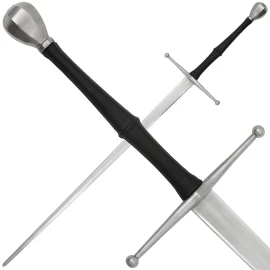
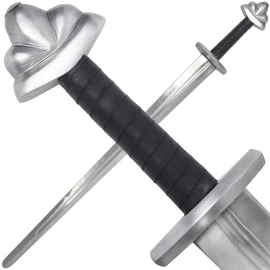
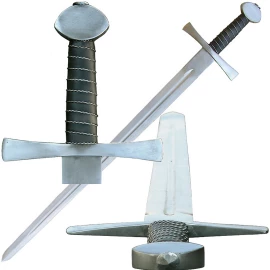
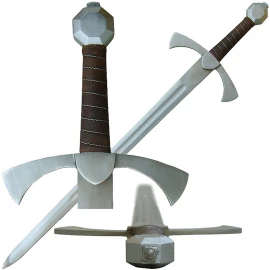
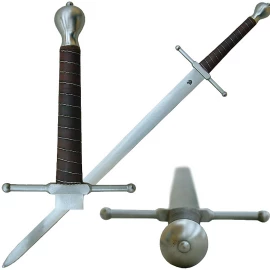
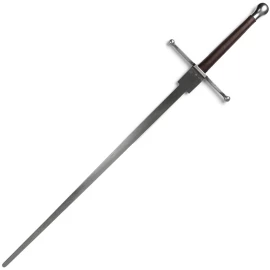
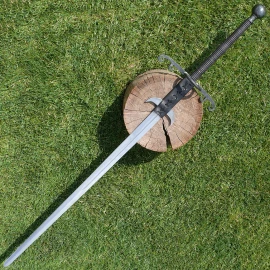
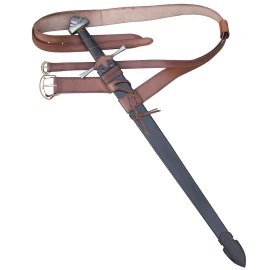
Bastard Sword Rulant, Class B
1x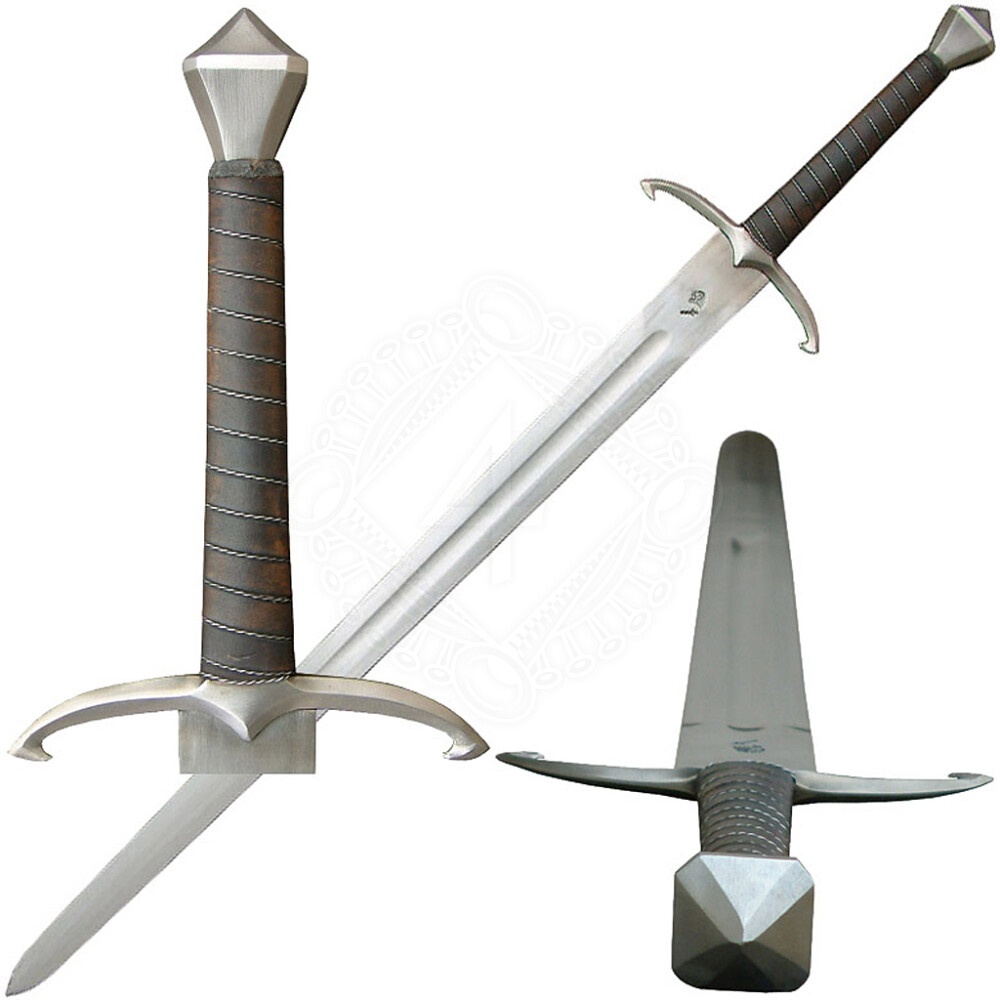


Bastard Sword Rulant
Sword class B
Specifications of the Bastard Sword:
- Overall length approx. 123cm
- Blade length approx. 92cm
- Guard length approx. 21cm
- Blade section at the cross-guard approx. 44*5mm
- Weight approx. 2.10 kg
- Blade of spring steel W.Nr. 1.7102 (DIN 54SiCr6) quenched to a hardness of approx. 47 HRC
Made in the Czech Republic.
Specifications vary from piece to piece; all stated data are to be understood as approximate. The blade is made out of hardened and tempered high carbon spring steel that is not stainless. The guard and pommel is made of steel.
The practical | battle-ready version of this sword has a blunt edge (2-3mm) and rounded point. Such sword was designed to be drawn in a battle or in a stage combat show.
Please note we cannot accept any responsibility for injury, damage or loss incurred by use of any of our sword. You use the sword entirely at your own risk! Even an unsharpened sword can cause serious injury and if precaution is not used easily break bone. Swords are not toys! Improper use and handling of accord may result in serious injuries or death to yourself or bystanders. Please keep your sword out of reach of children!
In fighting with sword on sword, the opponent’s blade should be parried with the side of the blade. Lead your sword sporty right and without excessive and/or unnecessary strength.
Compliance to local, state and federal laws and/or statutes is the responsibility of the purchaser.
Despite the high conscientiousness in the production and material selection, we cannot provide any warranty for breakage of the blade even at proper use. Any sword blade can be broken under certain circumstances. An absolute warranty cannot be provided by any respectable maker.
We warranty our swords against all manufacturer's defects (workmanship and or materials) for a period of one year. This warranty applies only when the product is used under normal conditions for which the sword is designed, and does not apply to damage related to accident, misuse, improper care, negligence, and abnormal and/or excessive wear and tear.
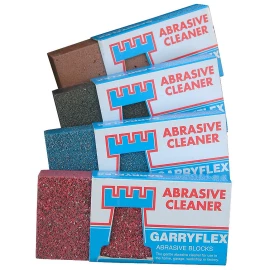
Possible nicks in the blade edge are natural symptom of wear and tear and cannot be reclaimed. When they turn up, please remove all sharp nicks by use of diamond file, abrasive paper or grinding machine.
Loosening of a cross | guard cannot be in many cases avoided as well. It can be fixed by additional riveting or tightening the screw joint. Winding a fishing line around the blade tang into the gap between the grip and guard prove as helpful as well to many swordmen, when trying to fasten a loosened guard.
Please read these Directions for the use of bladed weapons.
We are here for you!



.3773623034.1696456237.png.webp)

.3773623034.1696456247.png.webp)