 Čeština
 Deutsch


Renaissance Rapier William
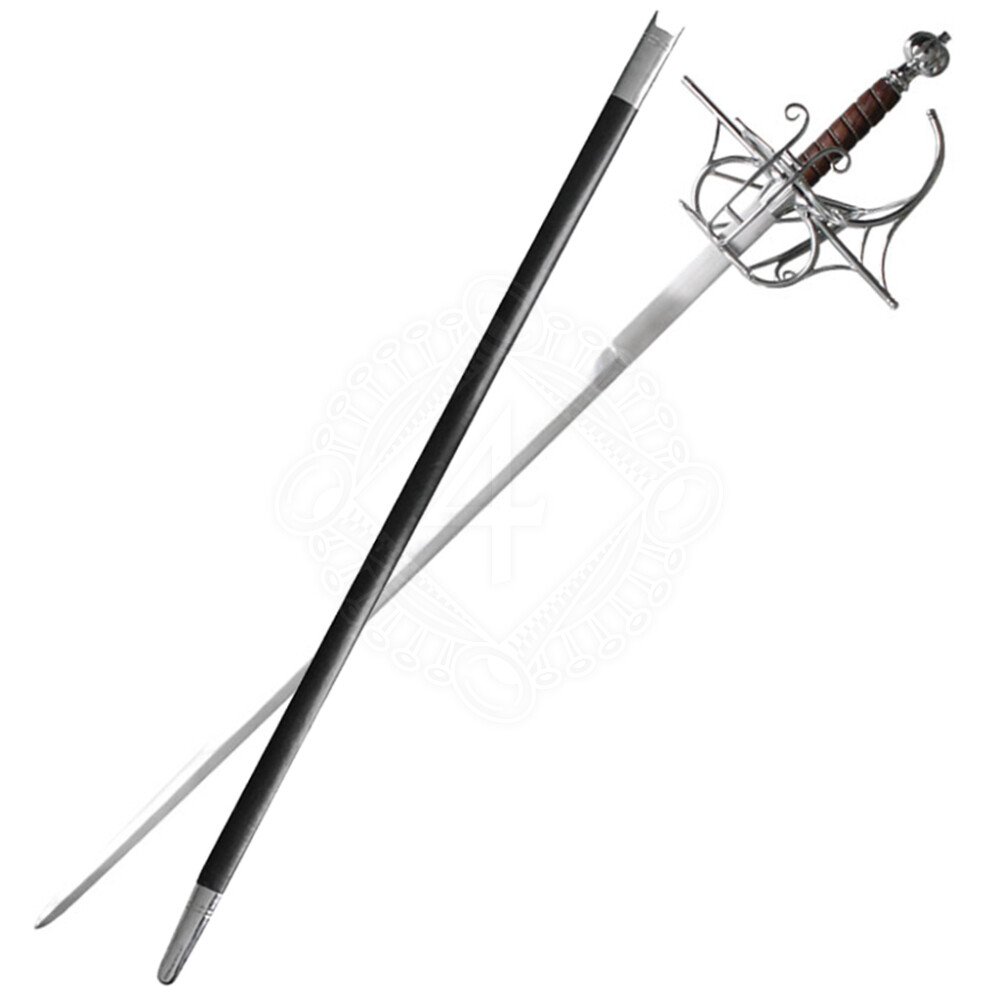
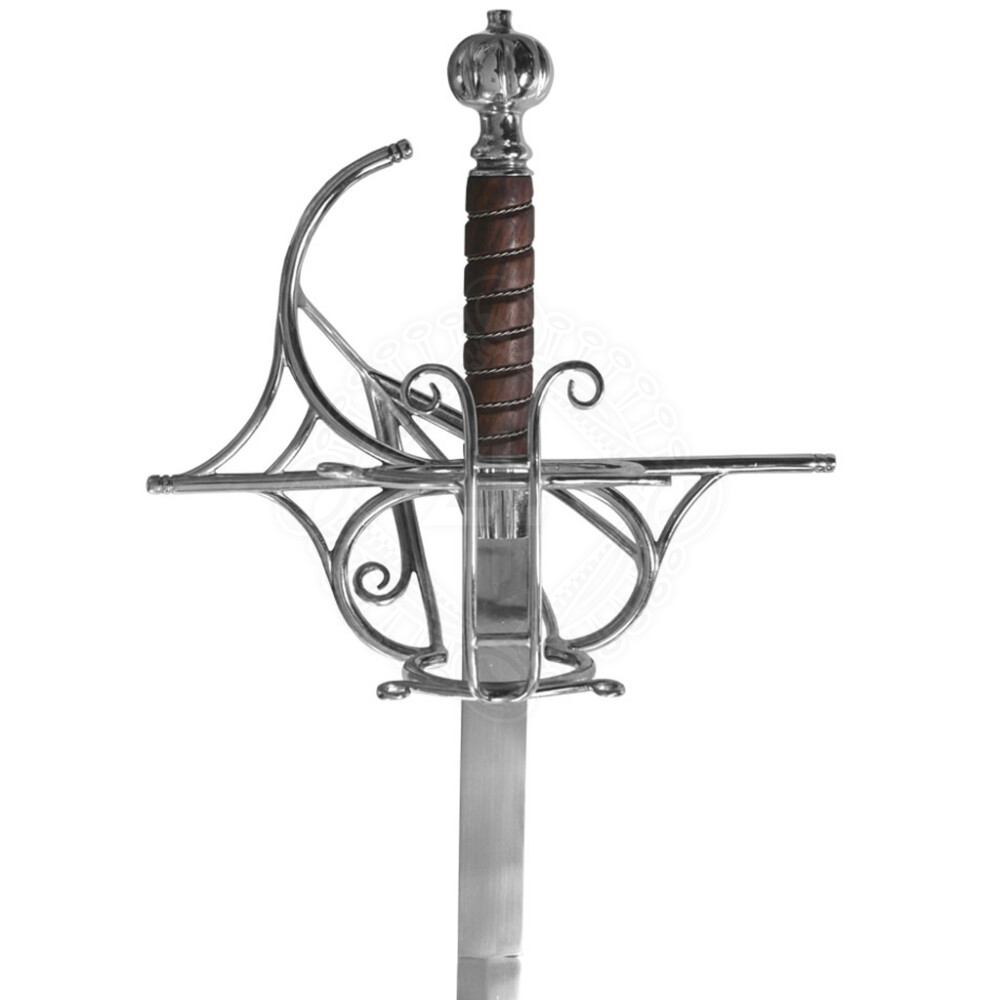
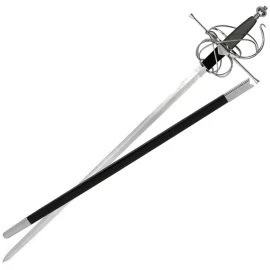
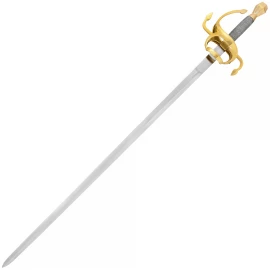
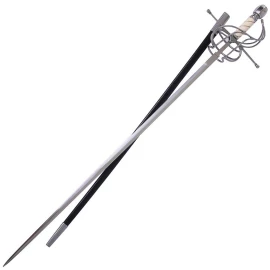
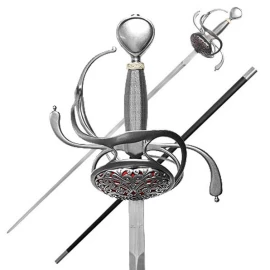
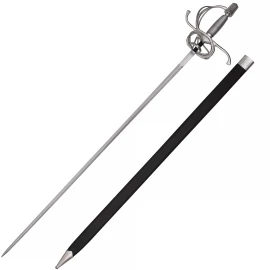
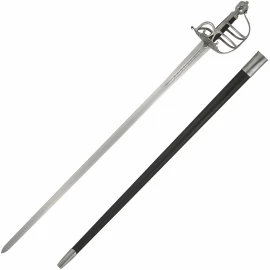
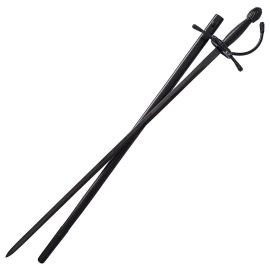
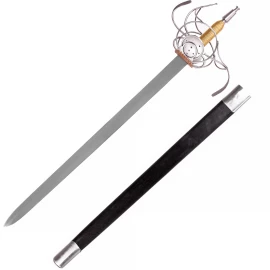
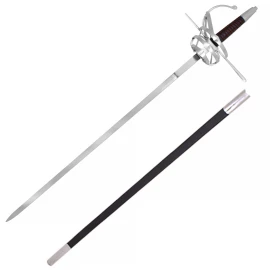
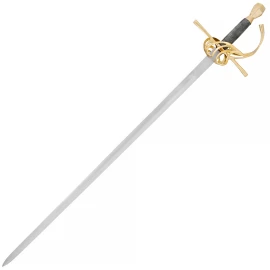
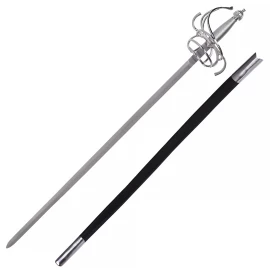
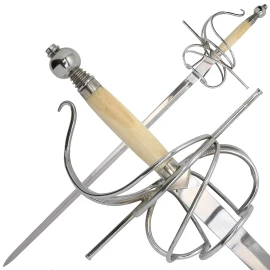
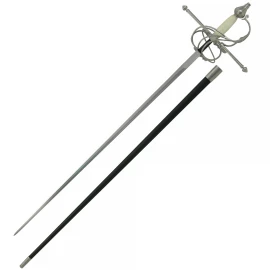
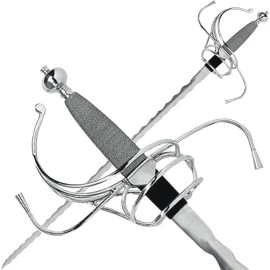
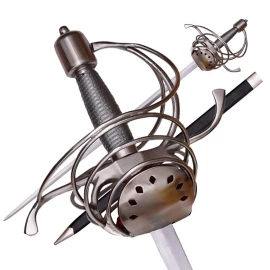
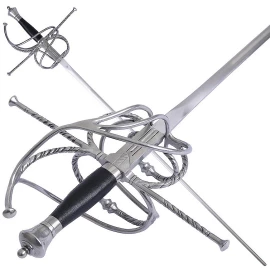
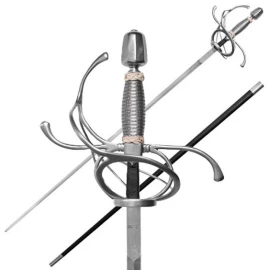
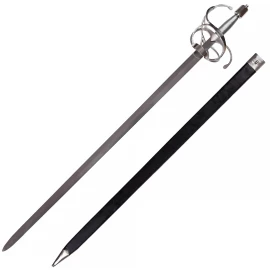
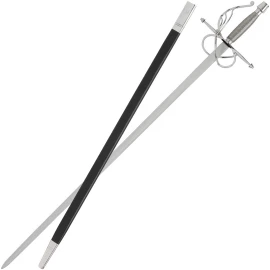
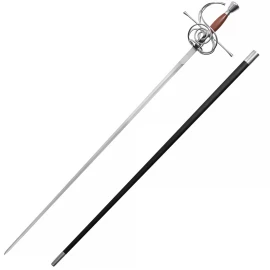
Are you looking for the perfect accessory for your Musketeer costume, noble persona, or Renaissance adventurer outfit? The William Rapier will immediately captivate you with its elegance and precise craftsmanship. Whether you are preparing for a theatre performance, LARP, or simply want to adorn your study wall with a piece of history, this sword is an excellent choice. Its hand-forged blade made of carbon steel and the intricately shaped basket hilt evoke a time when a man's honour depended on the speed of his draw. Although it looks like a formidable weapon, it is designed primarily as a safe, decorative replica that adds true historical authenticity to your appearance. It comes with a high-quality leather scabbard with fittings to protect the blade and facilitate carrying. Further product information ...

Renaissance Rapier William with Swept Hilt and Scabbard
Detailed Description and Usage
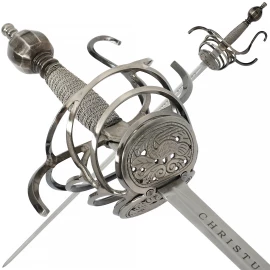
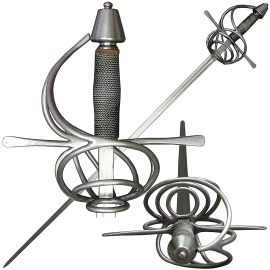
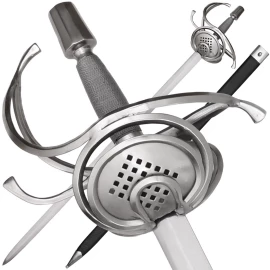
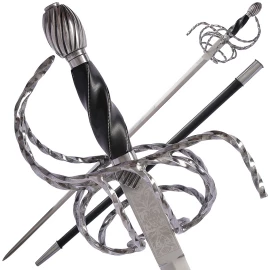
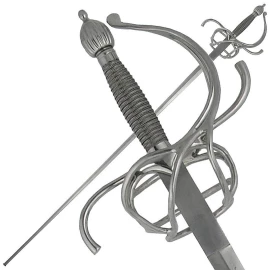
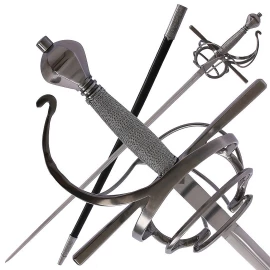
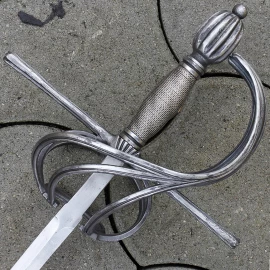
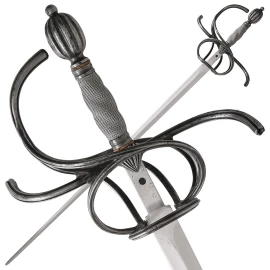
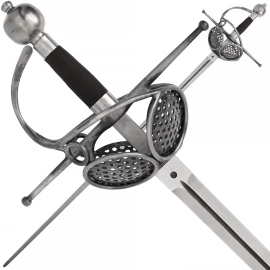
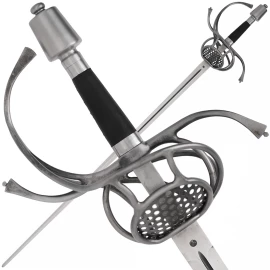
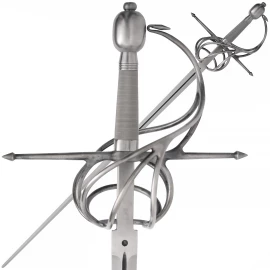
This rapier is a masterful example of swordsmanship inspired by the late 16th and early 17th centuries. The dominant feature of the weapon is the so-called swept hilt, which is made of mild steel. Its interlaced bars not only look fantastic but historically served to effectively protect the fencer's hand from the opponent's point. The grip made of hardwood is spirally grooved, ensuring a firm and comfortable hold even when wearing gloves. A massive pommel, which balances the long blade, completes the composition.
Although the blade is made of high-quality carbon steel and the construction feels sturdy, the manufacturer declares this model exclusively as a decorative item. It is therefore not intended for contact fencing, stage combat "blade on blade," or cutting practice. Use it as a costume accessory, a prop for photoshoots, or as a display piece. When worn on a belt, the included scabbard made of genuine leather, reinforced with metal fittings at the throat and chape, will serve you perfectly.
Directions for the Use of Bladed Weapons from Outfit4Events
Historical Context: The Gentleman's Weapon
The rapier evolved in the 16th century in Spain and Italy as a civilian weapon designed primarily for thrusting. Unlike heavy medieval swords, the rapier was light, fast, and deadly. It became an essential part of the attire of every man of higher society. It was not just a tool for self-defence in dark alleys, but also a fashion accessory and a status symbol. Duels with rapiers were often a matter of honour and frequently ended in death, leading to the development of complex fencing schools.
Care and Maintenance
To keep this beauty looking like new for as long as possible, it requires a little care:
- Blade Protection: Since the blade is made of carbon steel (not stainless), it is prone to rust. Regularly treat it with preservation oil (e.g., gun oil or WD-40), even if the sword is just hanging on the wall.
- Storage: Do not store the sword inside the leather scabbard for long periods. Leather can trap moisture from the air and cause the blade to rust.
- Leather Care: Occasionally treat the leather scabbard with leather balm to prevent cracking and maintain its appearance.
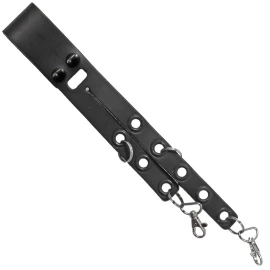
A high-quality leather belt frog would be a great addition to this rapier, allowing you to carry the weapon at the correct angle.
Specifications
| Total Length | 115 cm (approx. 45.3 inches) |
| Blade Length | 94 cm (approx. 37 inches) |
| Weight | 1550 g (approx. 3.4 lbs) |
| Blade Material | Carbon Steel (not stainless) |
| Hilt Material | Mild Steel |
| Grip Material | Hardwood |
| Scabbard | Genuine Leather, Steel fittings |
We are here for you!