
 Čeština
 Deutsch


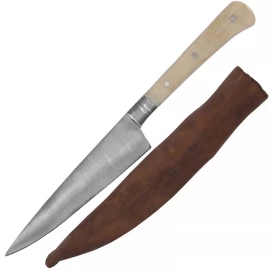
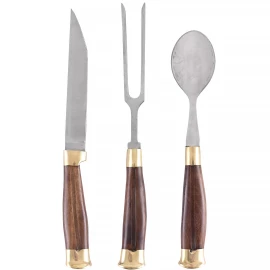
Medieval Dining Knife "Feast" (1250–1350)
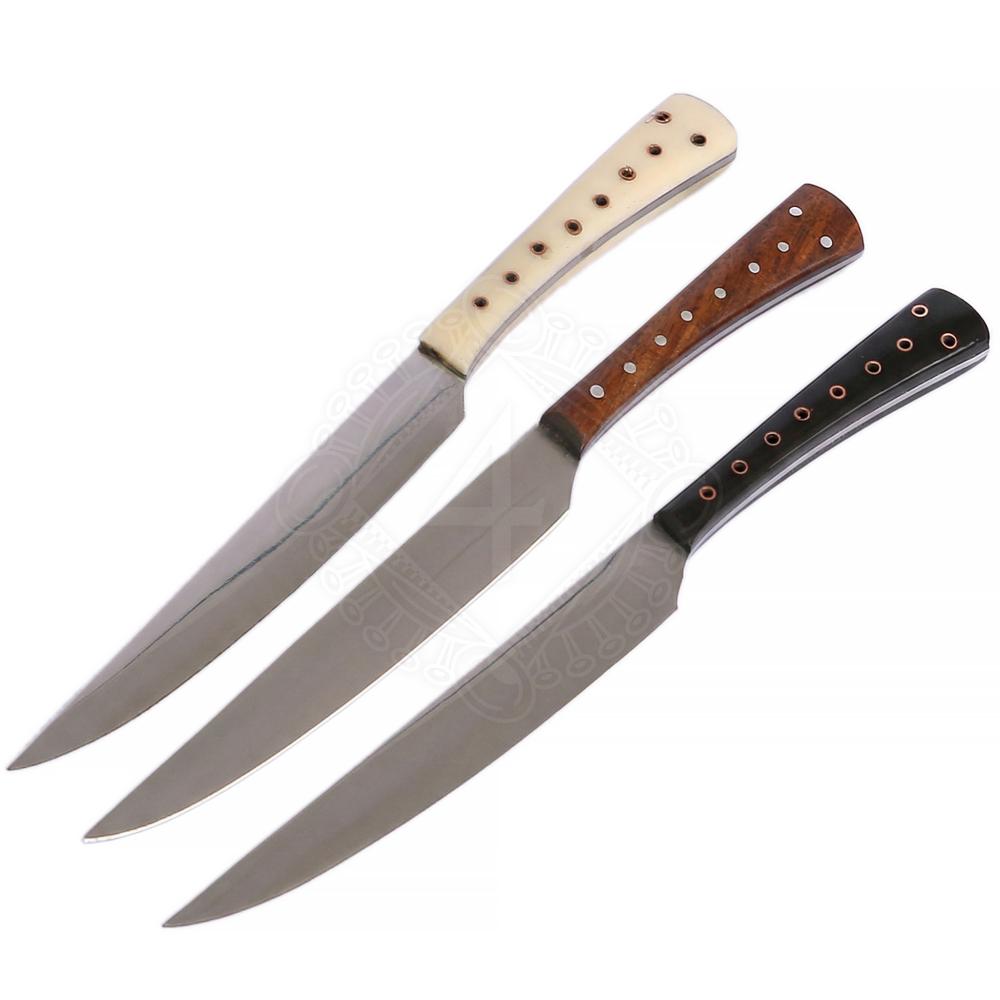
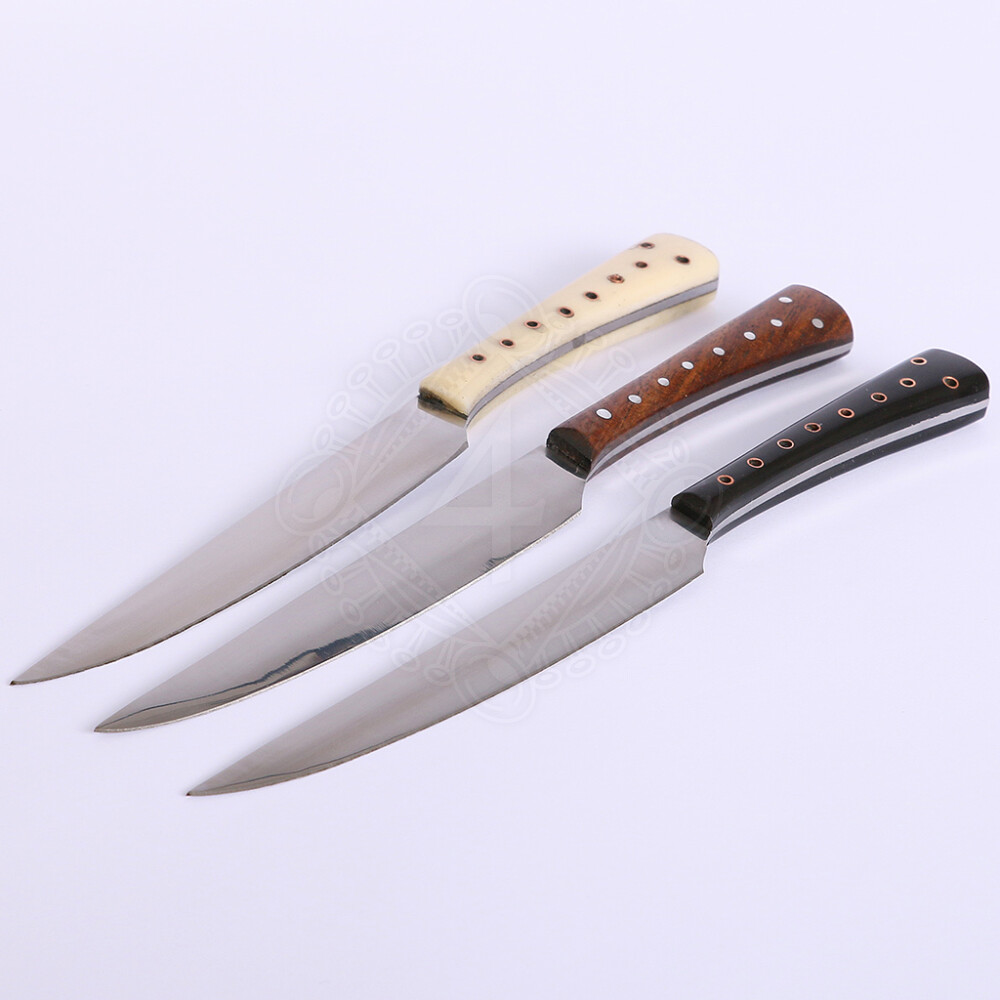
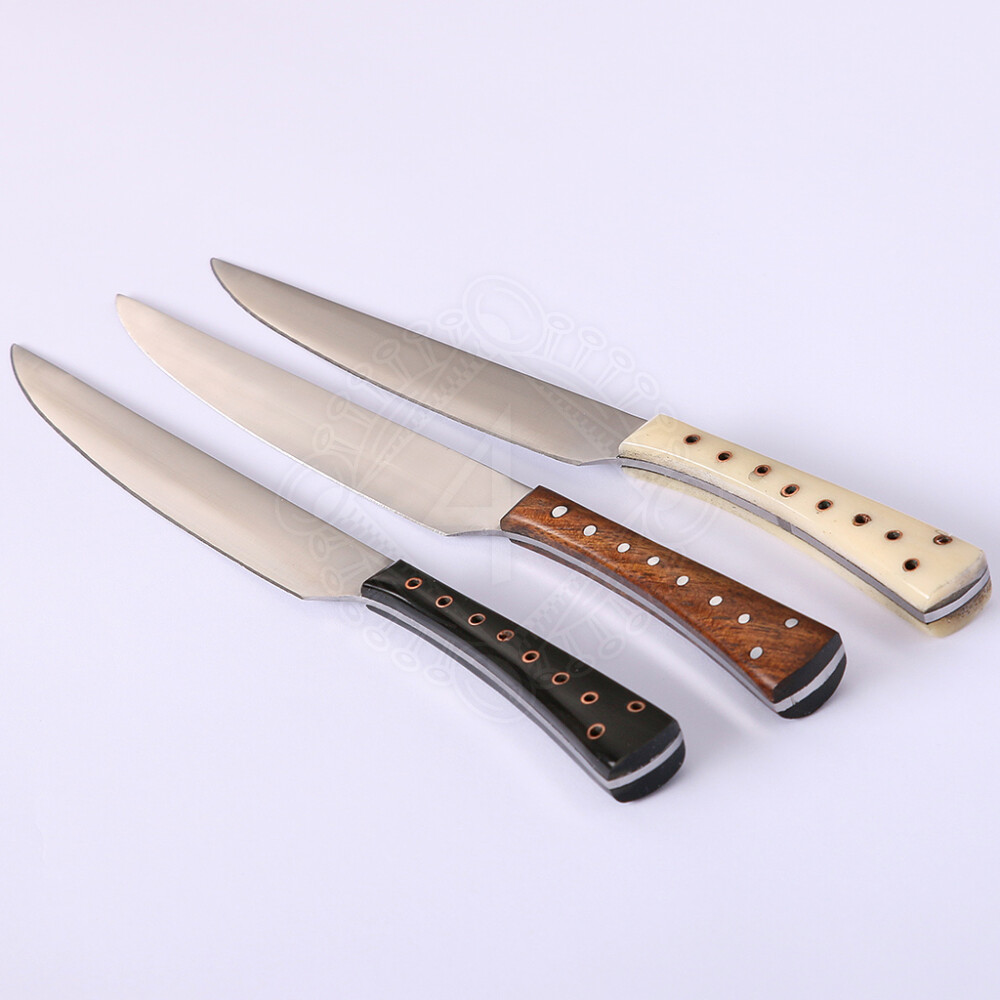
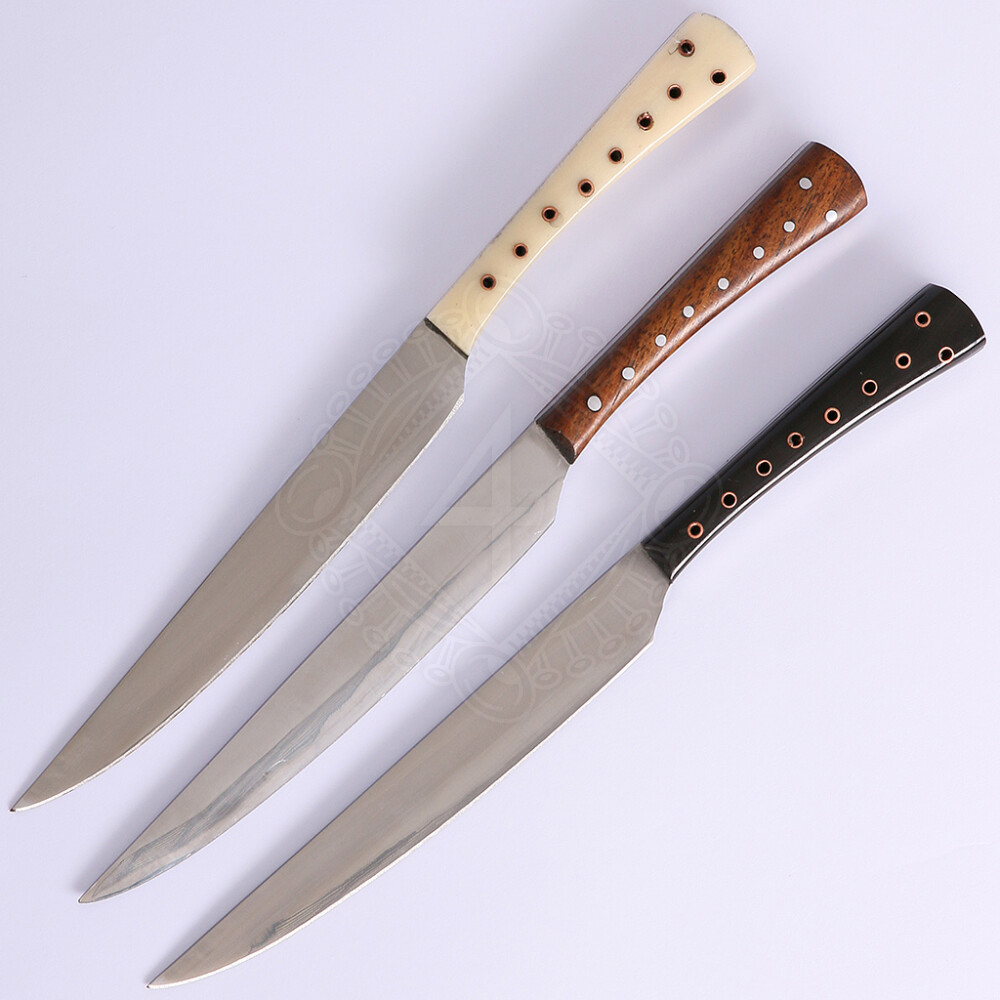
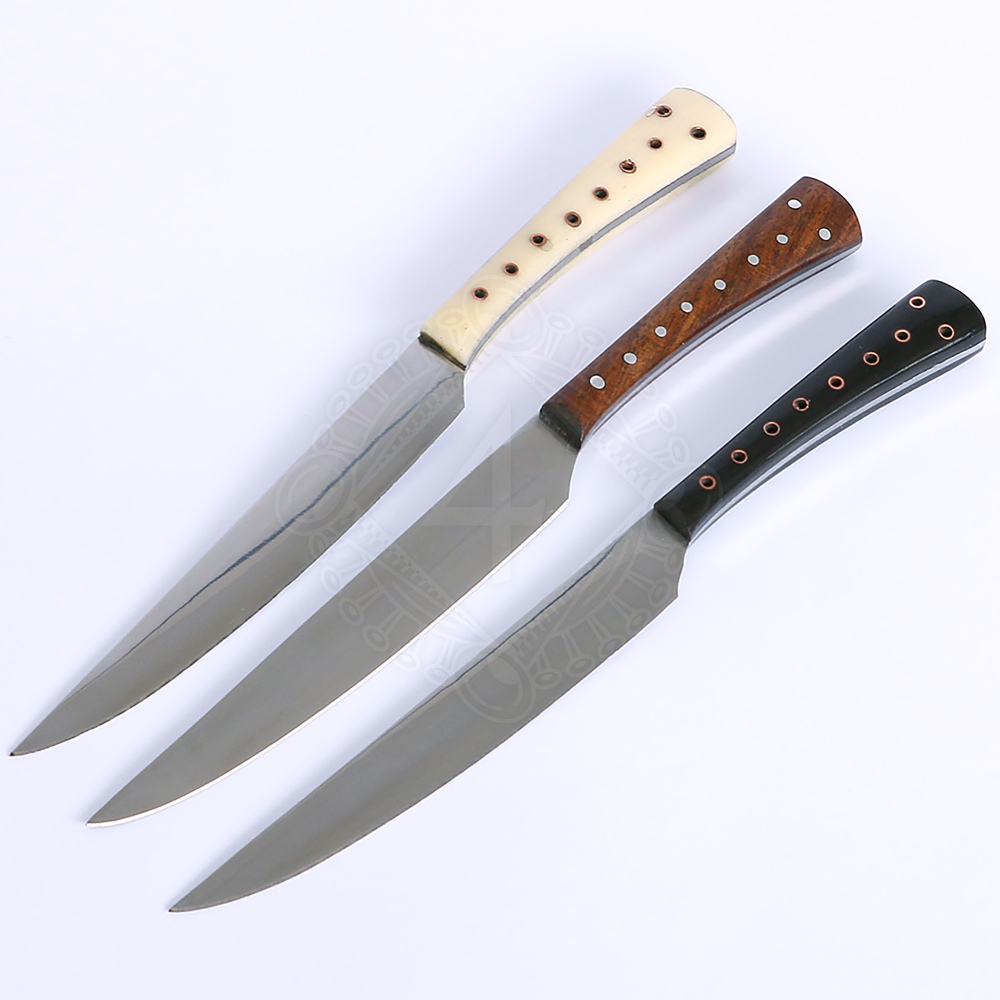

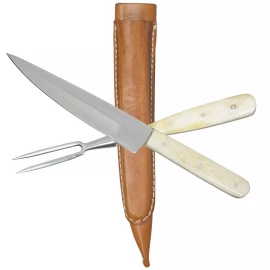
Imagine a lavish banquet in the High Middle Ages. You see roasted meat, bread, and cheese, but one thing is missing from the table settings – a fork. Between 1250 and 1350, a personal knife was the most important, and often the only, eating utensil a person carried. This elegant knife is a precise replica of that essential tool, without which no traveler, townsman, or noble would leave their home. Further product information ...

Medieval Dining Knife "Feast" (1250–1350)
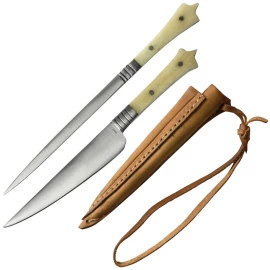
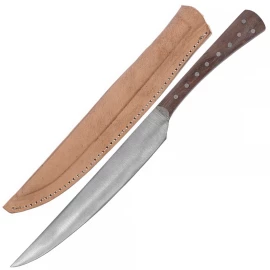
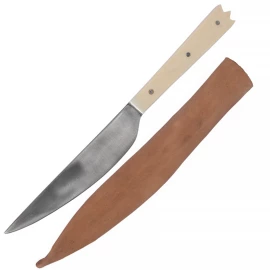
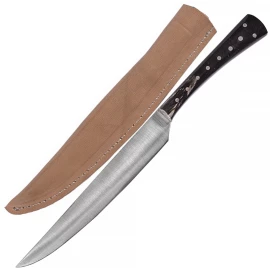
Whether you are preparing for a historical feast, a LARP event, or looking for a stylish accessory for your Renaissance Fair costume, this knife will serve you faithfully. With a choice of several natural handle materials, you can perfectly match the knife to the rest of your gear.
The Personal Cutlery of Our Ancestors
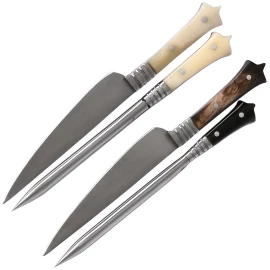
Historically, it was customary for every guest to bring their own knife to a meal. The innkeeper might pour your ale, but cutting your food was up to you. This model is based on archaeological finds of knives used in Europe during the 13th and 14th centuries. The blade has a typical shape that allows for slicing, and thanks to its pointed tip, it also serves to pierce food, effectively substituting the function of a modern fork.
Materials and Craftsmanship
The knife features a blade made of stainless steel, which is practical for contact with food and easier to maintain than carbon steel, yet it retains a historically authentic appearance. The construction is a full-tang design (scales are riveted directly onto the blade tang), ensuring high durability and longevity.
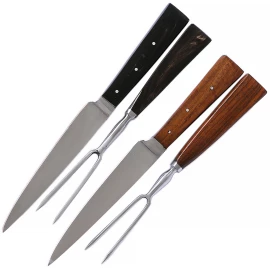
You can customize the look of the knife by choosing the handle material:
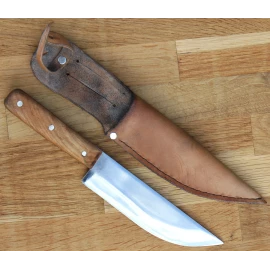
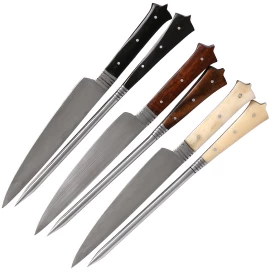
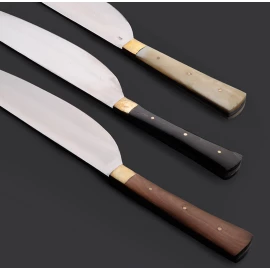
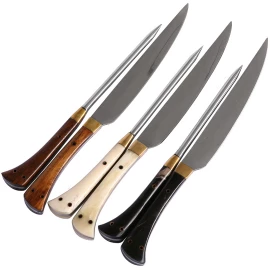
- Hardwood: A classic, warm, and durable choice that suits any costume, from simple to elaborate.
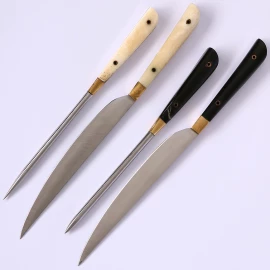
- Bone: The light-colored handle adds a touch of luxury and was popular among wealthier classes.
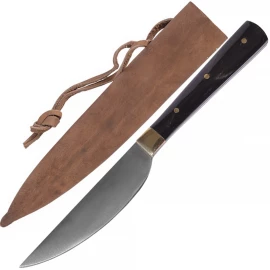
- Horn: A dark, organic look that makes every piece unique.
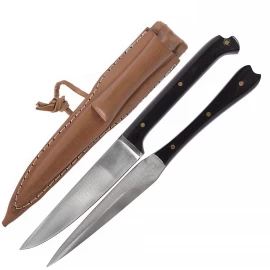
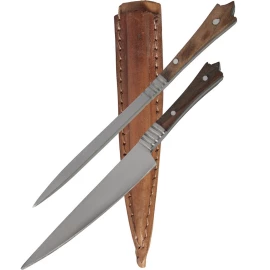
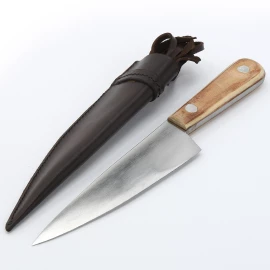
Depending on stock availability and variation, the scales are fitted with either solid brass rivets or decorative hollow copper rivets. The package also includes a simple leather scabbard to protect the edge and your belongings during transport.
Technical Parameters
| Overall Length: | approx. 23.7 cm (9.33 inches) |
| Blade Length: | approx. 14.1 cm (5.55 inches) |
| Max. Blade Width: | 19.6 mm (0.77 inches) |
| Blade Thickness (at hilt): | approx. 2.15 mm (0.08 inches) |
| Edge Thickness: | approx. 0.5 mm |
| Weight: | approx. 60 g (2.12 oz) |
| Blade Material: | Stainless Steel |
Care Instructions
Although the blade is made of stainless steel, the natural handle materials require care. Never wash this knife in a dishwasher! Aggressive salts and high heat would irreversibly damage the horn, bone, and wood, and could cause the rivets to crack. Wash the knife by hand with lukewarm water and mild detergent after use, dry it immediately, and occasionally rub the wooden or horn handle with vegetable oil (e.g., linseed or olive oil) to prevent cracking.
Keep the leather scabbard dry and treat it occasionally with leather balm. Do not store the knife in the scabbard for long periods, as leather can absorb moisture from the air and transmit it to the metal.
Important Safety Notice
This product is sharp and fully functional. While made from stainless steel, for legislative reasons, it is primarily sold as a historical replica and prop. Please exercise caution when using it to avoid injury.
This is a cold weapon category: Class C according to the classification of reenactment weapons, product without warranty! More information on the classification can be found here.
Note: The shade of the leather scabbard and the grain of the handle (wood/bone/horn) may vary from piece to piece, as these are natural materials.
We are here for you!


(1).2152382459.1713554205.jpg.webp)




.3773623034.1696456237.png.webp)

.3773623034.1696456268.png.webp)
.3773623034.1696456247.png.webp)