Čeština
 Deutsch


Hand-Forged Medieval Cutlery Set with Case


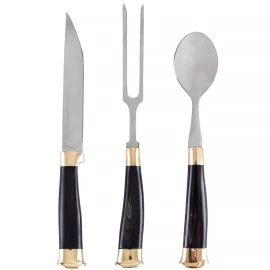
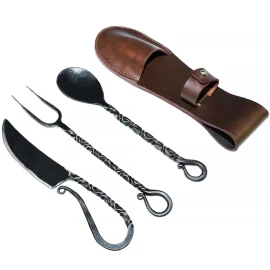
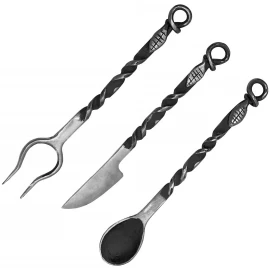
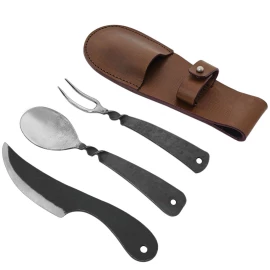
Replace modern tableware with something that looks at home around a historical feast. This hand-forged medieval cutlery set includes a table knife, two-pronged fork and spoon together with a practical carrying case. Dark forge-finished surfaces contrast with the polished working areas, while decorative twists give each utensil an individual hand-worked character. Compact and easy to carry, the set is well suited to LARP, medieval fairs, reenactment camps, historical dining and outdoor events. Whether you are eating beside the campfire or laying out a themed banquet, this medieval eating utensil set combines practical use with a convincingly rustic appearance. Further product information ...

 Delivery options
Traveller’s Feast – Hand-Forged Medieval Cutlery Set with Case
Three Pieces with Distinctive Forged Details
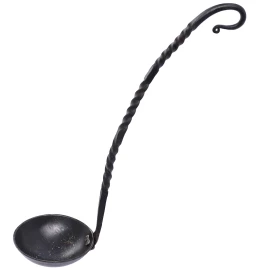
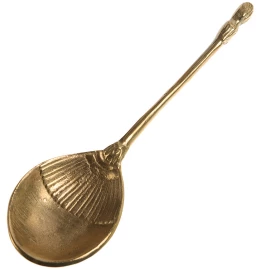
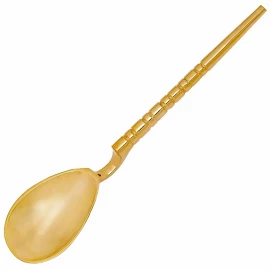
The set contains a spoon, a two-pronged fork and a table knife. The spoon has a polished oval bowl leading into a decoratively twisted neck and long dark handle. The fork uses two pointed tines, a form closer to early historical table forks than the familiar modern four-tined pattern. Its neck is likewise decorated with several forged twists.
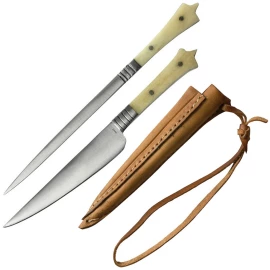
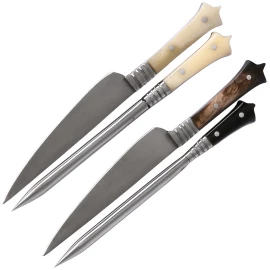
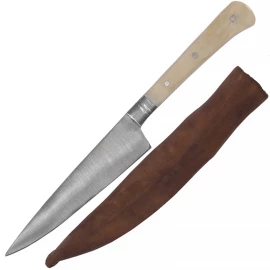
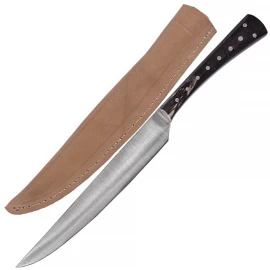
The knife is the most distinctive piece, with a high, gently curved blade and a functional single cutting edge. Its handle forms a large open loop and terminates in a small decorative scroll beside the blade. The cutting bevel is brightly polished, while the remainder retains its dark forged appearance.
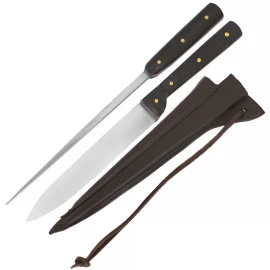
A black carrying case with retaining straps is also included, helping to keep the three utensils together in storage or during transport. It is a soft carrying cover rather than a rigid puncture-resistant sheath.
From the Medieval Eating Knife to the Renaissance Fork
The historical precedents for the three utensils belong to different stages in the development of European dining. Spoons and personal knives were fundamental eating implements throughout the Middle Ages. People commonly carried their own knives, using them both at the table and as versatile everyday tools.
The two-pronged table fork has a more complicated history. Forks were known in Byzantium and medieval Italy, and surviving Italian examples are known from the 15th century, but they remained unusual in much of western and northern Europe. The fork only became a widely accepted personal eating utensil during the early modern period. We therefore recommend treating this complete three-piece set as historical-style cutlery inspired mainly by the late 15th and 16th centuries, rather than as an exact reproduction of one archaeological cutlery set.
For Feasts, LARP and Historical Camp Life
Use the set for themed dining, LARP, medieval fairs, historical camps, picnics and similar events. The knife is intended for cutting ordinary food, the spoon for soups and other dishes, and the two-pronged fork for spearing individual pieces of food. A two-tined fork naturally handles somewhat differently from modern table cutlery, adding to the historical character of the dining experience.
Wash all three utensils thoroughly before their first use and dry them completely. As these are hand-worked pieces, slight variations in forging marks, surface texture and individual dimensions may occur.
Technical Specifications
| Specification | Details |
|---|---|
| Product type | Hand-forged medieval cutlery set |
| Number of cutlery pieces | 3 |
| Set contents | Knife, two-pronged fork, spoon and carrying case |
| Cutlery material | Steel |
| Manufacture | Hand-forged construction |
| Surface appearance | Dark forge finish with polished working surfaces |
| Overall knife length | approx. 16.8 cm / 6 5/8 in |
| Knife blade length | approx. 8.5 cm / 3 3/8 in |
| Maximum knife blade width | approx. 2.3 cm / 7/8 in |
| Overall fork length | approx. 15.3 cm / 6 in |
| Maximum fork width | approx. 2 cm / 3/4 in |
| Number of fork tines | 2 |
| Overall spoon length | approx. 16.3 cm / 6 3/8 in |
| Maximum spoon width | approx. 3.8 cm / 1 1/2 in |
| Handles | Forged construction with decorative twisted elements |
| Case | Black carrying cover with retaining straps |
| Historical styling | Historical interpretation inspired particularly by the late 15th and 16th centuries |
| Suitable for | Dining, LARP, medieval fairs, historical camps and themed events |
Care of Hand-Forged Cutlery
After use, hand wash the cutlery in warm water with a mild washing-up liquid and dry it thoroughly without delay. Do not leave the steel soaking in water and do not place the set in a dishwasher. Prolonged moisture, high temperatures and aggressive detergents may damage the surface and encourage corrosion.
- Do not leave water droplets on the steel after washing.
- Avoid coarse abrasives if you wish to preserve the dark forged surface.
- Before long-term storage, clean and dry steel surfaces may be given a very light coating of oil suitable for items that come into contact with food.
- Store the utensils only when completely dry.
- Make sure both the cutlery and carrying case are dry before packing the set away.
Safe Use
The knife has a functional cutting edge and the fork has two pointed tines. Treat both as sharp eating utensils. Always cut away from your fingers and use a stable cutting surface. Do not use the fork for prying or as a general-purpose tool. The set is not intended for fencing, throwing, combat games or any other activity in which the sharp edge or points could cause injury.
Secure the utensils carefully inside the case during transport so that the blade and fork points do not protrude unnecessarily. The soft case is not puncture resistant, so do not carry the packed set loosely where pressure or a fall could drive a sharp point through the cover.
Recommended Accessories
For a table inspired by the 15th and 16th centuries, we recommend pairing the set with a wooden or ceramic bowl, a wooden trencher or simple plate, a pottery drinking cup and a linen napkin. A leather belt pouch and historically styled drinking vessel are useful additions for camp life. For source-based reenactment of a particular region and decade, we especially recommend checking whether a two-pronged table fork is appropriate to the social and geographical context you are portraying.
We are here for you!