Čeština
 Deutsch


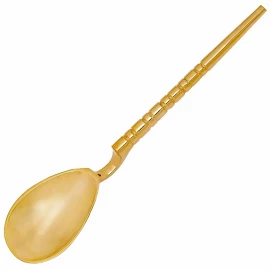
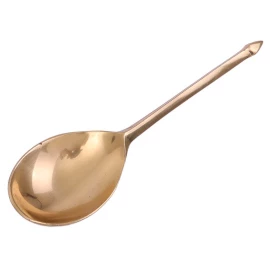
Brass Eating Spoon with Relief Detail, 15th–16th Century


Are you gearing up for a historical encampment, a LARP event, or a Renaissance banquet and looking to dine with true style, friend? This exquisite Renaissance brass eating spoon will elevate your historical dining experience to a whole new level. Cast based on surviving 15th and 16th-century originals, it immediately catches the eye with its detailed relief ornament inside the bowl and its elegantly sculpted handle terminal. We highly recommend this piece as an essential addition to the personal kit of any reenactor who values authenticity and historical detail. Further product information ...

 Delivery options
Renaissance Brass Eating Spoon with Relief Detail, 15th–16th Century
History and Construction of the Late Medieval & Renaissance Spoon
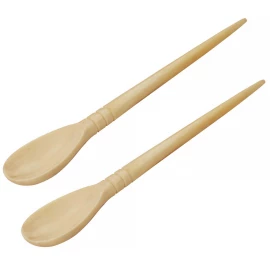
Throughout history, a spoon was one of the most personal items a person could own. During the 15th and 16th centuries, guests routinely brought their own cutlery to banquets, carrying it tucked into their belts or stored in leather pouches. While common folk used spoons carved from wood or horn, wealthy merchants, burghers, and nobility preferred cast brass, bronze, or silver. This particular design features the characteristic wide, slightly fig-shaped bowl joined to a slender, sturdy stem.
Notable details include the decorative relief join between the bowl and handle (a fan-like "rat-tail" motif) and the decorative terminal knob. During the Renaissance period, these handle finials were frequently shaped like acorns, gemstones, or religious figures (such as Apostle spoons). Owners often engraved their personal marks or initials onto the back of the bowl to identify their property during large feasts. The product is hand-cast from quality brass using period-accurate methods.
How to Carry and Use Your Spoon
This spoon can easily be carried directly at your belt. We recommend placing it inside a simple leather pouch or linen bag to protect the polished brass surface from scratches and dirt while traveling between camps. Before dining, simply wipe the spoon clean with a dry cloth.
Technical Specifications
| Parameter | Metric Value | Imperial Value |
|---|---|---|
| Overall Length | 17 cm | 6.69 in |
| Bowl Width | 5 cm | 1.97 in |
| Weight | approx. 150 g | approx. 5.29 oz |
| Material | Hand-cast brass | Hand-cast brass |
| Dating / Style | 15th–16th Century (Late Gothic / Renaissance) | 15th–16th Century (Late Gothic / Renaissance) |
| Finish | Polished brass with antiqued relief details | Polished brass with antiqued relief details |
Care and Safety Instructions
- Legal Disclaimer: This is a fully functional historical replica spoon crafted in small batches using traditional casting techniques. For regulatory compliance, please note that this item is sold as a decorative historical prop and is not officially certified for food contact.
- Cleaning: Hand-wash only using warm water and mild dish soap, then dry thoroughly immediately. Never place in a dishwasher or microwave oven!
- Brass Maintenance: Brass naturally tarnishes when exposed to air, moisture, and acidic foods, creating an antiqued patina over time. To restore a high shine, polish regularly using a soft cloth and metal polishing paste.
- Safety Precautions: Avoid exposing the spoon to harsh chemicals. Do not use the handle for prying or heavy mechanical leverage to avoid bending or snapping the metal stem.
Recommended Accessories
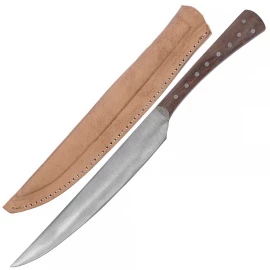
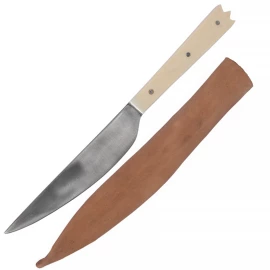
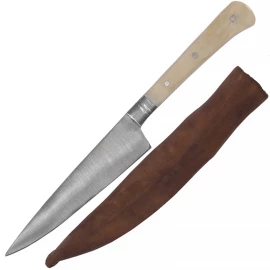
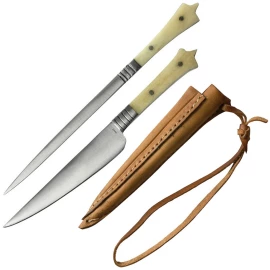
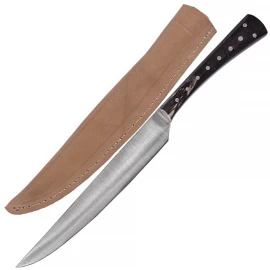
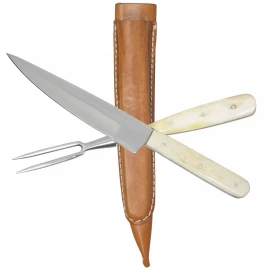
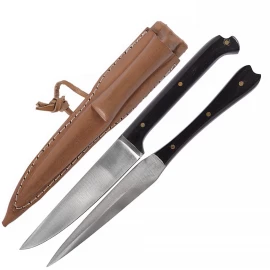
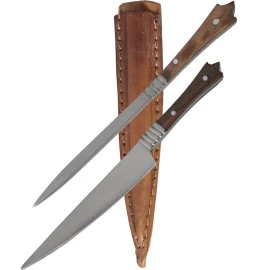
To complete your 15th–16th-century dining set, we recommend pairing this spoon with a period-appropriate eating knife with a bone or wood handle. A leather cutlery belt pouch, a wooden trencher, and an earthenware or pewter tankard will complete your authentic reenactment table setup.
We are here for you!