Čeština
 Deutsch


Large historical knife and eating pricker set
1x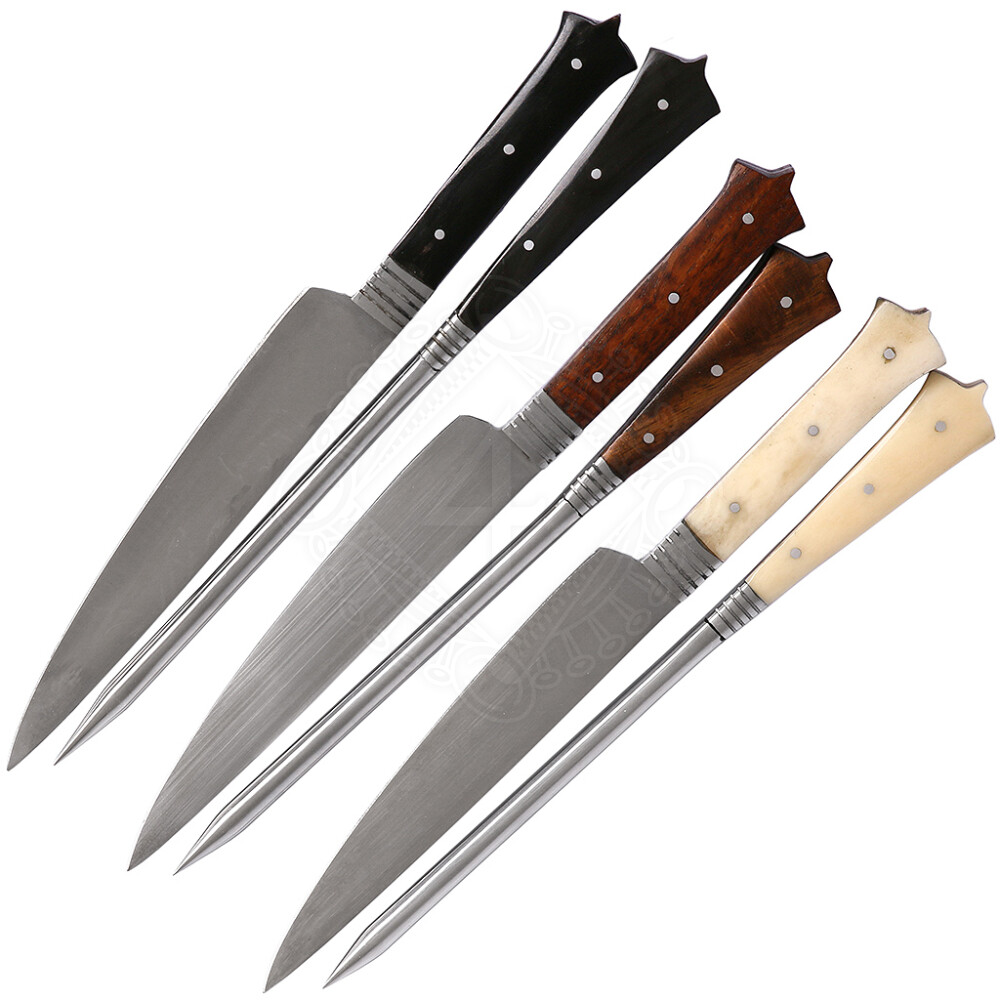
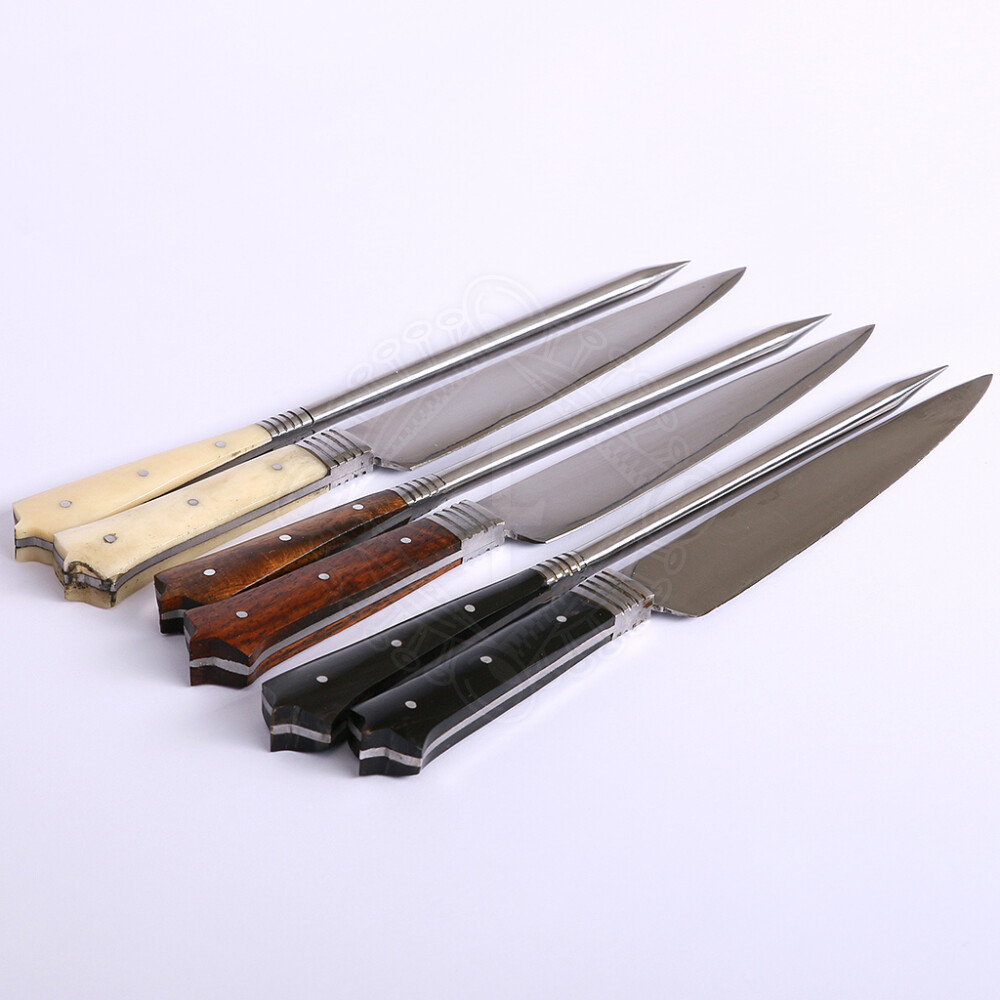
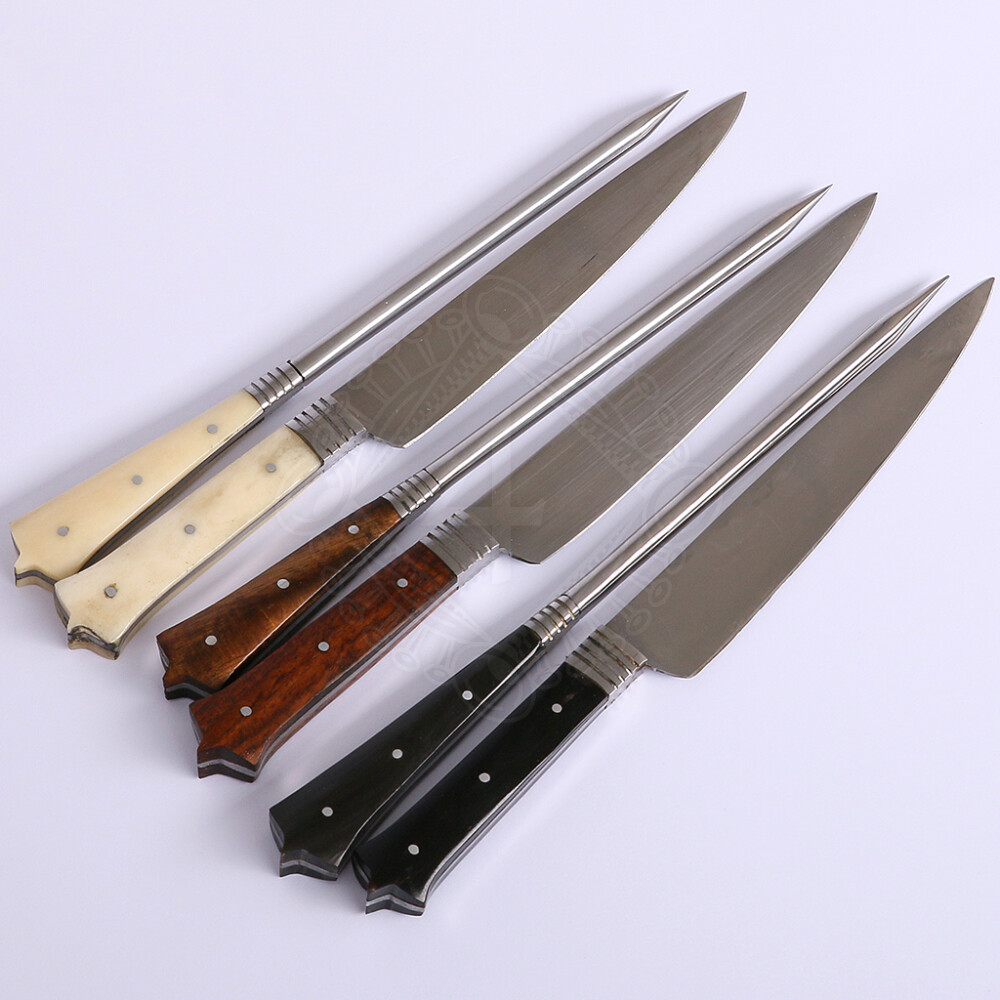
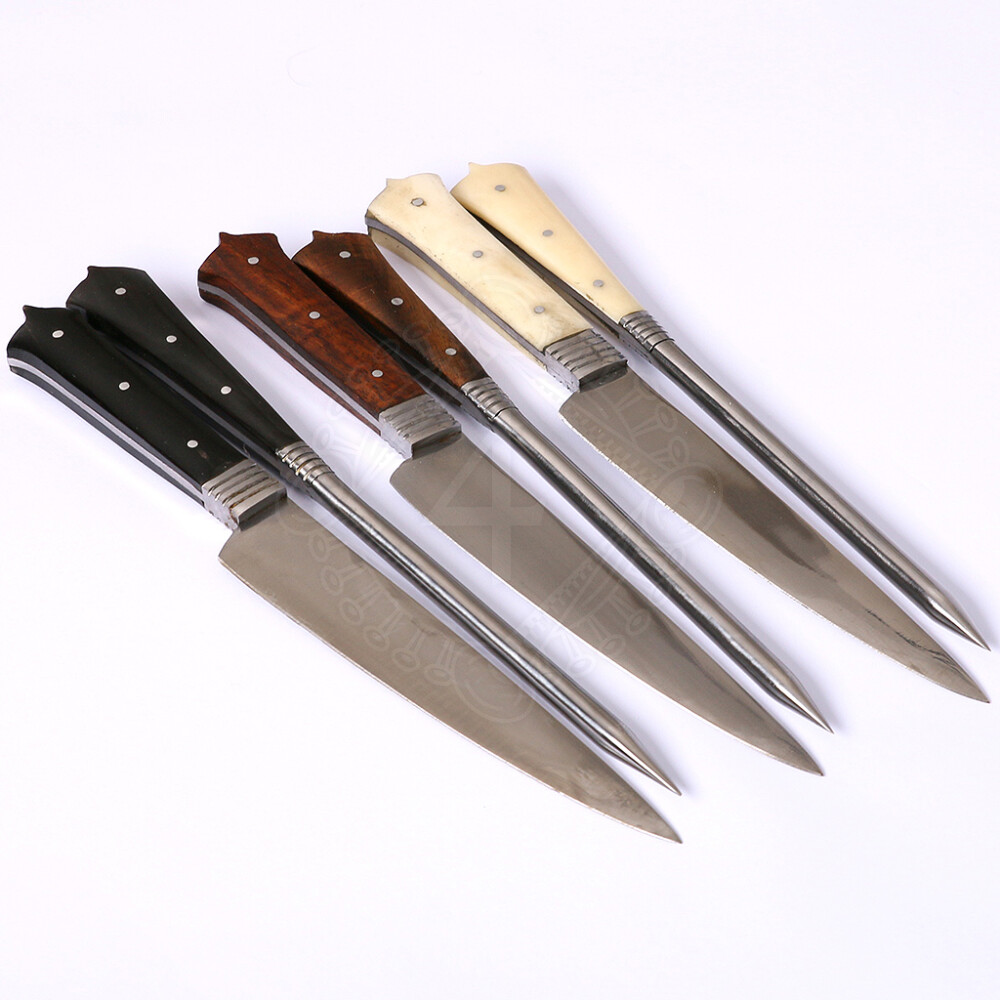
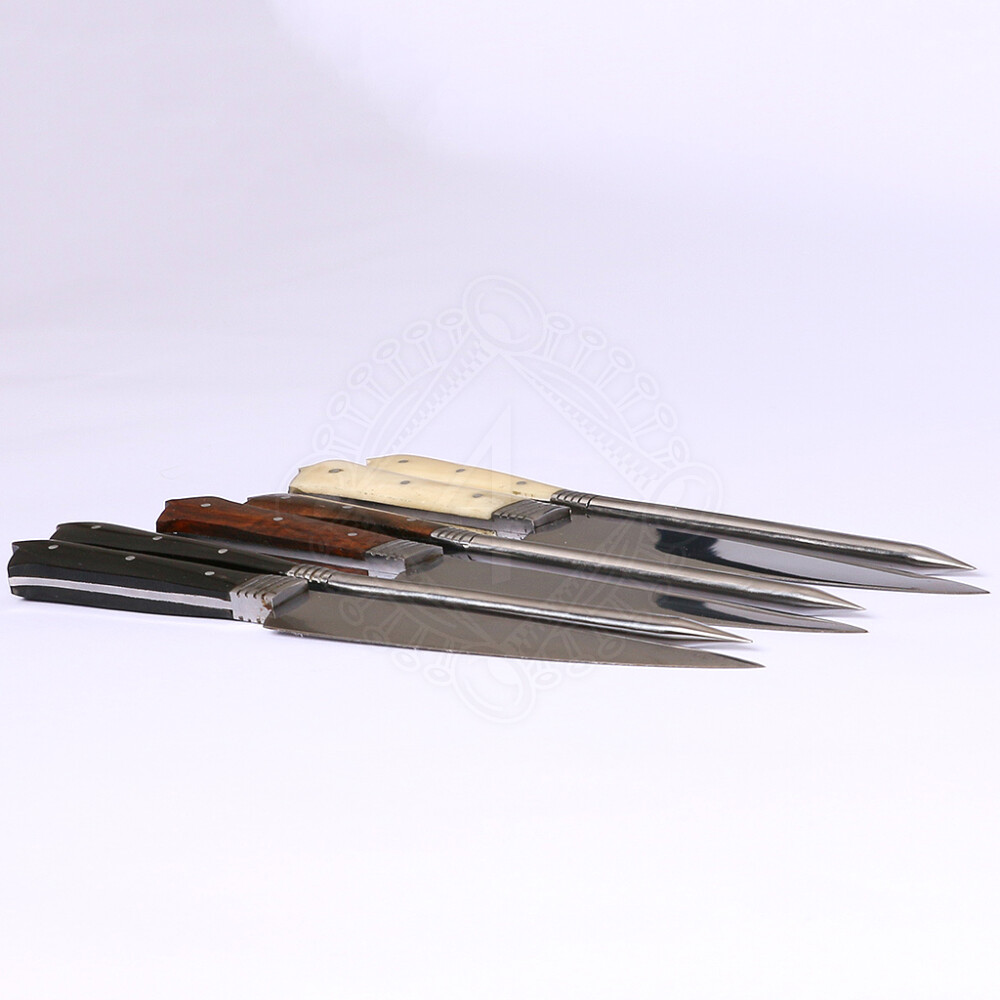
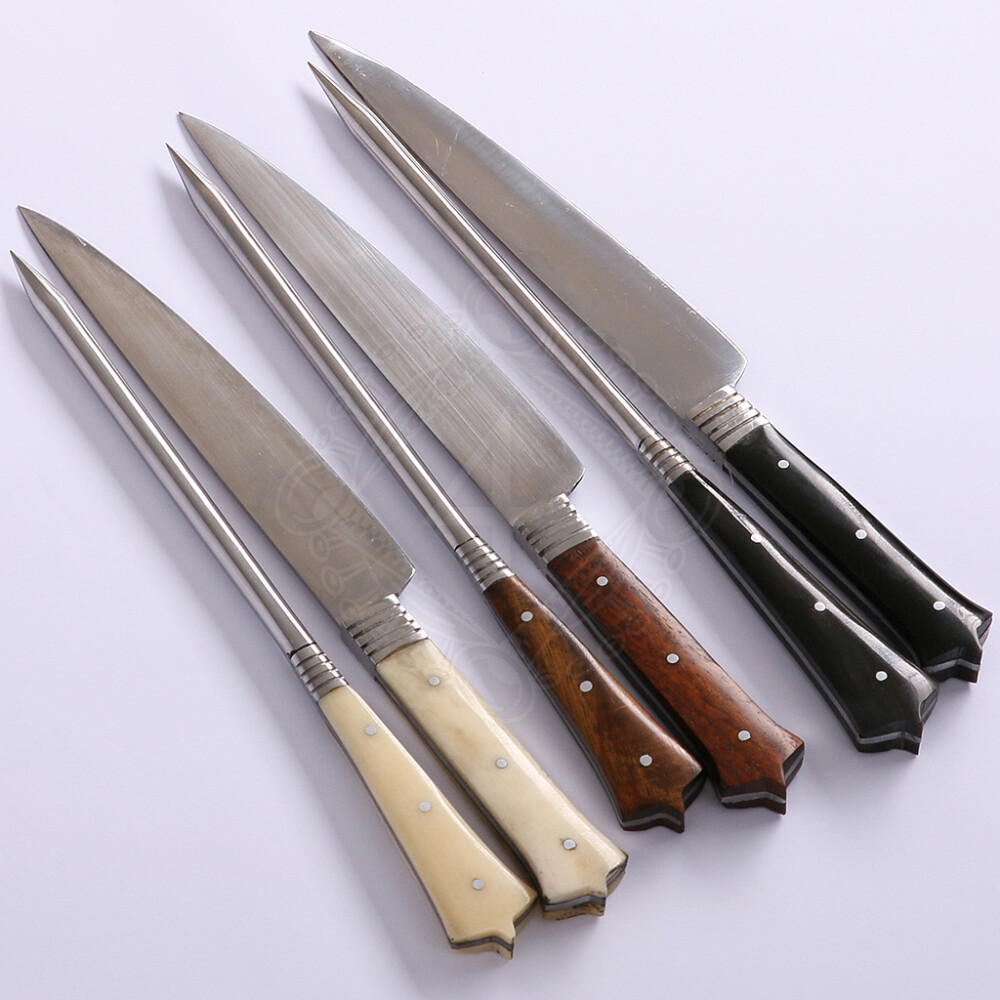

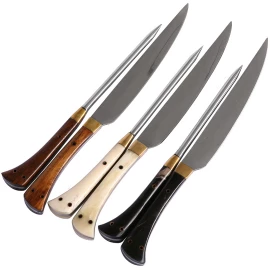
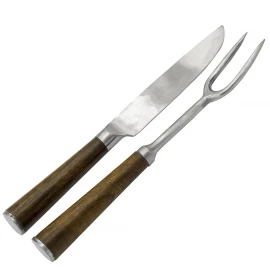
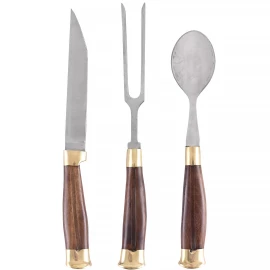
Complete your historical display or period-inspired interior with a large knife and eating pricker set. Matching handles, gleaming metal parts and fine grooves at their junctions create a coordinated appearance. Choose hardwood, bone or horn handles to suit your collection. The pointed blade and long pricker evoke a time when modern table cutlery was far from universal. Made in small batches using traditional methods, this set offers an interesting way to illustrate historical dining customs. Although its construction is functional, we offer it as a decorative item that is not certified for food contact. Further product information ...

 Delivery options
The following variants are currently available:
Large historical knife and eating pricker set for display
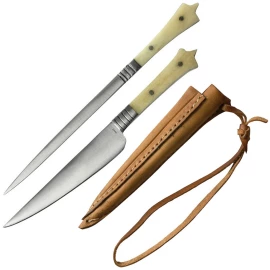
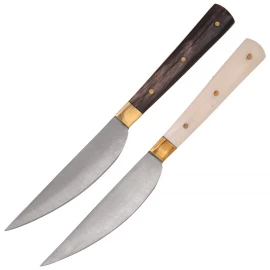
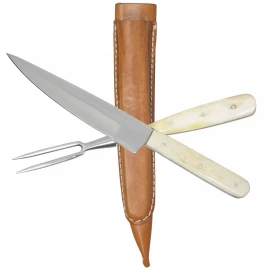
Matching knife and eating pricker
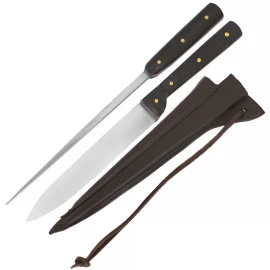
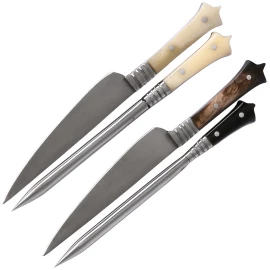
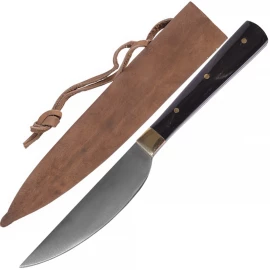
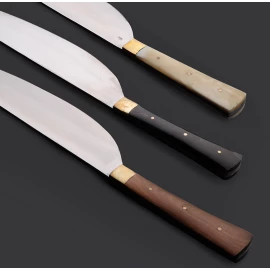
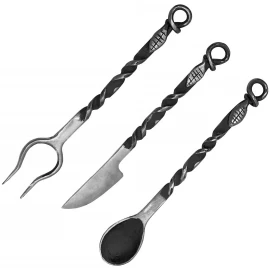
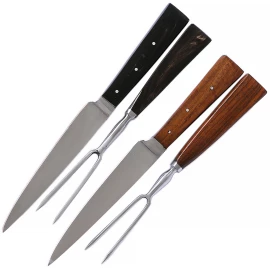
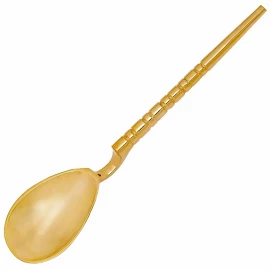
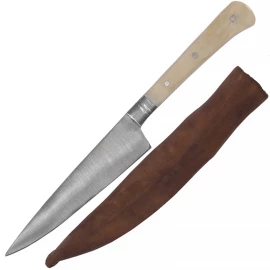
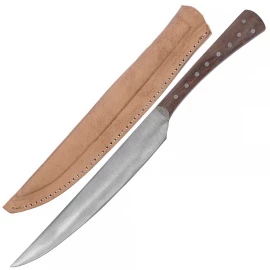
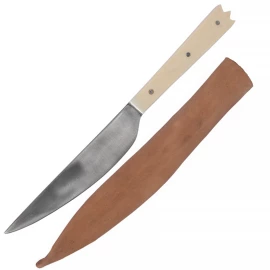
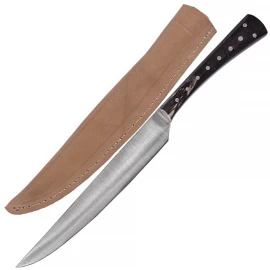
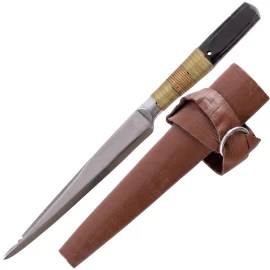
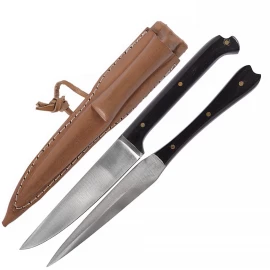
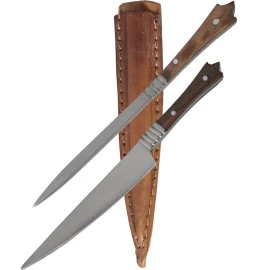
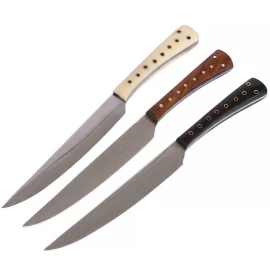
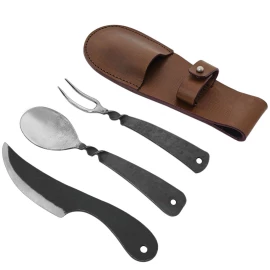
The knife has an elongated blade tapering towards a point. The pricker features a long metal section with a circular cross-section and a pronounced tip. Both handles have shaped profiles with slightly flared decorative ends. Three visible rivets secure the handle scales, while transverse grooves decorate the transitions to the metal parts.
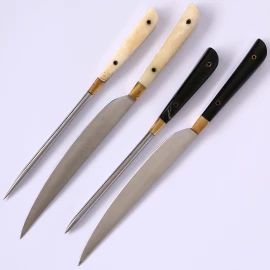
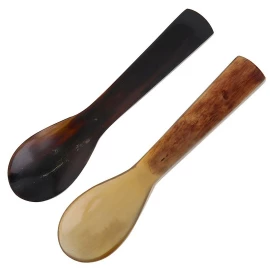
The photographs show several material options. The set contains one knife and one pricker in your selected finish, rather than all the illustrated variants. The precise metal is not specified in the supplied information.
Historical dining context
The pairing of a knife and pricker recalls European table utensils of the Renaissance, particularly the 16th century. The knife divided food, while the pricker held or skewered it. An exact date or specific historical prototype for this set has not been documented.
Interestingly, eating prickers could accompany other personal equipment: a surviving Saxon ensemble dated 1595 combines a knife and pricker with a dagger. This museum example illustrates the historical context, but it is not the prototype for the product offered here.
Technical specifications
| Part | Specification | Value |
|---|---|---|
| Knife | Overall length | Approx. 245 mm / 9.65 in |
| Knife | Blade length | Approx. 148 mm / 5.83 in |
| Knife | Maximum blade width | Approx. 24.6 mm / 0.97 in |
| Knife | Blade thickness at the handle | 2.05 mm / 0.081 in |
| Knife | Edge thickness | Approx. 0.4 mm / 0.016 in |
| Knife | Weight | Approx. 96 g / 3.39 oz |
| Pricker | Overall length | Approx. 230 mm / 9.06 in |
| Pricker | Metal section length | Approx. 137 mm / 5.39 in |
| Pricker | Metal section diameter | Approx. 7.87 mm / 0.31 in |
| Pricker | Weight | Approx. 84 g / 2.96 oz |
| Set | Contents | One knife and one pricker |
| Set | Handle options | Hardwood, bone or horn |
| Set | Manufacturer | Marshal Historical |
Display, care and safety
Before displaying the set, check that the handle scales are secure. Place it on a stable support from which it cannot slip. Do not use it to prepare or eat food. The blade and both points can cause cuts or puncture injuries. Cover them during transport and keep the set away from children.
Remove dust with a soft, dry cloth. Do not soak the set or place it in a dishwasher or microwave, and protect it from heat. Natural handle colours and markings may vary. Test any suitable protective treatment on an inconspicuous area first.
Recommended accessories
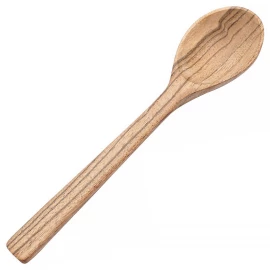
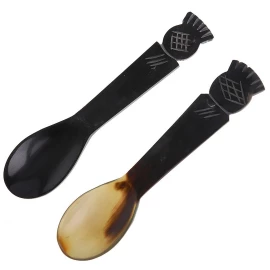
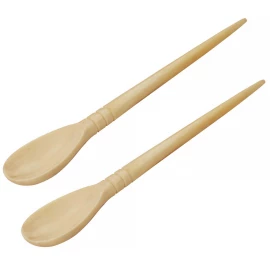
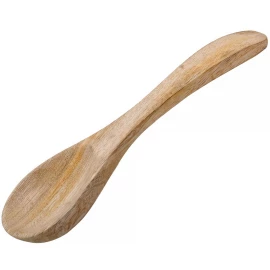
For a display inspired by the 16th century, we recommend a separate wooden spoon, a ceramic bowl and a linen tablecloth. A case with separate compartments for the knife and pricker is useful for safe storage. The case is not included.
We are here for you!