 Čeština
 Deutsch


Morgarten Medieval Flanged Mace
2x
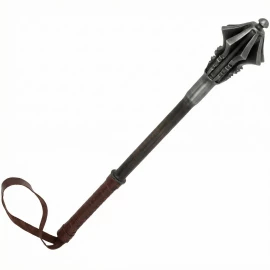
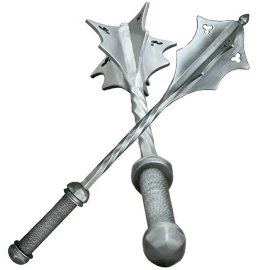
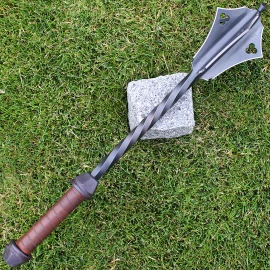
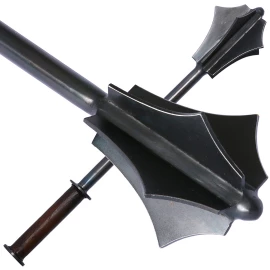
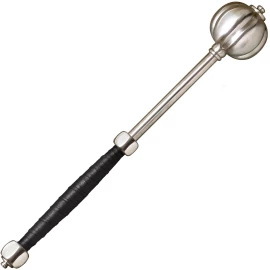
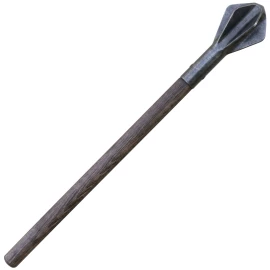
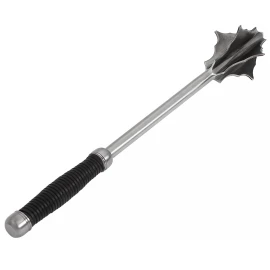
Imagine a medieval warrior facing an opponent clad in heavy armour. A flanged mace with a metal striking head could have been an important part of his equipment. This impressive reproduction features a sturdy construction, a long wooden shaft and a distinctive steel head with radially arranged flanges. Measuring approximately 60 cm (23.6 inches) overall and weighing around 1,010 g (2.23 lb), it has the imposing appearance of a medieval battlefield weapon. Its understated, practical design makes it a striking addition to a historical weapon collection, a knightly equipment display or an exhibition dedicated to medieval warfare. Further product information ...

 Delivery options
Morgarten Medieval Flanged Mace with Wooden Shaft
Construction and Appearance
The Morgarten medieval flanged mace consists of a straight hardwood shaft and a metal striking head. The wood has a dark brown finish with visible natural grain. The shaft ends in a rounded tip and has a simple, largely cylindrical profile.
Its most distinctive feature is the steel head fitted with projecting flanges arranged around its central axis. These flanges are approximately 4 mm (0.16 inches) thick and form prominent longitudinal striking edges.
The silver-grey metal finish contrasts with the dark wooden shaft, creating an authentic-looking medieval appearance.
Unlike simple clubs or maces with spherical heads, the flanged construction was designed to concentrate the force of a blow over a smaller area.
The History of Medieval Flanged Maces
Maces were important impact weapons throughout medieval Europe. They were used by both infantrymen and mounted warriors, with their designs developing alongside improvements in protective armour.
Flanged maces became particularly prominent during the Late Middle Ages, especially in the 14th and 15th centuries. During this period, increasingly sophisticated plate armour became widespread, creating a demand for weapons capable of delivering powerful, concentrated impacts.
A mace did not necessarily have to penetrate armour to cause serious injuries to the person wearing it.
An interesting aspect of mace history is that these weapons eventually acquired ceremonial significance. In certain contexts, they became symbols of military or official authority, with ceremonial versions surviving in European traditions long after the medieval period.
This product is a historically inspired reproduction rather than a documented replica of a specific surviving museum artefact.
Why the Name Morgarten?
The name Morgarten refers to the Battle of Morgarten, fought on 15 November 1315 in what is now Switzerland.
During this engagement, the army of the Habsburg Duke Leopold I suffered defeat at the hands of forces belonging to the early Swiss Confederacy.
The battle became an important part of Swiss military tradition and highlights the historical significance of infantry in medieval warfare.
This mace bears the name as a tribute to the period, rather than as a claim that this particular design was used during the battle.
Technical Specifications
| Feature | Specification |
|---|---|
| Weapon type | Medieval flanged mace |
| Overall length | Approx. 60 cm (23.6 inches) |
| Width of metal head | Approx. 10 cm (3.94 inches) |
| Flange thickness | Approx. 4 mm (0.16 inches) |
| Head material | Steel |
| Shaft material | Hardwood |
| Weight | Approx. 1,010 g (2.23 lb) |
| Colour | Silver-grey head, dark brown shaft |
| Historical inspiration | European medieval flanged maces, particularly the 14th–15th centuries |
| Intended use | Decoration, collecting, historical display |
All measurements and weight figures are approximate.
Safety and Maintenance
Important safety notice: As this product has not been confirmed suitable for practical combat or contact fencing, it is offered exclusively as a decorative reproduction. It is not intended for HEMA, buhurt, stage combat or striking people or objects.
- Never strike people, animals or hard objects with the mace. Its metal head can cause serious injuries.
- Before handling, check that the head remains securely attached to the wooden shaft.
- Keep all metal components dry and apply a thin layer of suitable protective oil when necessary to prevent corrosion.
- Protect the hardwood shaft from prolonged exposure to moisture, extreme temperature changes and direct heat.
- After handling, wipe away moisture with a soft cloth.
- Store the mace securely, out of children's reach, and prevent it from falling.
Recommended Accessories
To display your mace, we recommend a wooden weapon stand or a suitable wall-mounted holder. If you are assembling a knightly equipment display inspired by the 14th or 15th century, consider pairing it with plate gauntlets, mail armour, a gambeson or a medieval helmet. These accessories can help create an impressive historical collection, museum-style display or LARP costume.
We are here for you!