
 Čeština
 Deutsch


Master Carranza's Cup Hilt Practice Rapier for HEMA Fencing
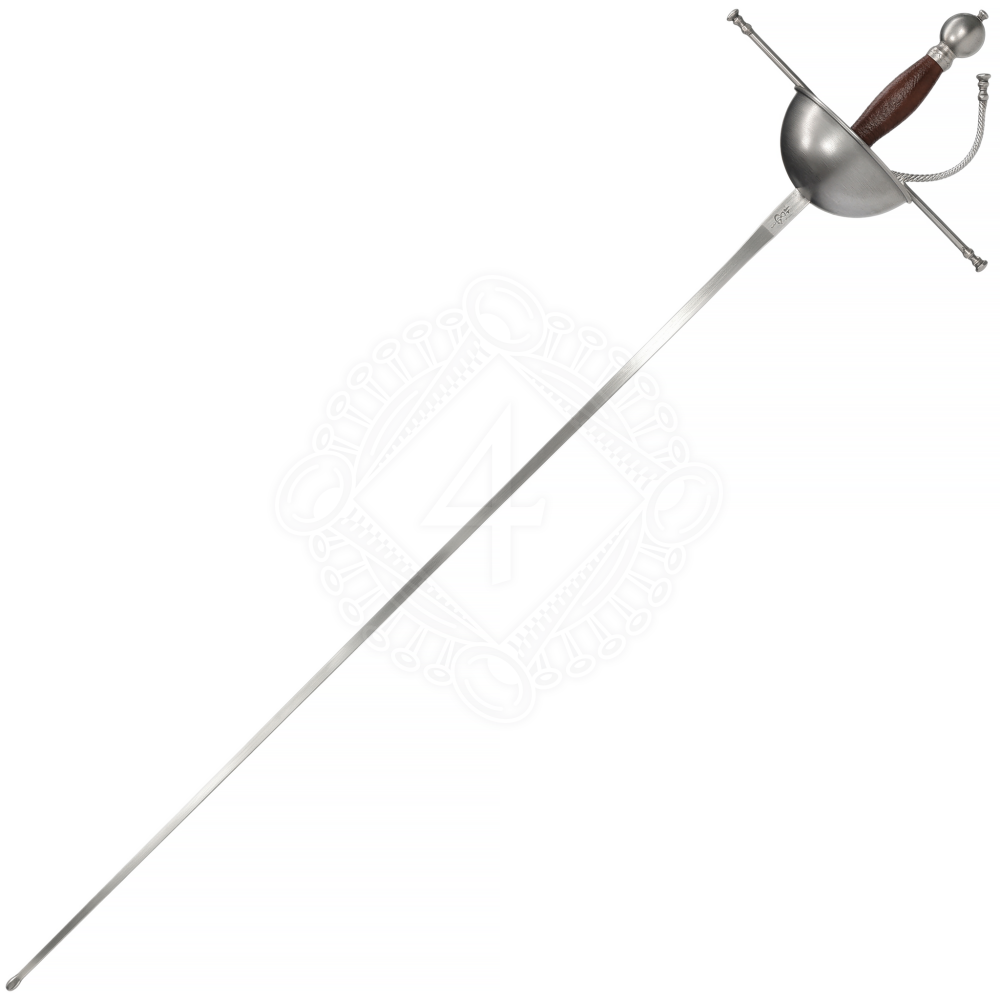


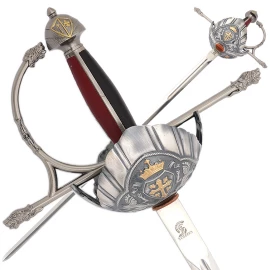
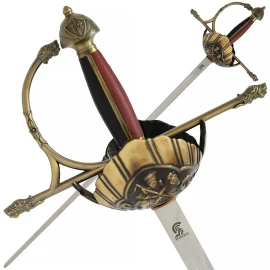
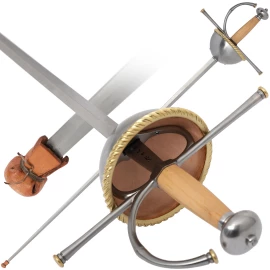
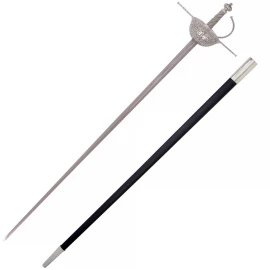
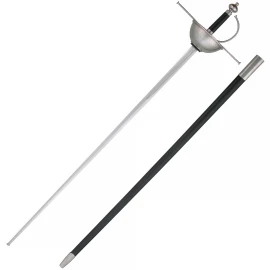
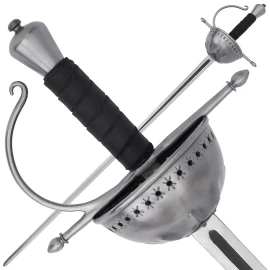
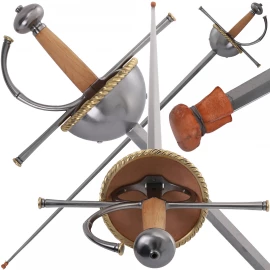
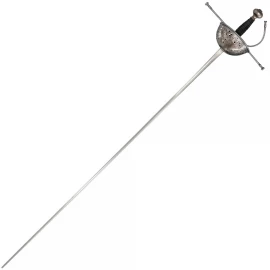
Are you looking for the perfect weapon to study the Spanish fencing school of La Verdadera Destreza? This practice cup hilt rapier will instantly transport you to the narrow streets of 17th-century Toledo. Thanks to its deep steel cup, it offers unsurpassed hand protection, while the long, excellently balanced blade with a safety tip guarantees absolutely safe training. The reddish-brown leather grip with distinctive thick stitching and the elegant spherical pommel give the weapon not only historical authenticity but also a unique flair. Get ready for hours of elegant fencing with a tool that perfectly combines the deadly beauty of the Renaissance with modern safety requirements for HEMA tournaments. Further product information ...
Would you like to be notified as soon as the item is in stock?
You will receive a short e-mail as soon as we have it back in stock.
Master Carranza's Cup Hilt Practice Rapier for HEMA Fencing
Features and Safe Use of the Practice Rapier
This weapon is designed from the ground up for full-contact Historical European Martial Arts (HEMA). The long, narrow blade measures an impressive 101 cm (39.8 inches) and is forged from premium spring steel, carefully heat-treated to a hardness of 49-53 HRC. At the base, the blade has a width of 2 cm (0.8 inches) for necessary strength in strong parries (the so-called forte) and tapers smoothly down to 2 mm (0.08 inches) at the tip. This distal taper ensures fantastic handling. To make your lunges safe for your training partner, the blade has a calibrated flex rating of just under 6 kg (13.2 lbs). This means the blade will bend safely upon a strong thrust. Safety is further enhanced by a thickened spatulated tip, which prevents penetration of the fencing jacket.
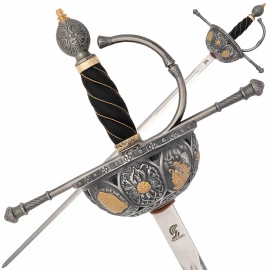
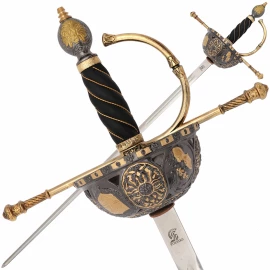
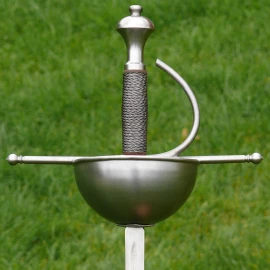
The hilt of the weapon is a masterpiece of utility. The steel cup, measuring 14 cm (5.5 inches) in diameter and 7 cm (2.8 inches) in depth, perfectly covers the entire hand. A narrow knuckle bow and an impressive 30 cm (11.8 inches) long straight crossguard emerge from the cup, indispensable for advanced techniques of binding the opponent's blade and leverage. The short grip covered in genuine leather forces you to hold the weapon exactly as the old masters demanded—with the index finger hooked over the quillon inside the cup for maximum point control.
Historical Context of the Cup Hilt Rapier
The cup hilt rapier, often referred to by the Spanish term "taza" (cup), represents the evolutionary peak of rapier development in the 17th century. While older swept-hilt and ring-hilt rapiers left gaps for enemy strikes, the solid steel cup provided the hand with perfect shield-like protection. This design became absolutely dominant in Spain and Southern Italy, where fencers practiced a geometrically precise style of combat called Destreza. Masters like Jerónimo Sánchez de Carranza taught that combat is a science based on circles and angles, and the cup hilt rapier with its long crossguard was the ideal tool for this defensive-offensive style.
Technical Parameters of the Replica
| Blade Length | 101 cm (39.8 inches) |
| Blade Width at Guard | 2 cm (0.8 inches) |
| Distal Taper | From 5.5 mm (0.22 inches) at base to 2 mm (0.08 inches) at tip |
| Crossguard Width | 30 cm (11.8 inches) |
| Cup Dimensions | Diameter 14 cm (5.5 inches), Depth 7 cm (2.8 inches) |
| Blade Flex Rating | approx. 6 kg (13.2 lbs) |
| Blade Material | Spring steel (49-53 HRC) |
| Tip Type | Safety blunt (Spatulated) |
Care, Maintenance, and Safety Guidelines
Caring for this rapier is key to its longevity. Both the blade and the hilt are made of high-carbon steel, which is prone to rust, especially if it comes into contact with sweat from your gloves. After every training session, wipe the weapon thoroughly dry and treat the blade and the inside of the cup with a thin layer of gun oil. Avoid thrusting into hard, unyielding targets (wood, walls, steel targets). The blade is designed to flex against a soft human body wearing protective gear; an impact against a wall could permanently deform or break it. During fencing, always use certified protective equipment: a HEMA mask (ideally 1600N rated), a gorget, a sturdy puncture-resistant fencing jacket, and gloves designed for rapier fencing.
For the safe storage of this beautiful weapon, we recommend purchasing an elongated padded rapier bag and a set of anti-corrosion oils.
The Heritage of Swordier's Craftsmanship
This rapier is a proud representative of the premium SWHZ series by the renowned Swordier brand. Weapons in this series are unique because their heat treatment takes place exclusively in the manufacturer's own modern forge, ensuring uncompromising control over every piece of steel. The manufacturer builds upon a staggering, over 2,600-year-old tradition of metallurgy in the Chinese city of Longquan. The experienced swordsmiths who make these weapons are themselves historical martial arts enthusiasts—they are people "living steel". Thanks to hand-forging and a deep understanding of fencers' needs, the tools created by their hands are not only safe but, above all, offer an authentic combat feel.
We are here for you!


.3773623034.1696456237.png.webp)

.3773623034.1696456247.png.webp)