
 Čeština
 Deutsch


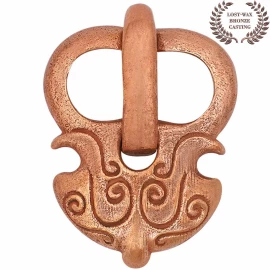
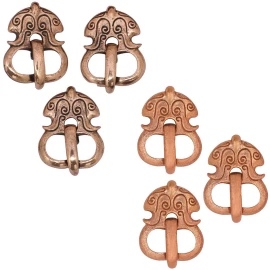
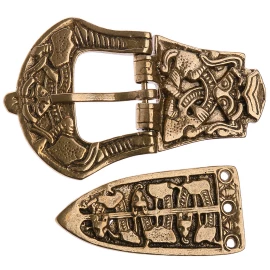
10th Century Viking Bronze Belt Buckle, Borre Style


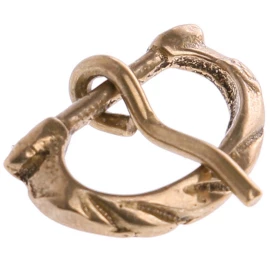
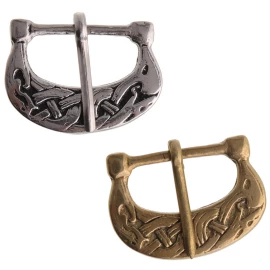
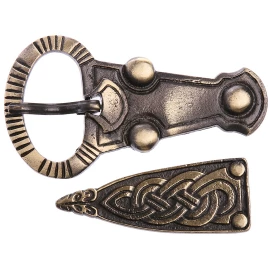
Complete your historical costume with this faithful and functional replica of a 10th-century Viking belt buckle. This magnificent piece, crafted using the precise lost-wax casting method, is inspired by archaeological finds from the height of the Viking Age. The buckle boasts rich ornamentation in the Borre style, characterised by elaborate zoomorphic (animal) motifs and complex knotwork patterns. Its antique bronze patina gives it an authentic appearance, as if it were just unearthed from a Norse grave. It will serve not only as a functional accessory but also as a splendid piece of jewellery for your attire. Further product information ...

Would you like to be notified as soon as the item is in stock?
You will receive a short e-mail as soon as we have it back in stock.
10th Century Viking Bronze Belt Buckle, Borre Style
Elaborate Design and Construction
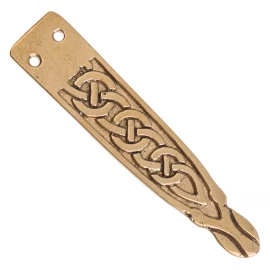
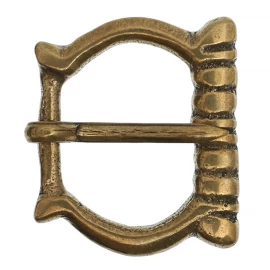
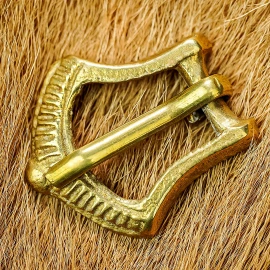
The buckle consists of two parts connected by a hinge. The first part is the horseshoe-shaped frame with a moveable pin. The frame is decorated with fine grooves and stylised animal heads. The second, rectangular part is an openwork plate designed for attachment to the end of the belt. This is where the main decorative element is found – a highly detailed mythical beast, its body intertwined in the characteristic Norse knotwork pattern. Thanks to the openwork (or ajoure) design, the buckle has a very light and elegant feel.
Use and Installation
This buckle is designed for belts with a width of up to 1.5 cm. The leather strap is threaded through the rectangular plate and secured with small rivets (not included) or by being firmly stitched through the openings in the ornament. This is a historically accurate method of attachment. When properly fastened, the buckle will hold securely on your belt for many years.
The Belt as a Status Symbol in the Viking Age
In the Early Middle Ages, particularly in Viking society, a belt was more than just a practical item for hanging a sword, knife (seax), or pouch. It was, above all, a significant symbol of social status. Richly decorated buckles made of bronze, silver, or even gold clearly indicated the wealth and power of their owner. The discovery of such buckles in graves often suggests that the interred was a warrior, a merchant, or another high-ranking member of the community.
An Interesting Fact: The Magical Power of Knotwork
It was believed that the complex and endless knotwork patterns adorning this buckle served more than just an aesthetic purpose. Norse cultures often attributed apotropaic (protective) powers to them. The interwoven designs were thought to symbolise fate and the connection between the world of gods and humans, while also protecting the wearer from evil spirits and misfortune in battle.
Specifications
| Material | Solid Bronze with Patina |
| Crafting Method | Lost-wax casting |
| Total Length | Approx. 4.7 cm |
| Fits Belt Width | Up to 1.5 cm |
| Period | 10th Century, Viking Age |
Care and Maintenance
To keep your buckle looking its best, follow these simple guidelines:
- Protect it from prolonged exposure to moisture and harsh chemicals (e.g., modern perfumes, hairsprays).
- To restore its shine, you can gently polish it with a soft, dry cloth.
- Never use abrasive pastes or wire wool, as these could permanently damage the fine details and patina.
- Store it in a dry place when not in use.
Note: Each piece is a hand-cast original, so minor variations in appearance and texture may occur.
We are here for you!






.2152382459.1713382643.JPG.webp)




.3773623034.1696456237.png.webp)

.3773623034.1696456268.png.webp)
.3773623034.1696456247.png.webp)