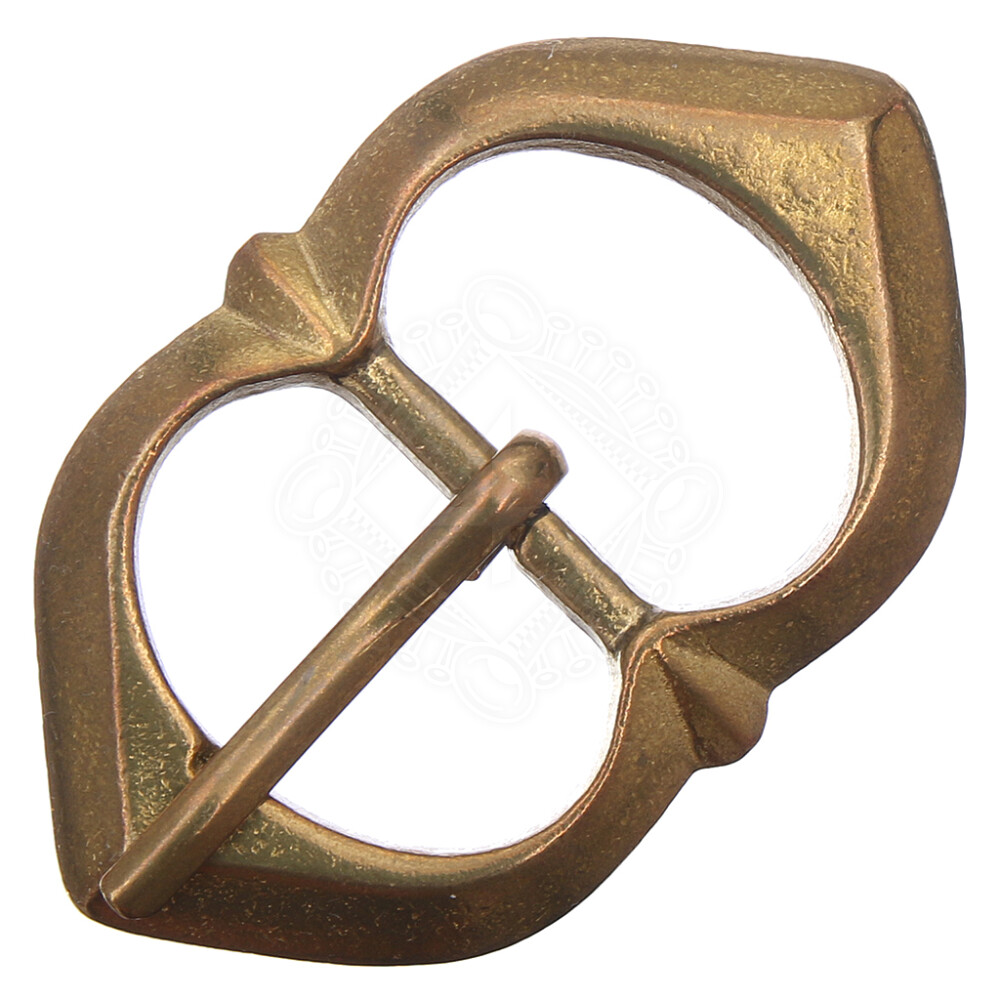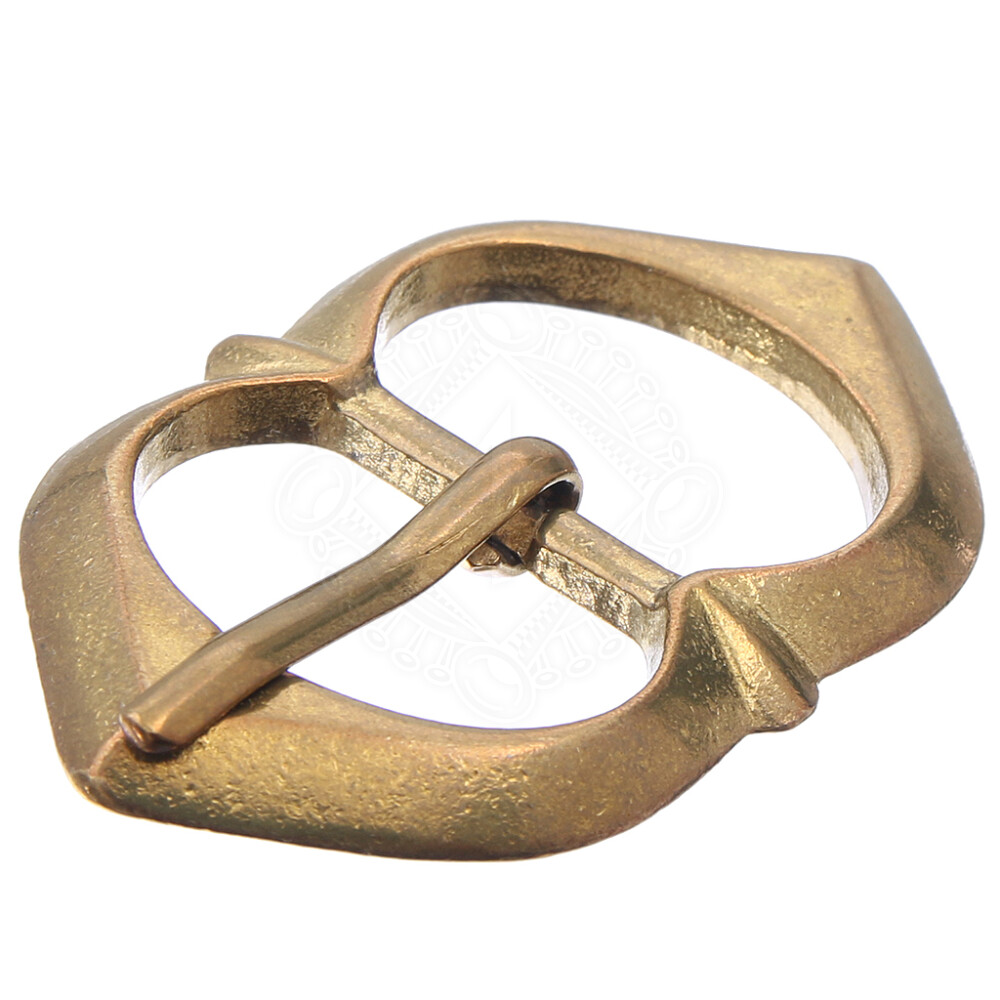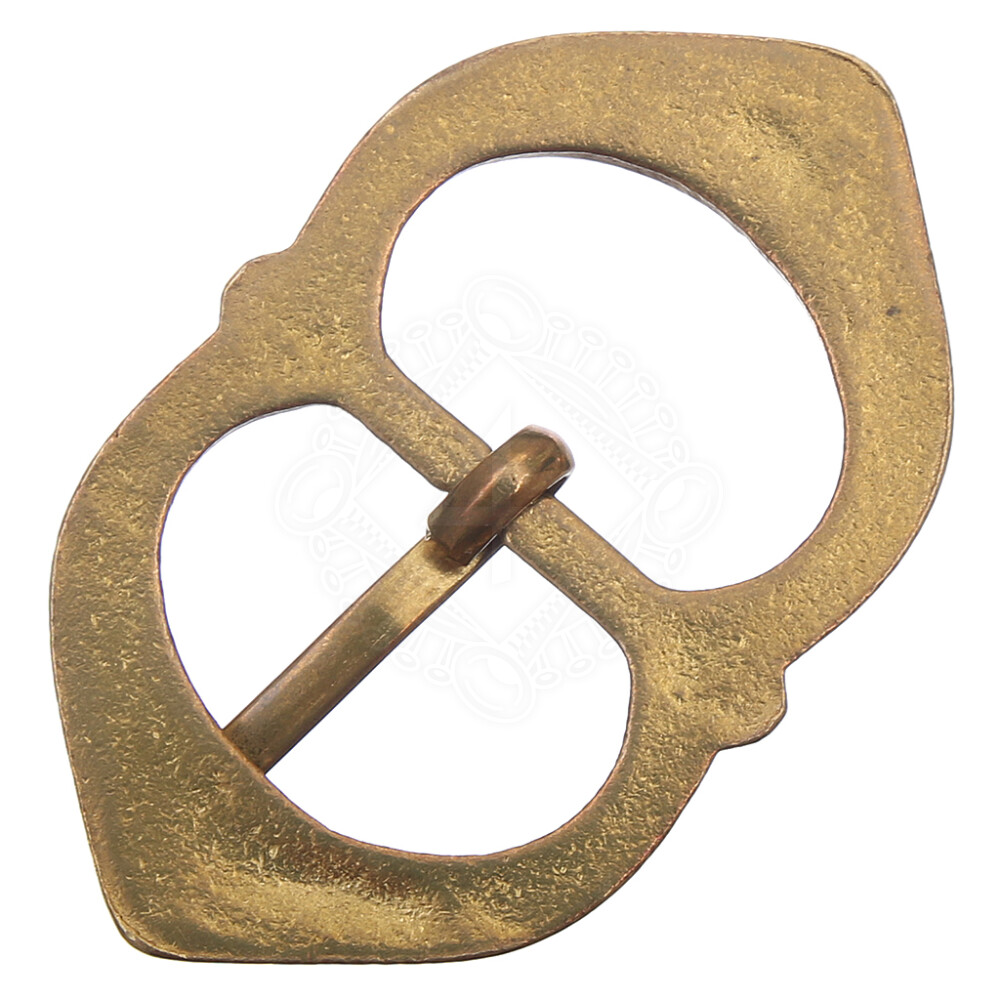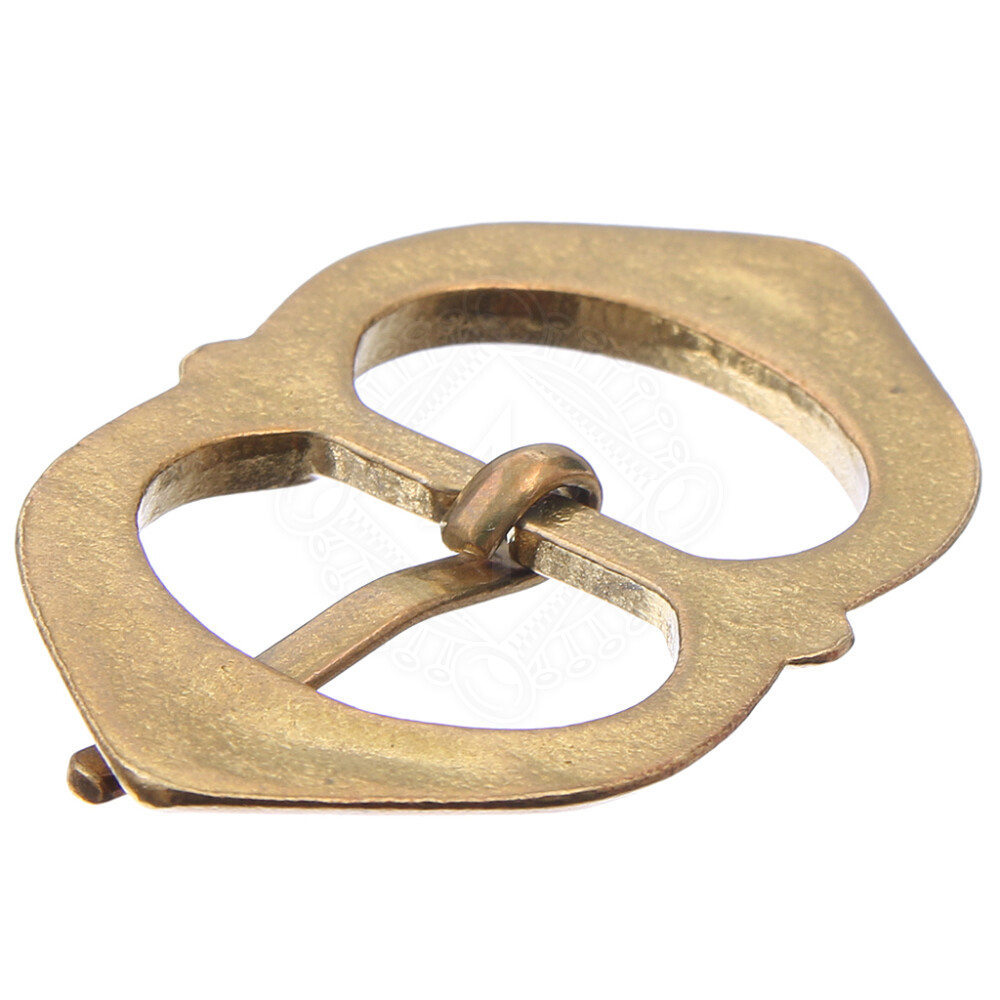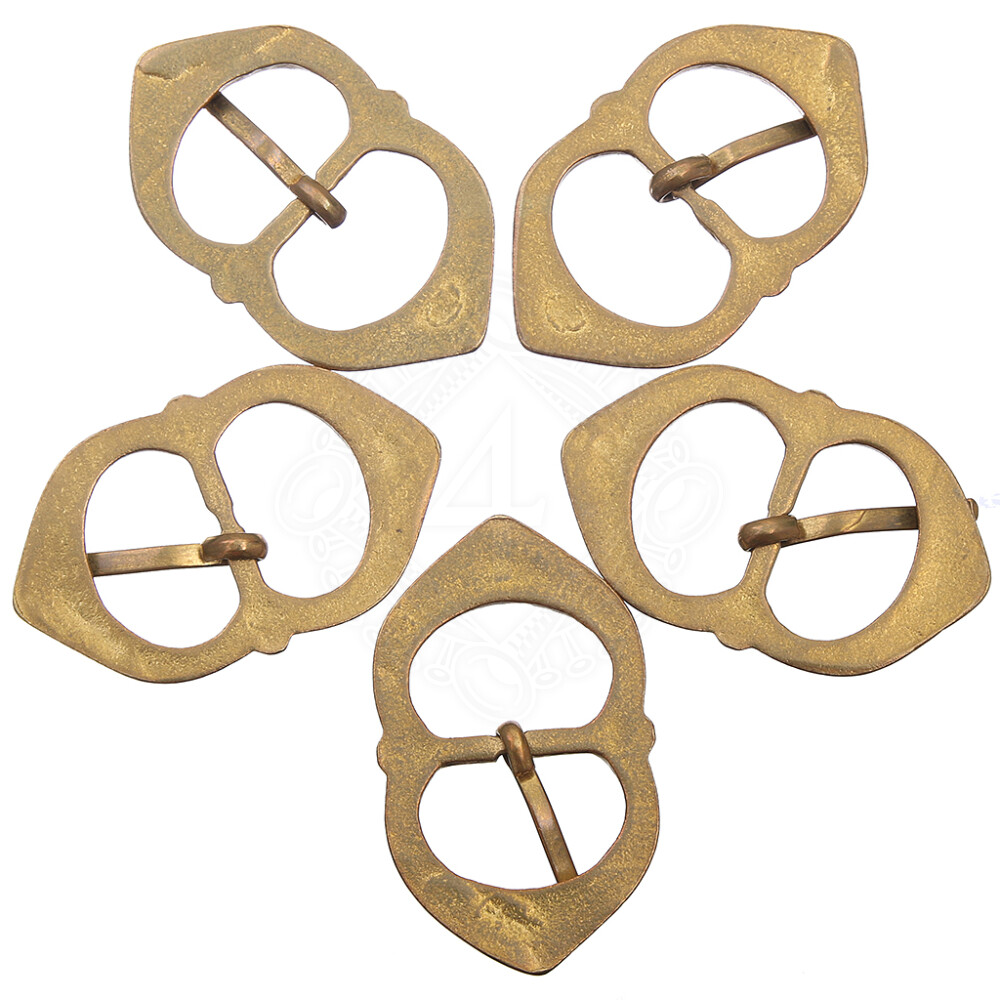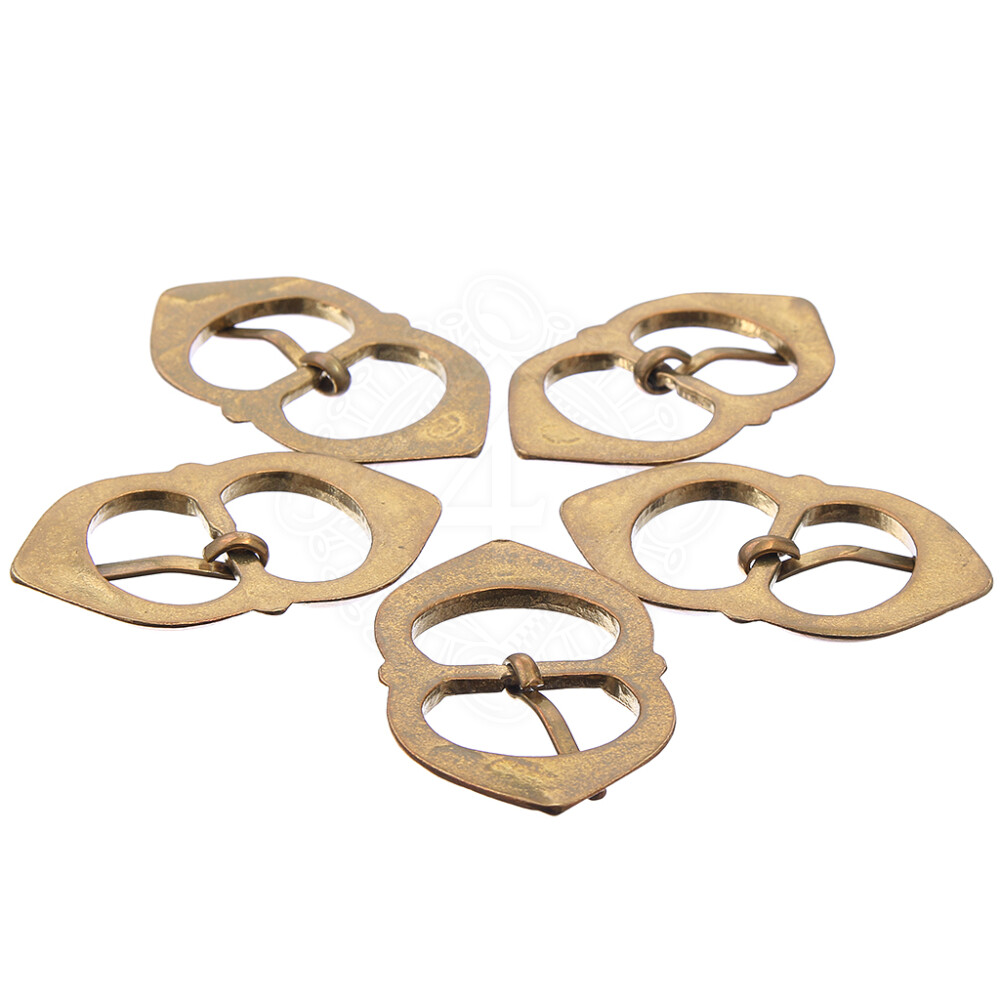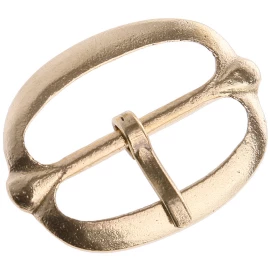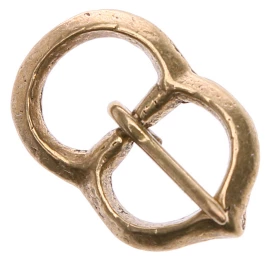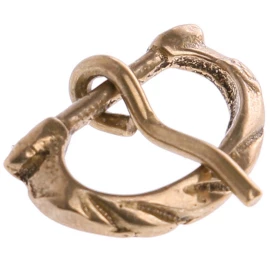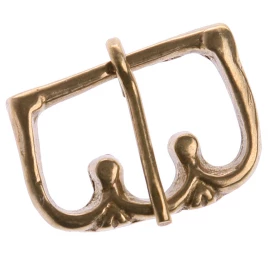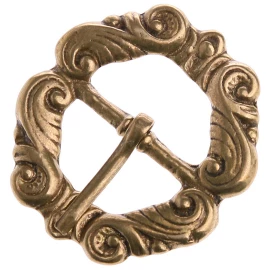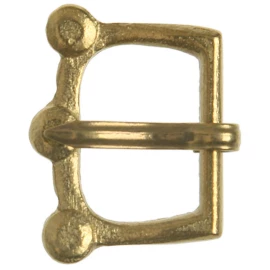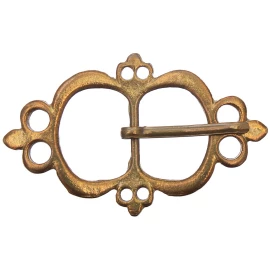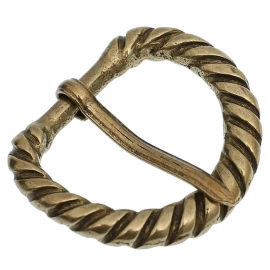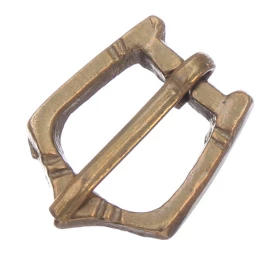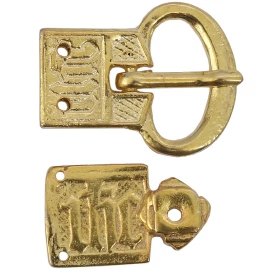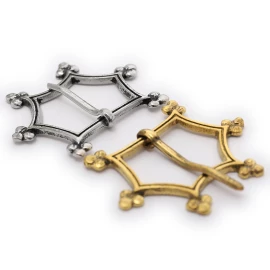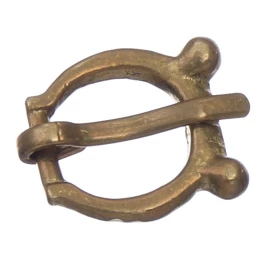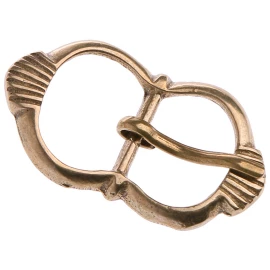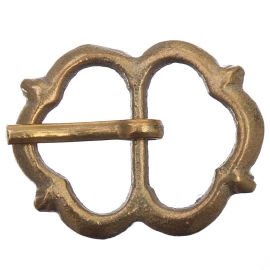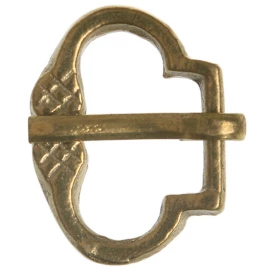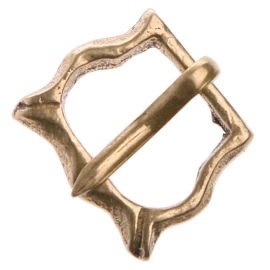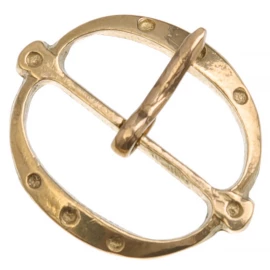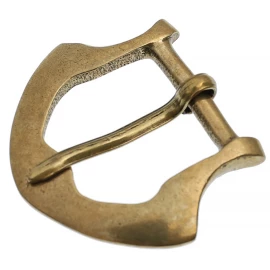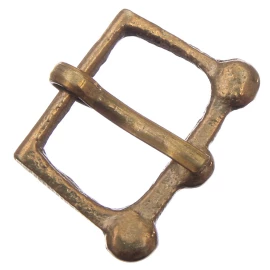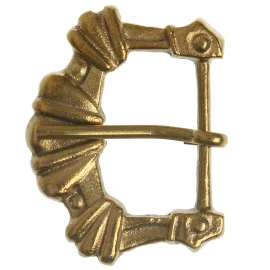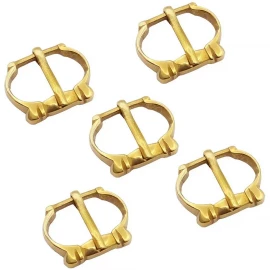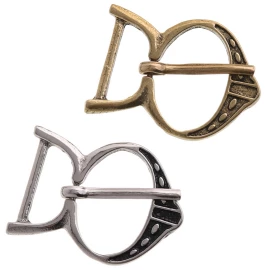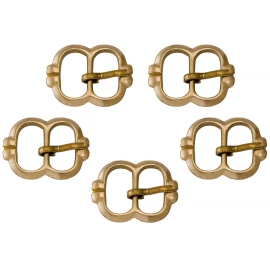

Late Medieval Double-Oval "Spectacle" Buckle, Large
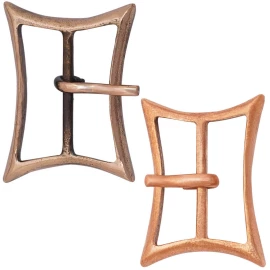
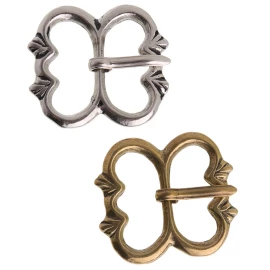
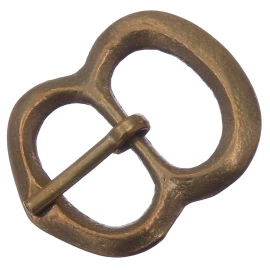
Looking to craft or restore an authentic late medieval belt for your costume, warrior? This hand-cast late medieval brass double-oval buckle (often referred to as a "spectacle" or figure-8 buckle) is the ultimate choice for re-creating historic belts and harness straps. Cast in high-quality brass with an antiqued patina finish, it stands out with its pointed outer edges and profiled central bar. We recommend this buckle for its strength, historical accuracy, and versatility. It will impart a true 14th- and 15th-century aesthetic to your reenactment attire or armor straps. Further product information ...
Would you like to be notified as soon as the item is in stock?
You will receive a short e-mail as soon as we have it back in stock.
Late Medieval Brass Double-Oval "Spectacle" Buckle, Large
History and Origins of Double-Oval Buckles
The design of this buckle is based on extensive archaeological finds dating to the 14th and 15th centuries (approx. 1350 to 1480). Double-oval or figure-8 buckles were immensely popular throughout Western and Central Europe, used extensively across the British Isles, the Holy Roman Empire, and Burgundy.
Historically, double-oval buckles were used for a broad range of applications. Large examples like this one were fitted to wide waist belts worn over tunics, doublets, gambesons, or plate armor. Additionally, they were employed on sword hangers, pouch straps, and armor harness fastenings (such as pauldrons and greaves). The central bar construction allowed for even weight distribution, preventing the leather strap from twisting or warping under load.
Assembly and Usage Instructions
Attaching this buckle to a leather strap is straightforward and simple to perform in your workshop:
- Prepare the leather: Choose a leather strap up to 27 mm (approx. 1.06 in) wide. Punch a longitudinal slot near the end of the strap for the buckle pin.
- Position the pin: Feed the buckle pin through the slot so it sits freely on the central bar.
- Secure the leather: Fold the leather end back around the central bar and fasten it securely with heavy stitching, rivets, or a brass belt plate.
- Fastening the belt: Pass the belt tip through the first loop of the frame, insert the pin through the desired hole in the leather, and feed the belt through the second loop.
Technical Specifications
| Parameter | Value |
|---|---|
| Product Type | Belt Buckle / Double-Oval Buckle |
| Historical Era | Late Middle Ages (14th–15th Century) |
| Material | Cast Brass |
| Overall Length | approx. 62.3 mm (2.45 in) |
| Overall Width | approx. 36.6 mm (1.44 in) |
| Max. Internal Width (Strap size) | approx. 27.3 mm (1.07 in) |
| Surface Finish | Patinated matte brass |
Care and Safety Instructions
Cast brass is a tough, long-lasting metal requiring minimal maintenance. To keep it in prime condition, observe these guidelines:
- Dry the buckle with a cotton cloth after exposure to rain or humidity.
- Avoid harsh chemical cleaners or abrasive polishes, as these can strip away the dark antiqued patina in the recessed areas.
- The pin point is functional – handle with care during assembly and wear to avoid scratching leather or skin.
- Do not use the buckle as a prying tool or subject it to extreme bending forces.
- Keep out of reach of small children due to small parts and sharp components.
Recommended Accessories
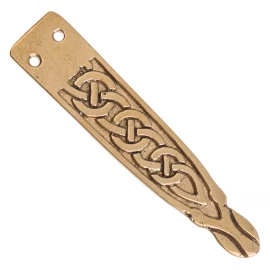
We recommend pairing this buckle with a 25–27 mm (1 in) wide blank leather strap from our store, a matching 15th-century brass belt chape, and brass belt rivets. It is ideal for belts worn over late medieval tunics, gambesons, doublets, or full knightly plate armor.
We are here for you!