
Roman Centurion Helmet Imperial Gallic G

Roman Centurion Helmet Imperial Gallic G
Free shipping

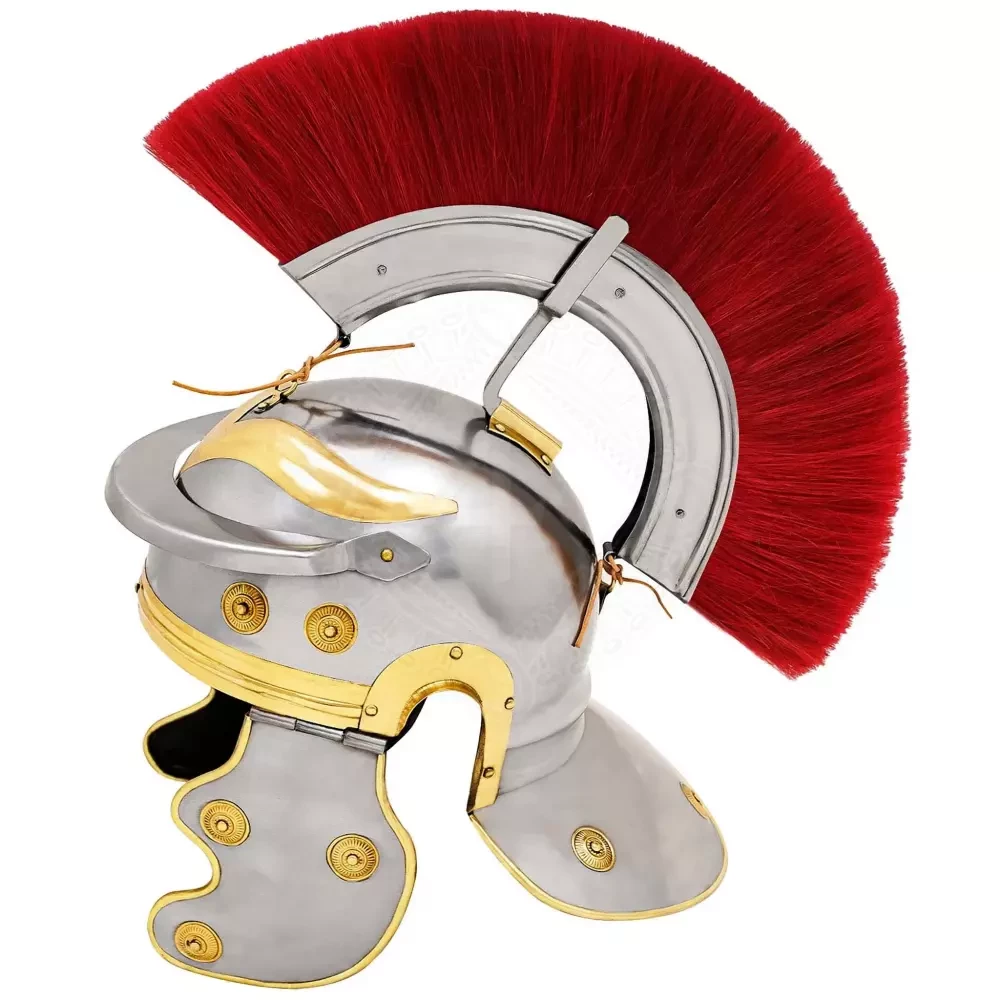
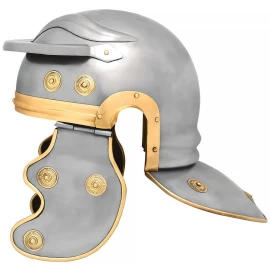
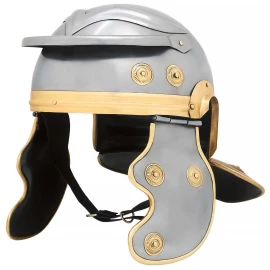
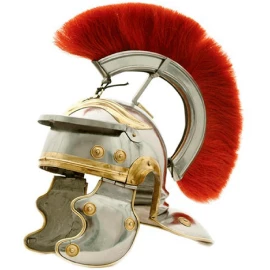
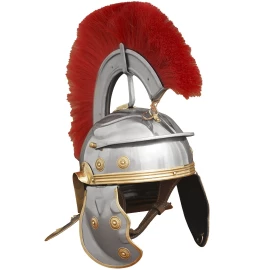
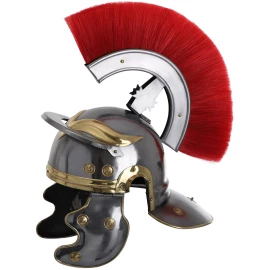
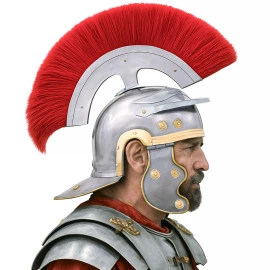
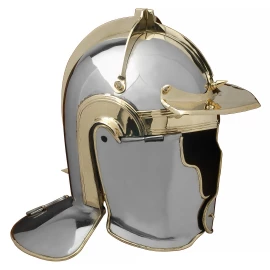
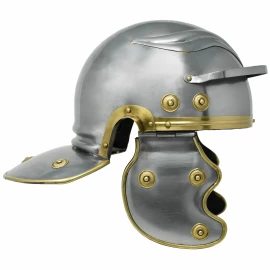
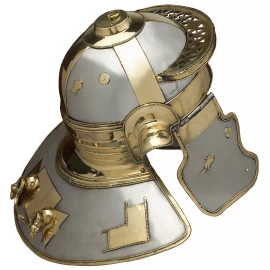
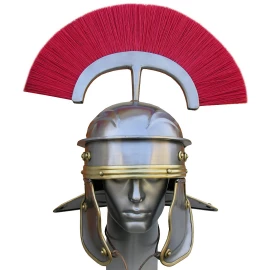
Centurion, complete your Roman kit with one of the most recognisable forms of 1st-century Roman helmet. This Imperial Gallic G helmet combines a polished steel bowl with contrasting brass fittings, articulated cheek guards, a broad neck guard and an imposing transverse red crest made from natural horsehair. An adjustable leather liner helps fit the helmet to a head circumference of approximately 56–59 cm / 22.0–23.2 in. We recommend this Roman centurion helmet for reenactment, living history, LARP, theatre, film, Roman costume displays or as an impressive centrepiece in a collection of ancient military equipment. Further product information ...

Available immediately 9 pcs
Item physically stored in our Warehouse in Kadan
, dispatch on: Tomorrow 18-Aug-2026
Delivery options
110,00 €
90,91 € excl. VAT

Facilis Roman Centurion Helmet Imperial Gallic G with Red Crest

A Roman Helmet With Classic Imperial Gallic Features

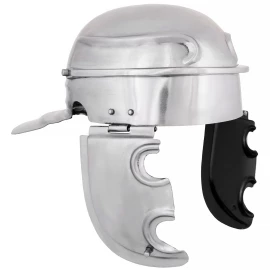
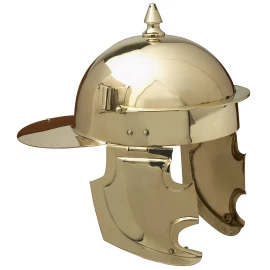
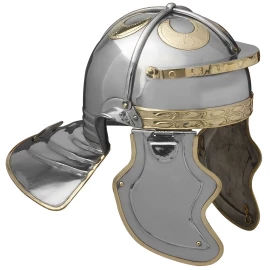
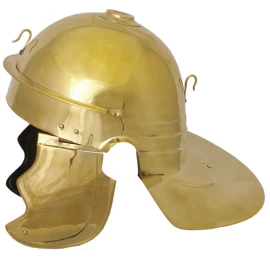
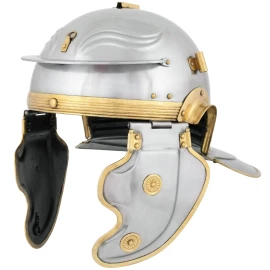
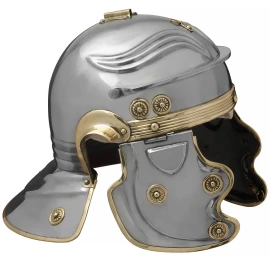
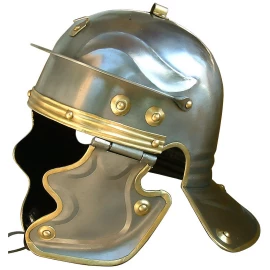
The principal structure of this Roman legionary helmet is a smoothly polished, rounded steel bowl. A prominent projecting peak runs above the forehead, whilst raised eyebrow-shaped ridges decorate the front of the skull. These embossed brows are amongst the best-known identifying features associated with the Imperial Gallic family of Roman helmets.

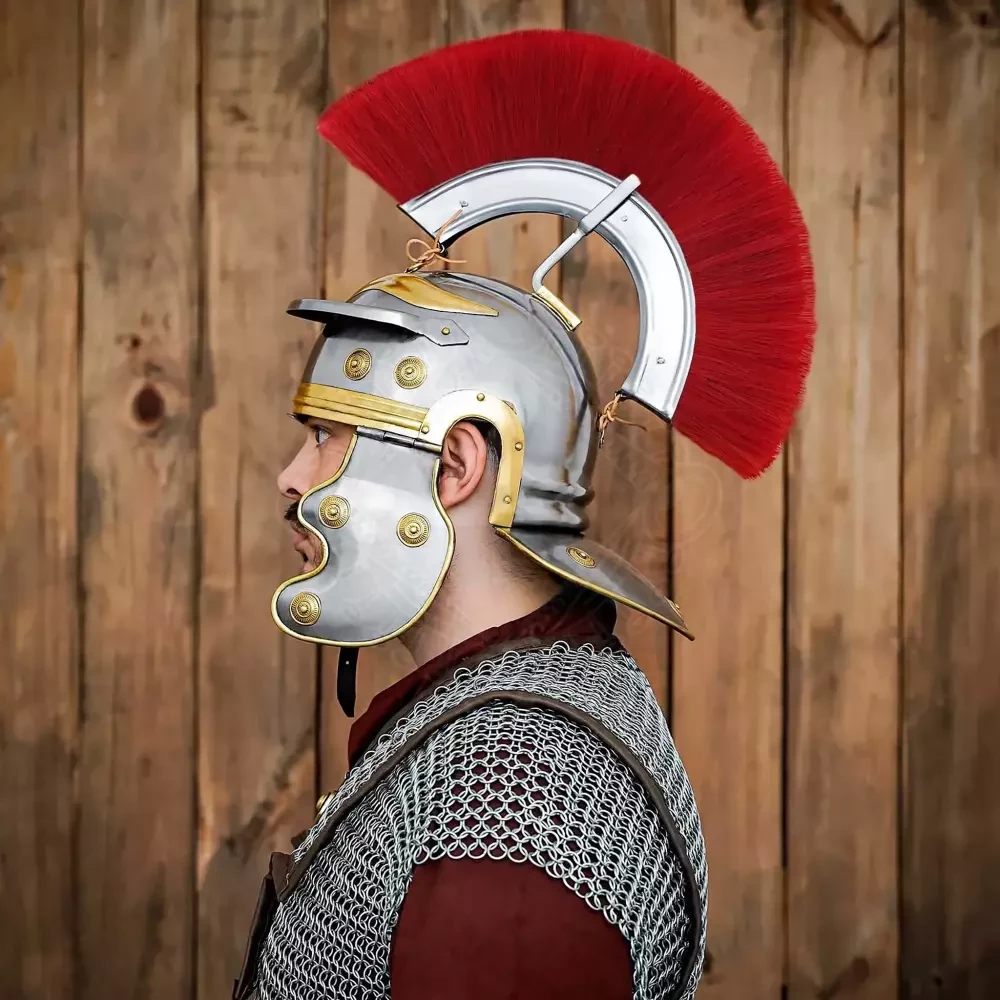
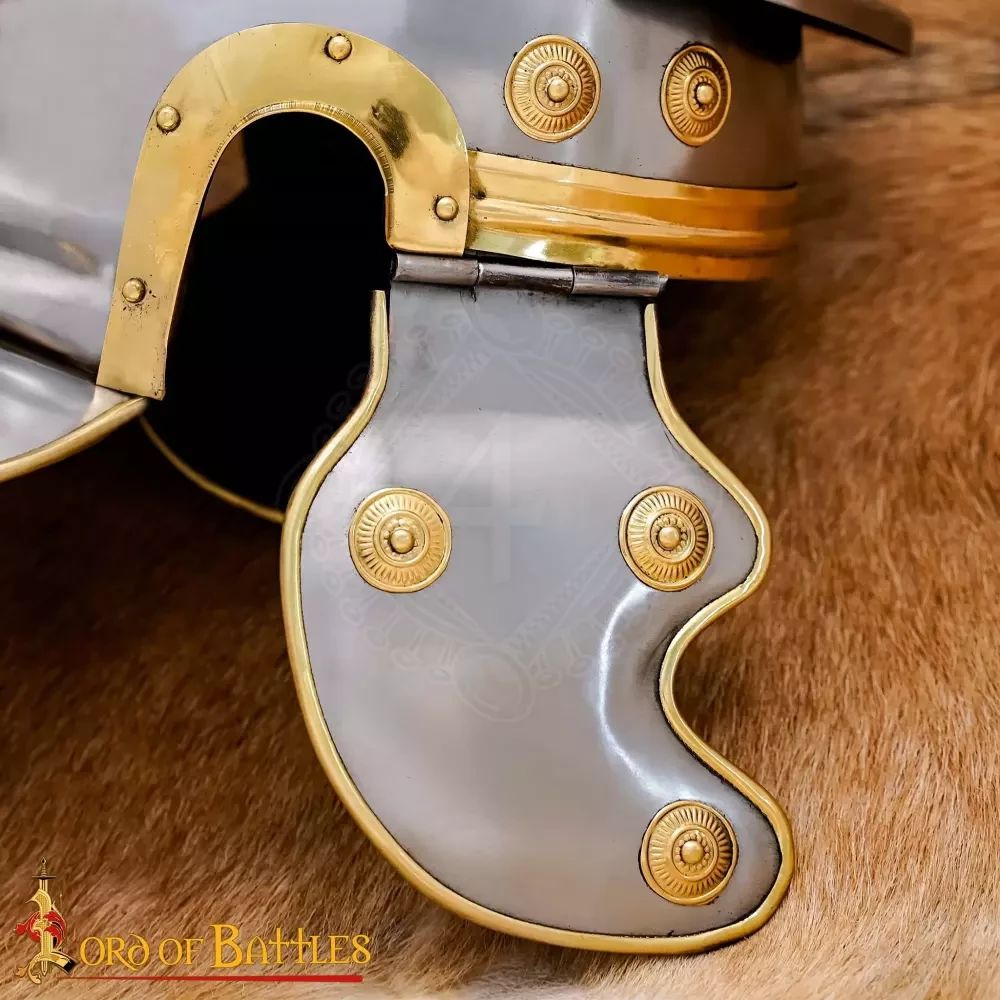
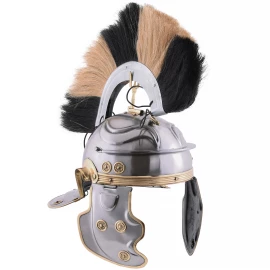
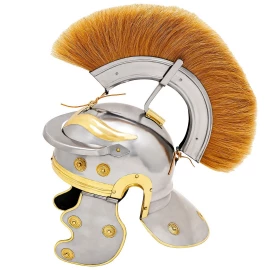
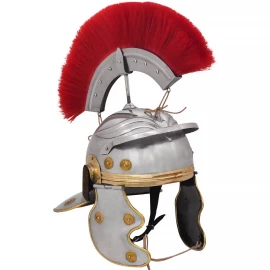
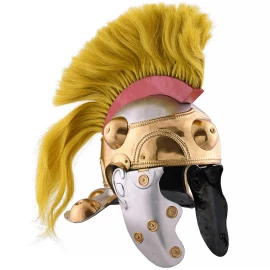
The silver-grey steel contrasts strongly with golden brass trim, riveted decorative rosettes and other fittings. Large articulated cheek guards hang from hinges on either side of the helmet. Their shaped front edges leave the mouth area open and allow useful freedom of movement, whilst brass edging emphasises their distinctive outline.

At the rear, the bowl extends into a broad neck guard. Above the skull is a tall semicircular metal crest frame carrying a dense red natural-horsehair crest. On this reproduction the crest is arranged transversely across the wearer's head, forming the traditional crista transversa associated with Roman centurions. The crest assembly can be removed to make transport, cleaning and storage easier.

Imperial Gallic G In The 1st Century AD

Imperial Gallic G is a modern classification established within H. Russell Robinson's typology of Roman helmets; it was not an ancient Roman designation. The type belongs to the broader Weisenau family and is particularly characteristic of the mid-1st century AD, although related forms remained in service beyond this period.

An important surviving example was recovered from the Rhine at Mainz-Weisenau. Closely related fragments have also been excavated at Roman Colchester, ancient Camulodunum, from contexts associated with the destruction caused by the Boudican revolt of AD 61. This makes the general form especially suitable for an impression of a legionary or centurion serving during the Claudian and Neronian periods.

A Roman military helmet of this form protected the crown, forehead, temples, cheeks and rear of the neck without enclosing the entire face. Hinged cheek pieces could follow the sides of the face, whilst the projecting rear plate provided additional neck coverage. The open facial area also preserved good vision, hearing and the ability to give or receive shouted commands.

The Transverse Crest Of A Centurion

The transverse helmet crest is strongly associated in Roman imagery and written evidence with the rank of centurion. Its conspicuous side-to-side orientation could make an officer easier for his soldiers to recognise amongst a formation. The surviving evidence is nevertheless incomplete, so it would be too absolute to assume that every centurion in every period wore exactly the same arrangement.

The specific red colour of 1st-century centurion crests is likewise not securely established. Red has become extremely popular in modern Roman reenactment and produces an impressive contrast with polished steel and brass, but historical crests may have appeared in different colours and their precise colour coding remains uncertain.

Made In Honour Of Marcus Favonius Facilis

The creative name of this helmet honours Marcus Favonius Facilis, a centurion of Legio XX whose 1st-century tombstone was discovered at Colchester. The monument depicts him as a Roman officer carrying the characteristic centurion's vine staff, or vitis. The tombstone was probably standing before the Boudican revolt of AD 60–61, placing Facilis in precisely the period represented by Weisenau helmet finds from Roman Britain. This Roman centurion helmet is named in his honour.

Preparing And Fitting Your Helmet

Before first use, inspect the cheek-piece hinges, chin strap, leather liner and crest attachment. The steel may arrive with a light protective film of oil. If so, wipe away any excess with a soft cloth before wearing the helmet so that it does not stain your clothing.

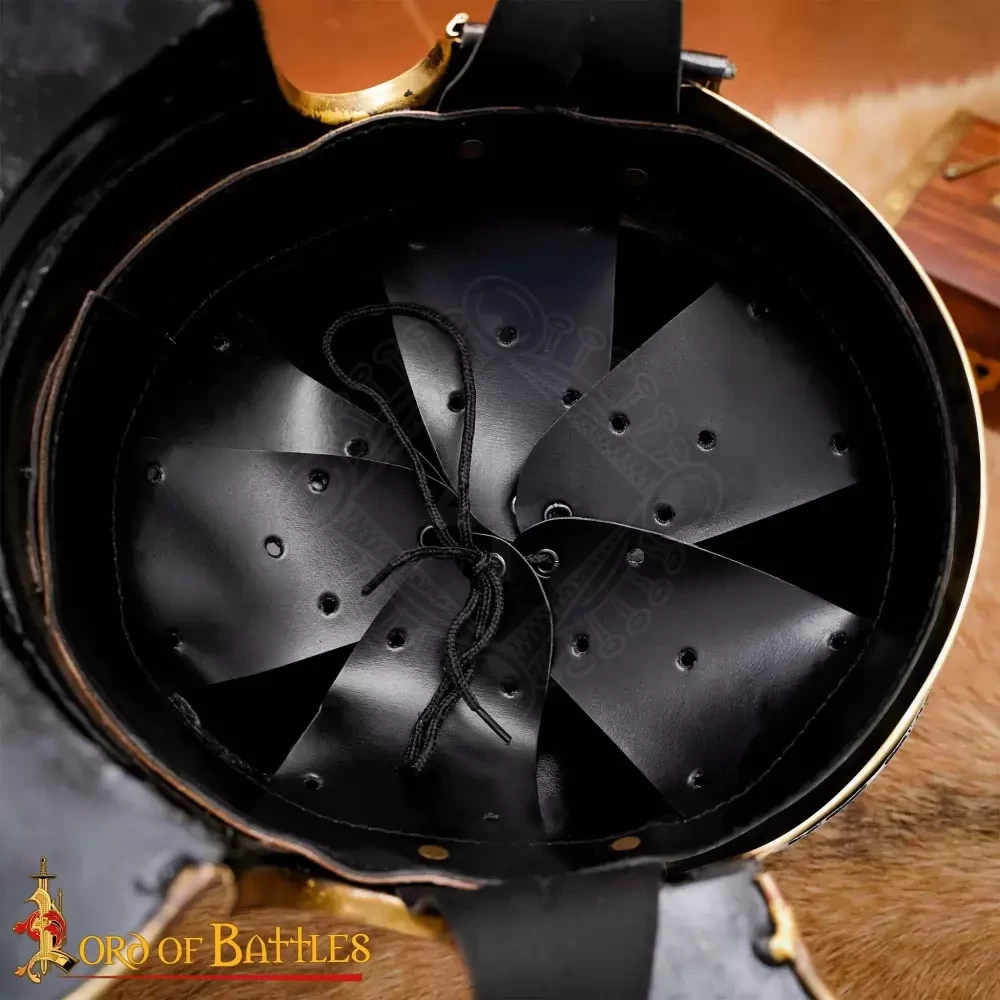
Adjust the leather suspension to suit your head and place the helmet level on the skull. The brow should not obstruct your normal field of vision. Lower the cheek guards and adjust the chin strap until the helmet remains stable when you turn your head, without placing excessive pressure on your jaw or throat.

For longer wear, make full use of the adjustable leather liner. If the available internal space permits, we also recommend a thin padded cap or arming hood beneath the helmet. This can reduce pressure points and limit unnecessary movement of the steel bowl on your head.

Technical Specifications

Specification Details
Type Roman legionary and centurion helmet
Modern classification Imperial Gallic G, Weisenau
Historical period Primarily mid-1st century AD
Helmet bowl material Steel
Steel thickness Approx. 1.2 mm / 0.047 in
Fittings and decoration Brass
Crest Red natural horsehair
Crest orientation Transverse, crista transversa
Liner Adjustable leather suspension
Chin strap Adjustable leather strap
Cheek guards Articulated and hinged
Neck protection Broad projecting neck guard
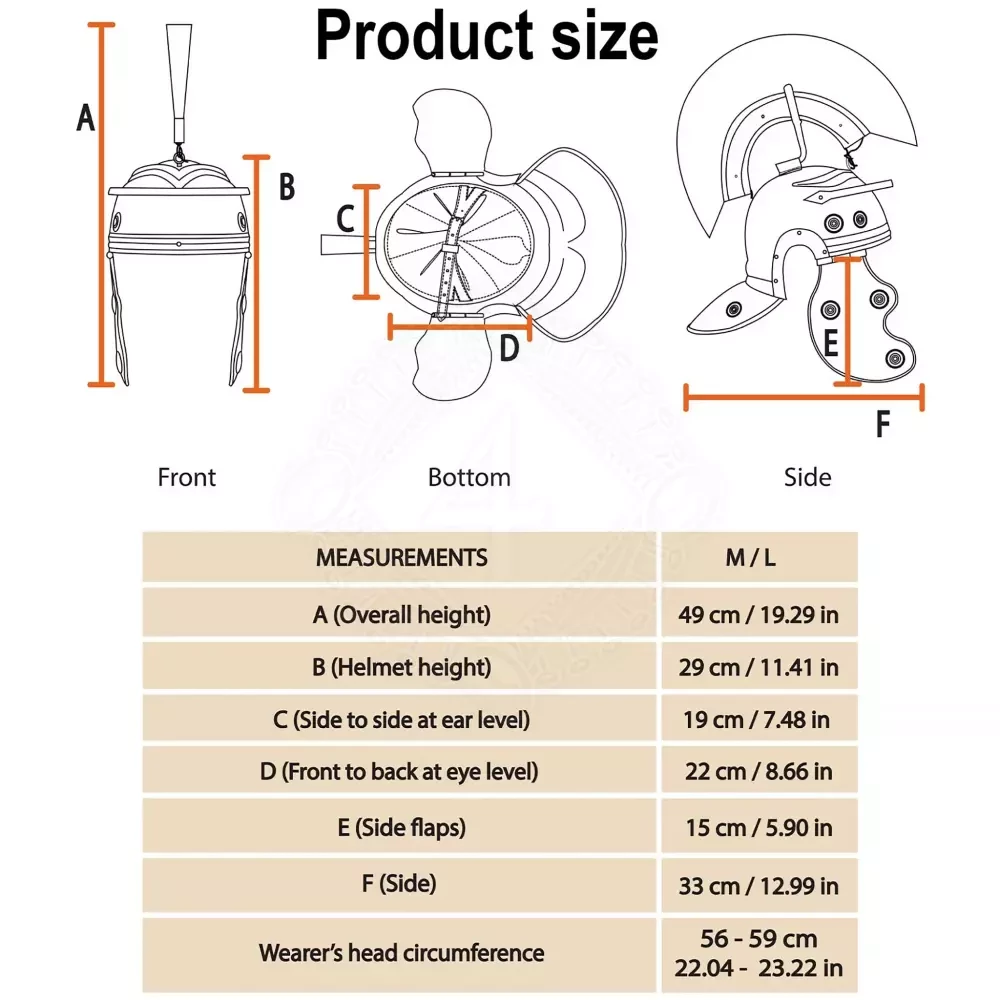
Overall height with crest Approx. 49 cm / 19.29 in
Helmet height without crest Approx. 29 cm / 11.41 in
Internal width at ear level Approx. 19 cm / 7.48 in
Internal front-to-back length Approx. 22 cm / 8.66 in
Cheek-guard length Approx. 15 cm / 5.90 in
Overall side measurement Approx. 33 cm / 12.99 in
Suitable head circumference Approx. 56–59 cm / 22.04–23.22 in
Manufacturer's size M/L
Weight Approx. 2 kg / 4.4 lb
Manufacture Hand-made reproduction; minor variations in finish and detail are normal

Size Guide

Size Head Circumference Internal Width Front-To-Back Length
M/L 56–59 cm / 22.04–23.22 in Approx. 19 cm / 7.48 in Approx. 22 cm / 8.66 in

Before ordering, measure around your head with a flexible tape approximately 1–2 cm / 0.4–0.8 in above the eyebrows, keeping the tape level around the widest part of the back of your skull. If you intend to wear an additional padded cap beneath the helmet, take the measurement whilst wearing that layer. Do not rely solely on your usual hat size.

Caring For Steel, Brass, Leather And Horsehair

After every use, wipe the steel with a soft dry cloth to remove perspiration, moisture and fingerprints. Apply a very thin film of suitable steel or armour preservation oil afterwards. Pay particular attention to rivets, hinges and junctions between the steel bowl and brass fittings.

Brass details may be gently polished with a suitable non-abrasive brass or metal-care product. If the leather liner or straps become damp, let them dry naturally at room temperature and occasionally condition them with a product intended for genuine leather. Never dry the helmet directly on a radiator or beside an open fire.

Remove dust from the crest by gently combing in the direction of the hair. Always lift and carry the helmet by its steel bowl rather than the horsehair crest or crest frame. Prolonged exposure to strong sunlight may fade the red colour. Store the helmet in a dry, well-ventilated environment.

Safe Use

This helmet is not certified personal protective equipment and is not designed for full-contact armoured combat. We recommend it for low-contact reenactment, living history, LARP, theatre, film, costume events and display. It is not suitable for buhurt, HMB, Battle of the Nations or comparable high-impact disciplines.

  • Inspect the rivets, cheek-piece hinges, chin strap, liner and crest attachment before every use.
  • Do not wear the helmet if the bowl is cracked, seriously deformed or has developed a dangerously sharp edge.
  • The articulated cheek guards must not pinch your ears or apply excessive pressure to your jaw.
  • Never use the horsehair crest or its frame as a carrying handle.
  • Do not expose the helmet to full-force blows from sharp or heavy steel weapons.
  • Always follow the safety rules and equipment requirements of the relevant reenactment or LARP organiser.

Recommended Accessories

  • A 1st-century Roman tunic as the basic garment for a legionary or centurion impression.
  • A 1st-century Corbridge-style lorica segmentata or lorica hamata to create a coherent Roman military kit.
  • A 1st-century Roman focale as a historically appropriate neck cloth for military dress.
  • 1st-century centurion greaves for a more distinctive officer impression.
  • A vitis, the centurion's vine staff, as a characteristic badge of rank for living-history interpretation.
  • A 1st-century gladius and pugio to complement the Roman kit; for costume events we recommend safe blunt or decorative versions.
  • For modern maintenance, we recommend steel preservation oil, brass polish, leather conditioner and a soft cloth.

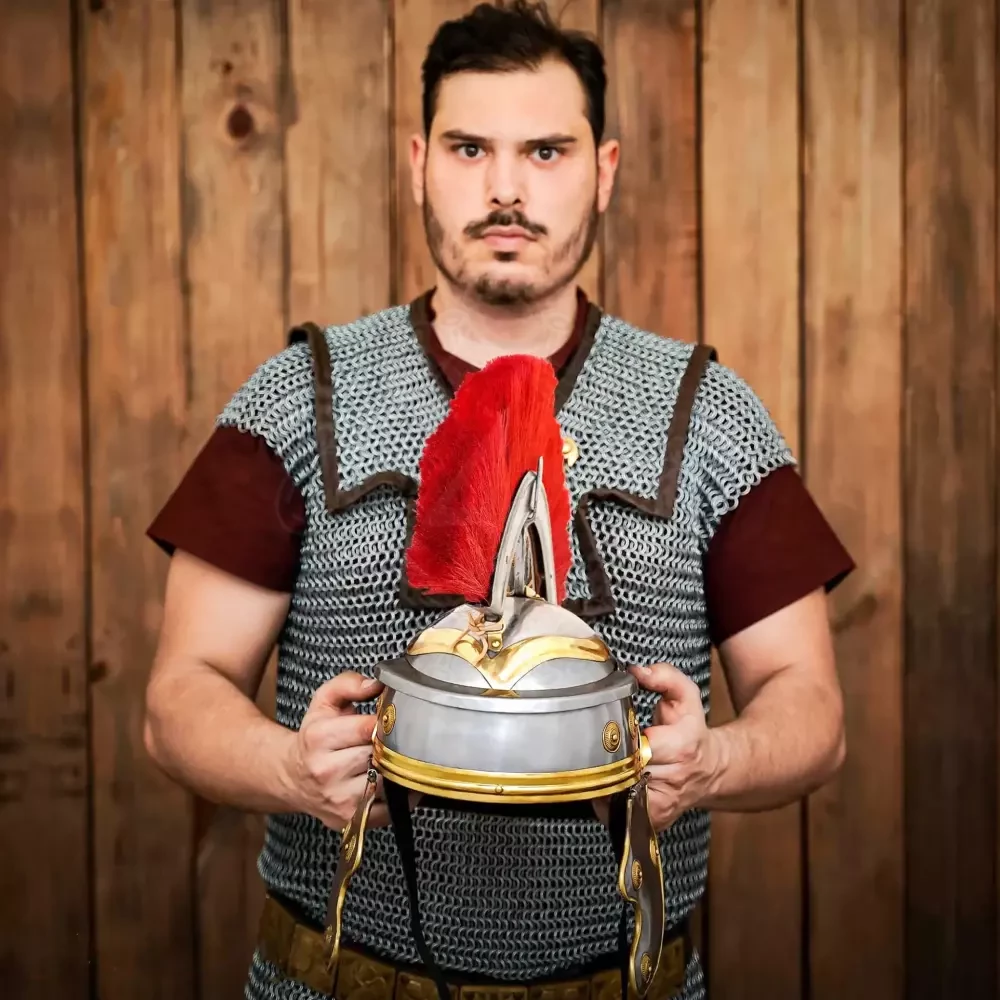
The mail armour, tunic, belt and other items of equipment shown in the photographs are not included unless specifically stated in the individual offer.

Similar products (50)