Čeština
 Deutsch


Long Quilted Arming Hood with Shoulder Collar
4x


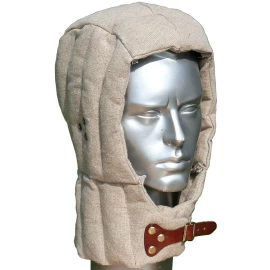
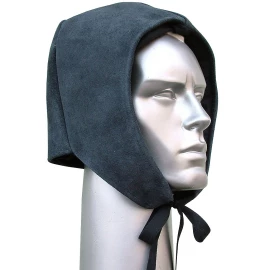
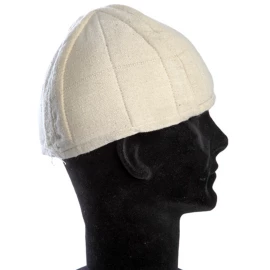
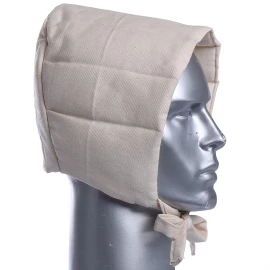
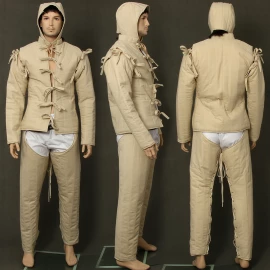
Looking for comfortable padding that reduces unpleasant pressure from your helmet and mail armour not only on your head but also around your neck and shoulders? The Näfels long quilted arming hood combines a traditional padded coif with an extended shoulder collar covering the upper chest, trapezius muscles and back. Made from 100% cotton, it has a quilted construction approximately 4 mm (0.16 in) thick. This creates a continuous padded underlayer beneath a mail coif, metal helmet or other historical armour. Available in black and natural cream, it is a quality product from Marshal Historical. Further product information ...

Näfels Long Quilted Arming Hood with Shoulder Collar
Extended Design for Head, Neck and Shoulder Comfort
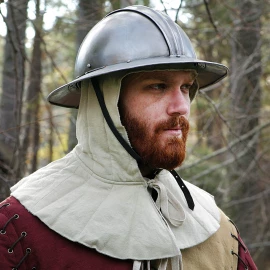
Unlike a conventional medieval padded arming cap, this model features a broad shoulder section. Its construction provides continuous padding from the crown of the head, over the nape and shoulders, and down to the upper torso. This is particularly useful when wearing a mail coif or a helmet with a mail aventail.
Each part of the design serves a practical purpose:
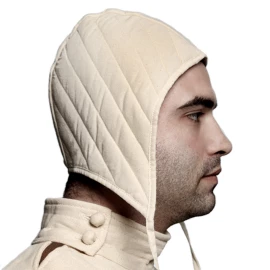
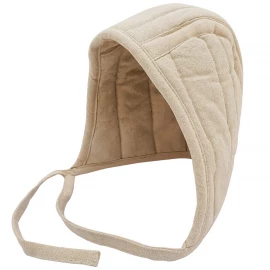
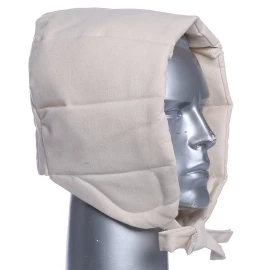
- Quilted head section: The rounded hood follows the shape of the head and covers the crown, temples, ears and back of the skull. It helps reduce direct contact between the skin and metal armour components.
- Enclosed neck area: The quilted fabric continues from the head down over the neck towards the shoulders. This helps minimise rubbing and uncomfortable pressure, particularly beneath a mail aventail.
- Extended shoulder collar: Broad, rounded panels cover the trapezius muscles, shoulders, upper chest and back. The padding therefore does not end immediately below the head.
- Different quilting directions: Lengthwise and diagonal stitching predominates around the head, while the shoulder sections feature stitching that follows their rounded outline. The seams help keep the padded construction together.
- Open face aperture: The shaped opening leaves the face exposed. Its circumference measures approximately 65 cm (25.6 in).
- Fabric edge binding: Both the face opening and the lower edge of the shoulder collar are finished with narrow textile binding.
- Cotton construction: Made from 100% cotton, the fabric is breathable, comfortable to wear and absorbs ordinary body moisture.
The hood simply slips over your head and requires no additional fastening. It measures approximately 51 cm (20.1 in) in overall height and 43 cm (16.9 in) in overall width. It is intended for head circumferences of approximately 60–65 cm (23.6–25.6 in).
Why Was Textile Padding Worn Beneath Medieval Armour?
During the European Middle Ages, particularly between the 12th and 15th centuries, various textile undergarments were worn as part of a warrior's armour. Their construction differed according to the historical period, region and type of metal protection being used.
Mail coifs protected the head, neck and sometimes the shoulders. Although mail armour provided effective protection primarily against cutting attacks, its weight and metal rings could make prolonged wear uncomfortable. Without a suitable underlayer, the rings could also catch the hair and chafe the skin.
A padded textile layer helped reduce pressure and friction, improved the fit of metal components and, depending on its construction, could contribute to cushioning impacts. Padding was particularly useful around the head, neck and shoulders, where part of the armour's weight was concentrated.
An interesting historical detail: During the 14th century, bascinets became increasingly widespread across Europe. These helmets were frequently equipped with a mail curtain known as an aventail, which protected the neck and lower part of the head. However, the additional mail increased the weight of the equipment, making suitable padding particularly useful for wearing comfort.
The modern Näfels arming hood follows the general principle of historical padded undergarments. It is not, however, presented as an exact reconstruction of any particular archaeological discovery.
The Battle of Näfels – The Meaning Behind the Name
The name Näfels refers to a Swiss village near which an important battle took place on 9 April 1388. The forces of Glarus and their allies confronted Habsburg troops, with the Swiss side achieving victory. The battle remains a significant event in late medieval Swiss history.
It was fought during a period when European military equipment combined mail protection with different helmet types and increasingly widespread plate armour components. The name therefore evokes an era when suitable padding beneath metal armour served an important practical purpose.
This does not imply that the exact design of this arming hood has been documented at the Battle of Näfels.
How to Wear Your Long Padded Arming Hood
The long quilted hood is primarily intended as a comfortable underlayer beneath historical equipment. Before your first use, we recommend trying it on together with all the armour components you intend to wear.
- 1. Check your measurements: Measure your head circumference. The hood is intended for approximately 60–65 cm (23.6–25.6 in). Also make sure its shape suits your head.
- 2. Put on your undergarment: Depending on your historical equipment, you may wear a tunic or suitable gambeson underneath.
- 3. Pull the hood over your head: Adjust the face opening so that the edge binding neither obstructs your vision nor presses uncomfortably against your chin.
- 4. Arrange the shoulder panels: Spread the padding evenly across your shoulders, chest and back. Check that the fabric does not bunch up excessively.
- 5. Put on your mail or helmet: Make sure the helmet has sufficient internal space to accommodate the additional padded layer.
- 6. Check your freedom of movement: Turn your head, bend forwards and raise your arms. The hood should not pull uncomfortably, interfere with breathing or restrict essential movement.
Remember: Additional padding changes the amount of space available inside a helmet. A helmet that fits closely without the hood may become too tight once the extra layer is added. It is equally important to check the overlap between the padded hood and any mail coif or aventail worn over it.
Where Can You Use This Long Quilted Arming Hood?
- Historical reenactment: As part of medieval military equipment during living history presentations.
- Staged combat and historical fencing: For more comfortable wear beneath suitable historical helmets and associated armour components.
- LARP: As a practical addition to knight, foot soldier, guard or mercenary costumes.
- Film and theatre: For assembling historical or fantasy costumes featuring metal helmets and mail armour.
- Medieval festivals: For historical events, parades and living history demonstrations where armour may be worn for extended periods.
Technical Specifications
| Feature | Specification |
|---|---|
| Product type | Long padded arming hood with shoulder collar |
| Historical inspiration | Medieval Europe, particularly 13th–15th centuries |
| Material | 100% cotton |
| Construction | Quilted, with extended neck and shoulder sections |
| Available colours | Black, natural (cream-white) |
| Suitable head circumference | Approx. 60–65 cm (23.6–25.6 in) |
| Face opening circumference | Approx. 65 cm (25.6 in) |
| Overall height | Approx. 51 cm (20.1 in) |
| Overall width | Approx. 43 cm (16.9 in) |
| Material thickness | Approx. 4 mm (0.16 in) |
| Size | One size |
| How to put it on | Pull over the head |
| Brand | Marshal Historical |
Caring for Your Cotton Quilted Hood
Proper care will help preserve the shape, padding and appearance of your arming hood, even with regular use.
- Washing: Turn the hood inside out before washing. Wash separately by hand in cold water, at a maximum temperature of 30°C (86°F).
- Detergent: Use only a very small amount of mild laundry detergent.
- Gentle handling: Avoid vigorous scrubbing, forceful wringing or twisting the fabric, which could damage the quilting or distort the padding.
- Drying: Allow the hood to dry naturally in the open air. Do not tumble-dry or place it directly on a hot radiator.
- Ironing: Avoid high temperatures and heavy pressure that could affect the shape of the padded sections.
- Airing: Allow the hood to air thoroughly after each use, especially if it has become damp with perspiration.
- Storage: Keep it clean, dry and free from prolonged compression beneath heavy objects.
Important Safety Information
The main purpose of this product is to improve comfort beneath historical helmets and mail armour. It is not specified as certified protective equipment against blows, cuts, thrusts or other mechanical injuries.
For HEMA contact fencing, buhurt and other heavy-contact combat disciplines, use protective equipment that meets the relevant safety requirements. This hood does not replace a suitable protective helmet or its required internal padding. Unsuitable additional layers may compromise helmet fit, stability and visibility.
Inspect the stitching and padded sections before use. If your equipment puts uncomfortable pressure on your neck, restricts head movement or interferes with breathing, remove the helmet and hood and adjust their fit.
Recommended Accessories for Your Medieval Armour
For an impression of a European warrior from the 13th–14th centuries, we recommend combining the hood with a mail shirt, mail coif or aventail and a historically appropriate helmet. Depending on your chosen period, a great helm, kettle hat or bascinet may be suitable.
It also combines well with a padded gambeson, medieval tunic and heraldic surcoat. Before assembling your complete equipment, check that the different layers overlap correctly and allow sufficient freedom of movement.
Only the long padded arming hood in your selected colour is included in the purchase. The gambeson, tunic, armour, helmet and other garments or accessories shown in the photographs are not included in the price.
 Ověřený zákazník
We are here for you!