Čeština
 Deutsch


Crusader Great Helm, 13th–14th Century
1x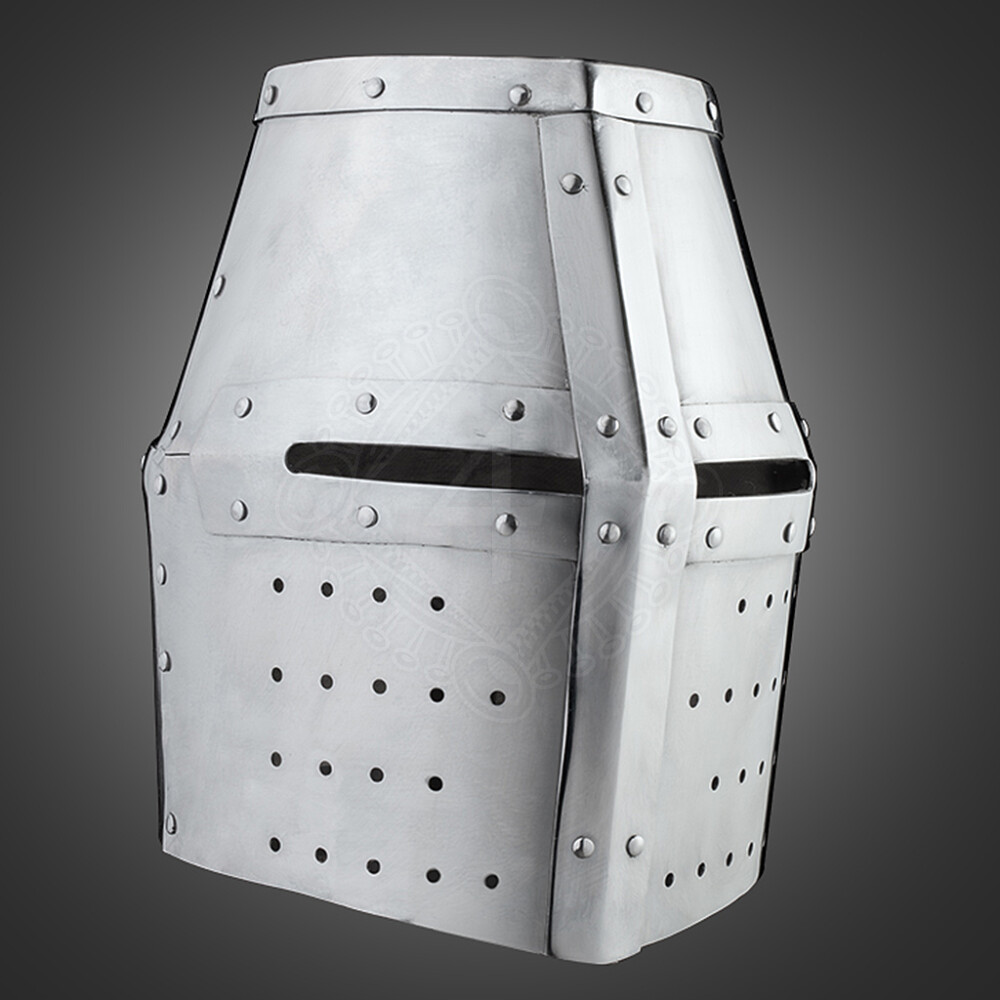
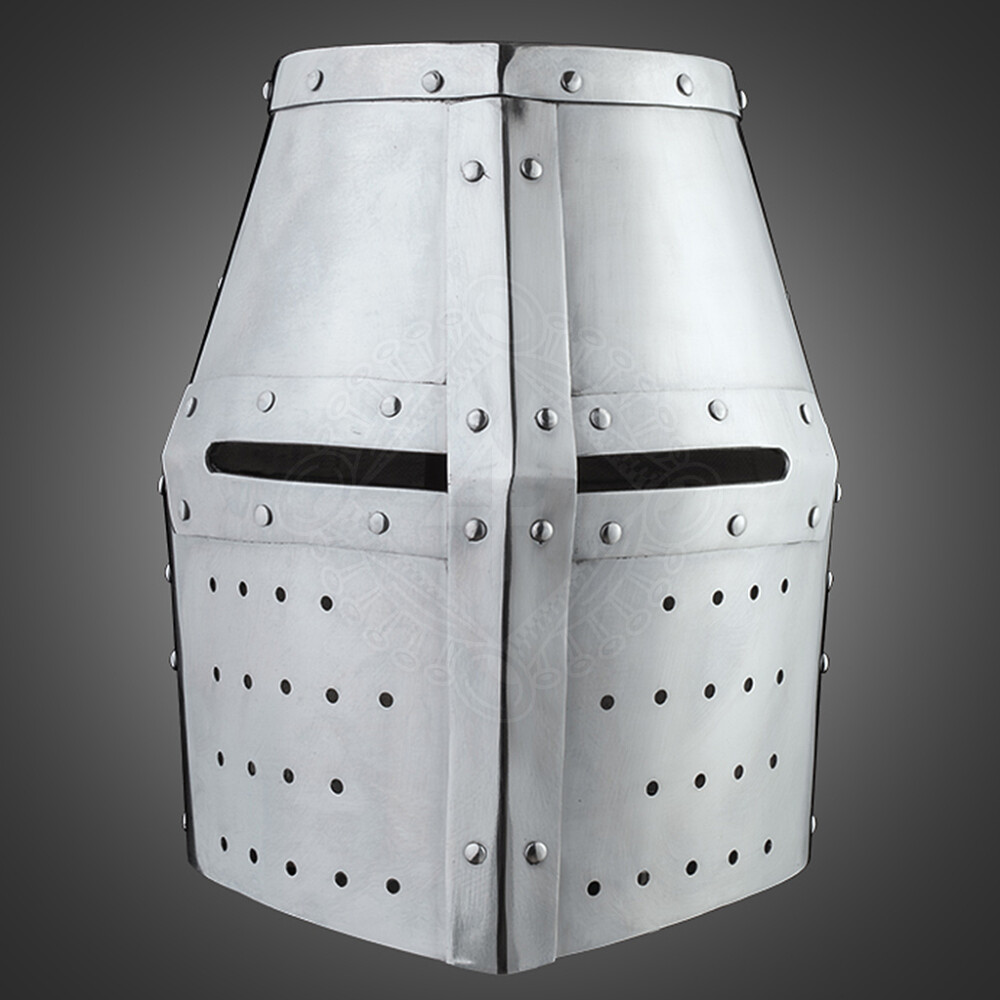
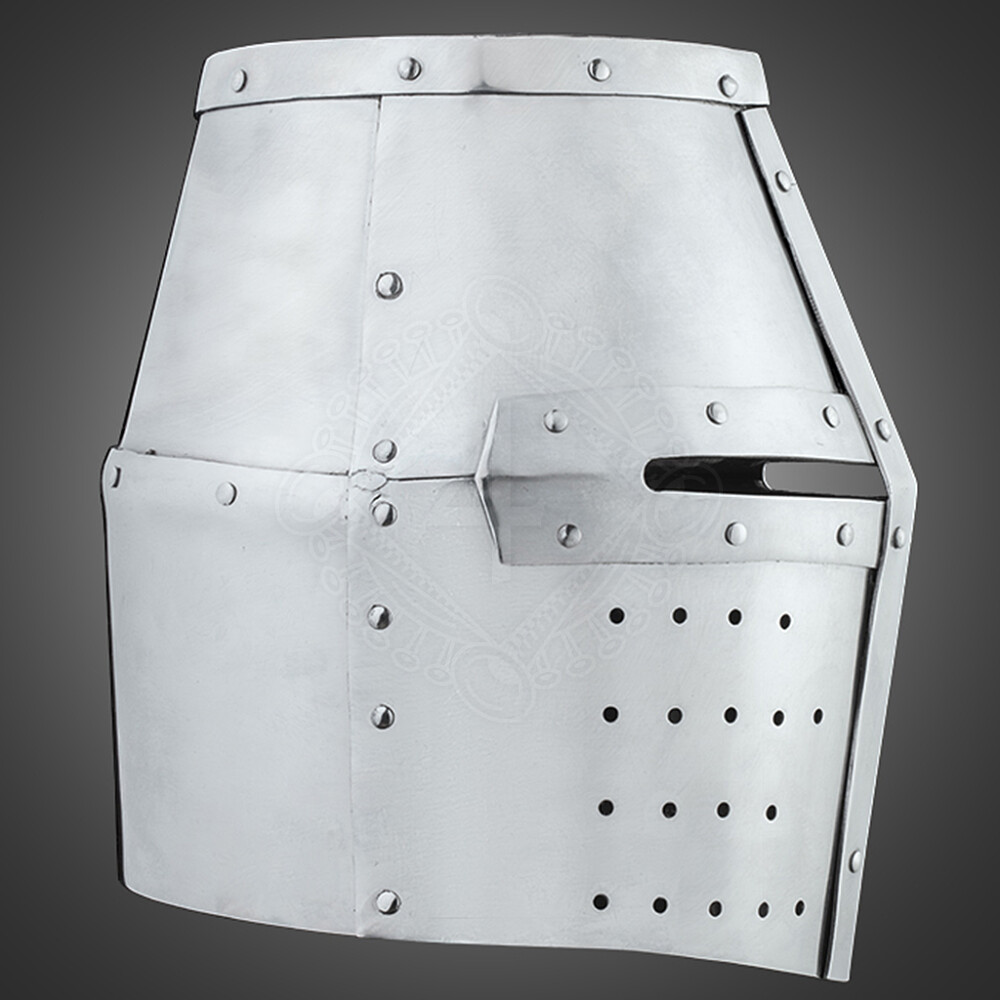
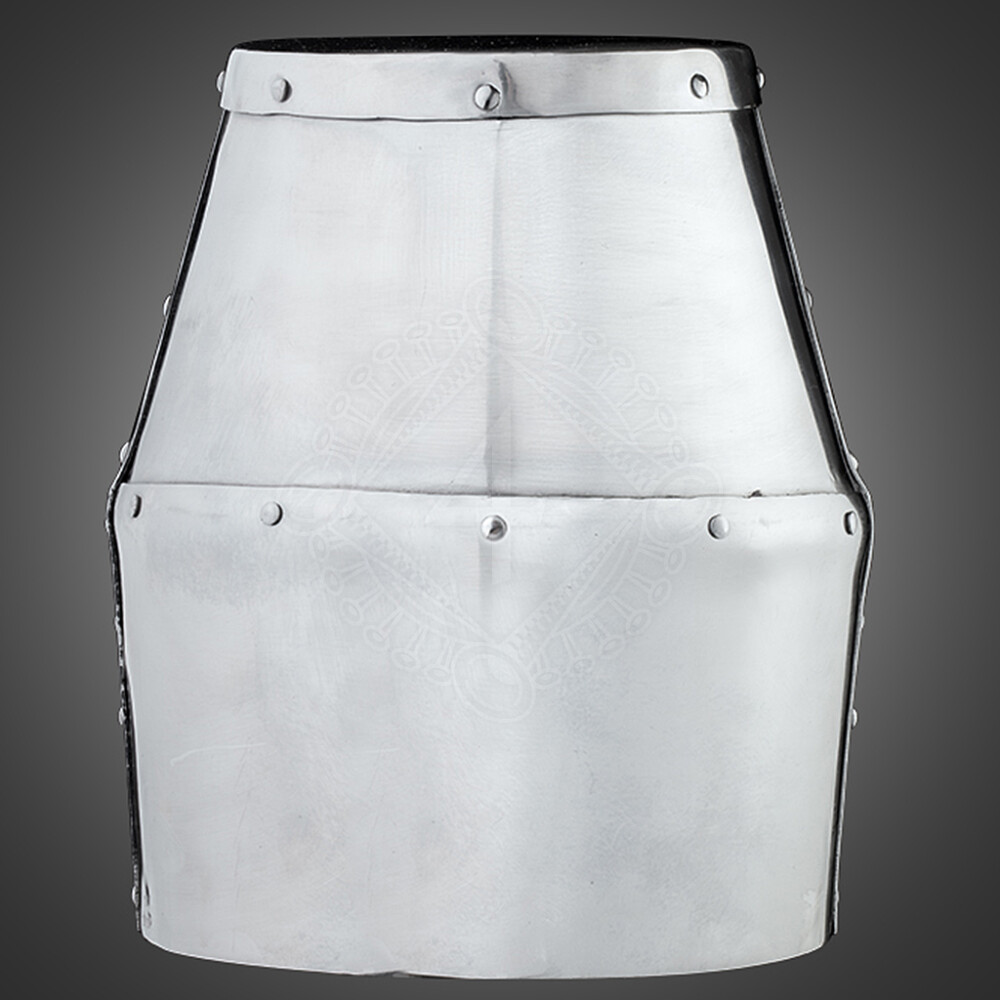
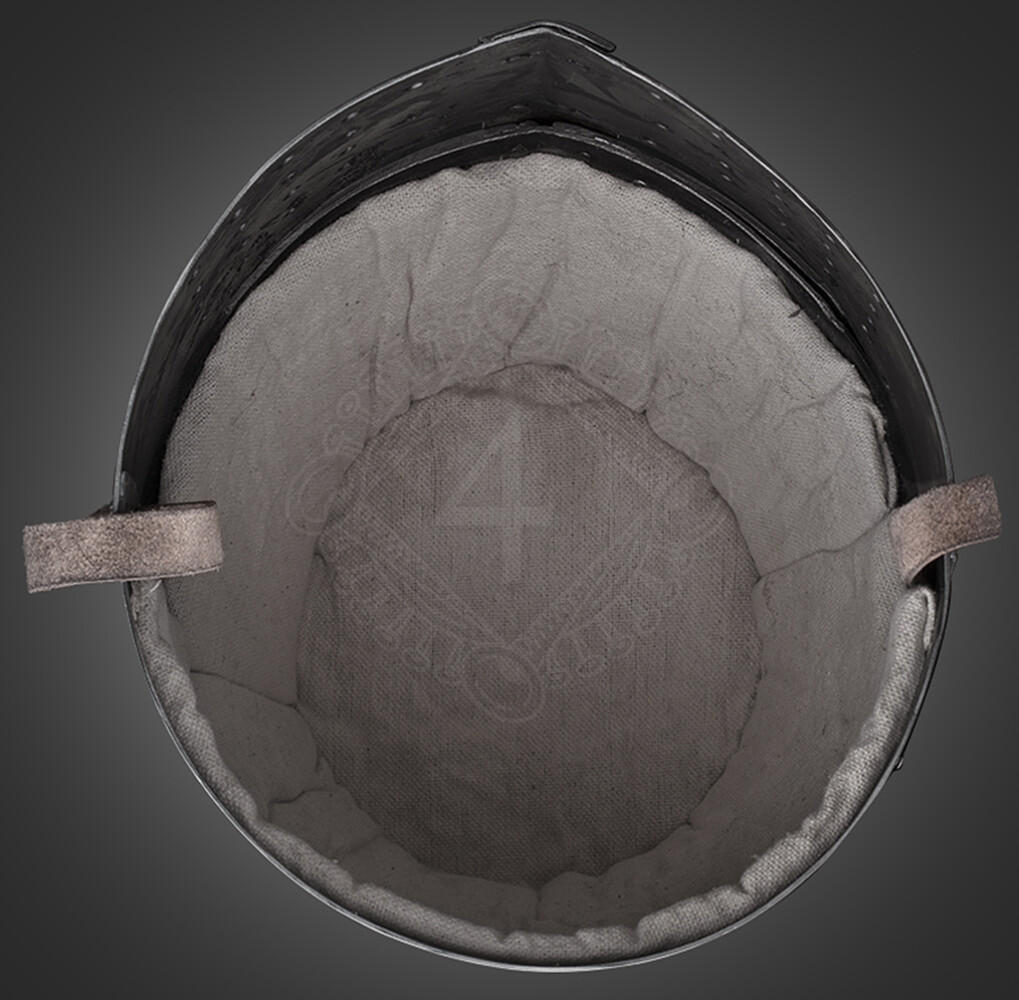

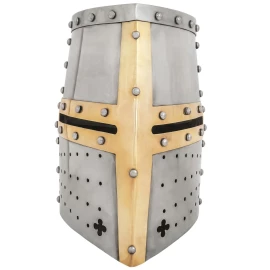
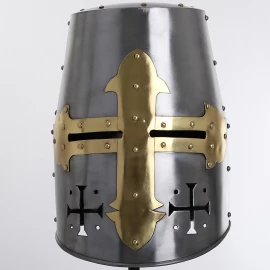
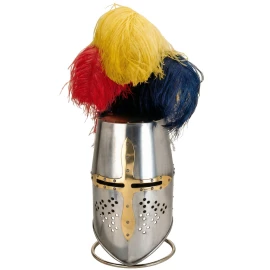
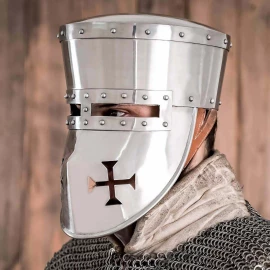
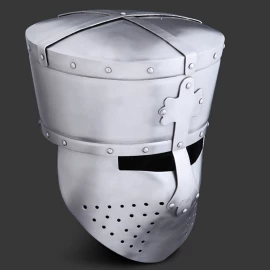
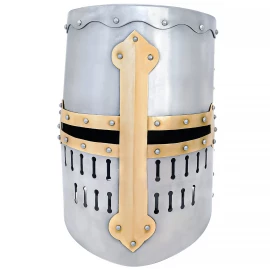
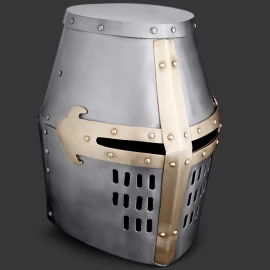
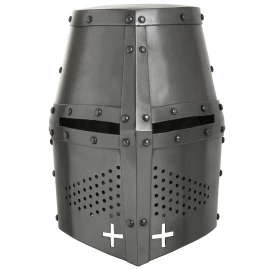
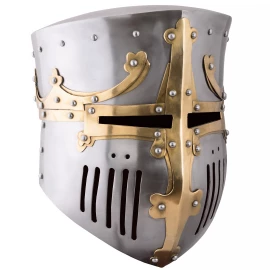
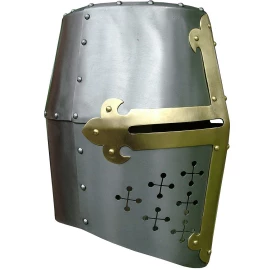
Complete your knightly equipment with one of the most recognisable helmets of the High Middle Ages! This Crusader great helm features the imposing, angular shape associated with European heavily armoured knights of the 13th and 14th centuries. Made from 1.6 mm (0.063-inch) steel plate, it has a brushed finish, narrow horizontal eye slits and rows of small ventilation holes. Inside, a fabric lining and leather chin strap help make it suitable for wearing as part of a historical costume. An impressive addition to a Crusader knight's outfit, historical reenactment display, staged performance or medieval armour collection, this helmet captures the unmistakable appearance of high medieval armour. Further product information ...

Would you like to be notified as soon as the item is in stock?
You will receive a short e-mail as soon as we have it back in stock.
Crusader Great Helm, 13th–14th Century, Brushed Steel
Imposing Construction with Distinctive Cross-Shaped Reinforcement
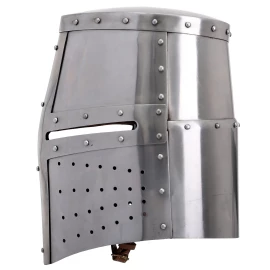
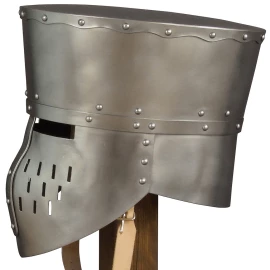
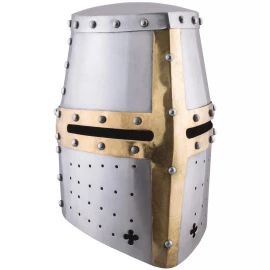
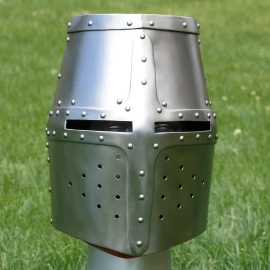
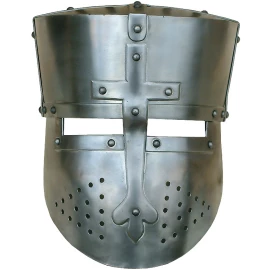
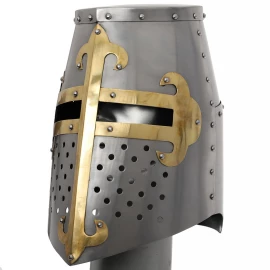
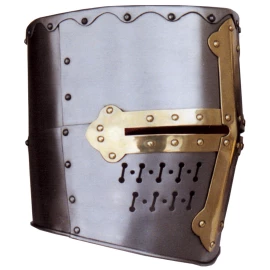
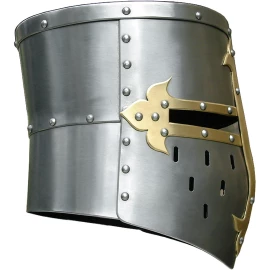
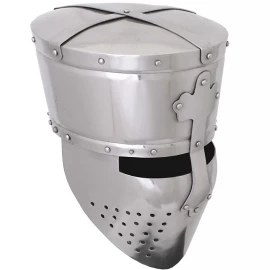
The helmet features a tall, almost cylindrical shell that widens slightly from the crown towards the bottom. Its characteristic appearance comes from the flat top, angular face plate and vertical reinforcing strip running down the centre of the front. This intersects a horizontal band at eye level, creating a prominent cross-like structure. The individual steel components are joined by visible rivets.
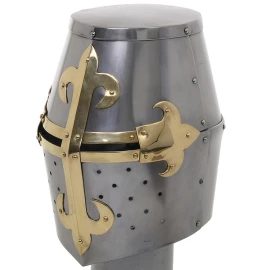
Two narrow horizontal eye slits provide forward vision. Below them are several regularly arranged rows of small circular ventilation holes. These allow some airflow into the helmet and can also help the wearer hear surrounding sounds. The openings are distributed symmetrically on either side of the central reinforcing strip.
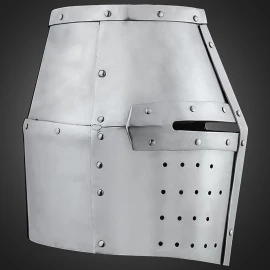
The brushed steel finish gives the helmet a subdued silvery sheen. The back is smooth and free from ventilation holes, with additional riveted reinforcing bands visible in the construction. The interior metal surfaces feature a dark finish.
A light-coloured fabric lining covers the crown and inner circumference, while a leather chin strap provides a means of securing the helmet during wear.
The History of Great Helms in the 13th and 14th Centuries
The great helm, also known as a pot helm or, in German, a Topfhelm, developed around the turn of the 12th and 13th centuries. Its evolution was associated with the growing need to protect not only the crown and face but also the sides and back of the head.
During the 13th century, great helms became characteristic equipment among European knights. They were worn during military campaigns and increasingly at knightly tournaments. Their enclosed construction offered extensive coverage of the head, although this came at the cost of restricted vision, reduced ventilation and increased weight compared with more open helmet types.
Throughout the 14th century, great helms continued to evolve in shape and proportion. On the battlefield, they were gradually supplemented and replaced by more practical helmets, particularly bascinets, while retaining an important role in tournaments and heraldic imagery.
Interestingly, some knights wore a smaller iron skullcap, such as an early cervelliere, together with a mail coif beneath their great helm. Under certain circumstances, the outer helmet could be removed while the underlying head protection remained in place.
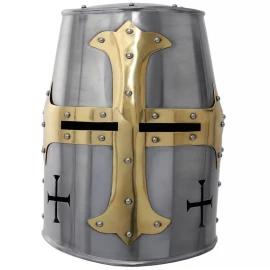
This model reflects the general appearance of High Medieval great helms, although it is not documented as an exact reproduction of any particular surviving original. The prominent cross-shaped reinforcing bands are both structural and decorative features; they do not, by themselves, establish an association with a specific Crusading order.
How to Fit and Wear the Great Helm
Before wearing the helmet for the first time, check that the size is suitable and that there is sufficient room for an appropriate padded underlayer.
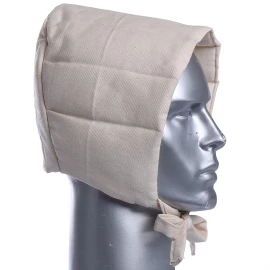
- Put on a suitable padded arming cap first. For historical impressions, you may also wear a mail coif, depending on the period you are portraying.
- Carefully lower the helmet onto your head, ensuring that the eye slits are correctly aligned with your eyes.
- Adjust the fabric lining and check that the helmet does not create excessive pressure at any point.
- Fasten the leather chin strap firmly enough to keep the helmet stable without restricting breathing or jaw movement.
- Test your head movement, field of vision and breathing in a safe environment before moving around.
Great helms naturally restrict peripheral vision and can make it more difficult to judge your surroundings. Move cautiously while wearing one, especially in crowds, on stairs and over uneven ground.
Technical Specifications
| Feature | Specification |
|---|---|
| Product type | Crusader great helm |
| Historical period | 13th–14th centuries |
| Material | Steel plate |
| Steel thickness | 1.6 mm (0.063 inches) |
| Surface finish | Brushed steel |
| Overall height | Approx. 30 cm (11.81 inches) |
| Size | One universal size |
| Suitable head circumference | Approx. 63–64 cm (24.8–25.2 inches) |
| Interior lining | Fabric |
| Fastening | Leather chin strap |
| Vision | Two narrow horizontal eye slits |
| Ventilation | Circular holes in the face plate |
| Construction | Riveted steel plates with reinforcing bands |
| Manufacturer | Marshal Historical |
All measurements are approximate. When assessing the fit, allow for the thickness of any padded cap or other equipment you intend to wear beneath the helmet.
Care and Maintenance
After each use, dry the helmet thoroughly and wipe the steel components with a soft cloth. Sweat and moisture can cause corrosion, so pay particular attention to riveted joints, edges and difficult-to-reach areas.
- Steel components: Regularly protect them with a thin layer of suitable anti-corrosion oil.
- Fabric lining: Allow it to air and dry after wearing. Remove surface dirt carefully with a slightly damp cloth.
- Leather chin strap: Keep it clean and apply a suitable leather conditioner when necessary.
- Storage: Store the helmet in a dry, ventilated environment. Avoid leaving it in a damp carrying bag for extended periods.
Do not use aggressive chemical cleaners or coarse abrasives that could damage the brushed finish. Damaged rivets, loose reinforcing strips or sharp edges should be professionally repaired before further use.
Safety and Limitations
This helmet is not explicitly rated as protective armour for full-contact combat disciplines such as buhurt, Battle of the Nations or similar activities. A steel thickness of 1.6 mm (0.063 inches) alone does not guarantee adequate protection against powerful impacts.
We recommend it primarily for historical costumes, reenactment, LARP, decorative displays and staged performances, provided its use complies with the relevant organiser's safety rules. For contact sword fighting, use only protective equipment approved for the specific discipline.
The narrow eye slits significantly restrict the field of vision, while the enclosed construction may impair ventilation. Never wear the helmet when driving, cycling or performing activities requiring unrestricted visibility. Remove it immediately if you experience dizziness, overheating or difficulty breathing.
Recommended Accessories
To complement this great helm, we recommend a padded arming cap, mail coif and gambeson inspired by the 13th and 14th centuries. For a complete Crusader or European knight's impression, consider adding a mail hauberk, padded arming garment, heraldic surcoat, medieval belt and suitable shield. Choose each accessory according to the specific historical period you wish to portray and your intended use.
We are here for you!