Čeština
 Deutsch


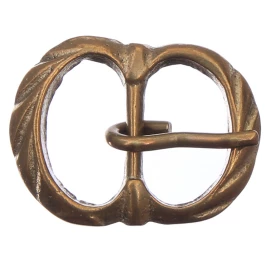
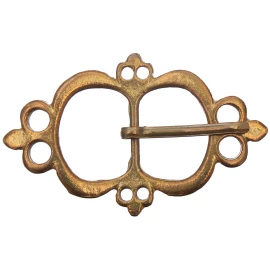
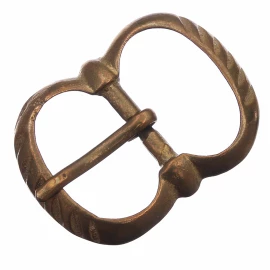
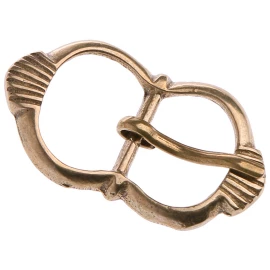
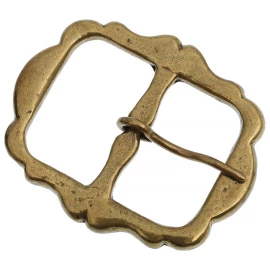
Double-loop belt buckle, 1550–1650


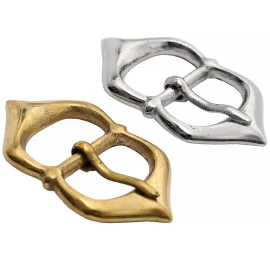
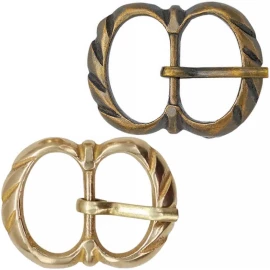
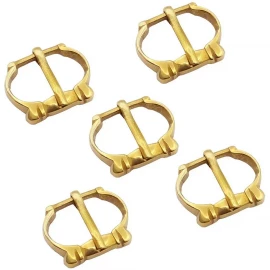
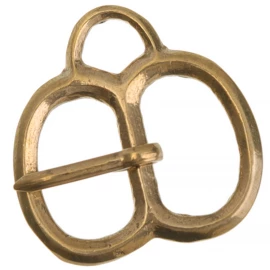
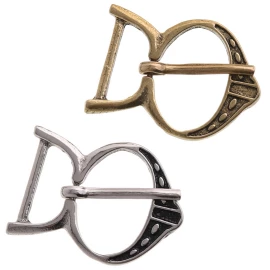
Make your own leather belt with a detail that complements Renaissance and early Baroque clothing. This double-loop brass buckle combines a golden tone with a distinctive shaped frame and a simple pin fastening. The hand-cast piece from Marshal Historical can be used for a new belt or to replace a buckle on an existing strap. Two openings are separated by a central bar, around which the leather is secured. It makes an attractive finishing touch to a narrow belt for historical events and reenactment. Before fitting it, check that your strap’s width and thickness suit the openings. Further product information ...

 Delivery options
Double-loop brass belt buckle, 1550–1650
Appearance and historical period
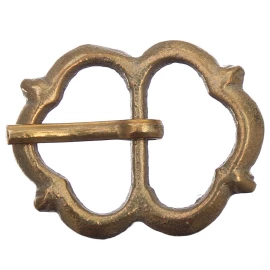
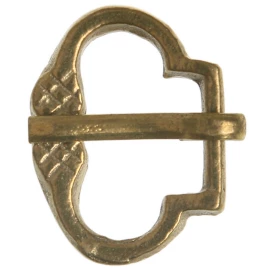
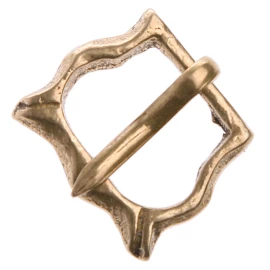
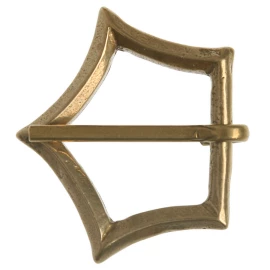
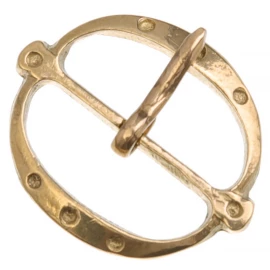
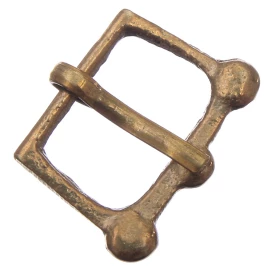
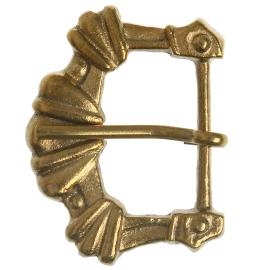
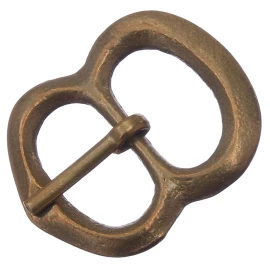
The frame consists of two rounded loops with prominent, pointed outer edges. Small projections sit at the ends of the central bar. A moving pin wraps around the bar, with its tip resting on the outer edge of the frame. Smoother surfaces contrast with the lightly textured finish of the casting.
The supplied date range of 1550–1650 covers the second half of the 16th century and the first half of the 17th century. The buckle therefore suits clothing in Renaissance and early Baroque styles. Buckles using this construction provide adjustable strap fastening. “Double-loop” describes the two openings in the frame, rather than two pins: the central bar carries the pin and also provides the attachment point for the fixed end of the belt.
Technical specifications
| Feature | Specification |
|---|---|
| Overall dimensions | 44 × 26 mm / 1.73 × 1.02 in |
| Maximum internal width | Approx. 16.5 mm / 0.65 in |
| Material | Brass |
| Manufacture | Hand-cast |
| Construction | Two loops, a central bar and one moving pin |
| Historical period | 1550–1650 |
| Manufacturer | Marshal Historical |
Fitting and using the buckle
Pass the fixed end of the leather strap through one loop and fold it around the central bar. Make a hole or short slot in the fold to allow the pin to move freely. Secure the leather with suitable stitching or rivets. Feed the free end through the second loop and insert the pin into your chosen strap hole. We recommend checking the fit before permanently securing the leather.
Care and recommended accessories
Wipe the buckle with a soft cloth and dry it after exposure to moisture. Use brass cleaner carefully, protecting the surrounding leather. Avoid coarse abrasives, forcing the pin out of shape and excessive strain. Check stitching, rivets and strap holes regularly, and take care not to pinch your fingers when fastening the buckle.
We recommend a narrow leather strap, a keeper and a suitable strap end. For a historical ensemble, choose accessories based on examples from the second half of the 16th or the first half of the 17th century. A leather hole punch, saddler’s thread and suitable rivets will help with assembly.
We are here for you!