
 Čeština
 Deutsch


Low Gothic Leather Shoes Poulaines
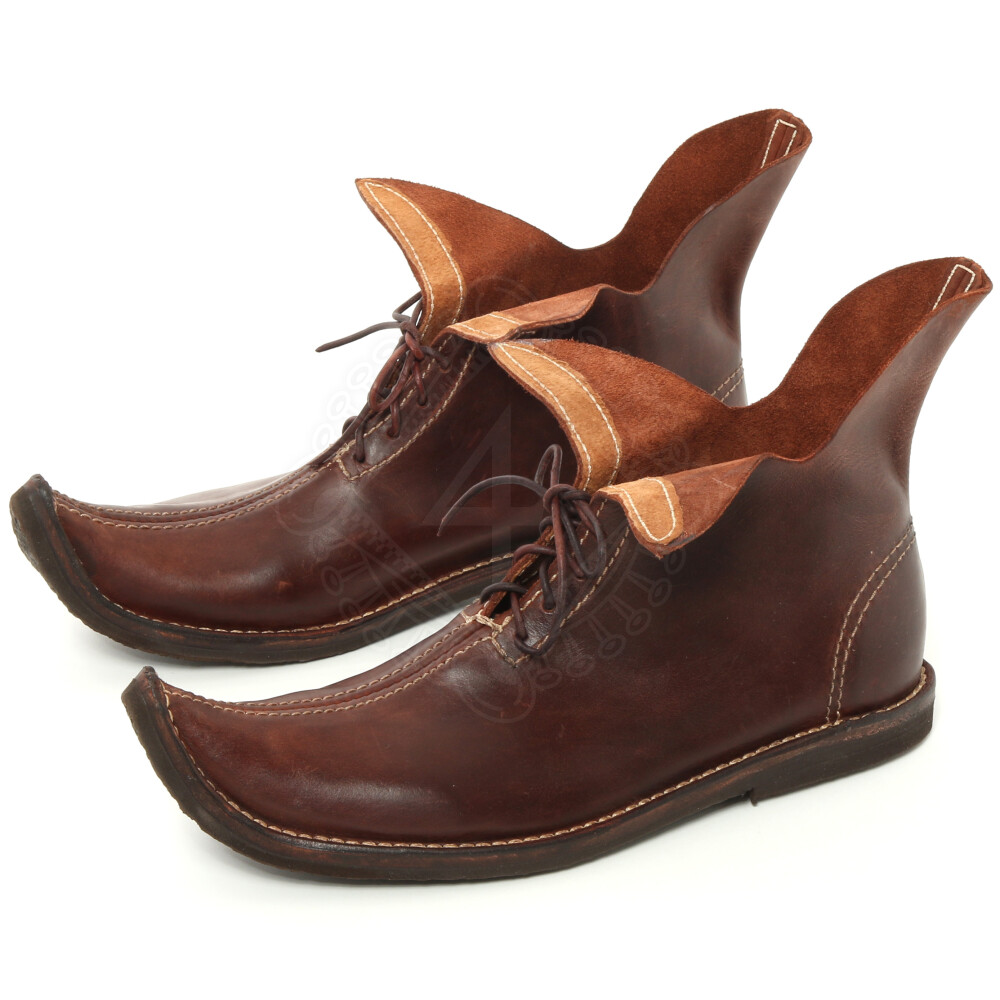
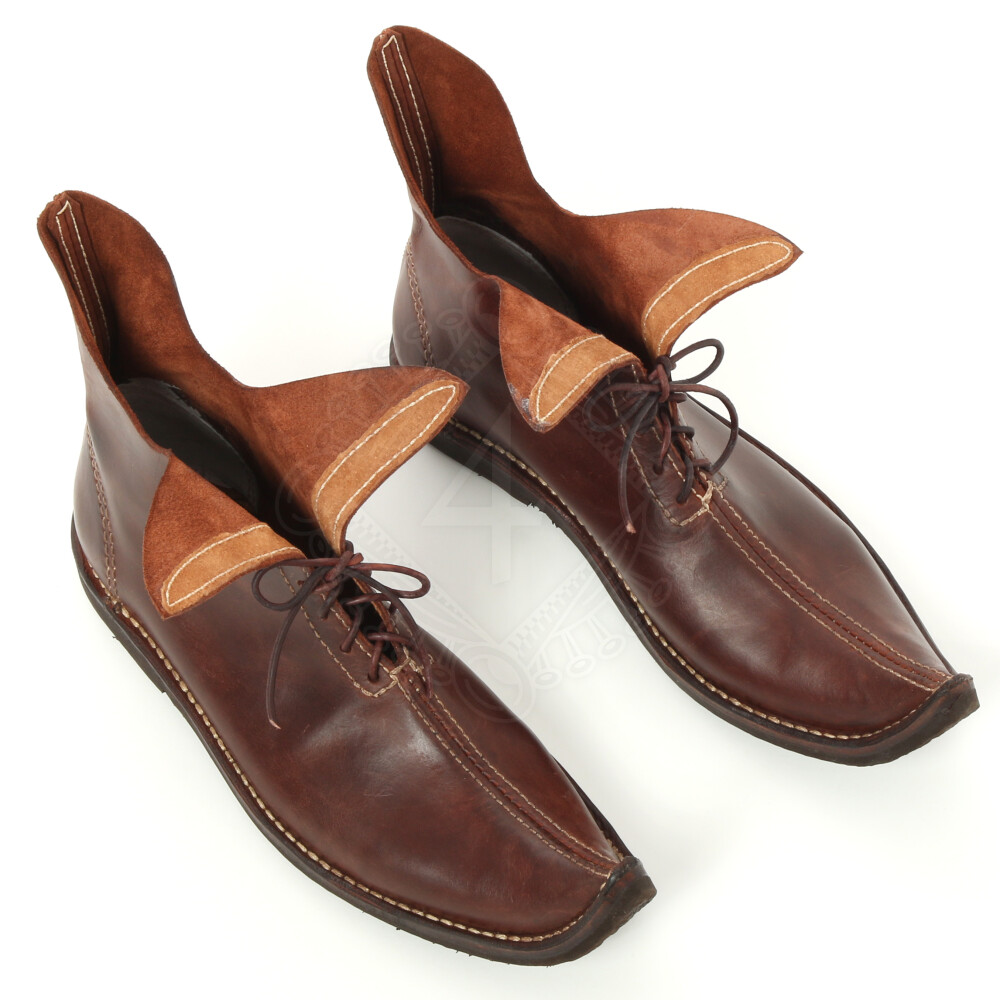
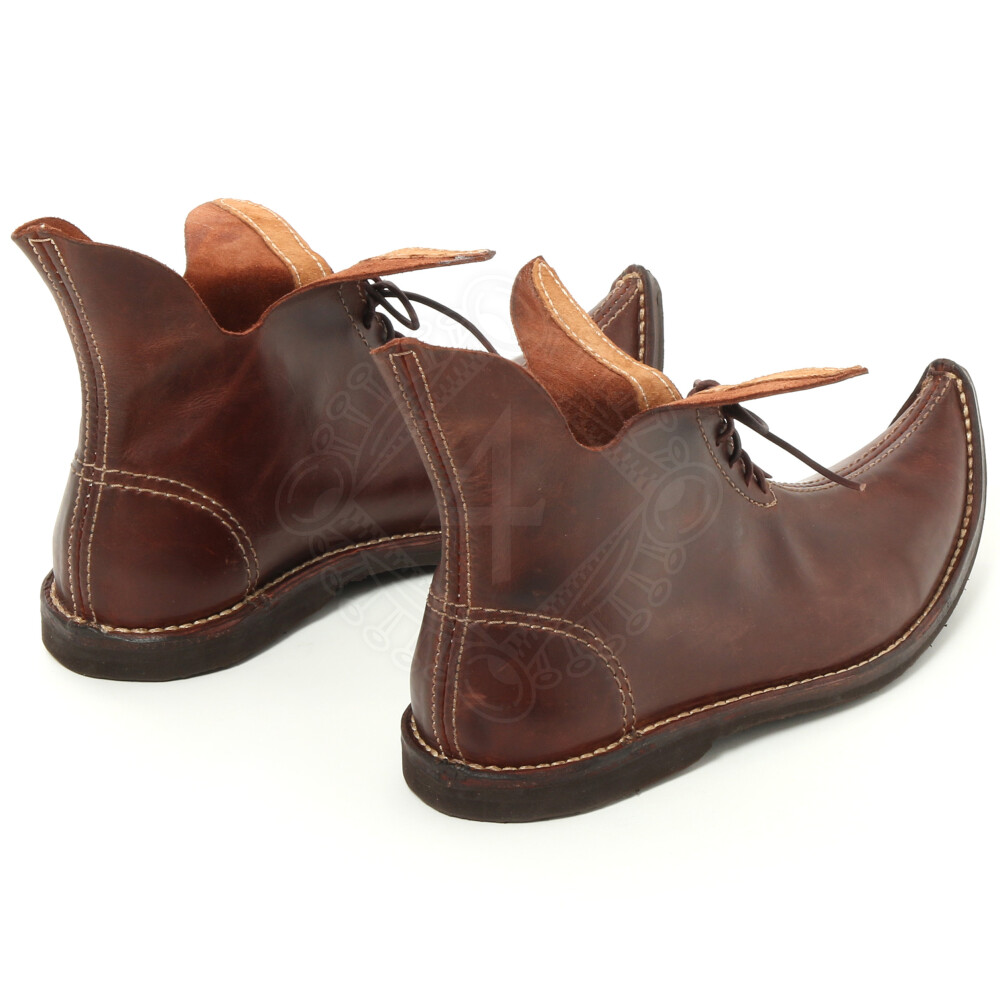
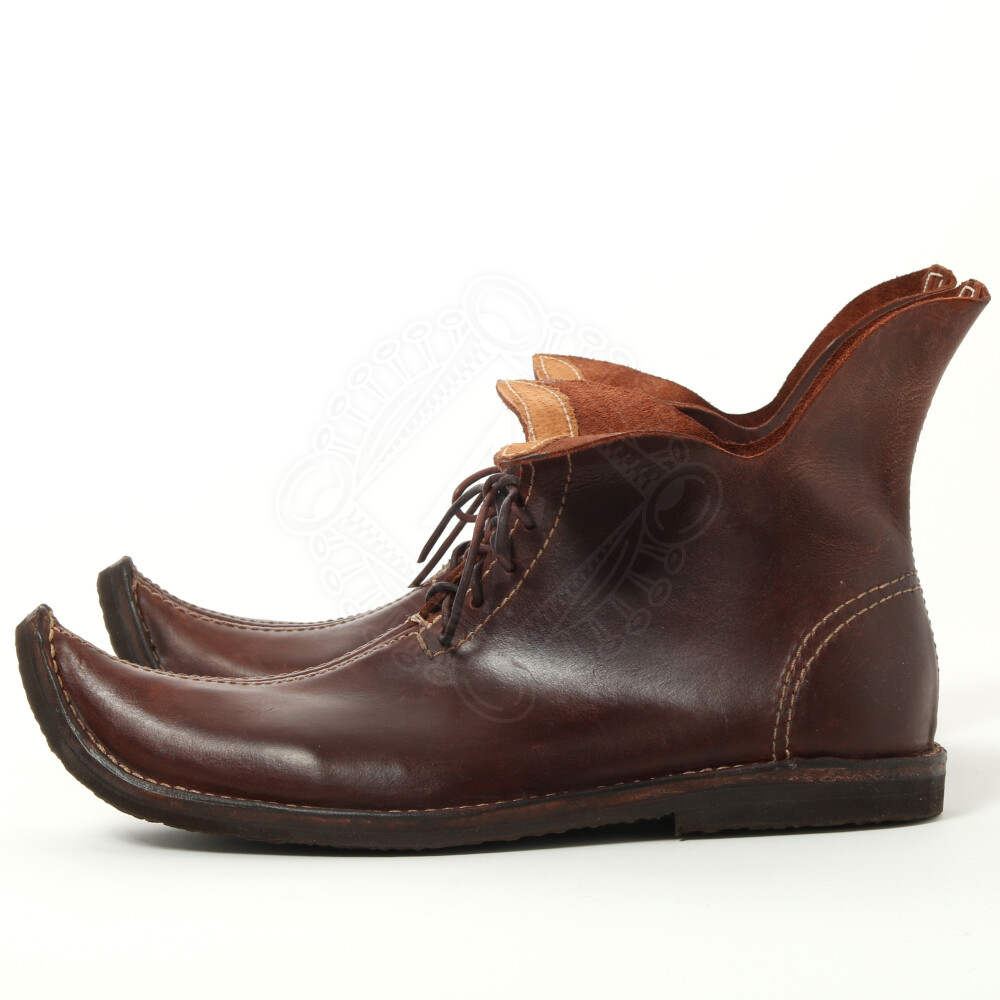
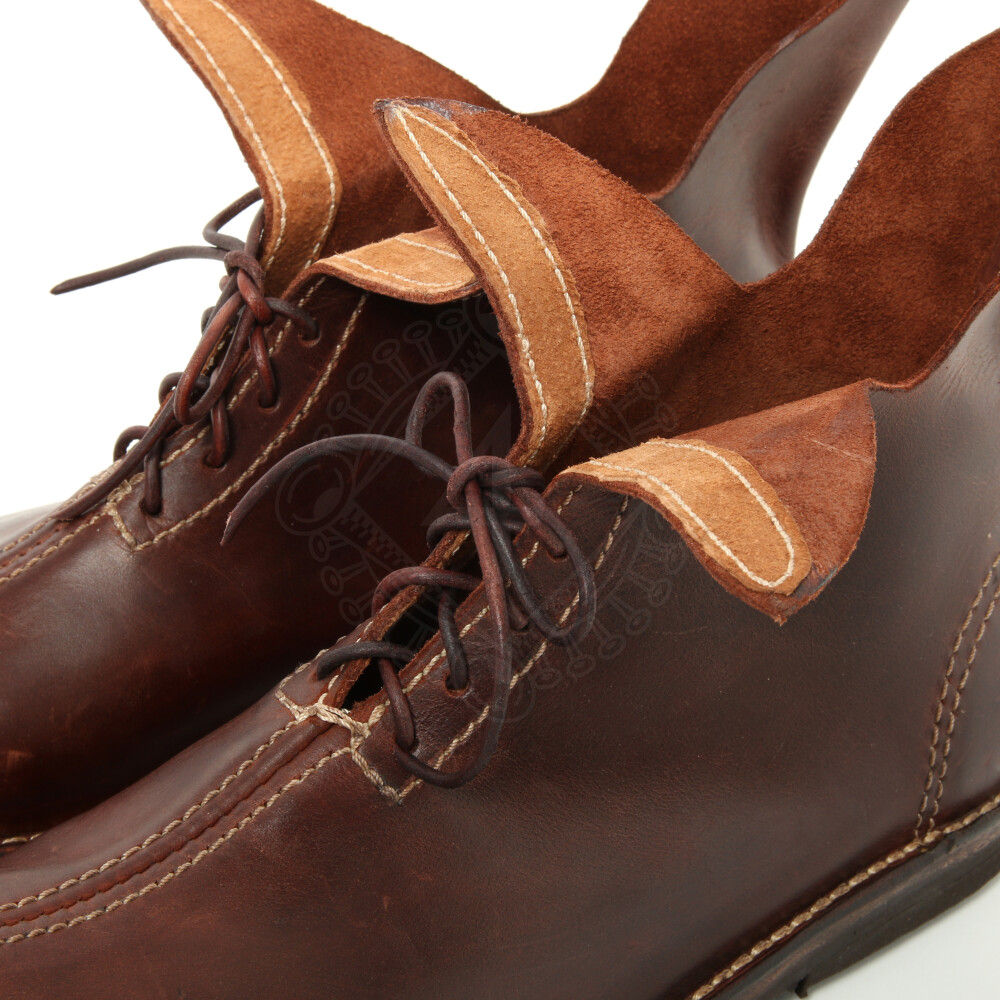
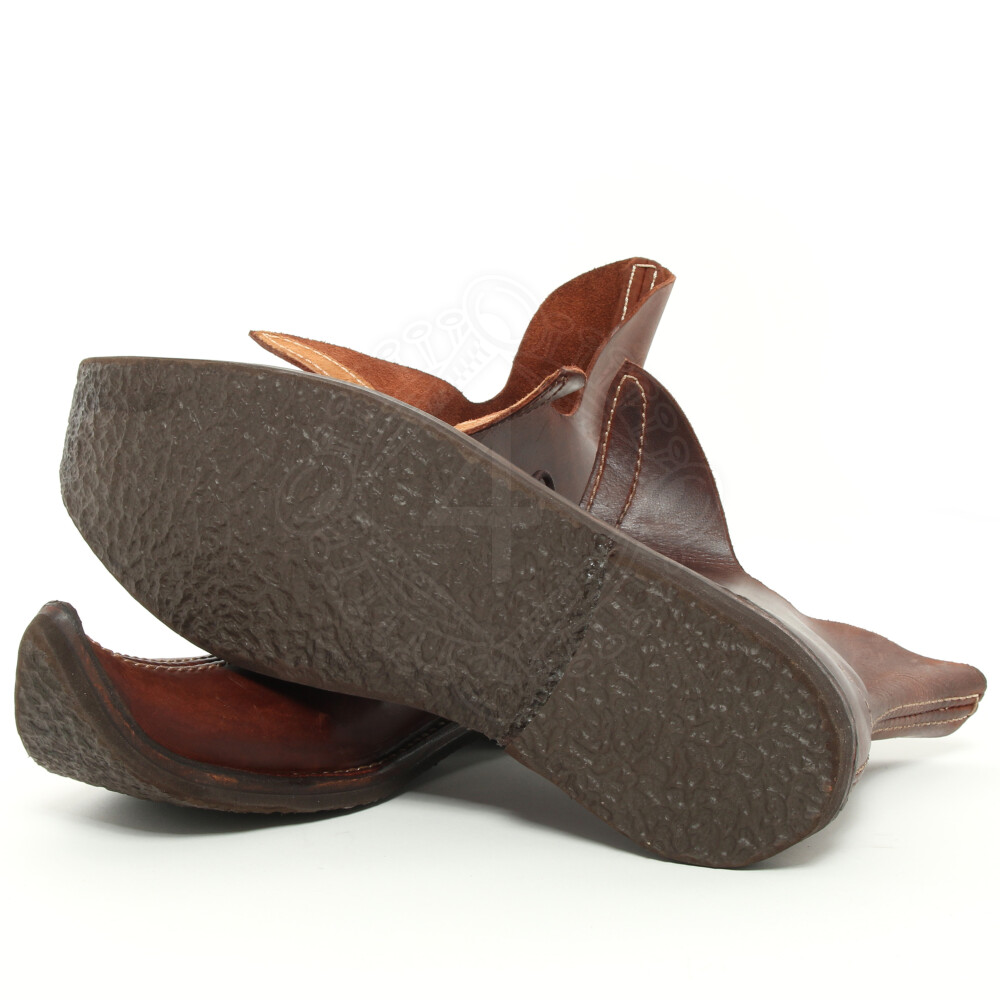
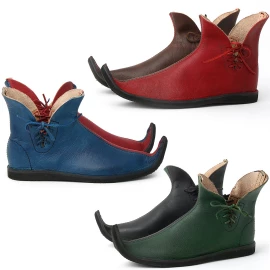
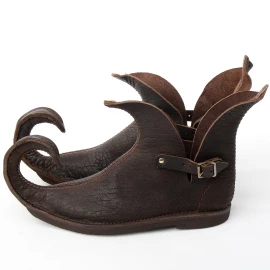
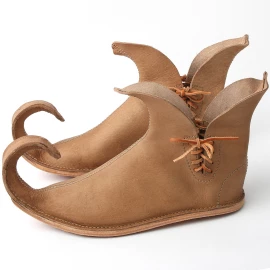
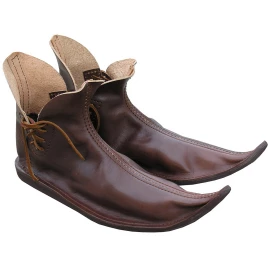
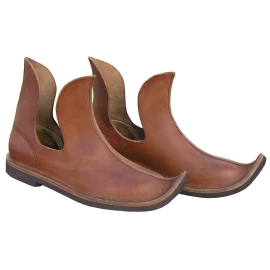
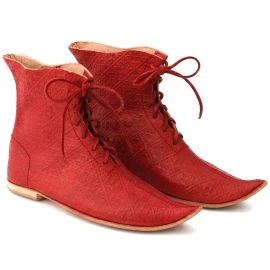
Are you looking for a stylish and historically accurate accessory for your Gothic costume? These low leather shoes, known as poulaines or crakows, will certainly appeal to you! With their characteristically elongated and elegantly upturned toe, which was the unmistakable hallmark of 14th and 15th-century fashion, you will turn heads at every historical festival, banquet, or theatrical performance. The shoes are crafted from durable cowhide and feature practical lacing on the instep to ensure a firm and comfortable fit around the foot. The modern rubber sole also provides you with stability and confidence on any surface. Step into the Middle Ages with elegance and comfort! Further product information ...

Low Gothic Leather Shoes Poulaines with Elongated Pointed Toes
Shoes That Provoked Society
Pointed shoes, for which the term poulaines (derived from Poland, where this fashion trend supposedly originated) became established in Europe, were a massive hit in the High and Late Middle Ages. The longer the toe of the shoe, the higher the social status and wealth the wearer demonstrated. The long toes clearly showed that their owner did not have to perform manual labour. The Church frequently criticised this fashion as sinful vanity and the "Devil's claw," but it enjoyed immense popularity among the nobility and wealthy townsfolk. The model offered here has a subtly upturned toe, which facilitates walking while maintaining that iconic Gothic look.
Materials and Parameters
| Upper Material | High-quality cowhide |
| Sole Material | Sturdy rubber with texture |
| Fastening | Lacing on the instep with a leather cord |
| Shoe Height | approx. 18 cm / 7.1 in |
| Historical Period | High and Late Middle Ages (14th - 15th Century) |
| Suitable for | Re-enactment, LARP, theatre, nobility, townsfolk |
How to Care for Gothic Poulaines
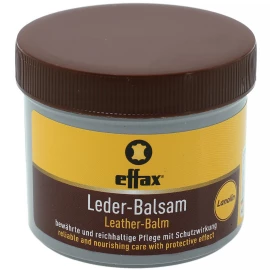
Leather is a natural material that needs regular care so your shoes serve you for a long time and look great. Straight from production, they are already treated with a beeswax balm. Regularly rub them with leather oil or wax balm to keep the leather supple and prevent it from cracking. After applying the balm, the leather may darken slightly, which is a natural process. Allow wet or sweaty shoes to dry slowly at room temperature. Under no circumstances should you dry them near a fire, on a hot radiator, or in direct sunlight. Any scuffs from historical battles or dances can be covered with standard shoe polish.
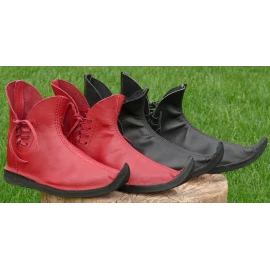
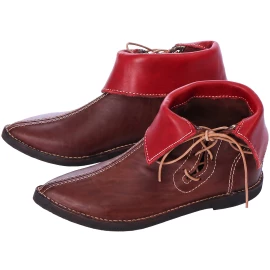
If you choose a colour other than black, dark brown, or light (natural), please note that the shade is achieved with a covering paint. This may crack over time in areas of bending. For occasional wear, this is fine, but for intensive use, we recommend choosing the basic leather colours.
Important Information on Sizing and Wearing
Sizing Note: The toe of these shoes is upturned by an arc of approx. 9 cm (3.5 in). This creates an empty space in front of your toes. Do not be misled into feeling the shoes are too big for you! If you were to intentionally order a smaller size, you would have to walk with unnaturally scrunched and raised toes, which would lead not only to pain but also to the rapid destruction of the footwear.
Thanks to the rubber sole, the shoes will be safer on slippery modern surfaces or wet grass than historical smooth leather. Even so, given the long toe, avoid running and fencing in them. If you wear orthotic insoles and choose "custom-made" shoes, you must physically post the insoles to us so we can fit them precisely into the shoes.
We highly recommend wearing medieval hose and woollen socks from our range with these elegant shoes to ensure maximum comfort.
We are here for you!






.3773623034.1696456237.png.webp)

.3773623034.1696456268.png.webp)
.3773623034.1696456247.png.webp)