
Late Gothic Men's Houppelande
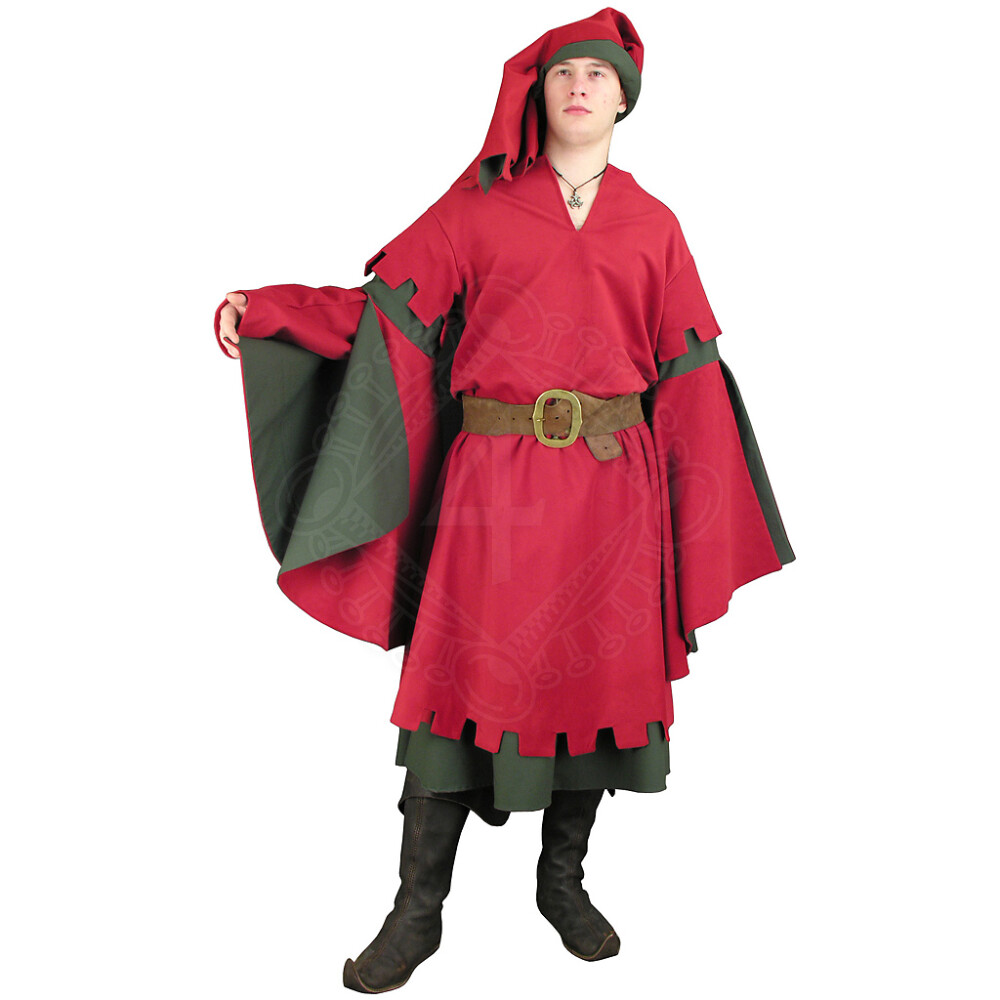
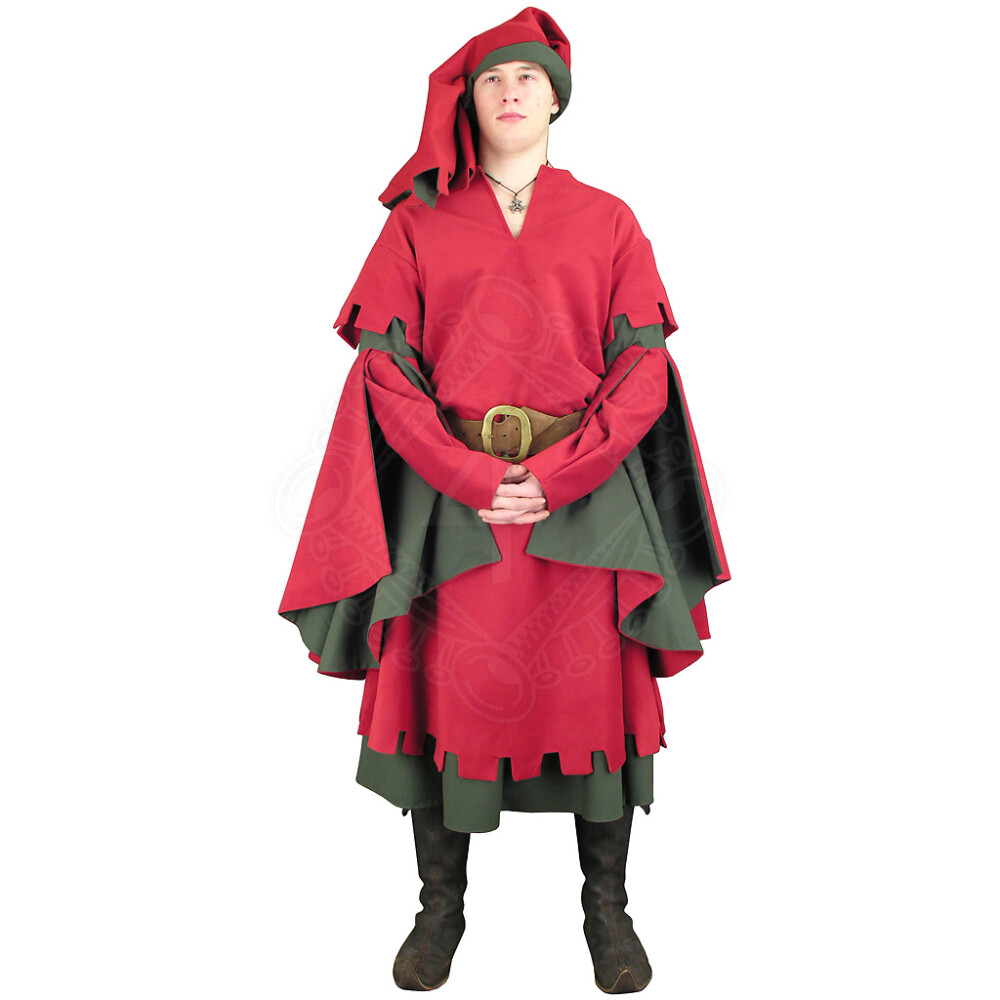
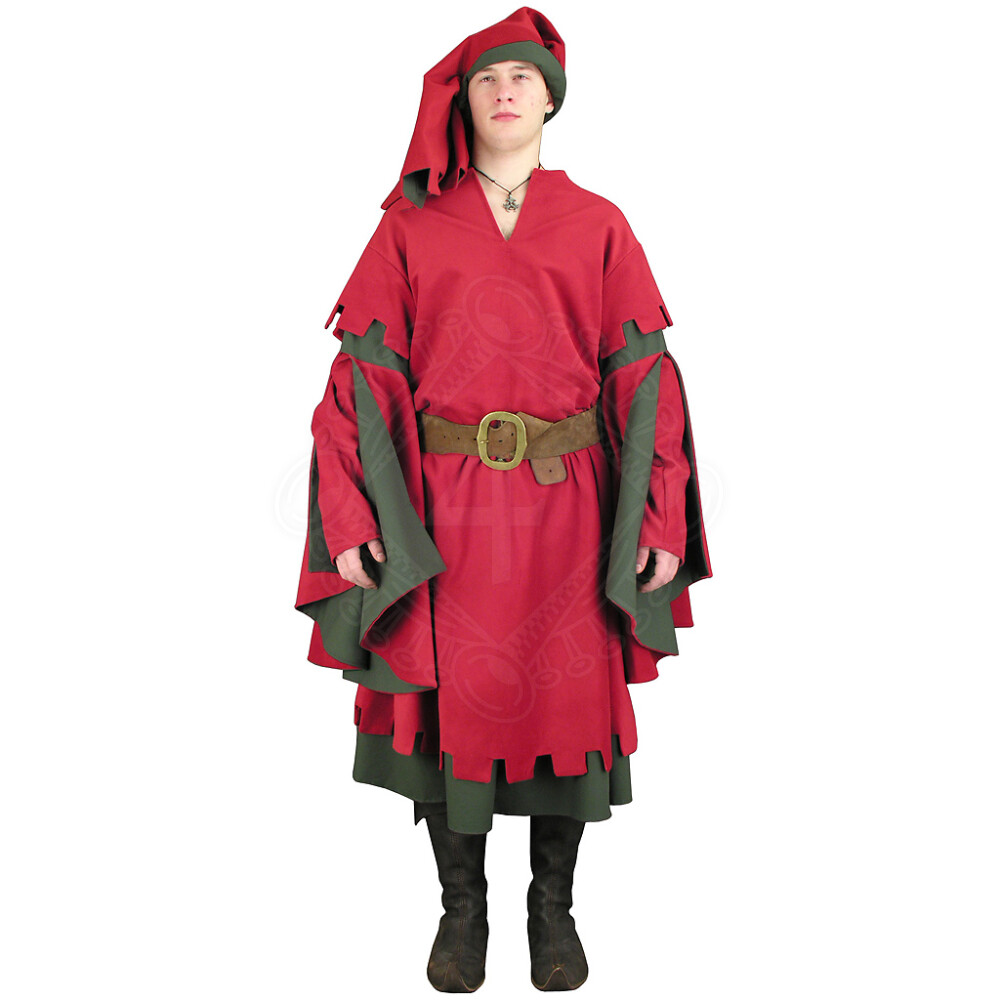
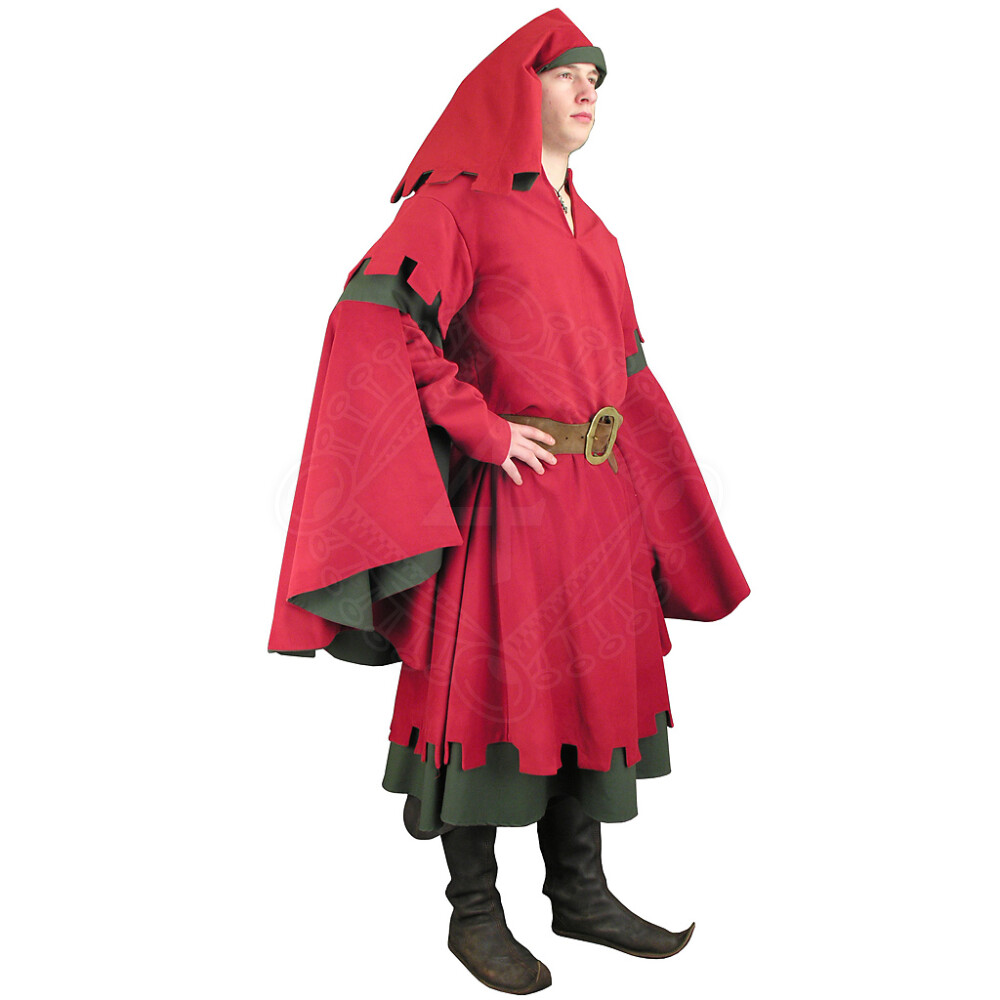
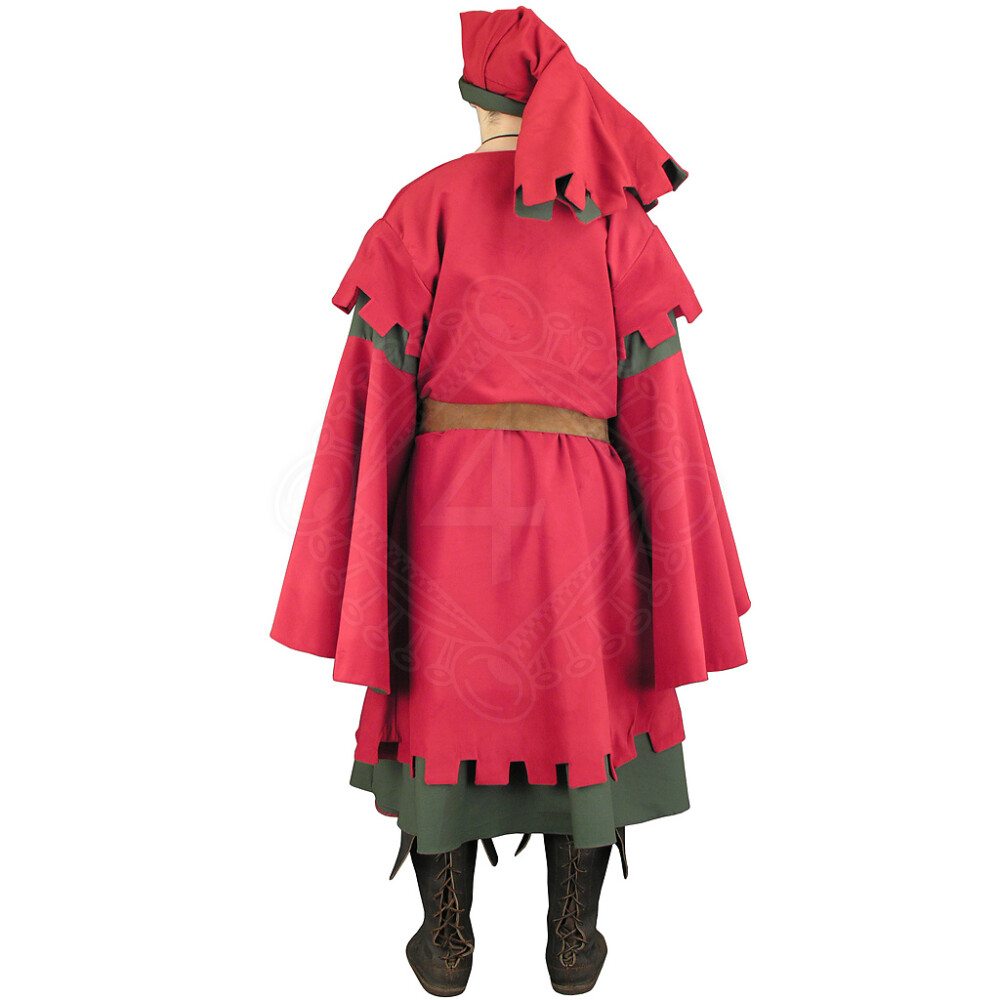
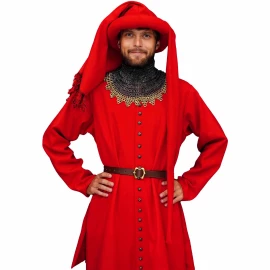
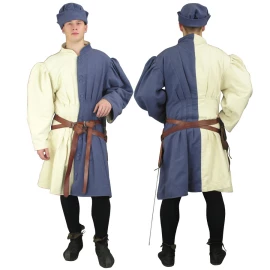
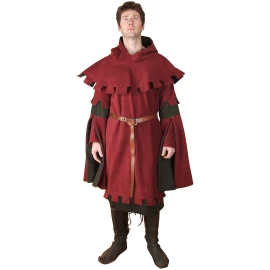
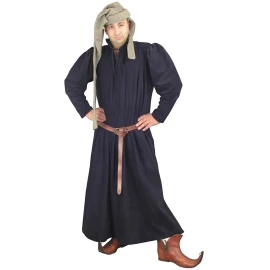
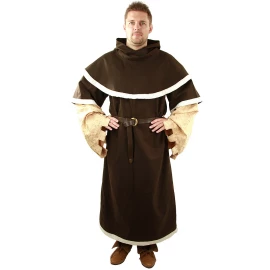
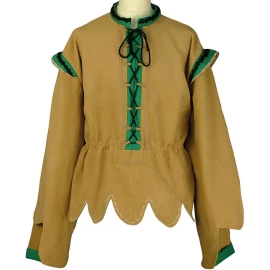
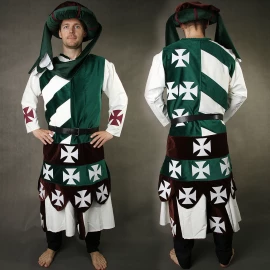
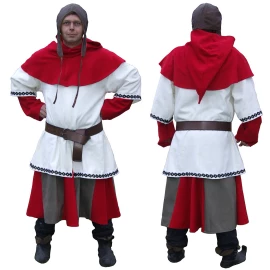
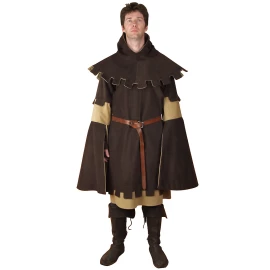
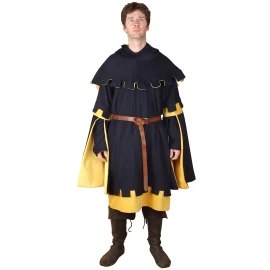
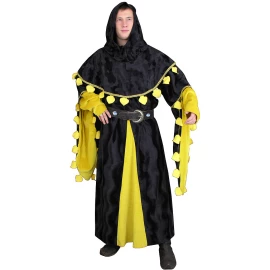
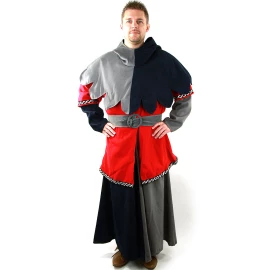
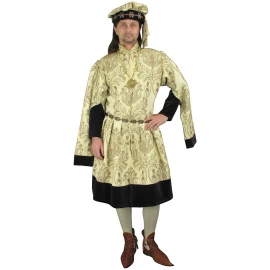
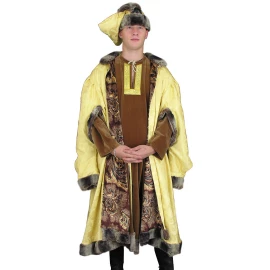
Are you preparing for a courtly feast, a medieval banquet, or a prestigious LARP event? This Late Gothic houppelande will instantly transform you into a noble lord, an influential merchant, or a wealthy patrician from the 14th or 15th century. Attention is immediately drawn to the long hanging sleeves, known as tippets, and the precisely cut dagging (crenellated edges) on the hems. The garment also includes a stylish headpiece – a chaperon, which will bring your historical look to absolute perfection. The ensemble is sewn from high-quality cotton duvetyne, whose brushed surface evokes luxurious velvet or fine wool broadcloth, ensuring maximum comfort and a highly representative appearance. Further product information ...
Late Gothic Men's Houppelande with Dagged Sleeves and Chaperon
Historical Context and Fashion Evolution
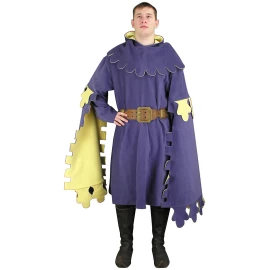
This garment is loosely inspired by the Late Gothic fashion of Western and Central Europe (14th–15th century). An over-garment of this type, often referred to as a houppelande or a tappert, was a popular outer garment across society at the time. A prominent fashion element of this era was dagging (the decorative cutting of fabric edges into the shape of leaves or battlements), which you will find on this costume on the sleeve hems, the bottom hem, and on the chaperon itself. The long hanging sleeves served an aesthetic function and were an indicator of wealth, as they demonstrated that the wearer had an abundance of expensive fabric and did not have to engage in manual labour. The chaperon represented an evolution of the common medieval hood, which began to be worn elaborately draped on top of the head.
Recommended Accessories and Notices
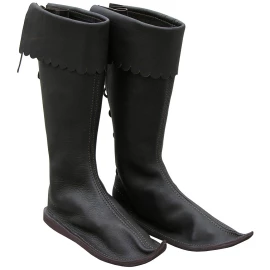
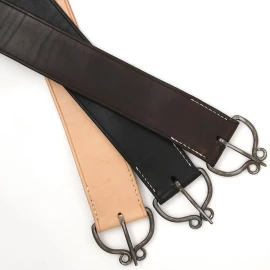
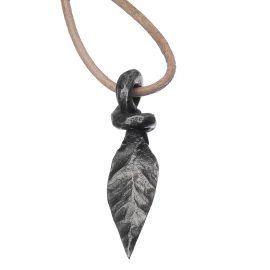
To achieve an absolutely perfect historical silhouette, we recommend belting the coat at the waist. Please note that the leather belt with a brass buckle, the historical leather shoes, and the jewellery shown in the photographs are not included in the delivery. A long leather ring belt perfectly complements this attire, and for footwear, we recommend Gothic pointed shoes (known as poulaines or crakows), which excellently accentuate 15th-century fashion.
Care and Maintenance of Duvetyne
The garment is made of duvetyne (100% cotton), which is a densely woven fabric with a fine nap. To ensure your costume lasts a long time and retains its beautiful appearance, it requires gentle care. We strongly recommend professional dry cleaning only, to prevent unwanted shrinkage of the fabric or the bleeding of contrasting colours. Never wash the costume in a washing machine and do not tumble dry it. Any dust and minor dirt on the surface can be easily removed with a soft clothes brush, brushing in the direction of the nap.
Sizes, Colours, and Custom Tailoring
This Late Gothic houppelande is available as standard in ready-to-wear sizes according to our size charts. However, we will gladly tailor it exactly to your measurements at no extra charge, ensuring a perfect fit. After completing your order, we will simply ask you to carefully fill out our measurement chart. Furthermore, upon your request, the garment can be sewn in other colour combinations (for example, with a different colour of contrasting lining) according to our fabric swatch books. Simply note your desired colour in the comment field of your order (always include the swatch book number, the letter of the colour, and the name, e.g. 03-A-yellow). If you choose a fabric with a different composition, the price may be adjusted, which we will, of course, consult with you before processing the order.
Technical Parameters of the Costume
| Historical Era | Late Gothic (14th – 15th Century) |
| Purpose | Nobility, patricians, LARP, historical festivals, banquets |
| Included in Delivery | Belted houppelande with long hanging sleeves, headpiece (chaperon) |
| Base Material | Duvetyne (100% Cotton) |
| Specific Cut Features | Dagged (crenellated) edges, contrast lining, tippet sleeves |
| Notice | Belt, shoes, and jewellery are not included in the set |
We are here for you!