Čeština
 Deutsch


Memmingen Gothic Leg Armour for Knights with Floral Side Plates

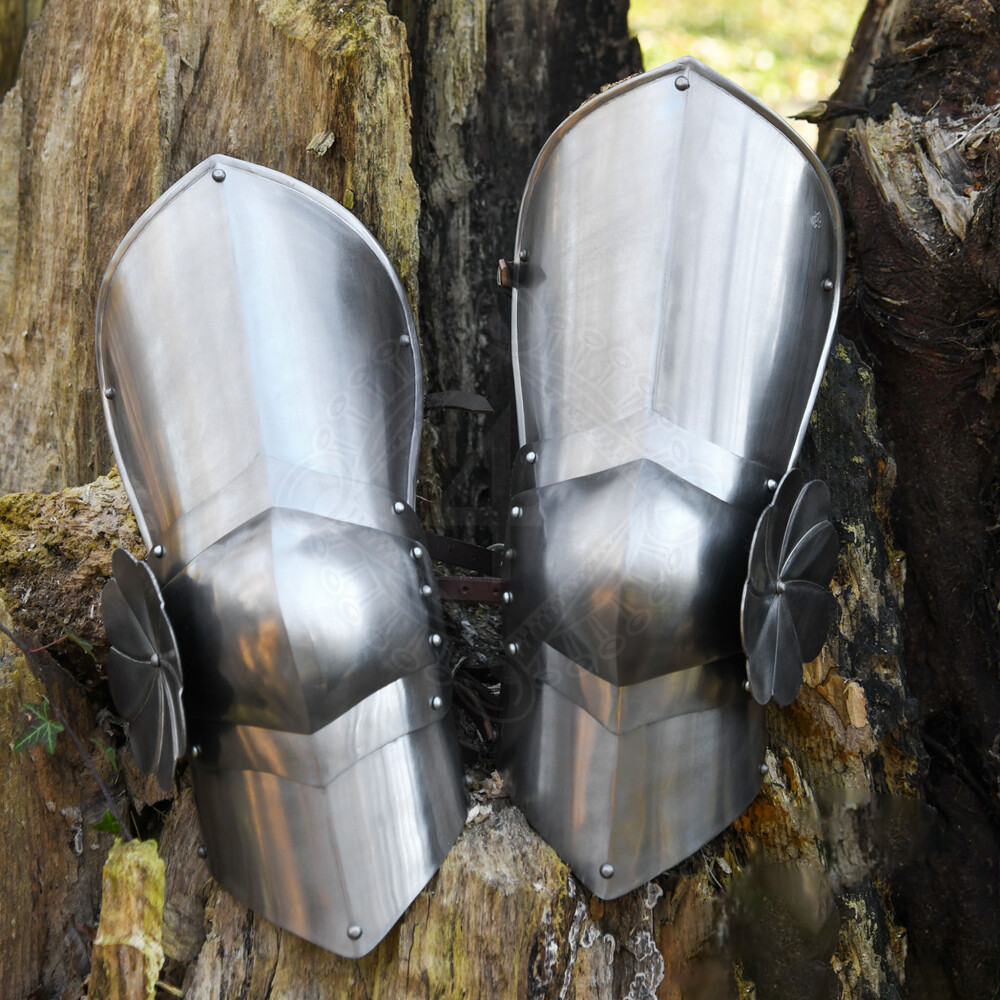
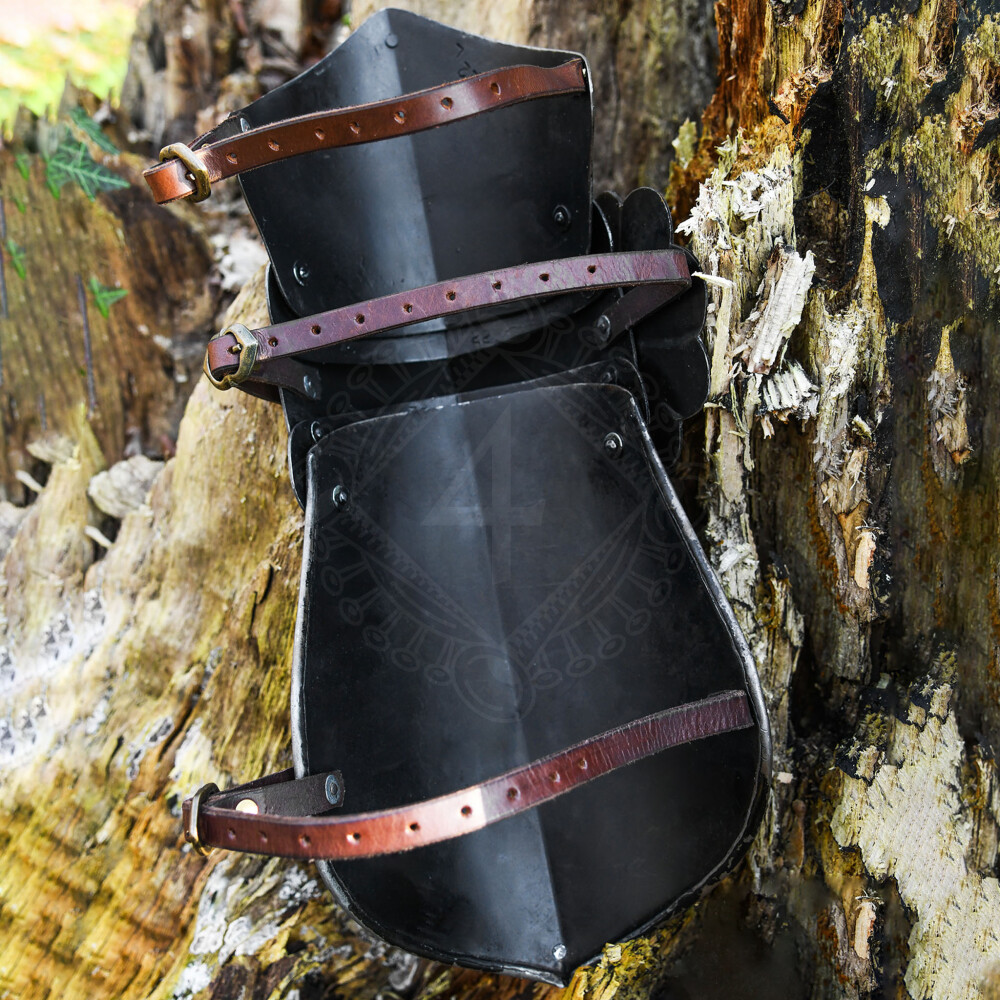
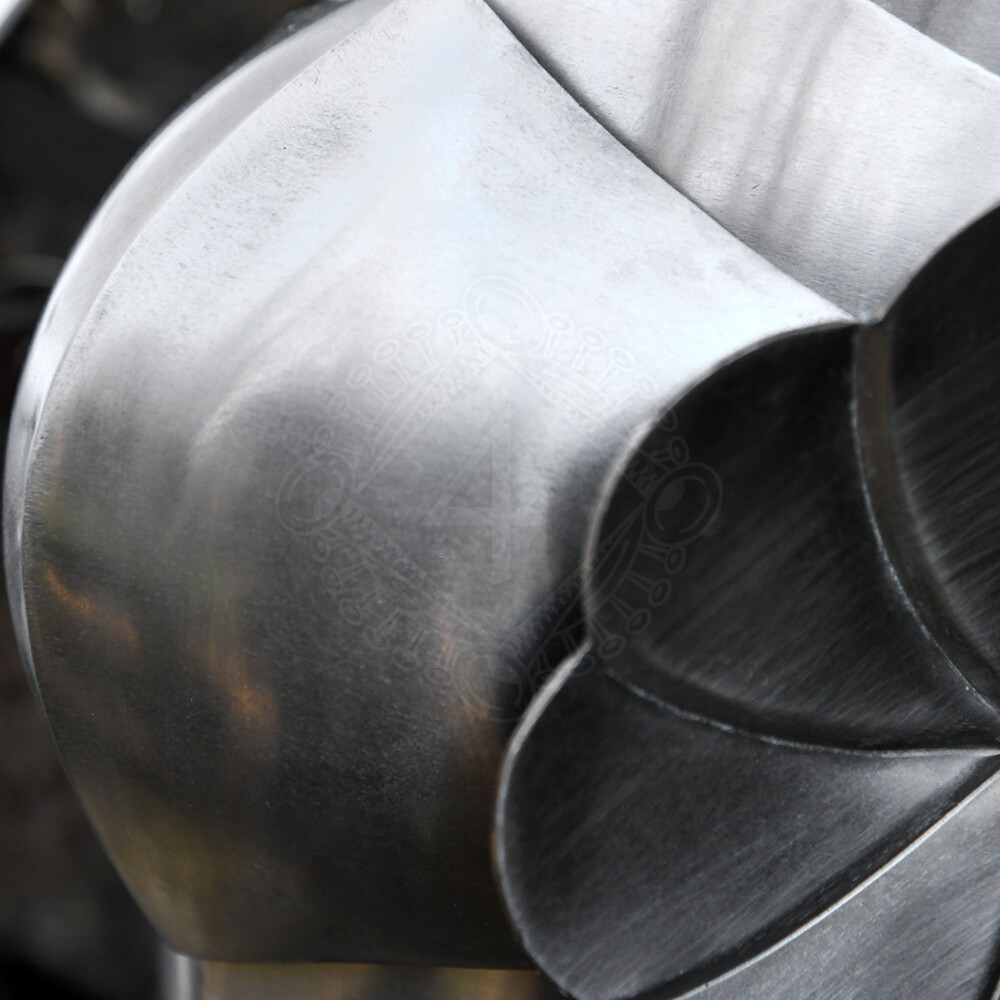
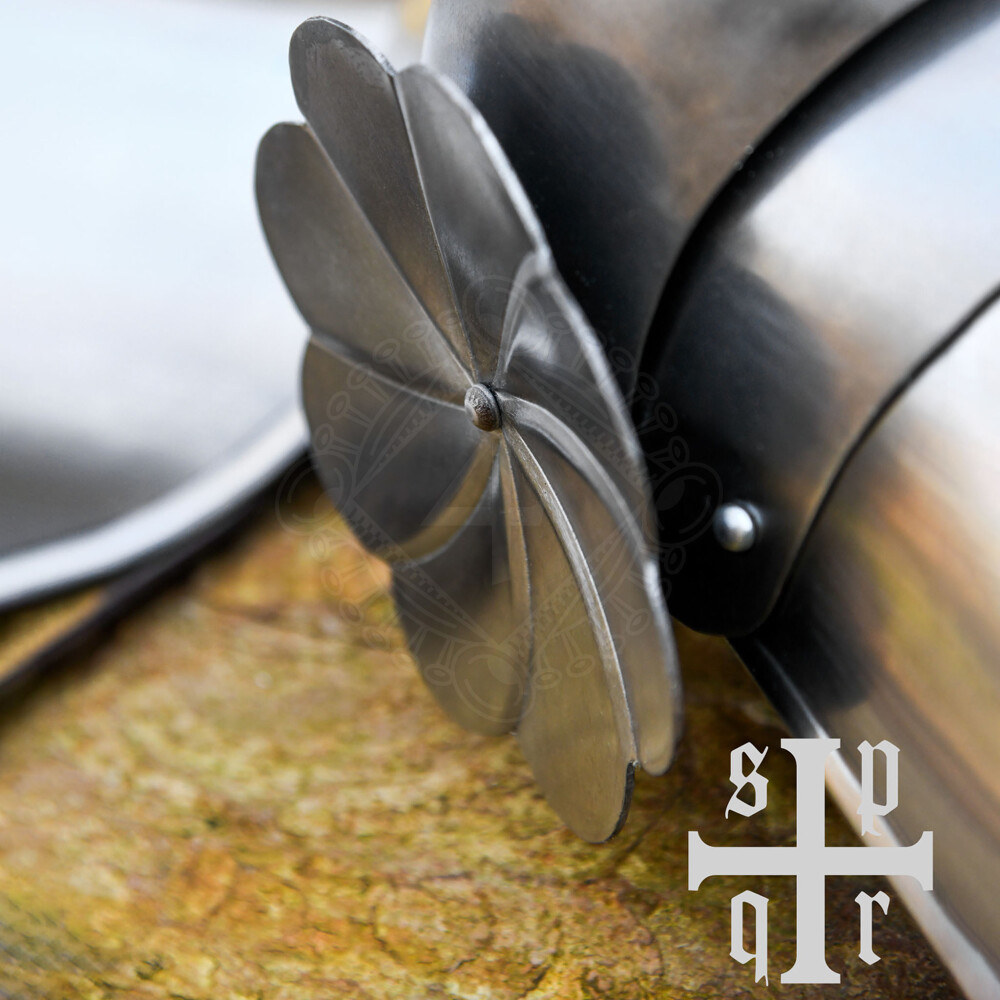
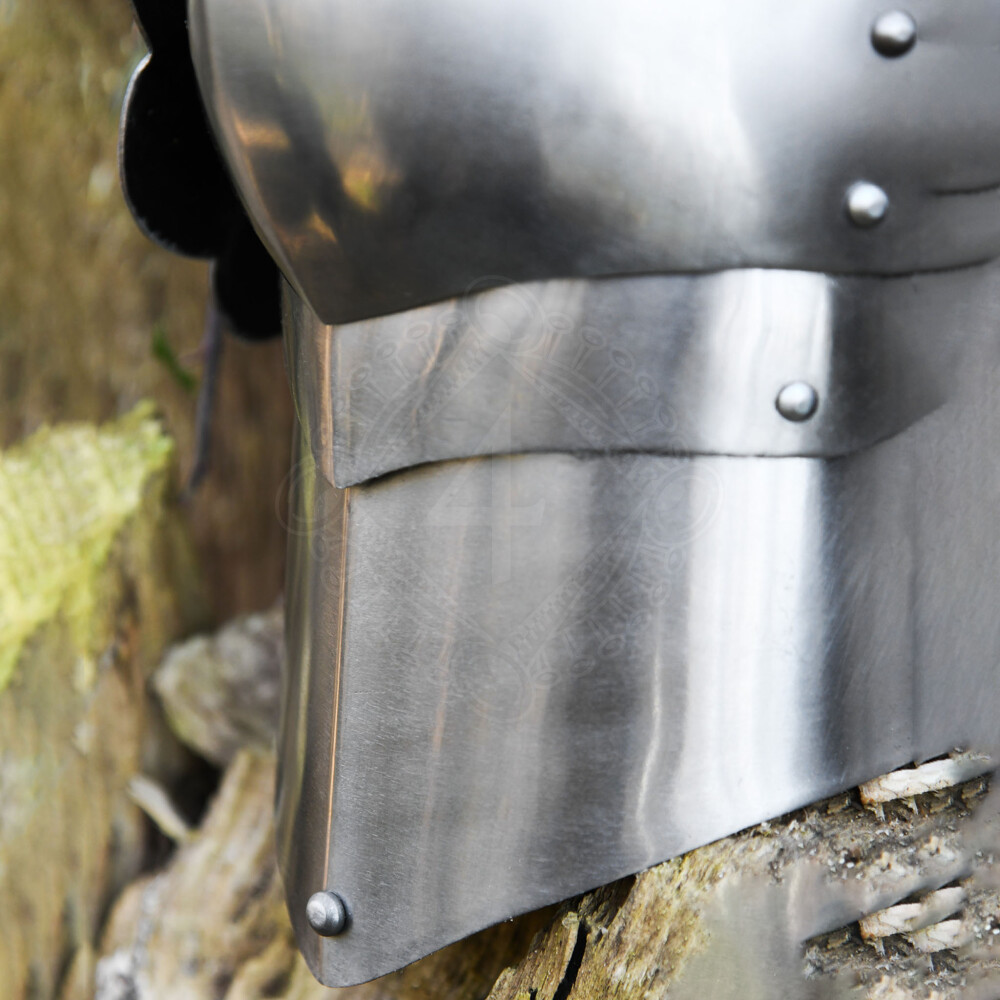

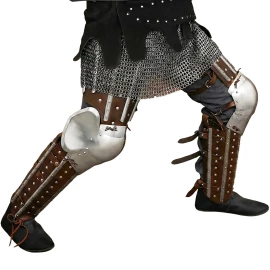
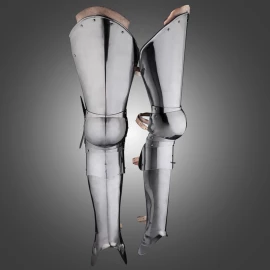
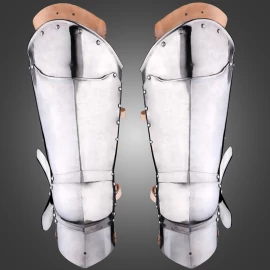
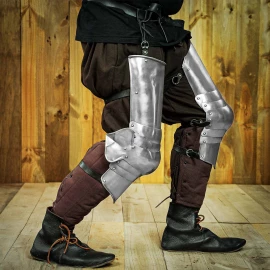
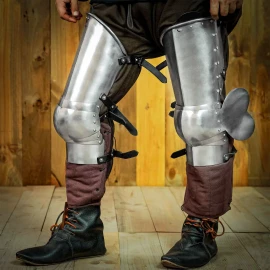
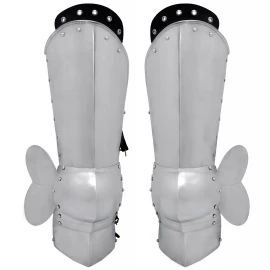
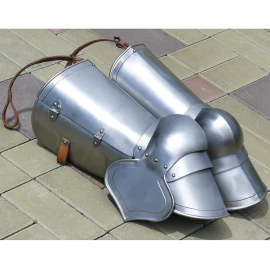
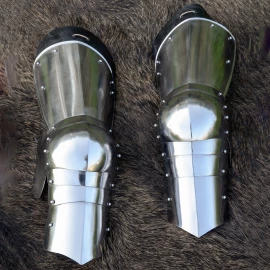
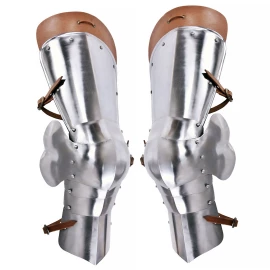
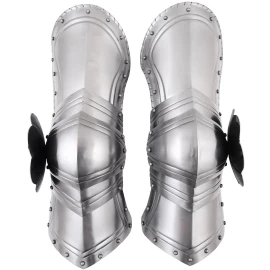
Complete your knightly kit with Memmingen Gothic leg armour, combining smooth steel plates with distinctive flower-shaped side discs. Long cuisses, raised poleyns and short plates below the knees create a coherent late medieval silhouette. Overlapping lames allow the knees to bend, while brown leather straps with antiqued brass buckles help you adjust the fit over your underlying clothing. Use this pair for historical presentations, LARP, theatre or film and television costumes. It also makes an attractive addition to an armour display. Before choosing, compare the dimensions with your build and the layers you intend to wear underneath. Further product information ...

Would you like to be notified as soon as the item is in stock?
You will receive a short e-mail as soon as we have it back in stock.
Memmingen Gothic Leg Armour for Knights with Floral Side Plates
Articulated Construction with Floral Side Plates
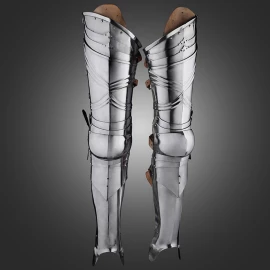
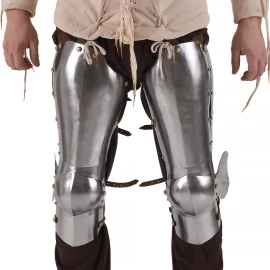
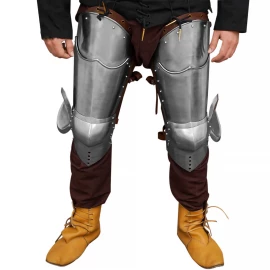
This leg armour is made from 1.6 mm steel sheet, approximately 0.063 in thick. It covers the thighs, knees and a short section immediately below the knees. The cuisses have rolled edges and longitudinal central ridges. Rounded knee cops, or poleyns, connect to short shin sections with pointed lower ends. The set does not cover the entire lower legs down to the ankles.
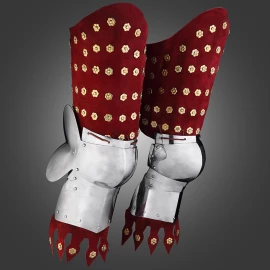
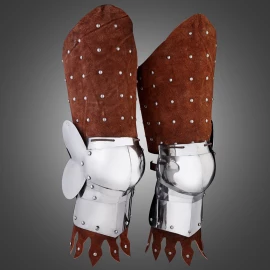
Overlapping plates joined with steel rivets provide articulation. A riveted, slightly inward-curved flower-shaped steel disc sits on the outside of each knee. Its lobed outline and radial shaping extend the side coverage of the joint and form the pair’s most distinctive decorative feature.
The exterior has a bright steel finish, while the interior is blackened to help reduce corrosion. Each leg defence fastens with three rear straps made from brown leather approximately 3 mm / 0.12 in thick. The brass buckles have an antique finish.
Historical Inspiration and the Memmingen Name
The design draws on Gothic-style late medieval plate armour. The manufacturer places it within the 15th–16th centuries; the 15th century is the natural starting point for assembling a Gothic knightly outfit. No specific historical original or precise decade is identified.
Armourers faced two competing requirements at the knee: covering a vulnerable joint while allowing it to bend. Poleyns could therefore be connected to adjacent plates by articulated lames, with side wings or discs extending coverage around the joint.
The name Memmingen recalls the historic imperial town in southern Germany and the setting of the late medieval German lands. It is a thematic model name, rather than a claim that the armour or its historical inspiration originated in that town.
Technical Specifications
| Feature | Specification |
|---|---|
| Contents | One pair – armour for the left and right legs |
| Plate and articulation rivet material | Steel |
| Steel thickness | 1.6 mm / approximately 0.063 in; manufacturer’s designation: 16 ga |
| Straps | Brown leather, approximately 3 mm / 0.12 in thick |
| Number of straps | Three adjustable rear straps per leg defence |
| Buckles | Brass with an antique finish |
| Overall length | Approximately 47 cm / 18.5 in |
| Opening width at thigh | Approximately 18 cm / 7.1 in |
| Opening width at shin | Approximately 14.5 cm / 5.7 in |
| Poleyn dimensions | Approximately 15 × 12 cm / 5.9 × 4.7 in |
| Poleyn depth | Approximately 9 cm / 3.5 in |
| Side disc diameter | Approximately 13.5 cm / 5.3 in |
| Weight per pair | Approximately 3.6 kg / 7.9 lb |
| Interior finish | Blackened |
| Construction | Cuisses, poleyns, short shin sections and riveted articulated lames |
| Lateral knee coverage | Flower-shaped steel discs with a slight inward curve |
Measurements and weight may vary slightly between individual examples. Opening widths are not leg circumferences, and adjusting the straps does not alter the length of the rigid plates.
Choosing the Fit and Putting It On
Take your measurements over padded chausses and all additional clothing or mail layers you intend to wear underneath. We recommend suitable padding, particularly around the knees and beneath plate edges. As well as width, check that the length of the cuisses allows the poleyns to align correctly with your knee joints.
Loosen the straps, position the floral discs on the outside of your knees and centre the poleyns. Fasten all three buckles in turn so that the armour stays in place without restricting circulation. Test the fit by walking slowly and gently bending your knees. The lames must not jam or pinch skin or clothing. If the armour slips, do not try to compensate by excessively tightening the straps.
Care and Safety
- This leg armour is not suitable protective equipment for buhurt, Battle of the Nations or heavy full-contact fighting. Suitability for HEMA or contact swordplay has not been established.
- Follow the organiser’s rules for LARP use. Side discs and projecting edges can injure others through accidental contact.
- Inspect rivets, straps and buckles before use. Do not wear damaged components or force the articulation beyond its available range.
- After wear, remove perspiration and moisture, dry the steel and apply a light coating of protective oil such as Ballistol. The steel is not stainless and may show minor traces of corrosion.
- Treat the straps with a suitable leather care product. Do not soak them or dry them on a radiator. Clean brass buckles gently to preserve their antique finish.
- Store in a dry place. Avoid impacts, forceful bending and coarse abrasives that could damage the finish or articulated connections.
Recommended Accessories
For a knightly outfit inspired by the 15th century, we recommend padded chausses, a Gothic cuirass, arm harness and gauntlets. Separate greaves and sabatons can complete the lower-leg coverage; first check that their edges overlap appropriately with this armour and leave movement unrestricted.
We are here for you!