
 Čeština
 Deutsch


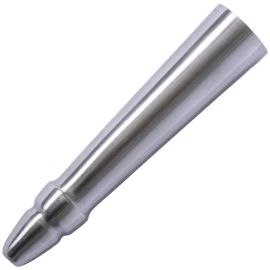
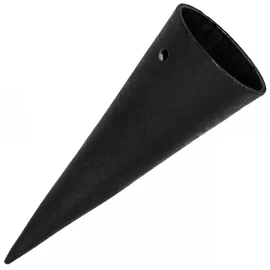
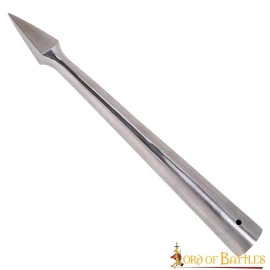
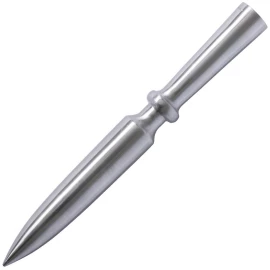
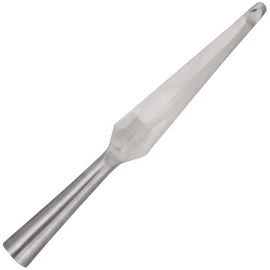
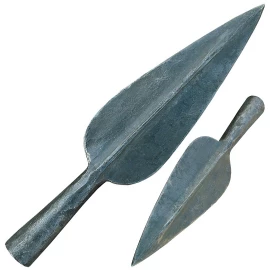
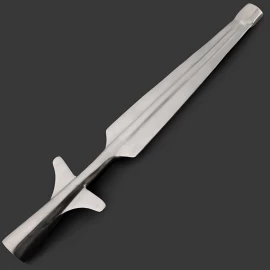
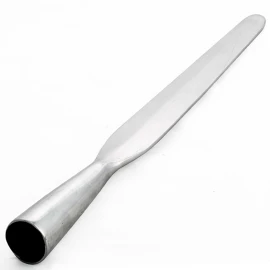
13th Century Medieval Steel Spear Butt Cap, 10 cm
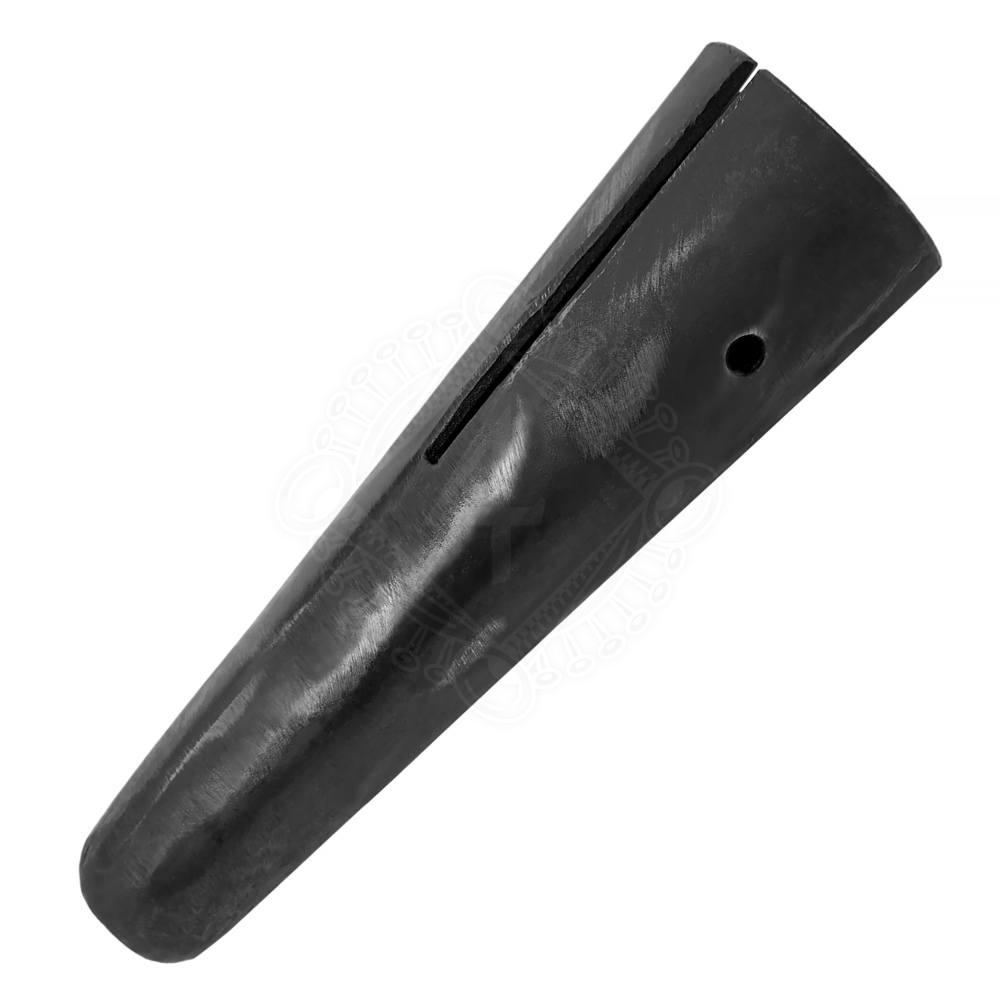
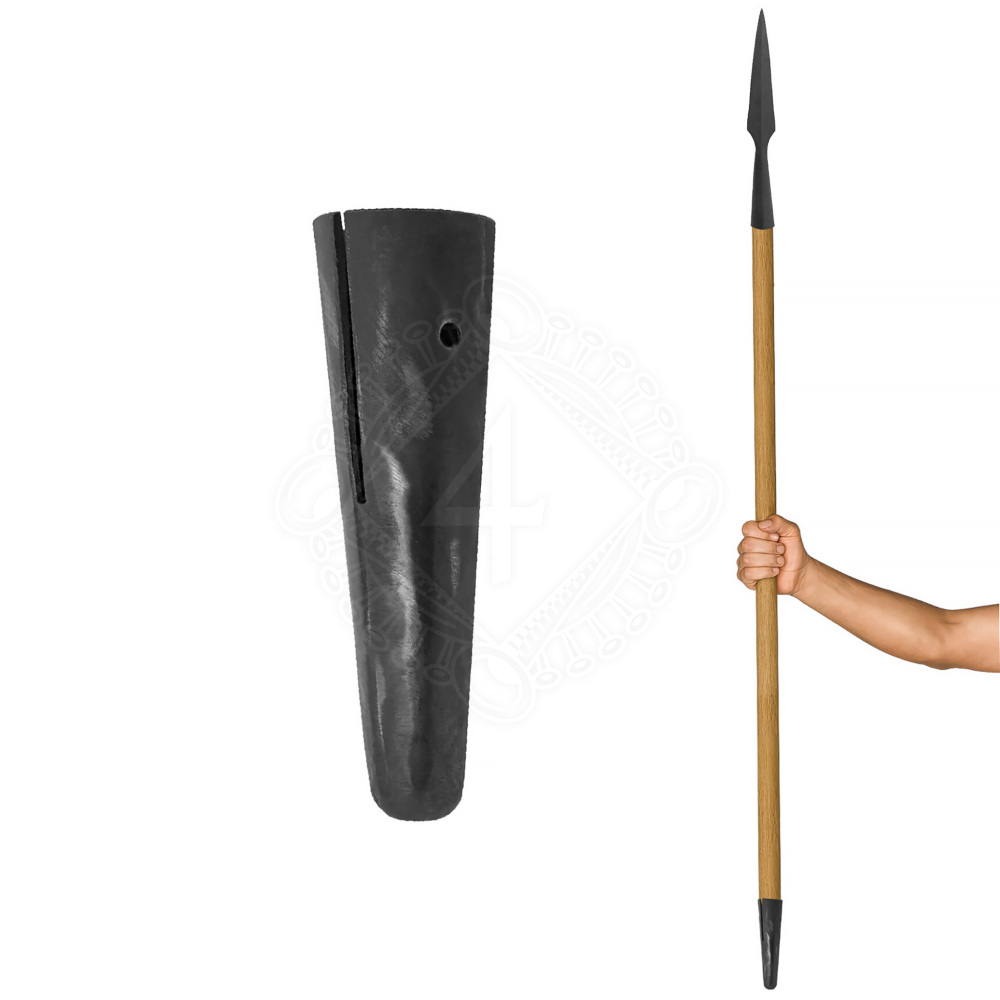
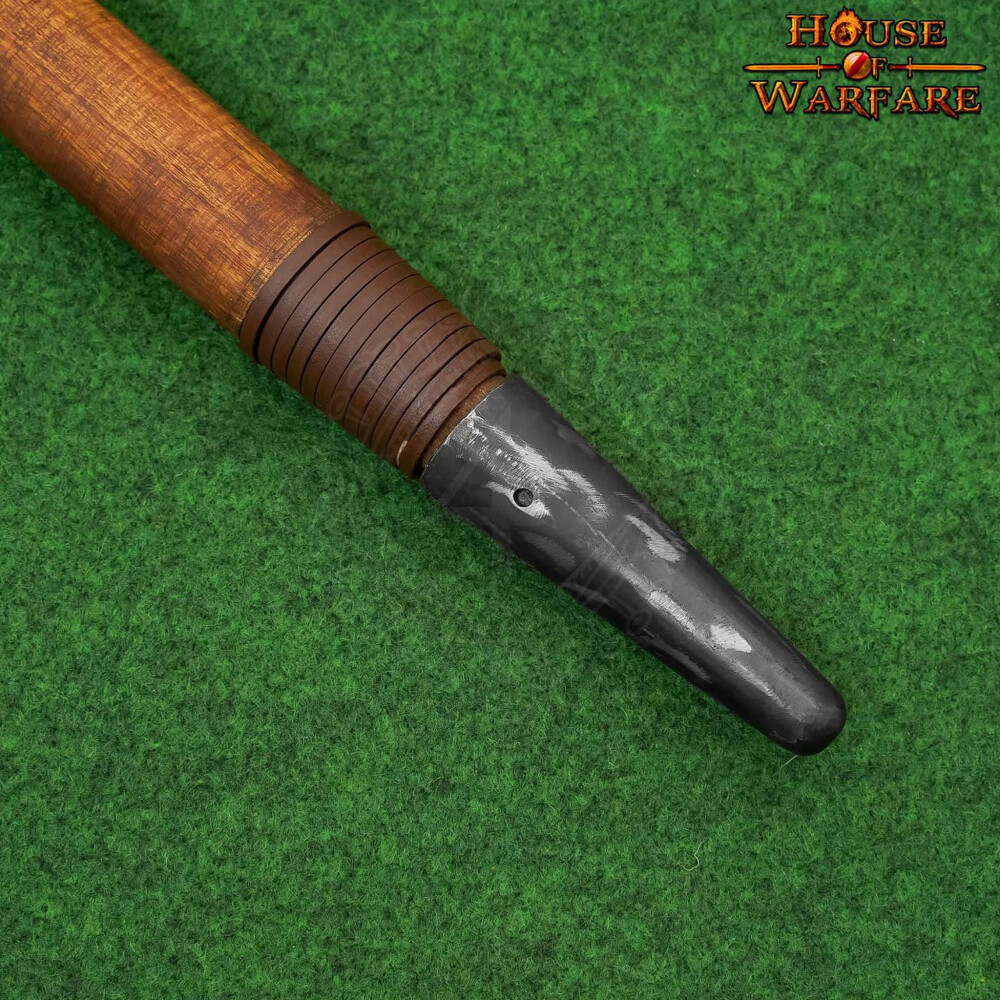
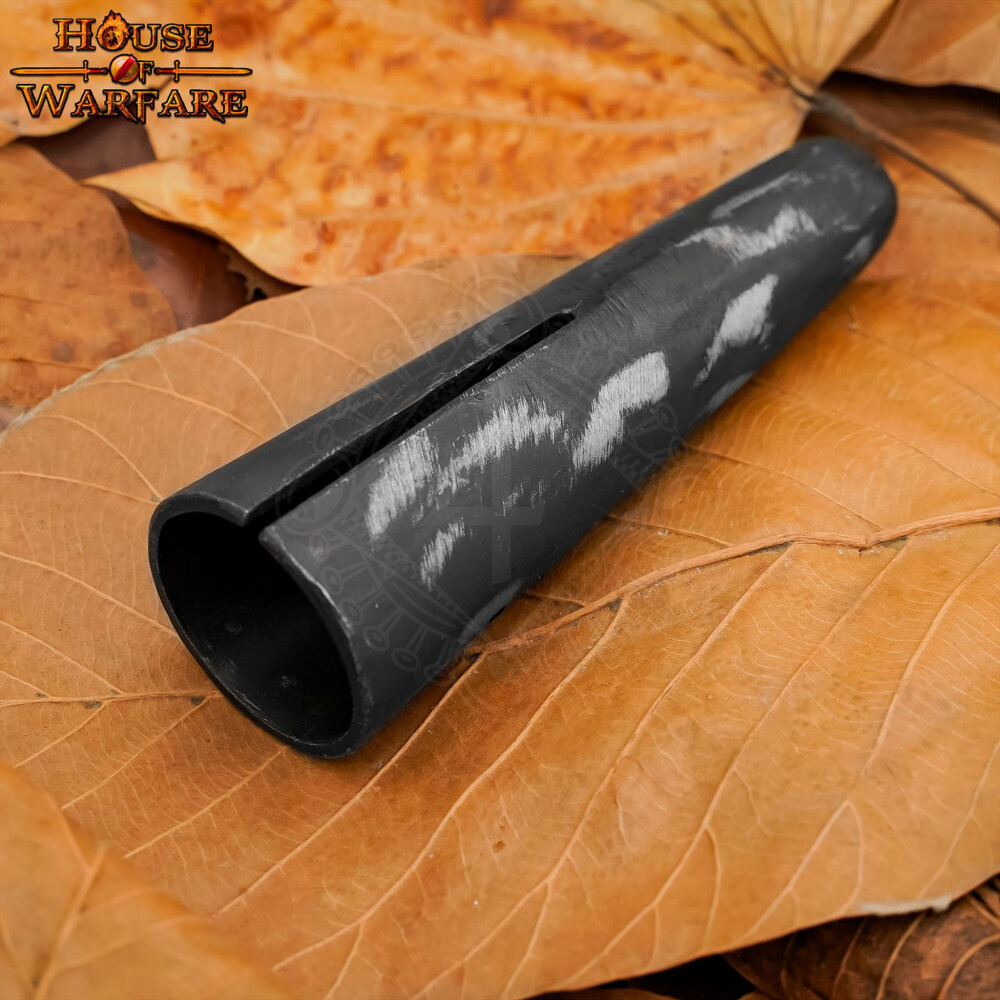

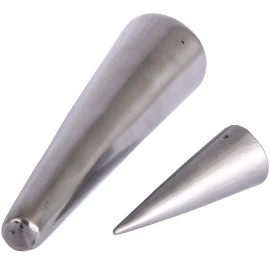
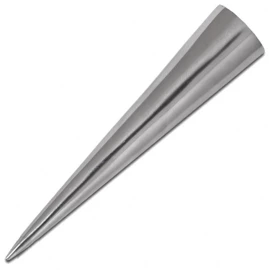
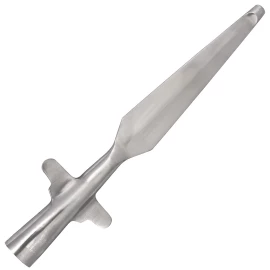
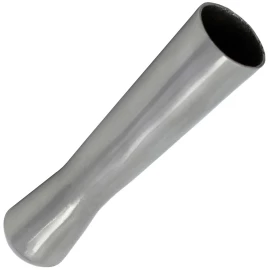
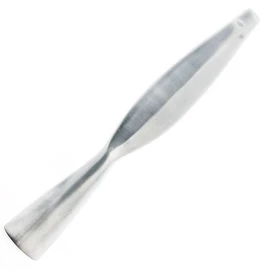
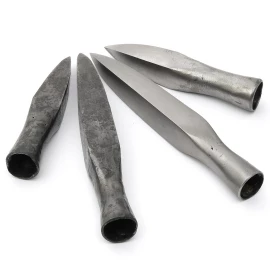
Complete your medieval spear replica with this robust, hand-forged steel butt cap. Its design, inspired by 13th-century artifacts, will give your weapon not only historical authenticity but also functional benefits like improved balance and shaft protection. It is an ideal choice for reenactment, DIY weapon crafting, or as a ferrule for a historical banner pole. This solid butt cap has a conical shape and is finished with a rounded tip. It is crafted from mild steel with a rough, partially blackened surface that gives it an authentic, period look. A unique feature is the longitudinal slit, which allows for easier fitting and a tighter grip on the end of a wooden shaft. A pre-drilled hole is provided for a rivet or nail to secure it in place. Further product information ...

 Delivery options
13th Century Medieval Steel Spear Butt Cap, 10 cm
For Weapon Crafters and Medieval Infantry
This butt cap is designed with practical use and easy assembly in mind.
- Easy Assembly: Thanks to the longitudinal slit, the butt cap can be easily hammered onto a slightly oversized shaft end, creating a very tight compression fit even before being secured with a rivet.
- Balance and Protection: It adds necessary weight to the end of the spear to counterbalance a heavy spearhead, making the weapon easier to handle. It also protects the wood from damage and splitting.
- Versatile Use: Besides spears and javelins, it is also excellent as a durable ferrule for the poles of banners and flags.
The Spear in the High Middle Ages
In the 13th century, infantry made a major comeback on the battlefield, and the long spear was its primary weapon against heavy cavalry. Formations like the Scottish schiltron relied on dense 'hedgehogs' of spears to halt a knightly charge. For a soldier who spent hours with his spear in hand, its butt resting on the ground, a solid steel butt cap was an absolutely essential piece of equipment. It protected the weapon and could also be used for a butt-stroke in the crush of battle.
Note on the Product
As this is the result of individual hand-craftsmanship, the shape, dimensions, and surface colouring may vary slightly from piece to piece, giving each item a unique character.
Specifications
| Overall Length: | approx. 101 mm |
| Inner Socket Diameter: | approx. 25 mm |
| Max. Outer Diameter: | approx. 33 mm |
| Material: | Mild steel, partially blackened finish |
Care and Maintenance
This product is made from carbon (mild) steel and is susceptible to rust. To ensure your butt cap lasts a long time and maintains its appearance, we recommend you keep it dry. Wipe it down after use and regularly preserve it with a thin layer of oil (such as Ballistol or WD-40).
Disclaimer
This is a single component for further crafting. The materials and craftsmanship would allow for practical use, but since the manufacturer provides no warranty for this, we offer the product for decorative and DIY purposes only. When mounting it, please prioritise your safety and the safety of those around you.
We are here for you!








.3773623034.1696456237.png.webp)

.3773623034.1696456268.png.webp)
.3773623034.1696456247.png.webp)