
 Čeština
 Deutsch


Steel Plate Gorget (Neck Armor), 16th to Early 17th Century
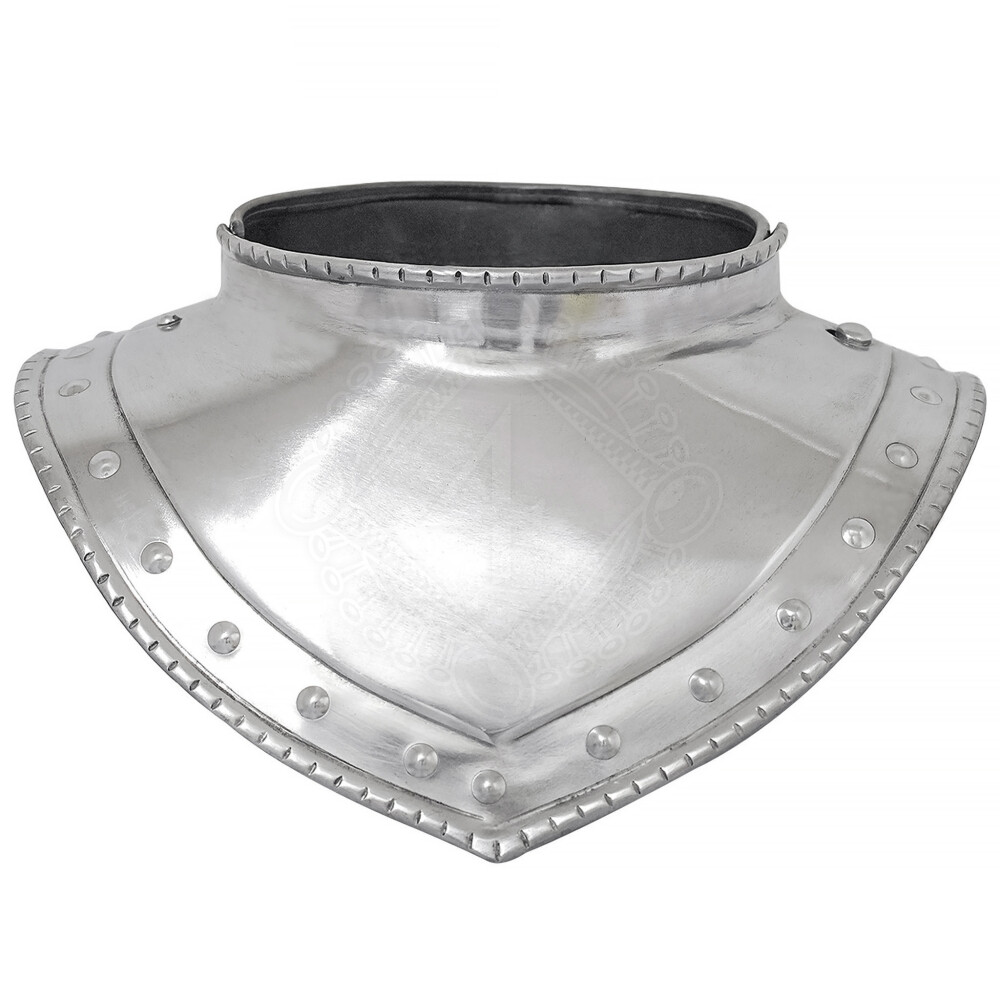
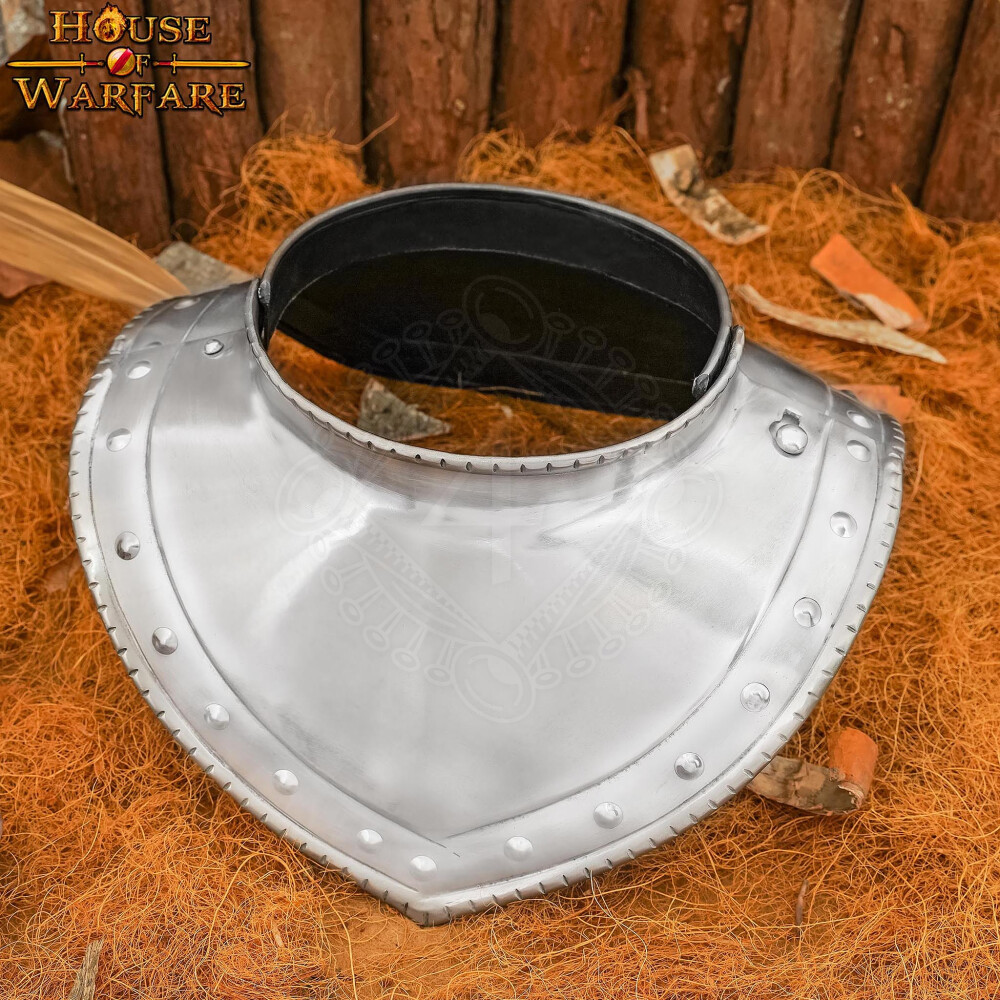
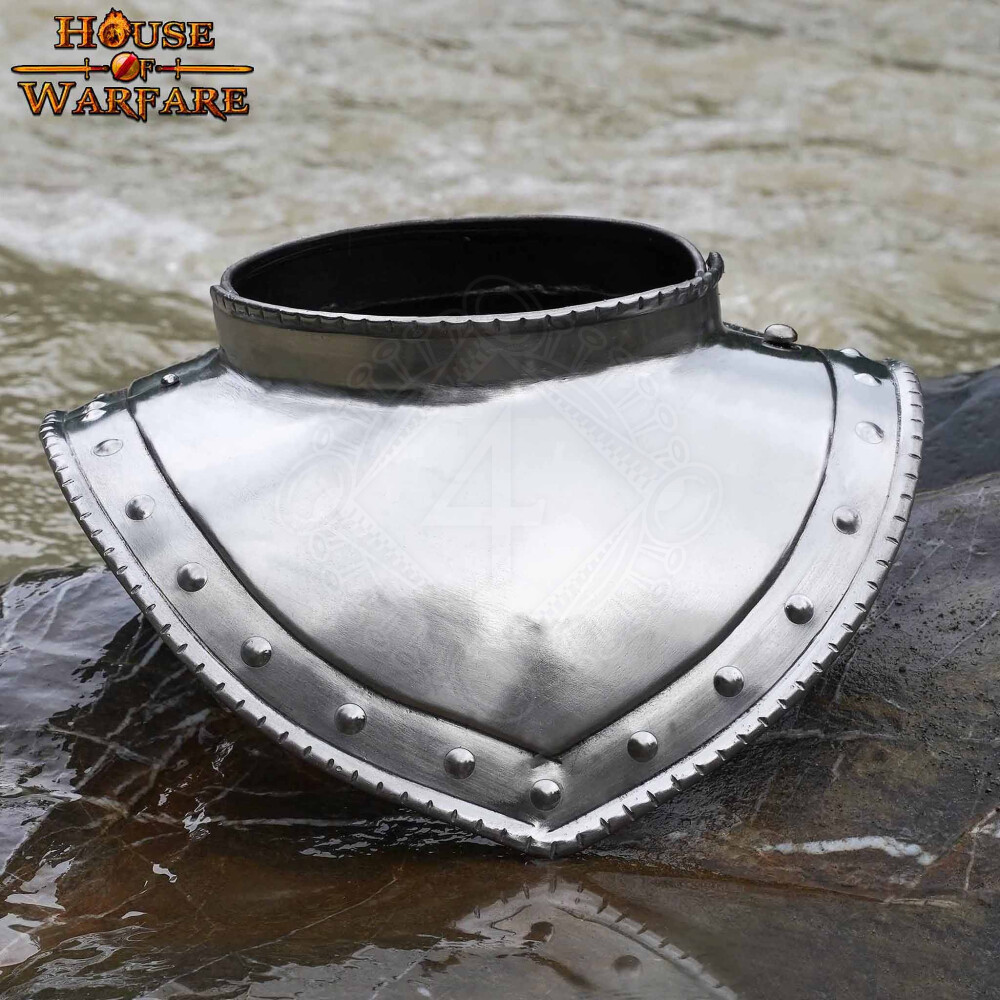

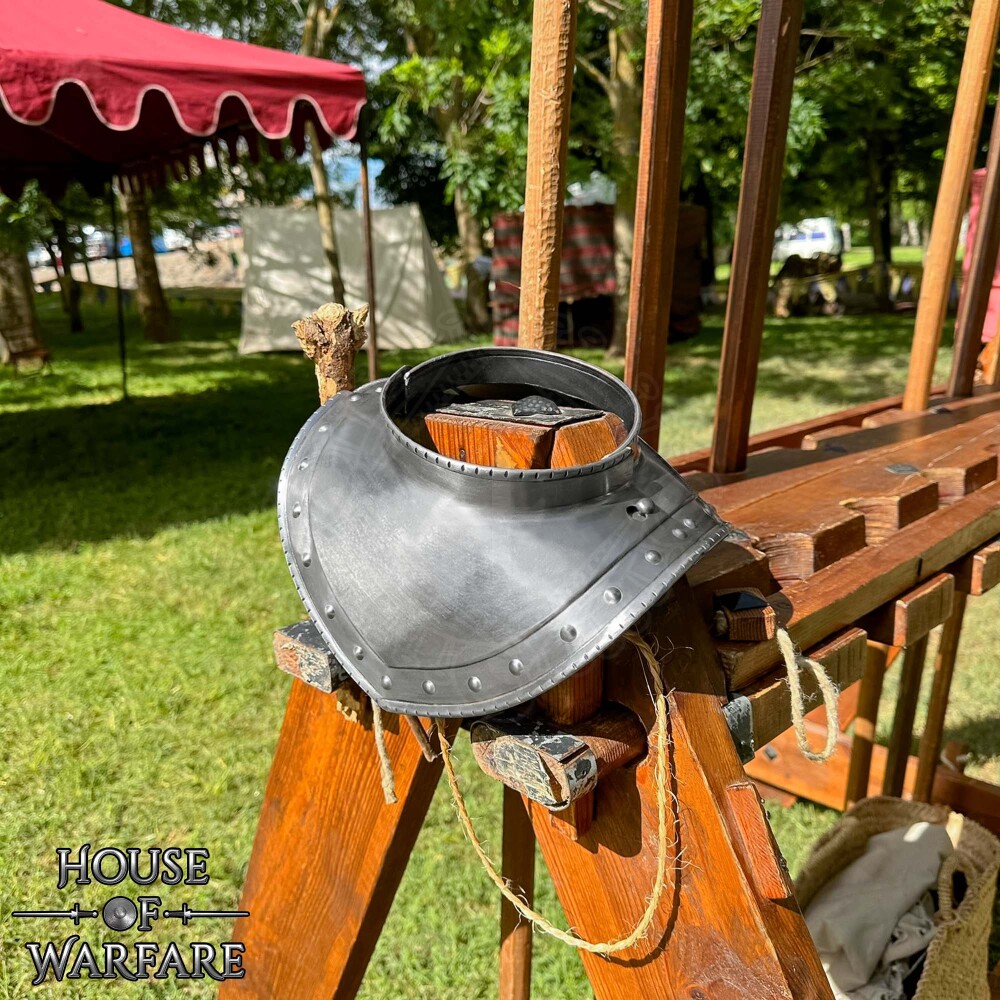
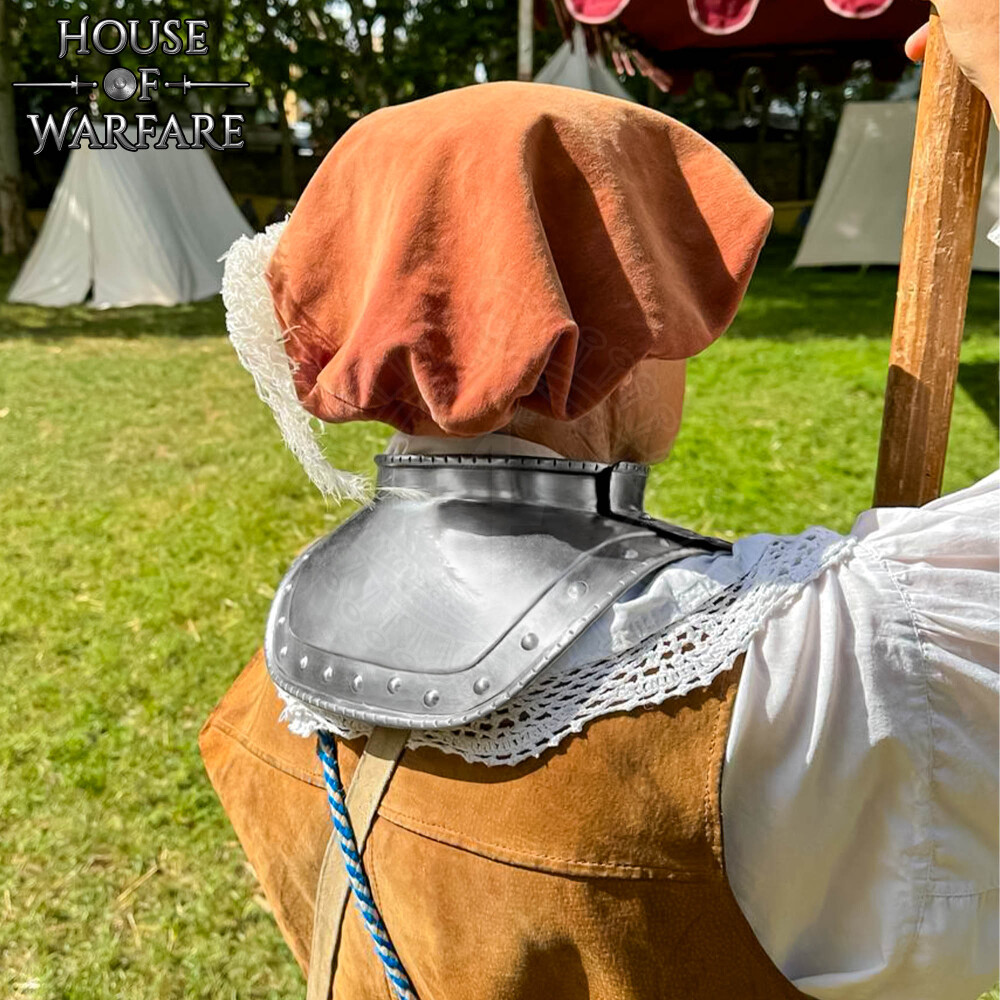

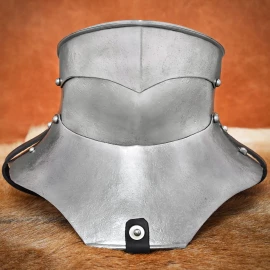
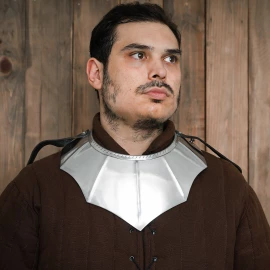
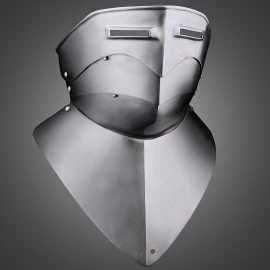
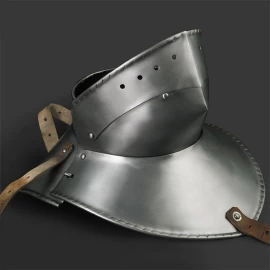
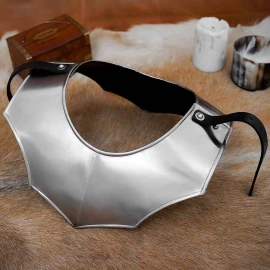
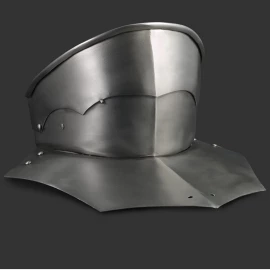
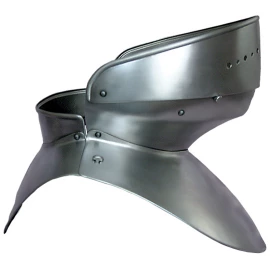
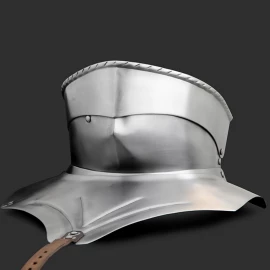
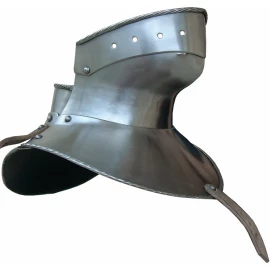
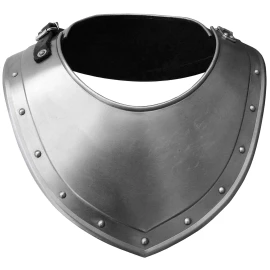
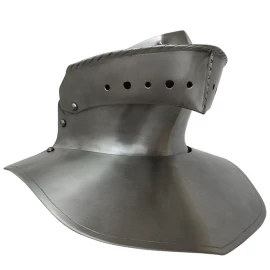
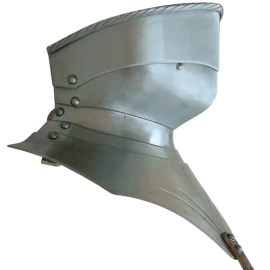
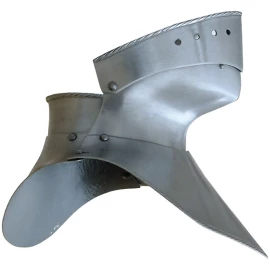
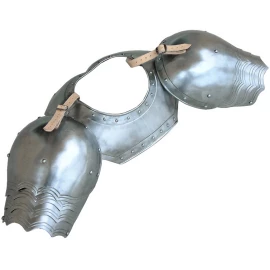
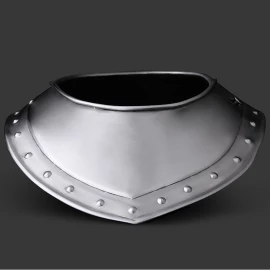
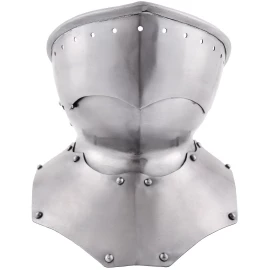
Secure the most vulnerable point in your harness—your neck—with this robust plate gorget, styled for the late Renaissance and early Baroque periods. This piece of armor, known as a gorget, was an essential component for every foot soldier, from pikemen to landsknechts. It not only protected the neck and upper chest but also served as the foundation for attaching pauldrons (shoulder armor). Forged from 1.6mm steel, this gorget is perfect for your costume, LARP kit, or as a display piece. Further product information ...

 Delivery options
Steel Plate Gorget (Neck Armor), 16th to Early 17th Century
Construction and Design
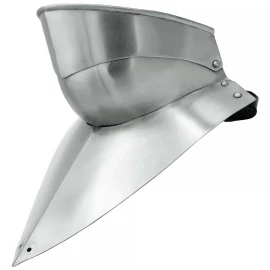
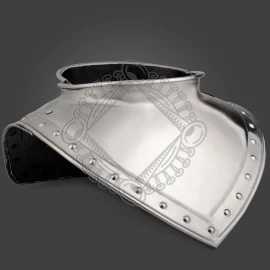
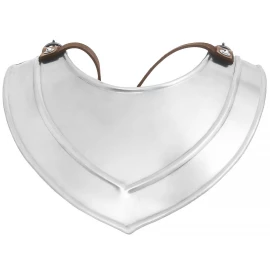
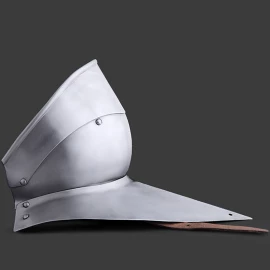
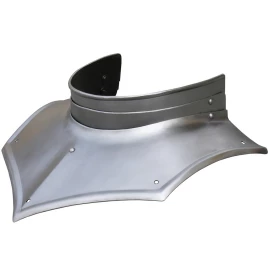
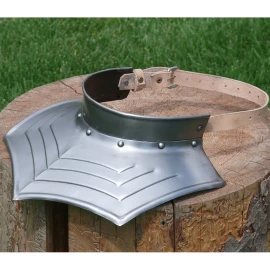
This gorget features a two-piece construction, consisting of a front and back plate, ensuring a comfortable fit and good mobility. The plates are connected by a sturdy hinge-rivet on one side and secured on the other with a simple yet reliable pin-and-hole locking mechanism.
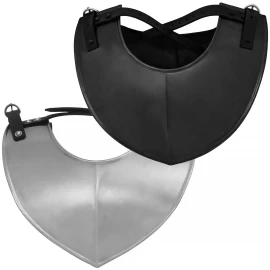
It is crafted from 1.6 mm (16 gauge) mild steel with a polished finish. All edges are carefully rolled to prevent injury and damage to the underlying garment. The front plate is shaped into a characteristic V-point with a central ridge, designed to effectively deflect strikes and thrusts. Decorative rivets along the border complete the aesthetic. For maximum comfort, the inside of the collar is fitted with a black leather lining.
How You Can Use This Gorget
This is a versatile piece of armor that will perfectly complement your historical kit:
- Historical Reenactment: Ideal for a Landsknecht, pikeman, or city guard costume from the 16th and early 17th centuries.
- LARP and Cosplay: An essential foundation for any character in plate armor, whether you are a knight, mercenary, or adventurer.
- Theater and Film: Its authentic appearance will add a layer of realism to your production.
- Collection and Display: A fantastic piece to showcase on an armor stand or mannequin.
Important Notice
This is a historical replica intended for costume use, LARP, and light, choreographed combat. While it is made of solid steel, it is not certified for full-contact combat sports such as HMB (buhurt) or other heavy-hitting disciplines.
Table of Specifications
| Measurement | Value |
|---|---|
| Front Plate Width | Approx. 28 cm |
| Back Plate Width | Approx. 30 cm |
| Overall Height | Approx. 27.5 cm |
| Neck Circumference | Approx. 50 cm |
| Material Thickness | 1.6 mm (16 Gauge) |
| Weight | Approx. 1.28 kg |
The Gorget in History
The gorget evolved in the late Middle Ages to address the need to protect the vulnerable neck, which had previously been covered mainly by a mail coif. From the 15th century onwards, it became a standard component of plate armor. Its design changed over the centuries, but its primary function remained the same: to protect the throat, collarbones, and upper spine. It also served as a "keystone" to which other parts of the harness, such as the pauldrons, were attached.
A Point of Interest: The Officer's Mark
While the gorget was still a fully functional piece of armor in the 16th and early 17th centuries, it gradually lost its defensive role in the later 17th and 18th centuries. It shrank in size and became a purely symbolic item—a badge of rank for military officers. This small, often ornate metal crescent worn at the throat was the last remnant of knightly armor on army uniforms, persisting until the Napoleonic Wars.
How to Care for Your Gorget
Mild steel is prone to rust. After each use, especially in a humid environment, wipe the gorget down thoroughly with a dry cloth. Then, apply a thin layer of protective oil (such as WD-40 or another mineral oil). Store it in a dry place, away from damp fabrics.
We are here for you!





.2152382459.1713555710.jpg.webp)






.3773623034.1696456237.png.webp)

.3773623034.1696456268.png.webp)
.3773623034.1696456247.png.webp)