 Čeština
 Deutsch


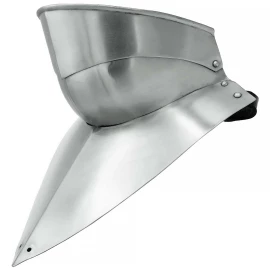
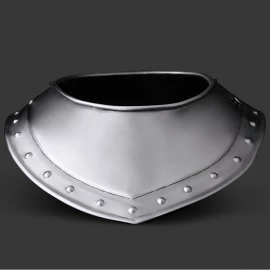
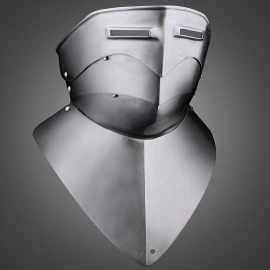
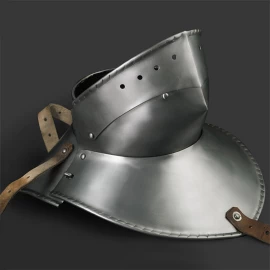
Patay gorget with folding bevor
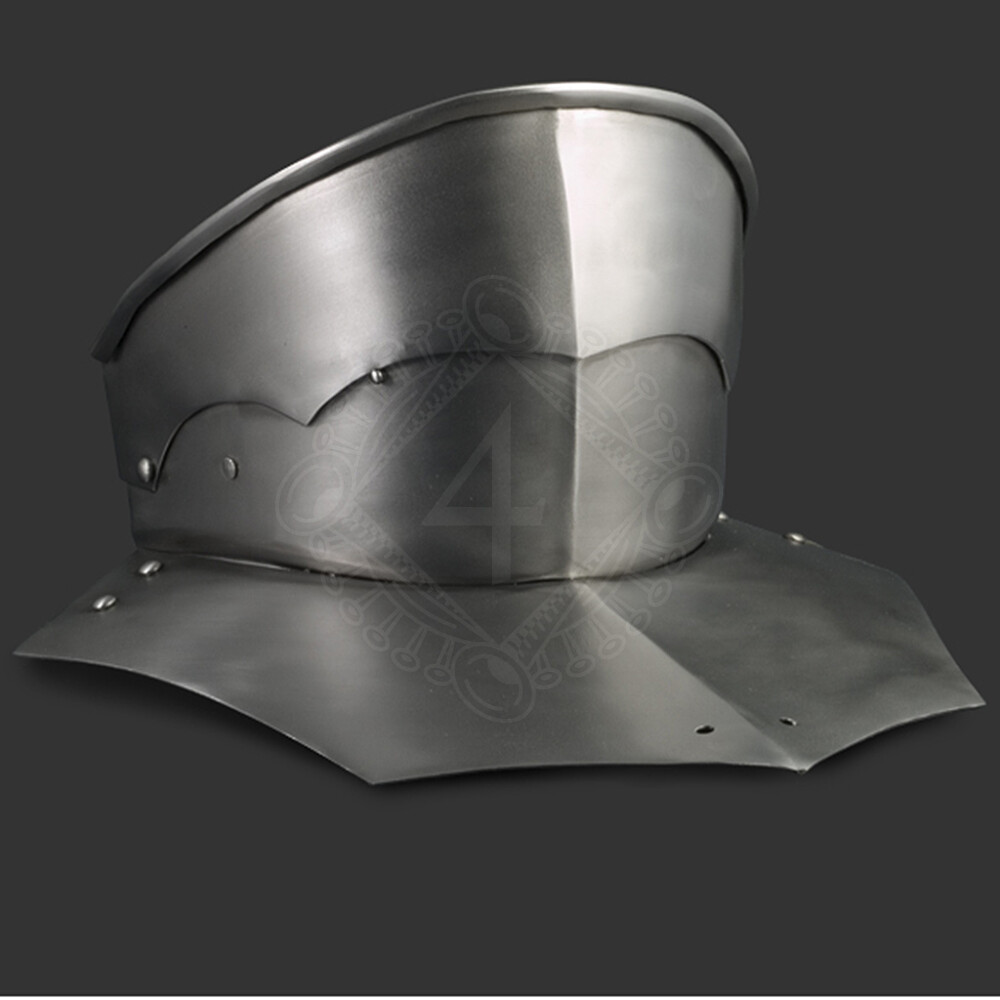
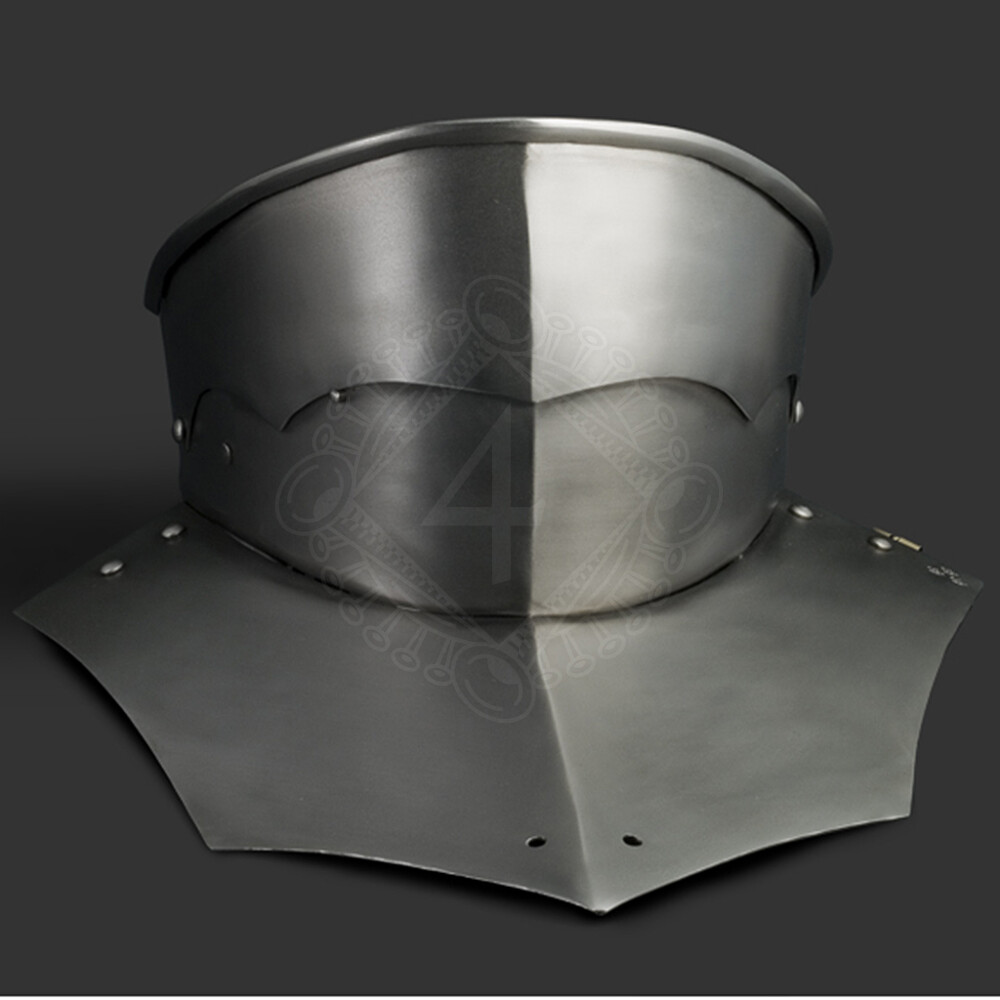

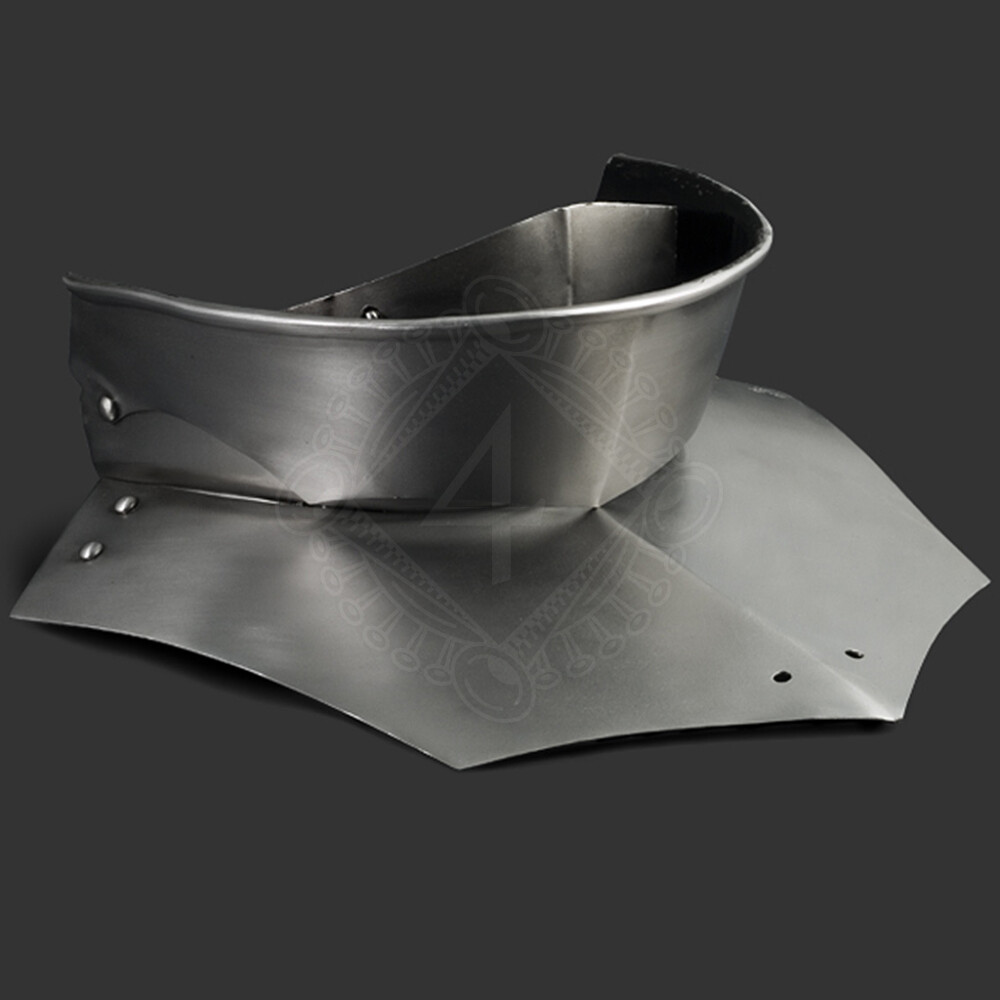

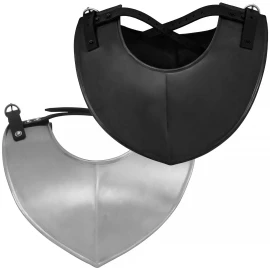
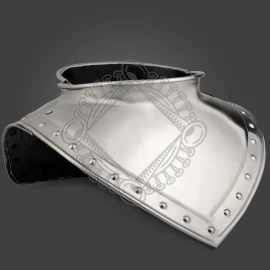
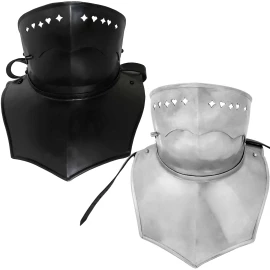
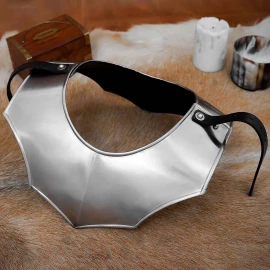
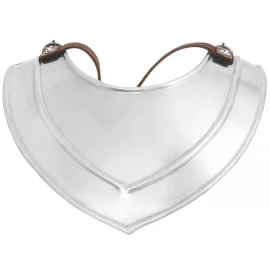
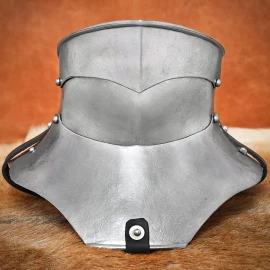
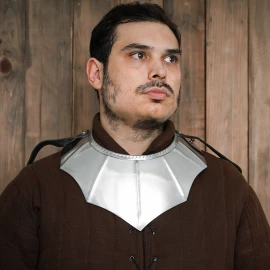
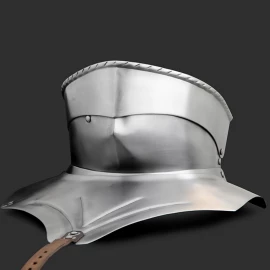
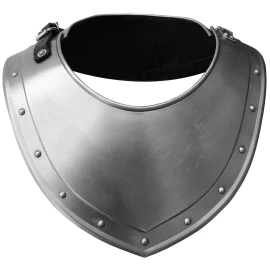
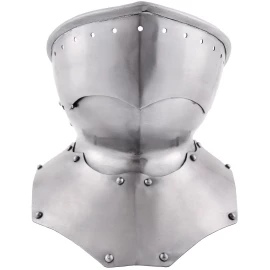
Complete your late medieval kit with a distinctive plate defence between the chest and chin. The Patay gorget with folding bevor combines a broad chest plate, shaped throat section and movable upper component. Its smooth metal surface and central ridge create a restrained appearance that pairs readily with other armour. According to the specifications, the model is intended for portraying a foot knight or mercenary from 1400–1480. A rear leather strap helps hold it in position. Allow for under-padding and try it with your helmet to ensure their edges do not collide and the complete setup fits comfortably. Further product information ...

Would you like to be notified as soon as the item is in stock?
You will receive a short e-mail as soon as we have it back in stock.
Patay gorget with folding bevor for medieval knightly kit
Fixed base and folding chin defence
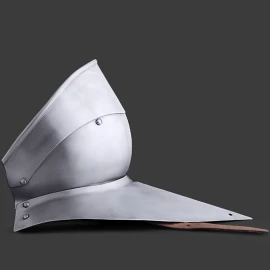
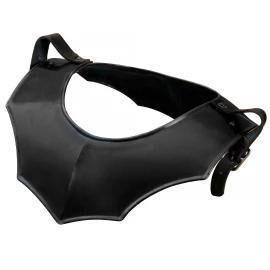
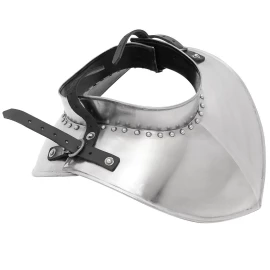
The lower plate spreads across the upper chest and has two holes at the front. Above it rises the shaped throat section with a pronounced central ridge. The upper chin defence pivots at the sides and has a rounded upper edge. Its shaped lower edge overlaps the fixed section. A leather strap secures the gorget at the rear. Match any use of the front holes to your adjoining equipment; their presence does not establish compatibility with every cuirass.
Historical inspiration and the name Patay
The product specifications place the model within 1400–1480. Separate bevors supplemented helmets in the 15th century when the lower face was not fully covered. The combination with a sallet is particularly well known: the helmet covered the head, while the bevor supplemented coverage of the chin and neck. The supplied information does not identify an exact historical original for this model.
The name Patay recalls the battle fought in 1429 between French and English forces during the Hundred Years’ War. It refers to the period represented by this accessory without claiming that this particular gorget was used in the battle.
Technical specifications
| Feature | Details |
|---|---|
| Sheet thickness | 1.2 mm (approximately 0.047 in) |
| Construction | Chest plate, fixed throat section and folding chin defence |
| Upper component movement | Pivots at the sides |
| Rear fastening | Leather strap |
| Internal width at the rear edge | Approximately 16 cm (6.30 in), where the horizontal collar plate and vertical throat plate meet |
| Historical period according to the specifications | 1400–1480 |
| Manufacturer | Marshal Historical |
Size guide
| Size | Neck circumference according to the specifications |
|---|---|
| One size | Up to 47 cm (approximately 18.50 in) |
Fitting and safe use
Try the gorget over a suitable padded collar or coif. The stated circumference does not guarantee comfortable fitting over additional layers. Position the chest plate, adjust the rear strap and check the movement and retention of the chin defence. Adjust the moving component while stationary and take care not to trap skin between the plates. Allow sufficient room for breathing, swallowing and head movement; the metal must not press against your throat.
This gorget is not suitable for heavy full-contact fighting such as buhurt or Battle of the Nations. Before any proposed contact use, have the complete setup assessed by an experienced instructor and the event organiser. Sheet thickness alone does not establish protection against blows.
Care and suggested accessories
Remove sweat and moisture after use, dry the metal and apply a light coating of protective oil. Keep the strap away from soaking and direct heat. Inspect the rivets and moving connections regularly; do not force a jammed chin defence.
For equipment inspired by the 15th century, we recommend an appropriately selected sallet, padded underlayer and matching cuirass. Always check their combined fit by trying them on together.
We are here for you!