Čeština
 Deutsch


Salzburg Gothic Gorget, 1470–1500


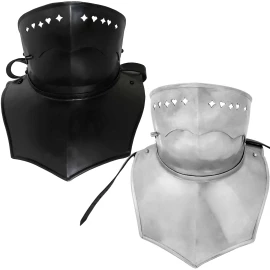
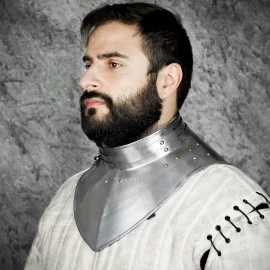
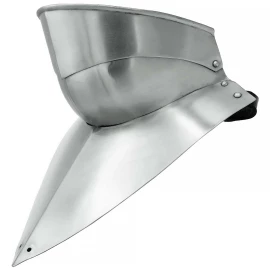
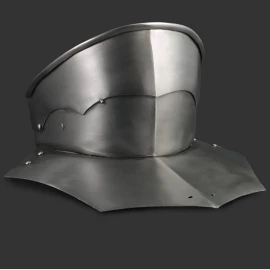
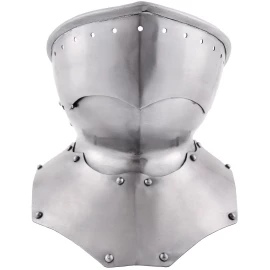
Looking for a distinctive finishing touch for your late medieval knightly armour? The Salzburg Gothic gorget with articulated bevor is inspired by steel neck and lower-face protection from the period 1470–1500. Its most striking features are the tall, multi-piece bevor, two narrow horizontal openings and a broad lower plate extending over the upper chest. The articulated plates allow the bevor to be lowered, making the assembly easier to handle. Made from steel plate with a nominal thickness of 1.6 mm (0.063 inches), it comes in one universal size for neck circumferences up to 47 cm (18.50 inches). A distinctive addition to historical reenactment, theatrical costumes and late Gothic plate armour displays. Further product information ...

Would you like to be notified as soon as the item is in stock?
You will receive a short e-mail as soon as we have it back in stock.
Salzburg Gothic Gorget with Articulated Bevor, 1470–1500
Articulated Construction with Overlapping Plates
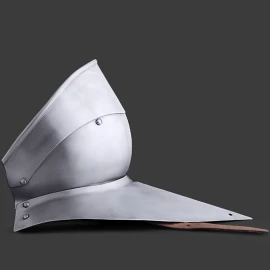
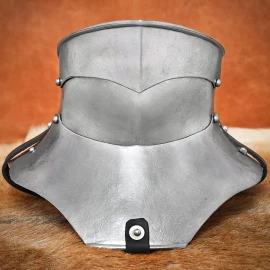
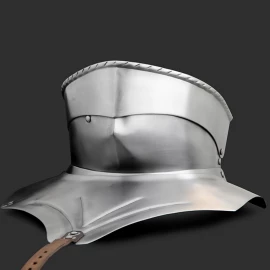
The most prominent feature of this gorget is its tall bevor made from several overlapping steel plates. The upper section rises to cover the lower half of the face. A pronounced vertical ridge runs down the centre, giving the structure its distinctive angular profile.
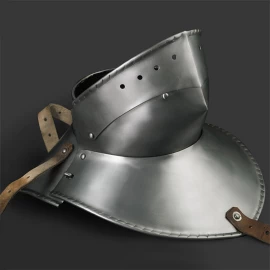
Near the upper edge are two narrow horizontal openings resembling vision slots. Their raised borders create an eye-catching structural detail. Beneath them are overlapping articulated lames with smoothly curved edges, forming the front protection for the chin and throat.
The bevor plates can be lowered, allowing the position of the front section to change. The individual components are connected with rivets. This construction combines steel coverage with a degree of articulation between the plates.
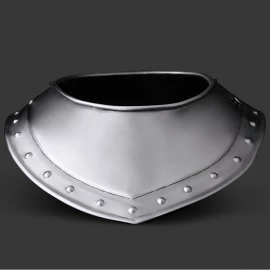
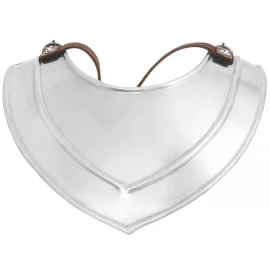
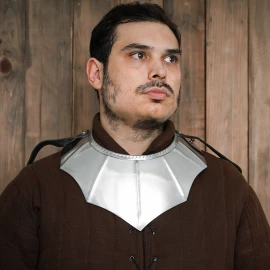
The lower section consists of a broad steel plate extending downwards over the upper chest. It widens away from the neck and terminates in a prominent central point. Similar plate shapes historically helped cover the transition between throat protection and body armour.
The entire assembly has a smooth silvery-grey surface with subtle grinding marks. Turned edges, visible rivets and the clean lines of the overlapping plates emphasise its late Gothic appearance.
The Development of Gorgets and Bevors in the 15th Century
European plate armour reached a remarkable level of technical sophistication during the second half of the 15th century. Armourers developed increasingly elaborate constructions to combine extensive steel coverage with the movement needed by a warrior.
One important challenge was protecting the throat, chin and lower face. These vulnerable areas required careful design because the transition between helmet and cuirass had to allow the wearer to move their head.
During the 15th century, sallet helmets combined with separate plate bevors became widespread in parts of Central Europe. The sallet protected the head, forehead, temples and back of the neck, while the bevor provided additional coverage for the chin and throat.
The exact construction varied according to region, period and intended use. Some bevors were rigid, while others incorporated several moving plates to facilitate handling or movement.
Between approximately 1470 and 1500, carefully shaped throat and chin defences with articulated components were part of the evolving range of late Gothic armour.
An interesting feature of German armour-making in the second half of the 15th century was the development of Gothic plate harnesses, distinguished by sharply defined contours, elaborate shaping and, frequently, longitudinal fluting. The gorget presented here incorporates similarly pronounced geometric lines, although most of its surface remains smooth.
This product is a historically inspired reproduction. The available information does not establish that it is an exact copy of a particular surviving museum artefact.
Why Is the Gorget Called Salzburg?
Salzburg was an important ecclesiastical and commercial centre in medieval Central Europe. As the seat of the Archbishops of Salzburg, the city maintained close connections with the territories of present-day Austria, Bavaria and southern Germany.
The name Salzburg evokes the Central European cultural setting in which late Gothic armour was developed and worn during the 15th century. It does not imply that the precise historical prototype of this gorget originated in Salzburg.
How to Fit and Wear the Gorget
This gorget is intended to complement other components of historical plate armour. For improved comfort, we recommend wearing a suitable padded arming doublet or gambeson with appropriate neck protection beneath it.
- Begin by inspecting the rivets, overlapping plates and all articulated connections.
- Check that your neck circumference, including any padded underlayer, is compatible with the universal size.
- Position the gorget so that its lower plate extends naturally over the upper chest.
- Check the movement of the bevor and lower it carefully without applying excessive force.
- Make sure the plates do not exert uncomfortable pressure on your throat, chin or jaw.
- Test turning, lowering and raising your head to ensure the plates do not catch on other equipment.
- When combining the gorget with a helmet, confirm that the two components do not interfere with one another.
The maximum stated neck circumference is 47 cm (18.50 inches). However, this measurement alone does not guarantee a suitable fit. Neck shape, bevor height and compatibility with your helmet and cuirass are also important.
If you plan to wear the gorget with a Gothic sallet, we recommend checking their compatibility before use. Not every sallet is designed to accommodate every type of separate bevor.
Technical Specifications
| Feature | Specification |
|---|---|
| Product type | Gothic steel gorget with articulated bevor |
| Model | Salzburg |
| Historical period | 1470–1500 |
| Material | Steel plate |
| Nominal steel thickness | 1.6 mm (0.063 inches) |
| Size | One universal size |
| Maximum neck circumference | 47 cm (18.50 inches) |
| Bevor construction | Multi-piece, with articulated lowering plates |
| Plate connections | Riveted |
| Upper section | Tall shaped bevor with two horizontal openings |
| Lower section | Broad chest plate with an extended central point |
| Surface finish | Silvery, finely ground |
| Historical style | Late Gothic |
| Intended use | Historical reenactment, costume and theatrical use |
| Package contents | 1 gorget with articulated bevor |
Due to the handcrafted manufacturing process, the actual steel thickness may vary slightly across different parts of the assembly.
Care and Maintenance
Regular maintenance will help preserve the appearance and articulation of your steel gorget, especially if you wear it during outdoor historical events.
- Cleaning: After each use, remove perspiration, dust and moisture with a soft, dry cloth.
- Corrosion protection: Apply a thin layer of suitable protective oil to the steel surfaces regularly.
- Articulated plates: Check that the lames move freely and do not catch. Moving metal joints may be lightly lubricated when necessary.
- Rivets: Inspect the riveted joints for looseness or damage. Have defective connections professionally repaired.
- Storage: Keep the gorget in a dry, well-ventilated location.
Avoid aggressive cleaning products, coarse abrasives and forcibly bending the steel plates. Excessive strain could affect the alignment and movement of the articulated sections.
Safety and Usage Limitations
This gorget is not explicitly rated as protective equipment for full-contact combat disciplines such as buhurt, Battle of the Nations or similar activities. A nominal steel thickness of 1.6 mm (0.063 inches) alone does not establish an adequate level of protection.
Before using it for historical contact fencing, check the organiser's safety requirements, the suitability of the product and its compatibility with the rest of your protective equipment. The gorget does not replace complete head and neck protection.
Before each use, ensure the articulated lames engage and move correctly without creating dangerous pinch points. An incorrectly fitted bevor may restrict breathing or head movement and place excessive pressure on the neck or jaw.
If the plates become deformed, rivets loosen or moving components begin to jam, discontinue use until the assembly has been professionally assessed.
Recommended Accessories
To build a complete knightly harness from the late 15th century, we recommend combining this gorget with a Gothic sallet inspired by the period 1470–1500, provided its construction is compatible with a separate bevor. A padded arming doublet or gambeson makes a suitable underlayer. Other complementary equipment includes a Gothic plate cuirass, pauldrons, arm defences and steel gauntlets modelled on examples from the second half of the 15th century. Always check the dimensions and mechanical compatibility of individual armour components when assembling your harness.
We are here for you!