 Čeština
 Deutsch


Rocroi steel gorget, 17th-century
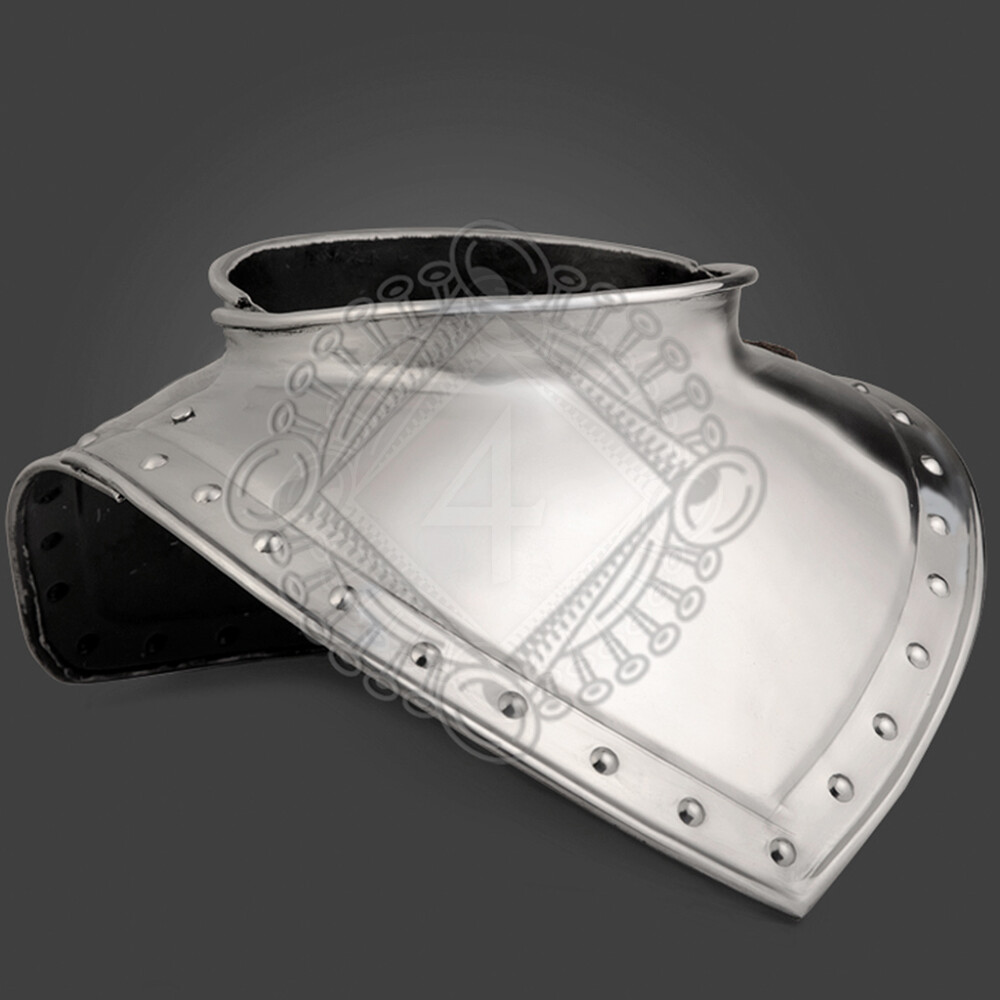
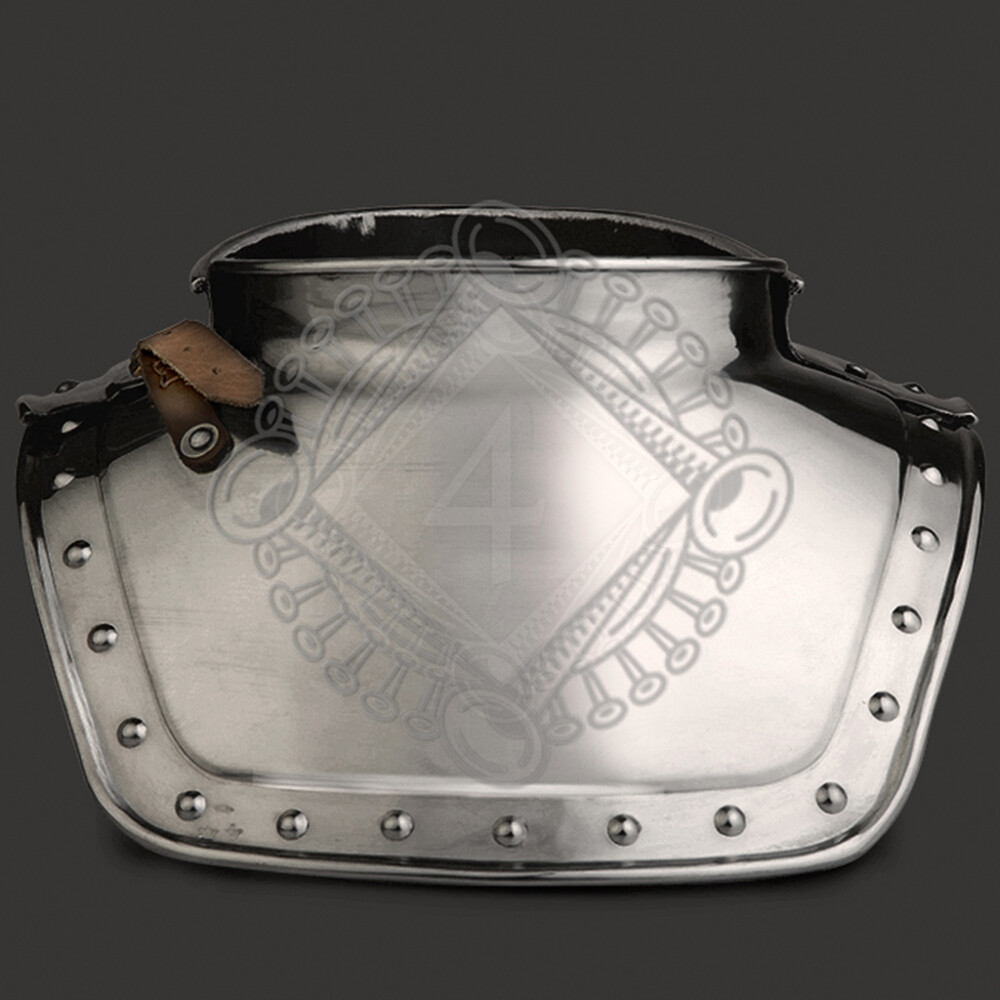
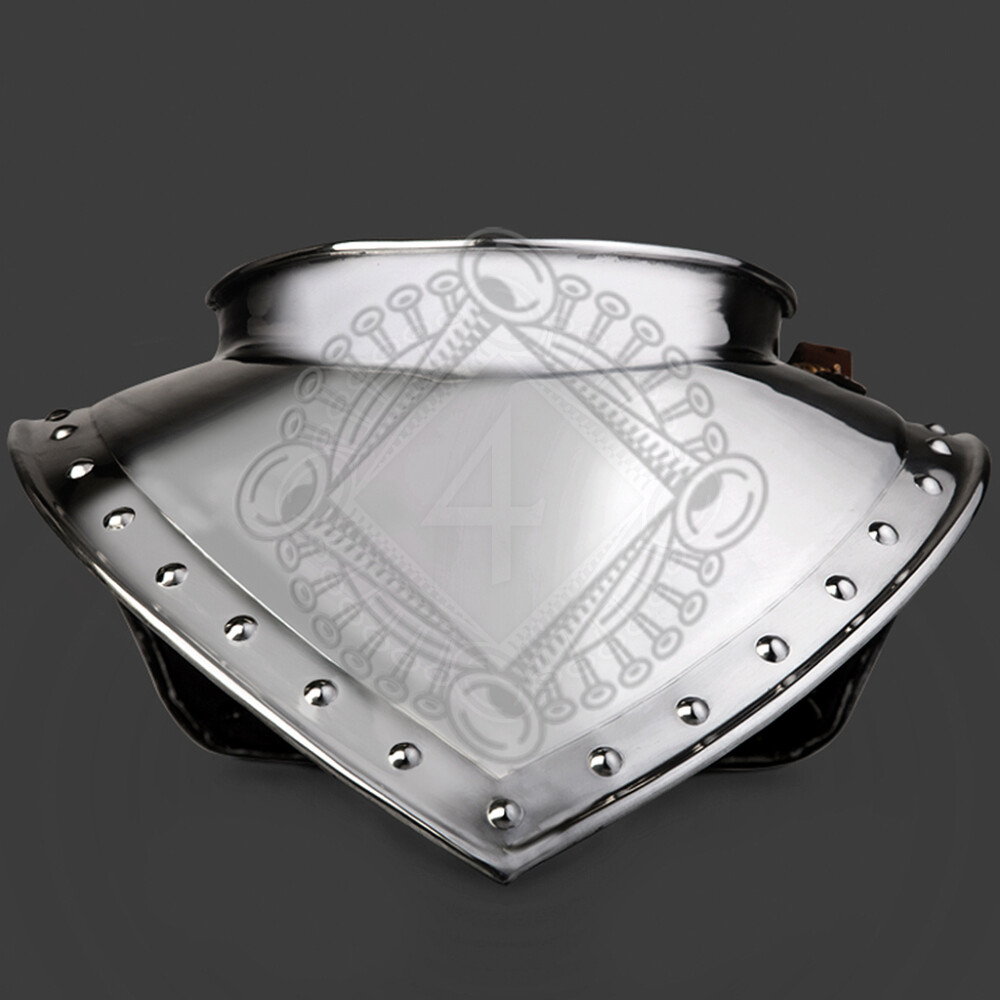

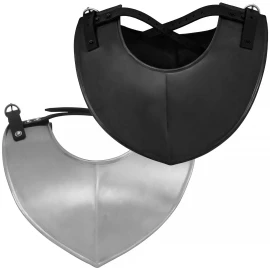
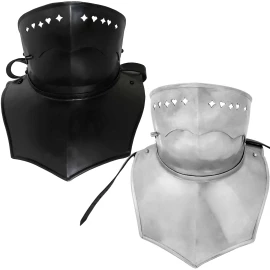
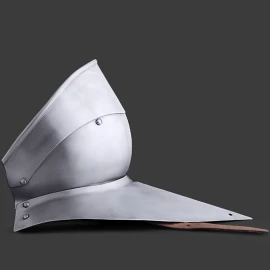
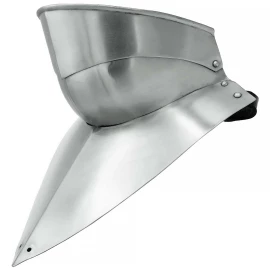
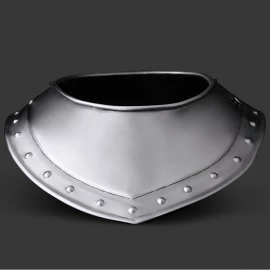
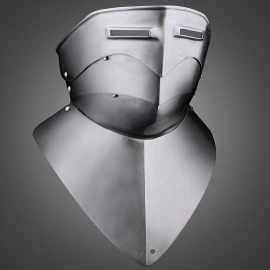
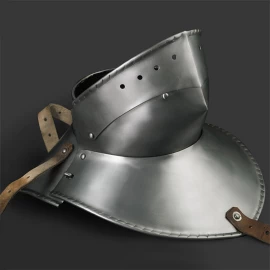
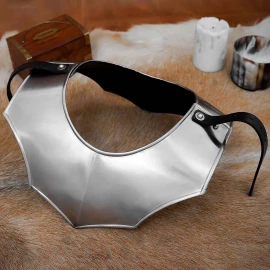
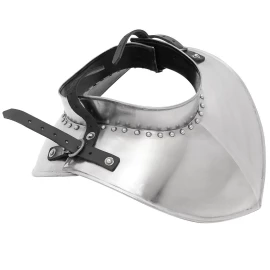
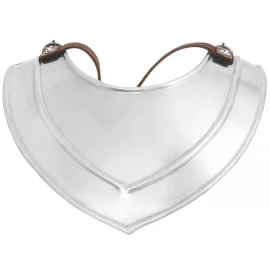
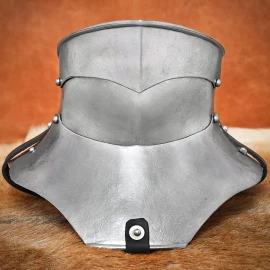
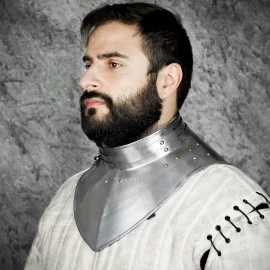
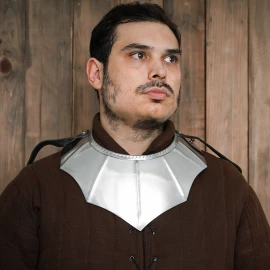
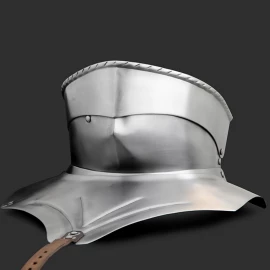
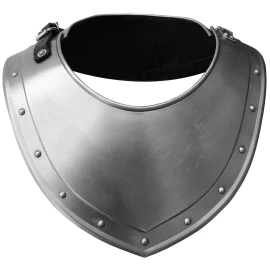
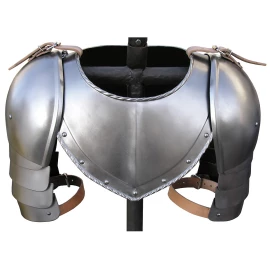
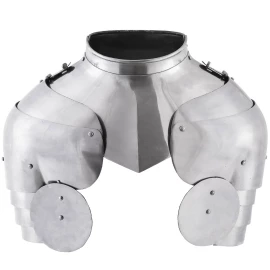
Complete your early modern outfit with a distinctive armour component that surrounds the neck and extends over the upper chest and back. The Rocroi carbon steel gorget features a smooth, bright surface, raised collar and a row of rivet heads along its lower border. Its front plate tapers to a point, while the back plate has a broader, rounded outline. A side pin connection and leather strap fastening allow you to open it for fitting. It suits historical presentations and costumes inspired by the 16th and especially the 17th century. Allow for a suitable underlayer and comfortable head movement when assembling your kit. Further product information ...

 Delivery options
Rocroi steel gorget for 17th-century historical kit
Two-piece construction with a side fastening
The gorget consists of front and back plates with a raised collar. Its upper and lower edges have rounded finishes. Rivet heads emphasise the lower border, while the remaining surfaces are plain. A metal pin joins the components on the right, with a leather strap and buckle fastening on the left. This arrangement lets you put it on without pulling a closed collar over your head.
From protective armour to a badge of status
Plate gorgets formed part of European equipment in the 16th and 17th centuries. During the 17th century, as the amount of armour worn often declined, a gorget could also be worn alone over a buff coat or contemporary clothing. Later, smaller versions developed into officers’ badges of status. This model surrounds the neck rather than forming a small suspended badge.
The name Rocroi recalls the battle fought in 1643 during the Thirty Years’ War. It refers to the military setting of the 17th century that suits this accessory, without claiming to reproduce a specific gorget worn in that battle.
Technical specifications
| Feature | Details |
|---|---|
| Material | Carbon steel, not stainless |
| Sheet thickness | 1.5 mm (approximately 0.059 in) |
| Construction | Front and back plates with a raised collar |
| Right-side connection | Metal pin |
| Left-side fastening | Leather strap and buckle |
| Appearance | Bright metal surface, rivet heads along the lower border |
| Manufacturer | Marshal Historical |
Size and fitting
| Feature | Value according to the specifications |
|---|---|
| Maximum neck circumference | 53 cm (approximately 20.87 in) |
Try the gorget over a padded collar or suitable period clothing. The stated maximum circumference does not guarantee comfortable fitting over additional layers. Open the strap, position the front and back plates and check the pin connection. Once fastened, ensure you can breathe, swallow and turn your head freely. The collar must not press against your throat.
Care and safety
Dry the gorget after use and apply a light coating of protective oil to the metal components. Keep the leather strap away from soaking and direct heat. Inspect the pin, buckle and rivets regularly. Do not reshape the parts by forcibly bending them.
This gorget is not suitable for heavy full-contact fighting such as buhurt or Battle of the Nations. Before any proposed contact use, have the complete setup assessed by an experienced instructor and the event organiser. Sheet thickness alone does not establish protection against blows.
Suggested accessories
For 17th-century equipment, we recommend a period doublet, suitable padded underlayer and, depending on your portrayal, a buff coat or cuirass. Try it together with your helmet to ensure the helmet’s lower edge does not collide with the collar.
We are here for you!