Čeština
 Deutsch


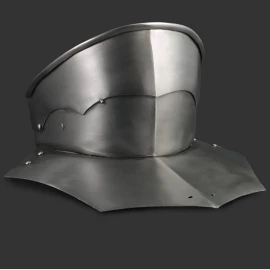
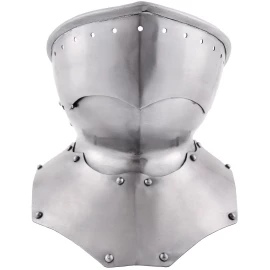
Dornach gorget with a folding bevor, 1480–1500


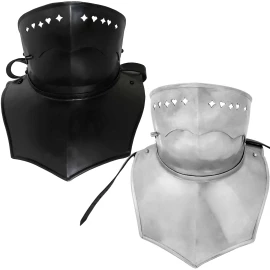
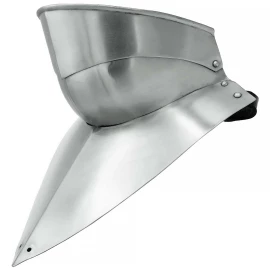
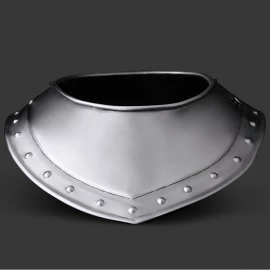
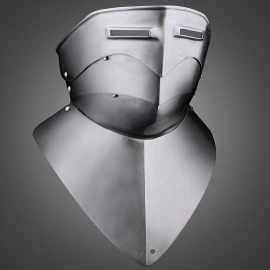
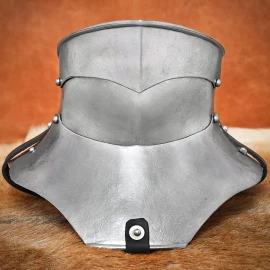
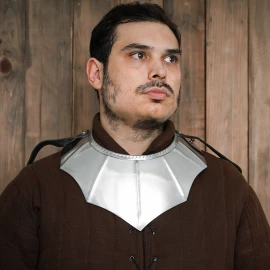
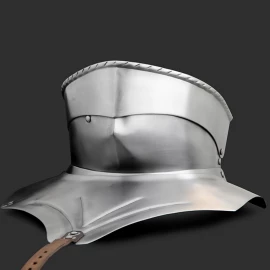
Complete your late medieval outfit with the Dornach gorget with a folding bevor. Broad plates rise into a fixed collar and a shaped chin defence with a moving upper lame. Smooth metal surfaces, a central ridge and decorated borders suit a portrayal of Central Europe in the late 15th century. The side fastening allows the collar to open for fitting. Use it for historical presentations, costumes or an armour display. Before assembling your outfit, compare its measurements with your padded clothing and helmet: comfort also depends on their shape and how the individual components overlap. Further product information ...

Would you like to be notified as soon as the item is in stock?
You will receive a short e-mail as soon as we have it back in stock.
Dornach gorget with a folding bevor, 1480–1500
Appearance and construction
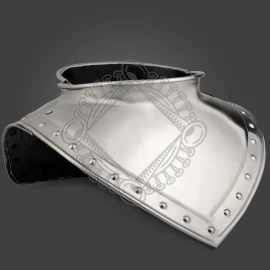
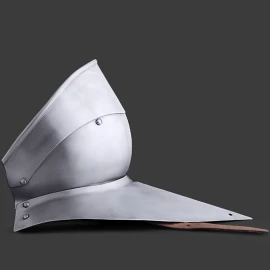
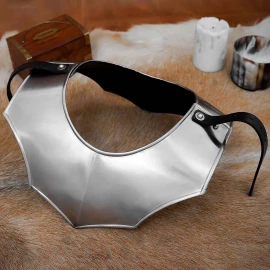
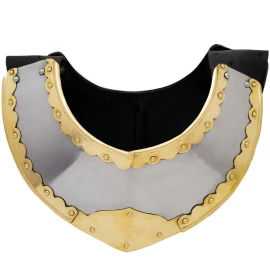
The gorget surrounds the neck and spreads over the upper chest and back. The front chin defence has a convex profile and a central ridge. Its upper lame folds down on side pivots and contains a row of circular openings. Diagonal decorative markings follow the upper and lower borders. Riveted leather straps are also visible in the photographs.
The surrounding collar opens with a catch on one side and a pinned joint on the other. The folding lame changes the height of the front defence without requiring you to remove the entire gorget.
Historical period and the name Dornach
The supplied information places the model in Central Europe around 1480–1500. A plate bevor protected the chin and neck and complemented a helmet, particularly a sallet. Sallets were already being worn with bevors before this period, so the design should not be described as a simple precursor to that combination.
The name Dornach recalls the battle of 1499, a decisive engagement of the Swabian War. We chose it as a reference to the military world of the late 15th century. It does not identify the product as a copy of a particular battlefield find.
Technical specifications
| Feature | Approximate measurement |
|---|---|
| Plate thickness | 1.2 mm / 0.047 in |
| Neck opening diameter | 14 cm / 5.51 in |
| Internal circumference of neck opening | 44 cm / 17.32 in |
| Overall length, measured underneath | 36 cm / 14.17 in |
| Overall width, measured underneath | 26.5 cm / 10.43 in |
| Overall height with lame lowered | 16 cm / 6.30 in |
| Overall height with lame raised | 20 cm / 7.87 in |
| Bevor height from upper gorget edge, lame lowered | 10 cm / 3.94 in |
| Bevor height from upper gorget edge, lame raised | 14 cm / 5.51 in |
| Rear standing collar height from upper gorget edge | 6 cm / 2.36 in |
| Maximum vertical dimension of moving lame | 6 cm / 2.36 in |
| Collar fastening | Side catch and pinned joint |
| Historical period | Central Europe, 1480–1500 |
| Manufacturer | Marshal Historical |
The source labels the 44 cm measurement as an internal diameter. We list it as a circumference because it corresponds to an opening approximately 14 cm in diameter. It is not a recommended maximum wearer’s neck circumference: padding also requires room.
Fitting and safe use
Try the gorget over a suitable padded collar or arming garment. Release the catch, open the surrounding collar, put it on and close the fastening fully. Check that you can breathe freely, move your head and wear your helmet comfortably. Move the lame slowly and keep your fingers away from overlapping plates. Do not force the mechanism.
This gorget is not suitable as protective armour for buhurt, HMB or Battle of the Nations. Even for costume use and historical presentations, make sure it does not press against your neck or chin.
Care and suitable accessories
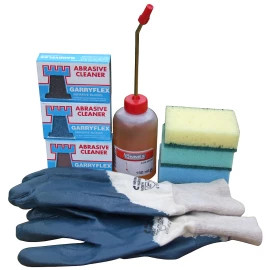
Dry the metal after use and apply a thin layer of protective oil. Keep it away from damp conditions, check the pivots, catch and straps, and avoid coarse abrasives. Treat the leather with a suitable leather conditioner.
We recommend a sallet, breastplate and padded arming garment based on late 15th-century examples. Check their compatibility by trying them on together; matching historical dates alone do not guarantee correct overlap or fit.
We are here for you!