Čeština
 Deutsch


Gothic Brass Belt Chape with Trefoil Tracery


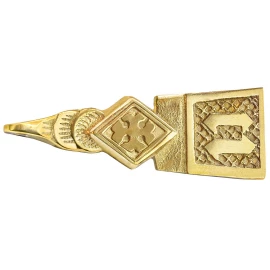
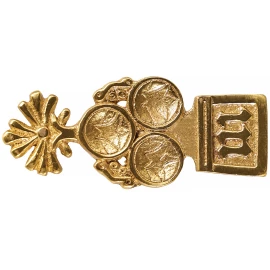
Finish your historical belt with an eye-catching fitting inspired by 14th- and 15th-century Gothic metalwork. This solid brass belt chape combines practical protection for the end of a leather strap with openwork trefoil tracery, projecting leaf-like crockets and a decorative cross-shaped finial. It is suitable for reenactment, LARP, theatre, film and the construction of a refined medieval costume. Designed for a belt approximately 29–30 mm / 1 1/8–1 3/16 in wide, it can be secured through two prepared mounting holes with suitable leatherworking rivets. Further product information ...

 Delivery options
Gothic Brass Belt Chape with Trefoil Tracery
A Decorative Finish for a Medieval Belt
A belt chape, also known as a strap end, belt tip or terminal fitting, is fitted over the free end of a leather belt. It reinforces the cut edge of the leather and helps protect it against fraying, deformation and repeated wear. On richly decorated medieval girdles, the chape was also an important visual element complementing the buckle and other applied mounts.
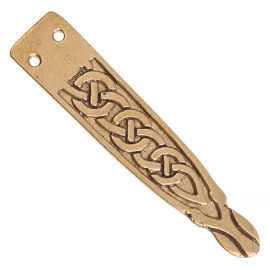
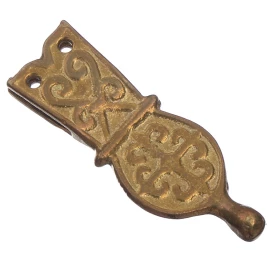
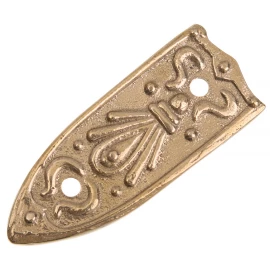
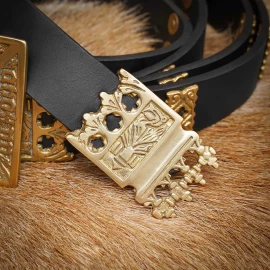
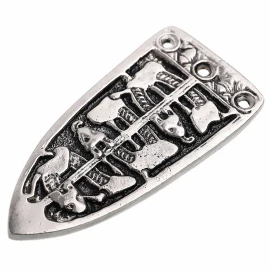
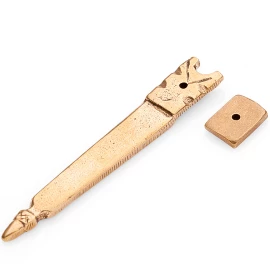
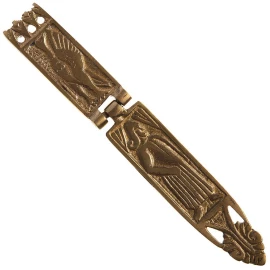
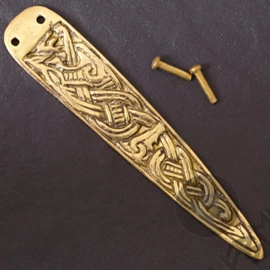
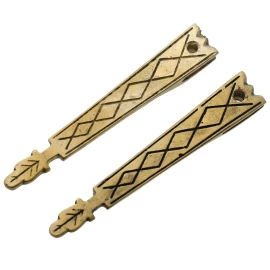
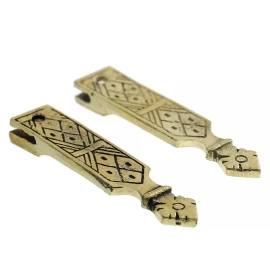
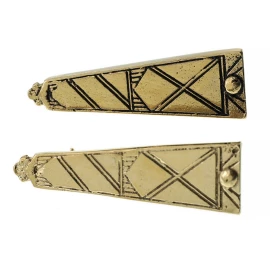
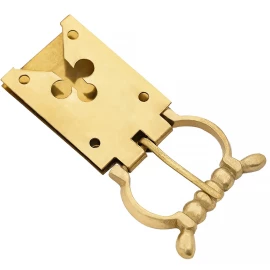
This example is made from solid brass with a warm golden appearance. Its broad mounting section encloses the tip of the leather strap from both sides. The front plate is decorated with an openwork trefoil and angular divided fields, whilst two smaller holes are provided for the mounting rivets.
A long tapered extension projects from the mounting sleeve. Small raised leaf-like forms run along its edges, recalling Gothic architectural crockets. Similar stylised leaves and buds decorated pinnacles, gables, portals and towers. A raised four-lobed cross-flower finial completes the narrow end.
Gothic Styling of the 14th–15th Century
The ornament corresponds to the visual language of the High and Late Gothic periods, particularly the 14th and 15th centuries. Decorative metal strap ends were used throughout western and central Europe on belts worn by nobles, affluent townspeople, armed retainers and other individuals able to purchase ornamented dress accessories.
A medieval belt did far more than hold clothing in place. Purses, keys, knives and other everyday possessions could be suspended from it. Its material, length, fittings and manner of wear might also communicate the owner’s wealth and social position. A decorated buckle, chape and series of smaller mounts could transform a simple leather strap into a conspicuous item of jewellery.
Trefoil Tracery
The pierced trefoil is one of the most recognisable motifs of Gothic architecture and decorative art. Three-lobed forms appeared in window tracery, reliquaries, furniture fittings and many products of medieval metalworking.
Crockets and Leaf Buds
Small leaf-shaped projections line the tapered body of the chape. These resemble the crockets placed along the sloping edges of Gothic pinnacles, canopies and ornamental gables. Their use on this small fitting gives the complete silhouette a particularly rich architectural character.
Cross-Flower Finial
The terminal takes the form of a four-lobed flower with raised diagonal arms. It may be understood as a simplified cross-flower finial, visually completing the long axis of the fitting.
The piece is a faithfully styled reproduction of a Gothic belt-fitting type. It is not presented as an exact copy of one individually identified archaeological artefact.
How to Fit the Belt Chape
- Use a firm vegetable-tanned leather strap approximately 29–30 mm / 1 1/8–1 3/16 in wide.
- Cut the end of the strap square and finish its edges so that it fits neatly between the mounting plates.
- Insert the leather fully into the chape until it reaches the internal stop.
- Use the two mounting holes to mark the corresponding positions on the leather.
- Remove the strap and punch the holes with a correctly sized leather punch.
- Refit the chape and secure it with two suitable saddler’s rivets or double-cap rivets.
- Set the rivets on a firm surface without crushing, splitting or distorting the brass plates.
- Check that the fitting is secure and that no sharp edges or projecting rivet ends remain.
Mounting rivets are not included. Select their length according to the thickness of your leather and the construction of the chosen rivet. We recommend asking a leatherworker or saddler to complete the fitting when you are not familiar with installing historical belt hardware.
Costume and Reenactment Applications
- 14th–15th-century Gothic clothing: for the belt of a noble, townsman, courtier or armed retainer
- Reenactment: for historically inspired High and Late Medieval leather belts
- LARP: for a knight, paladin, noble, town guard or cleric
- Theatre and film: as a clearly visible decorative finish for a costume belt
- Cosplay: for Gothic, medieval and fantasy characters
- Leathercraft: for bespoke belts and other historicist leather projects
Technical Specifications
| Specification | Details |
|---|---|
| Product type | Belt chape, strap-end or terminal belt fitting |
| Material | Solid brass |
| Artistic style | Gothic, High to Late Gothic |
| Historical period | Approximately 14th–15th century |
| Regional inspiration | Western and central Europe |
| Decoration | Trefoil tracery, side crockets and cross-flower finial |
| Overall dimensions | Approx. 76 × 29 mm / 3 × 1 1/8 in |
| Recommended belt width | Approx. 29–30 mm / 1 1/8–1 3/16 in |
| Approximate mounting-section depth | Approx. 8 mm / 5/16 in |
| Attachment | Two prepared rivet holes |
| Mounting hardware | Not included |
| Contents | 1 solid brass belt chape |
As the fitting is cast and individually finished, separate pieces may vary slightly in brass tone, surface texture, depth of detail and minor manufacturing marks.
Care of the Brass Fitting
- Wipe the chape with a soft, dry cloth after use.
- When it becomes wet, allow it to dry and buff it with a clean cloth.
- Use a small amount of mild brass polish when a brighter finish is required.
- Test the polishing product on a less visible area before treating the complete fitting.
- Do not use steel wool, wire brushes or coarse abrasive compounds.
- Avoid prolonged exposure to moisture, perspiration, salt and aggressive chemicals.
- Treat the leather belt separately with a suitable leather balm or wax.
- Store the belt unrolled or loosely coiled in dry, ventilated conditions.
Brass naturally darkens and may develop a patina over time. This is not a material defect. You may retain the patina for an aged appearance or remove it with careful polishing.
Installation and Safety Information
- Wear eye protection and use a stable work surface when punching and setting rivets.
- Do not hold the strap directly in your hand whilst punching the holes.
- Do not use rivets so long that their stems project from the reverse of the belt.
- Do not strike the rivets with excessive force, as this may crack or distort the brass plates.
- Before wearing the belt, check that the fitting has no burrs or sharp edges.
- Do not use a belt with a prominent metal chape during contact combat unless it is permitted by the organiser’s safety rules.
- Observe all event regulations governing metal costume fittings during LARP and reenactment.
Recommended Accessories
- 29–30 mm / 1 1/8–1 3/16 in leather strap for a 14th–15th-century Gothic belt
- Gothic brass buckle inspired by High or Late Medieval originals
- Brass belt mounts with tracery, fleur-de-lis or foliate decoration
- Leatherworking rivets made from brass or brass-plated steel in a suitable length
- Leather punch and rivet-setting tools for a clean and secure installation
- Leather purse or belt pouch for a 14th–15th-century costume
- Gothic knife or dagger suspension for a complete historicist belt set
The leather belt, buckle, rivets and other fittings shown in the photographs are not included.
We are here for you!